This content was published on
June 30, 2026 - 07:07
5 minutes
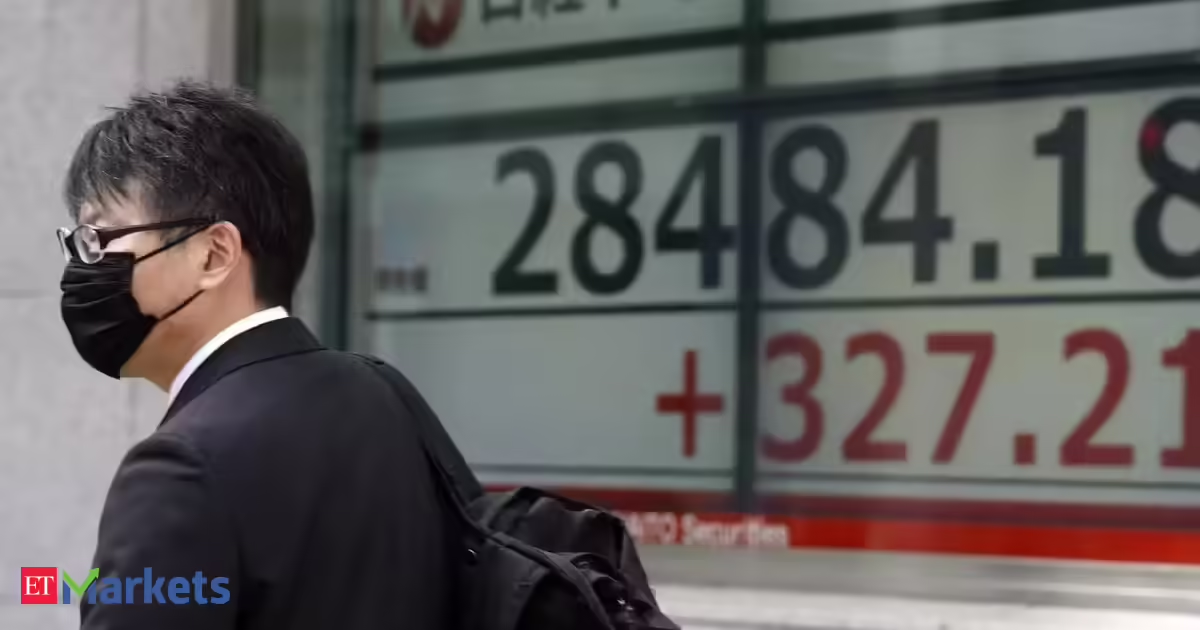
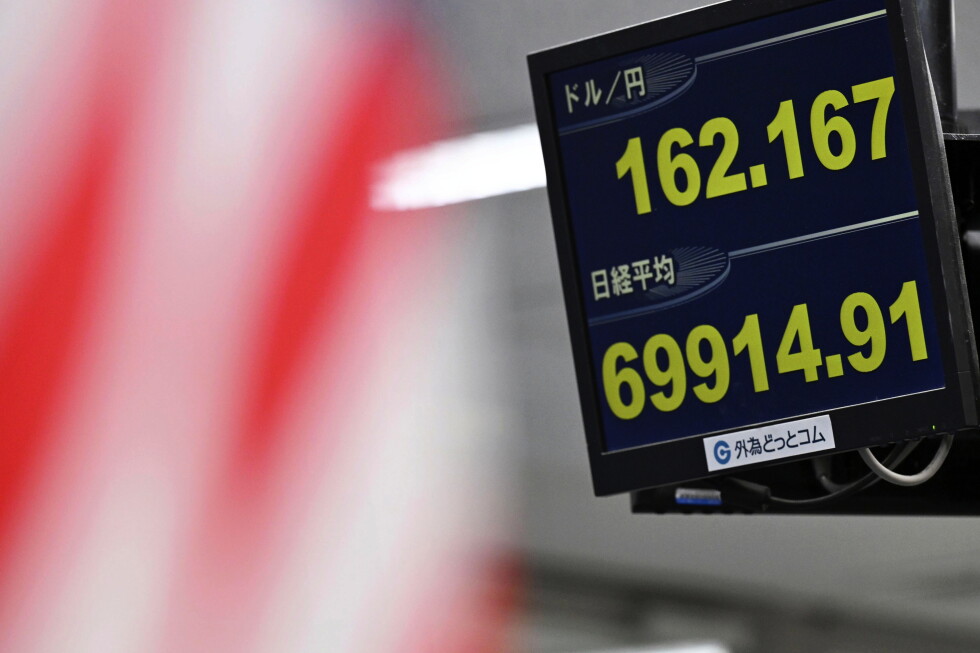
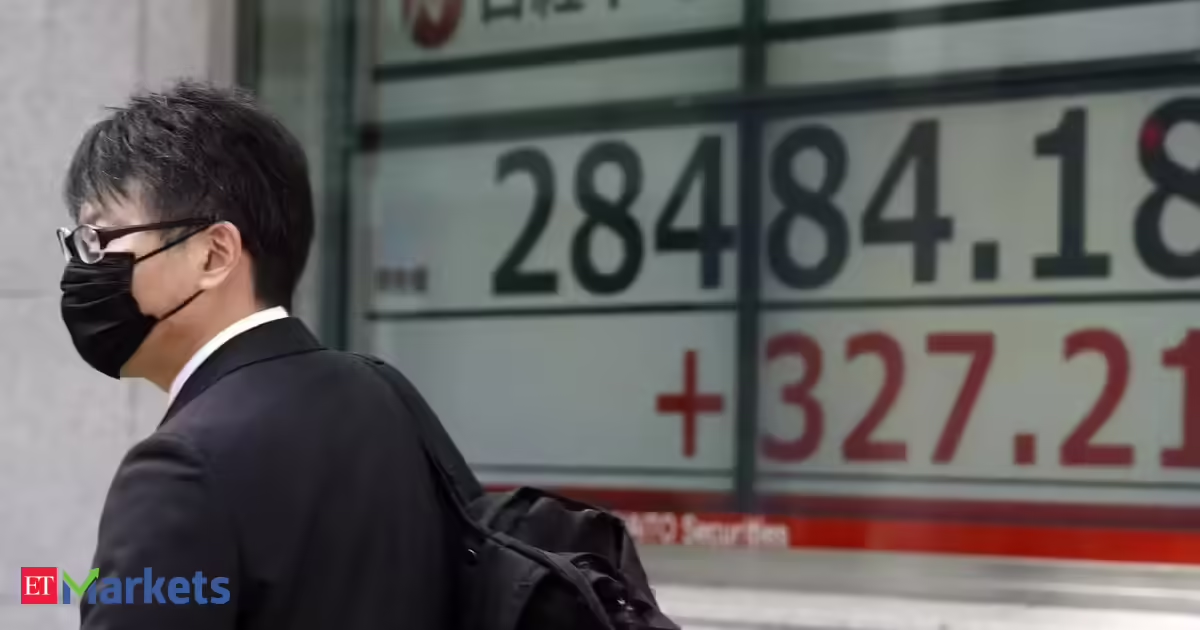
(Bloomberg) — Wall Street’s technology-driven rally spilled into Asia as investors piled back into companies seen as beneficiaries of the AI buildout. The yen slid to its weakest level against the dollar since 1986.MSCI’s Asia Pacific equities gauge climbed 1.4% on the final trading day of the quarter after a rally in semiconductor stocks helped the S&P 500 Index snap a five-session losing streak. Tuesday’s advance added to the Asian benchmark’s biggest quarterly jump in almost 17 years. Futures contracts indicated further gains for Europe and the US.South Korea’s Kospi index climbed 2.9% to extend its lead as the world’s best-performing major equity benchmark this year. Samsung Electronics Co. rose more than 5% to take its quarterly gains to above 100%, while SK Hynix Inc. extended its April-to-June rally to almost 240%.Elsewhere, the yen extended its recent losses to weaken beyond 162 per dollar — a milestone that will generate unease in Japan and put traders on alert for authorities wading into the market. Finance Minister Satsuki Katayama said Japan will respond to developments in foreign exchange appropriately at any time.Global equities are on track for their best quarter in almost six years as investors piled into companies seen as key beneficiaries of the artificial intelligence buildout, from Asian chipmakers to upstream suppliers. Investors will now turn their focus to US-Iran talks on Tuesday and June US payrolls data on Thursday that may offer clues on whether the Federal Reserve will keep interest rates higher for longer.“After a robust quarterly gain, the next test is consistency,” said Hebe Chen, an analyst at Vantage Global Prime. “Earnings, AI demand and margin growth will need to prove that Asia is not just riding the global AI story, but becoming a leading engine.”Attention in Asia was on the yen. While the weaker Japanese currency has boosted exporters’ profits and helped propel the country’s stocks to record highs, it has also raised import costs, squeezed households and added to political pressure on Prime Minister Sanae Takaichi’s government.The currency breached the 161.95 mark versus the dollar in New York trading Monday, passing the nadir it touched in July 2024 during an earlier campaign to shore up the exchange rate. It extended its decline to 162.40 in Tokyo on Tuesday, even after jawboning from Chief Cabinet Secretary Minoru Kihara. The subsequent Katayama comments had little immediate impact.“It’s the 1980s all over again for the yen,” said Tim Waterer, chief market analyst at KCM Trade. “The yen is now getting uncomfortably weak from an imported inflation standpoint.”Elsewhere, Brent crude fell 1% ahead of the expected US-Iran talks in Doha.The commodity, trading around $72.45 a barrel, is headed for the biggest quarterly decline since the pandemic as flows through the Strait of Hormuz accelerated following progress on a peace deal, with Morgan Stanley warning of a potential glut.Gold slipped below $4,000 an ounce. The yellow metal has fallen about 15% this quarter, the worst performance since the quarter ended June 2013.A Bloomberg gauge of the dollar climbed 0.2% Tuesday, while Treasuries were little changed.Back to equities, the resurgence in stocks has defied skeptics, coming in the face of the war in the Middle East, an oil supply shock and inflation jitters. Since bottoming three months ago, the S&P 500 Index has staged one of the swiftest rebounds this century, gaining 20% from its March 30 low to its June 2 peak — something it has done just three other times since 2000.In Asia, Japan’s Nikkei 225 Stock Average has gained over 38% this quarter — the best three-month performance on record. The Kospi has climbed about 71%, the strongest advance since 1998. However, after a banner year for Chinese stocks on the back of AI advances, 2026 is not going well.“Chinese equities have been a major drag on our portfolio year-to-date,” said Gerald Gan, chief investment officer at Reed Capital. “We have the likes of Tencent and Alibaba, but they are underperforming badly. The performance divergence across major economies has been wide and utterly disappointing.”Some of the main moves in markets:StocksS&P 500 futures rose 0.2% as of 2:06 p.m. Tokyo time Nikkei 225 futures (OSE) rose 1.4% Japan’s Topix rose 0.8% Australia’s S&P/ASX 200 fell 0.2% Hong Kong’s Hang Seng fell 1.4% The Shanghai Composite rose 0.1% Euro Stoxx 50 futures rose 0.6% CurrenciesThe Bloomberg Dollar Spot Index rose 0.2% The euro fell 0.3% to $1.1390 The Japanese yen fell 0.1% to 162.18 per dollar The offshore yuan was little changed at 6.7962 per dollar CryptocurrenciesBitcoin fell 1.4% to $59,376.09 Ether fell 1.7% to $1,587.52 BondsThe yield on 10-year Treasuries was little changed at 4.37% Japan’s 10-year yield advanced four basis points to 2.675% Australia’s 10-year yield declined two basis points to 4.72% CommoditiesWest Texas Intermediate crude fell 1% to $70.07 a barrel Spot gold fell 0.6% to $3,990.06 an ounce This story was produced with the assistance of Bloomberg Automation.–With assistance from Aya Wagatsuma and Winnie Hsu.©2026 Bloomberg L.P.