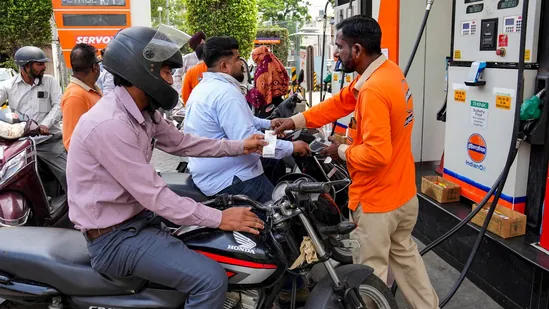
India’s average import price for crude oil has fallen below $70 a barrel for the first time since the West Asia conflict began, but consumers are unlikely to see an immediate cut in petrol and diesel prices as refiners seek to recover previous losses and the government may recoup part of the fiscal cost of shielding consumers, people familiar with the matter said.People refuel their vehicles at a petrol pump, in Amritsar. (PTI)The average price of the Indian basket of crude fell to $68.86 a barrel on Friday, down more than 56% from a peak of $157.04 on March 23 after the outbreak of the conflict on February 28. The decline has eased pressure on state-run oil marketing companies (OMCs) that were running huge losses. According to the people cited above, the three state-owned fuel retailers are now earning marketing margins of about ₹5-6 a litre on petrol, although they continue to lose around ₹8-10 a litre on diesel sales.Indian Oil Corporation, Bharat Petroleum Corporation Ltd, Hindustan Petroleum Corporation Ltd and the petroleum ministry did not respond to emailed queries.India imports more than 88% of the crude oil it processes. As global oil prices surged during the conflict, OMCs incurred losses because retail fuel prices remained largely unchanged. The government cut excise duty on petrol and diesel by ₹10 a litre each on March 27 to partly offset those losses after losses climbed to ₹26 a litre on petrol and ₹81.90 a litre on diesel.As the conflict intensified and the Strait of Hormuz — a key transit route for about a fifth of oil traded globally — closed, international crude prices climbed further. According to the people cited above, losses widened again despite the excise duty reduction, prompting OMCs to raise petrol and diesel prices by a cumulative ₹7.35 and ₹7.53 a litre, respectively, between May 15 and May 25.Oil prices began easing after prospects emerged for a US-Iran peace agreement and a memorandum of understanding was signed in mid-June to chart a pathway towards ending the conflict. As energy shipments through the Strait of Hormuz gradually resumed, international crude prices softened, improving India’s energy supply situation, the people said.The Indian basket, which stood at $71.17 a barrel on February 27, crossed $100 in early March and remained above that level until May. It slipped below $80 by mid-June before falling to $68.86 a barrel on June 26, according to the latest available data.Petroleum minister Hardeep Singh Puri said on X that the government had protected Indian consumers from the global energy shock despite severe supply disruptions.According to the people cited above, the Centre has already borne a fiscal cost of about ₹1.23 lakh crore to shield consumers, including the impact of the excise duty reduction. Government estimates put the revenue forgone because of the excise cut at nearly ₹14,000 crore a month.Puri said India’s diversified crude sourcing, expanded import infrastructure and strategic investments in pipelines and storage had enabled the country to weather the disruption without fuel shortages.He added that India had maintained uninterrupted supplies despite the closure of the Strait of Hormuz and that consumers had been insulated from the full impact of the crisis. India did not see the kind of fuel rationing that several other countries did.
India's oil import cost falls below $70, first since Iran war began. But petrol, diesel price cut unlikely
The average price of the Indian basket of crude fell to $68.86 a barrel, down more than 56% from a peak of $157.04 on March 23 after the outbreak of the war. | India News
541 words~2 min read