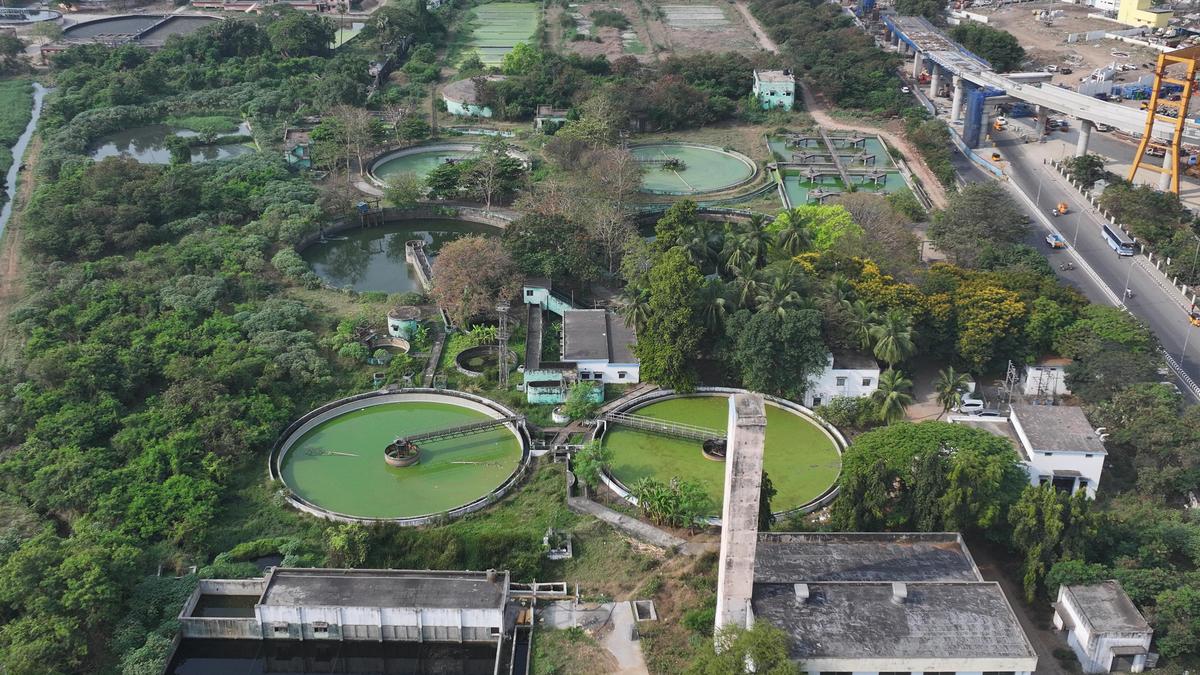
An aerial view of the Sewage Treatment Plant at Koyambedu. Chennai treats 650 million litres of sewage per day through 20 of its STPs, and generates nearly 94 tonnes of dry sludge per day.
| Photo Credit: JOTHI RAMALINGAM B
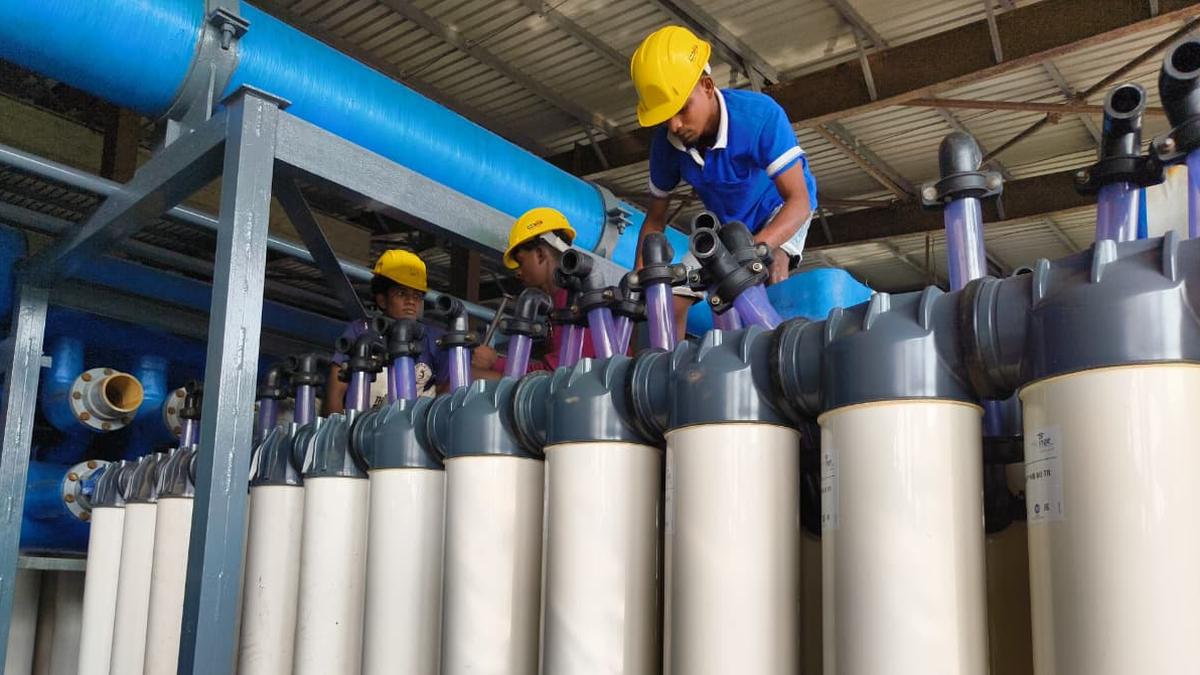
While focus has largely remained on wastewater treatment, the reuse of sewage sludge is seldom optimised. In a recent study, Anna University has demonstrated that the adoption of advanced treatment technology in sewage treatment plants could increase biogas production by nearly 28% and be reused in various applications.The study found that sewage sludge generated in Chennai Metrowater’s sewage treatment plants contained low concentrations of heavy metals within international standards, making it viable for reuse after treatment.However, researchers from Anna University noted that raw sludge showed significant microbial contamination, including salmonella. Pathogens were found to exceed prescribed standards in raw sludge samples, posing a major barrier to sludge reuse and necessitating additional treatment.Given the constraints, including land scarcity and limited treatment infrastructure, sewage sludge management and safe disposal are emerging as environmental challenges. Once pathogen risks are addressed, treated sludge could be used to support various applications, including land restoration, urban forestry, and soil rehabilitation programmes, according to the study.Researchers from Anna University analysed sludge samples from 12 of Chennai Metrowater’s STPs over nearly 18 months for the study funded by the Central Public Health and Environmental Engineering Organisation, Union Ministry of Housing and Urban Affairs.Chennai currently treats 650 million litres of sewage per day through 20 of its STPs, and generates nearly 94 tonnes of dry sludge per day. Eleven of the STPs generate nearly 24,500 cubic metres of biogas.S. Kanmani, principal investigator of the study and Head, Department of Civil Engineering and director-in-charge, Centre for Climate Change and Disaster Management, said it was imperative for the STPs to evolve beyond their conventional role of pollution control facilities and prioritise reuse of the treated sludge or biosolids reuse.The study demonstrated the feasibility of adapting sustainable thermal-based sludge stabilisation and resource recovery technology to Chennai’s STPs. With suitable modifications, STPs can adopt it to increase biogas production and improvethe use of biosolids, she said.With the application of the technology, an STP could yield up to 31,365 cubic metres of biogas, which is nearly 28% higher than the current generation. Moreover, the treatment process also helped remove faecal coliform and significantly reduced salmonella in the sludge, enabling treated biosolids for better reuse, said the study published in the Environmental Monitoring and Assessment journal.Saranya Kuppusamy, the study’s co-principal investigator and visiting professor, Department of Civil Engineering, Anna University, said the cost-effective technology would also help reduce the volume of sludge requiring disposal by about 60%. Besides improving renewable energy recovery, the technology would enhance the quality of treated biosolids and support land reclamation and landscaping. Biosolids could be co-composted with green waste to improve soil fertility.Anna University is also exploring pilot projects with its industry partner – Larsen and Toubro – and scaling up technology for implementation across the State, Ms. Kanmani said. Published - June 30, 2026 05:30 am IST