This content was published on
June 30, 2026 - 00:06
4 minutes
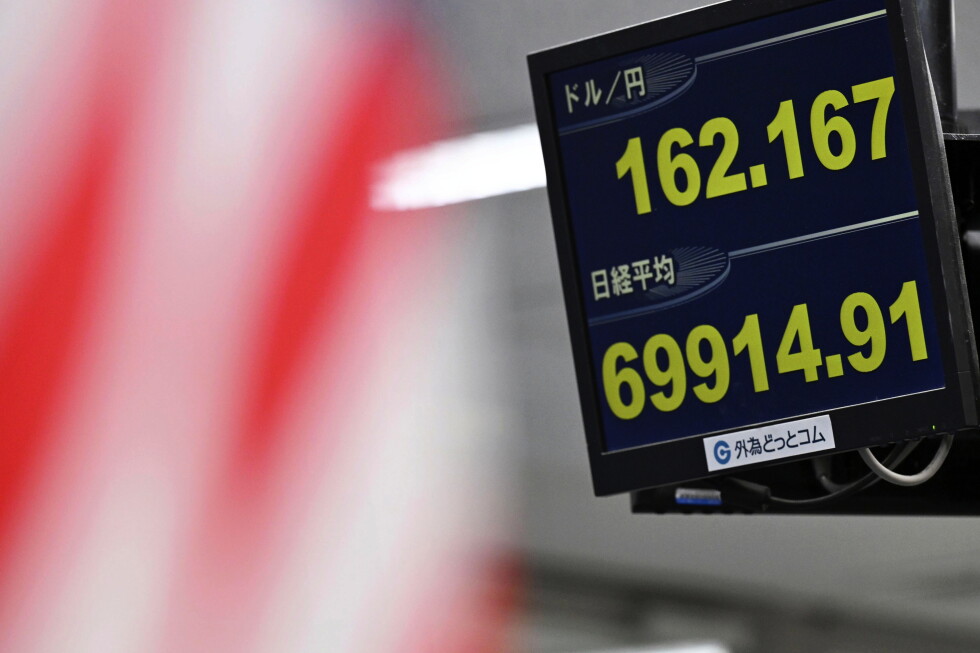
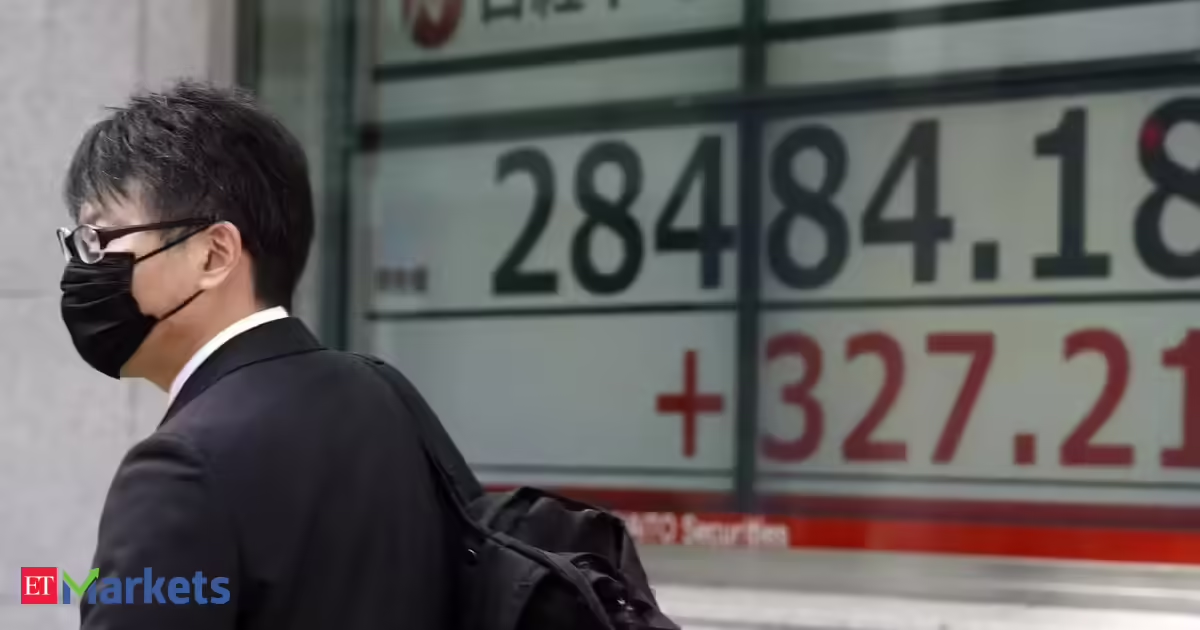
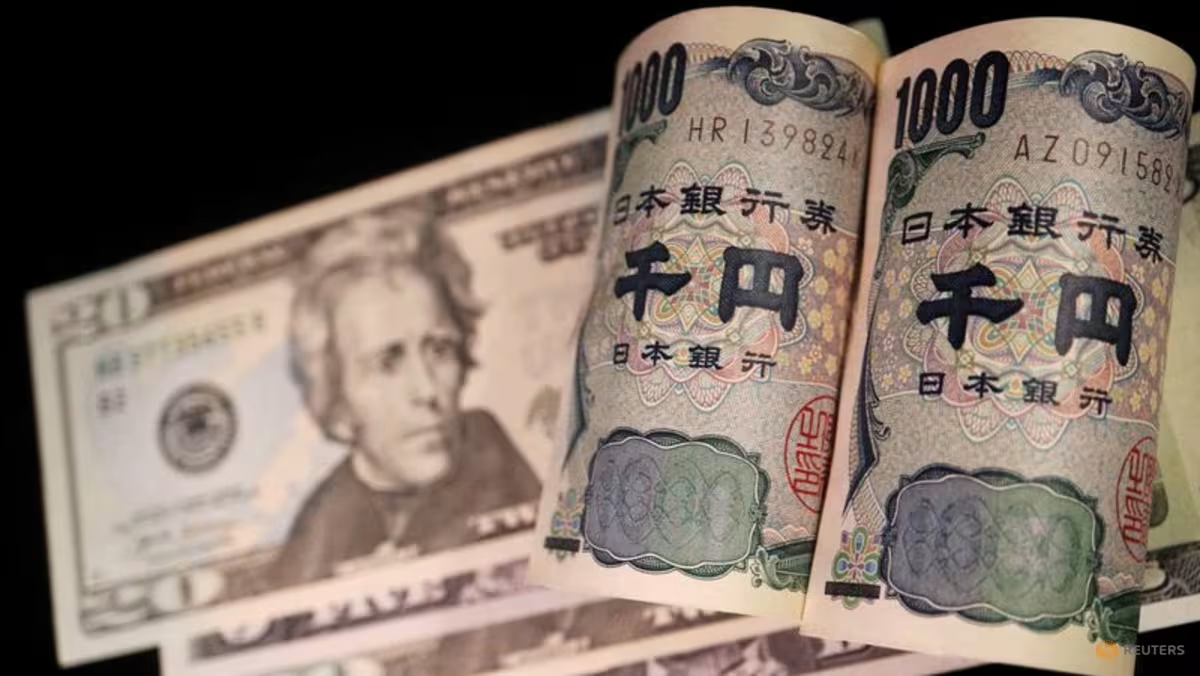
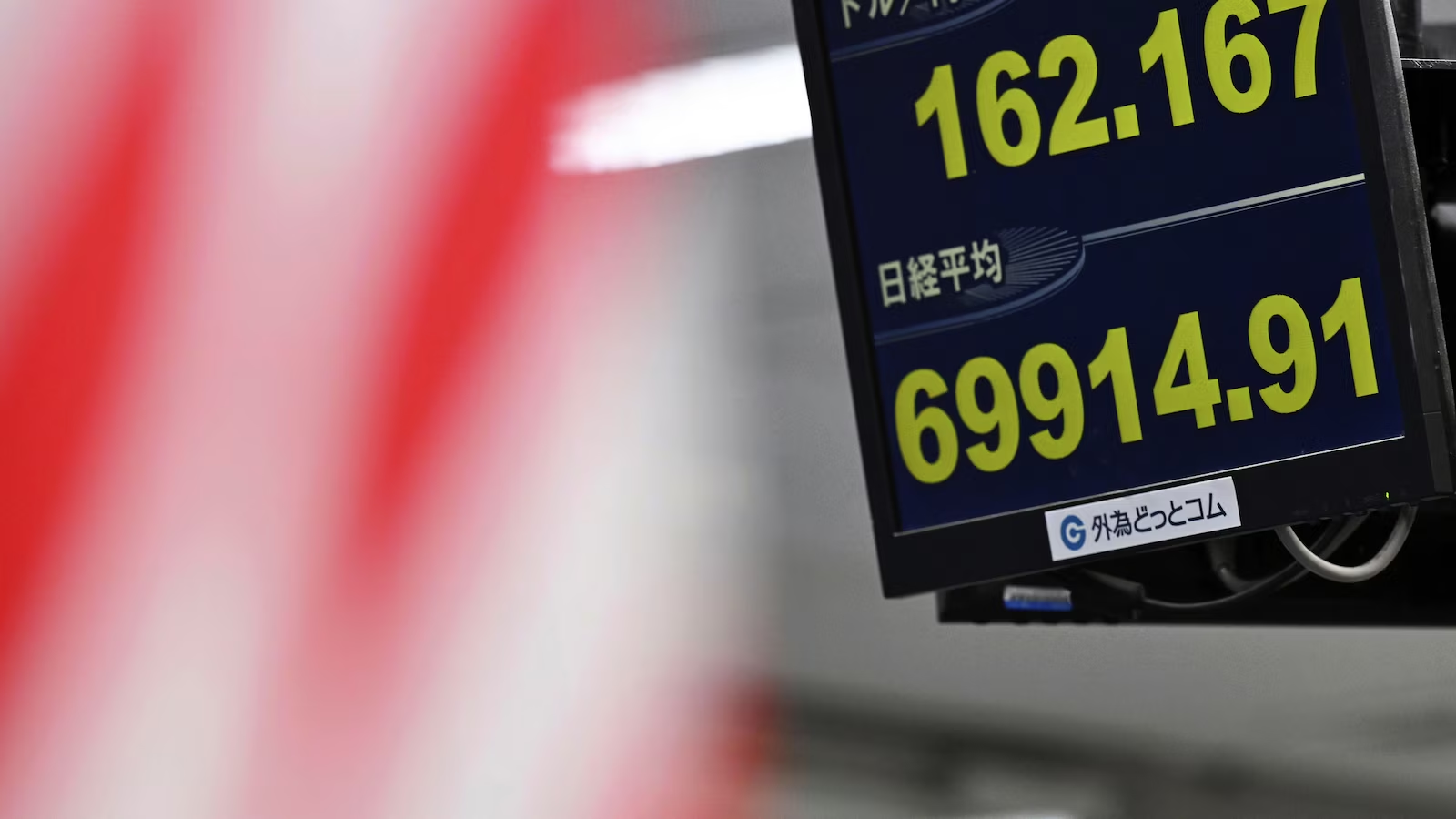
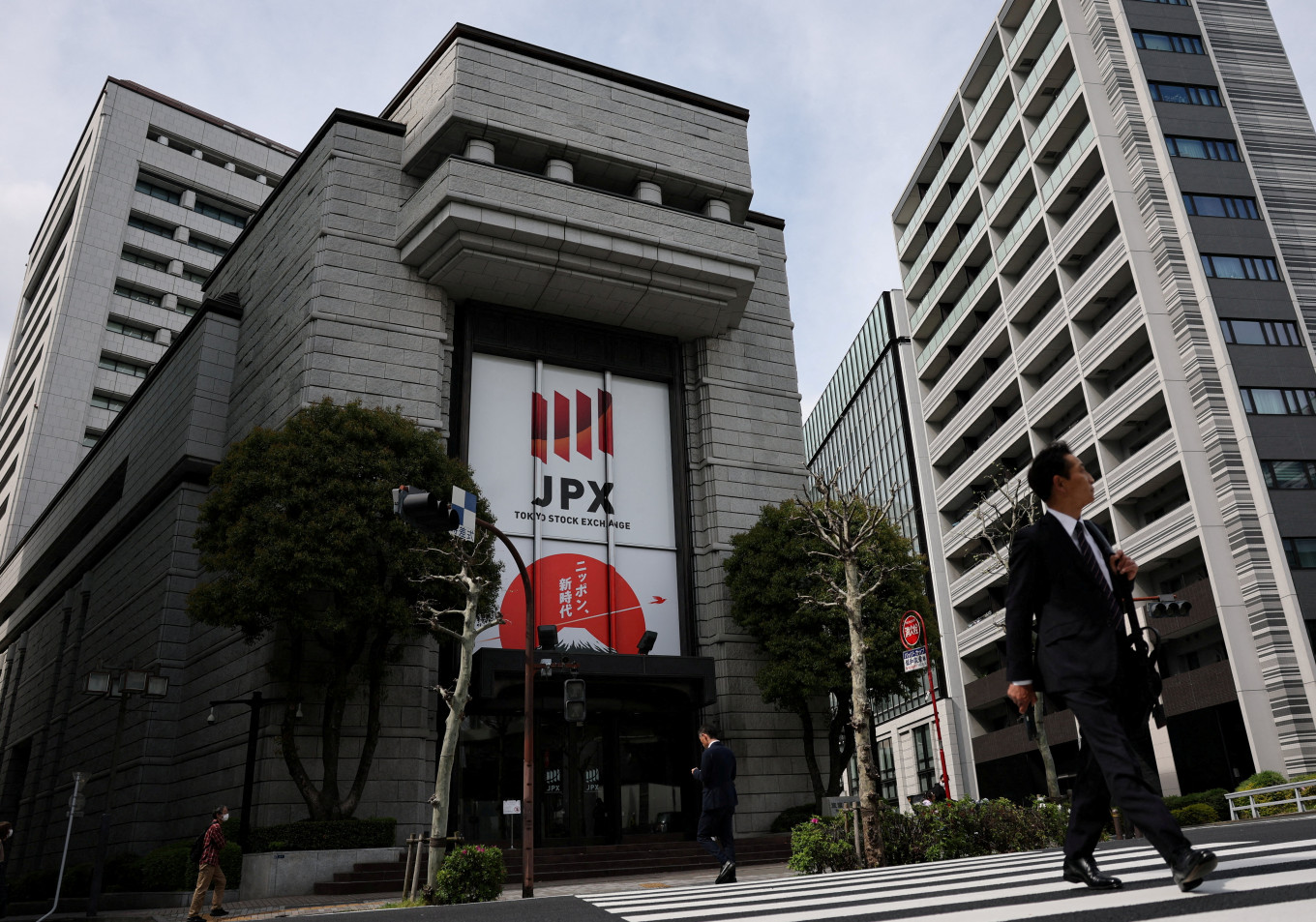
(Bloomberg) — Japanese stocks were set to rise as the yen slid to a four-decade low against the dollar and a rebound in several US technology giants lifted Wall Street.Equity futures pointed to a strong open in Tokyo, with Hong Kong and Sydney set for little change. S&P 500 contracts were steady after the benchmark rose 1.2% on Monday, with chipmakers rebounding from their worst week since April 2025. Oil held onto gains as traffic slowed through the Strait of Hormuz.While the weaker yen has boosted exporters’ profits and helped propel Japanese stocks to record highs, it has also raised import costs, squeezed households and added to political pressure on Prime Minister Sanae Takaichi’s government.The currency’s slide beyond the milestone is also likely to put traders on intervention watch.“Intervention is right around the corner if we don’t see a quick correction,” said Andrew Hazlett, a foreign-exchange trader at Monex Inc. Still, intervention is “only a temporary fix if they do not address the interest-rate differential.”The Bank of Japan lifted its benchmark interest rate on June 16 to 1%, the highest since 1995. Yet the impact was minimal, as traders expect the Federal Reserve to stay hawkish going forward.In the US, the stock resurgence has defied skeptics, coming in the face of war, an oil supply shock and inflation jitters. Since bottoming three months ago, the S&P 500 has staged one of the swiftest rebounds this century, gaining 20% from its March 30 low to its June 2 peak — something it has done just three other times since 2000.“The bounce we’re seeing is a welcome development for the bulls,” said Matt Maley at Miller Tabak. “We continue to believe strongly that the action in the tech sector will continue to be the main driver in the stock market.”While tech doesn’t have to keep outperforming in a big way, the sector needs to refrain from declining in a significant manner due to its heavy weight in the S&P 500, he noted. Otherwise, individual investors could start “rotating” toward cash, especially after hearing so much talk about bubbles in the past year, Maley added.Equities bounced despite a rise in oil prices. President Donald Trump said peace talks with Iran are set to resume on Tuesday after both sides agreed to halt a series of tit-for-tat attacks over the Strait of Hormuz. The renewed strikes served as a reminder of the fragility of their truce.Calm prevailed in the Treasury market as the US Supreme Court ruled that Federal Reserve Governor Lisa Cook can stay in her job for now, reinforcing the central bank’s independence from the White House.“A Fed perceived as subject to political direction would likely introduce a persistent risk premium to US dollar-based assets,” said Michael Reynolds at Glenmede. “Removing that tail risk, even one that markets had only remotely priced, is a quiet but meaningful positive for the stability of the long-term rate outlook.”What Bloomberg Strategists say…“Activity in leveraged equity ETFs tends to pose technical risks to the market given that investors in these funds tend to buy into strength and sell into weakness. While such a tendency helped the Nasdaq 100 on its way up, it’s proving to be a double-edged sword now.”—Kristine Aquino, Macro Strategist, Markets Live. For the full analysis, click here.Some of the main moves in markets:StocksHang Seng futures were little changed as of 7:01 a.m. Tokyo time S&P/ASX 200 futures were little changed Nikkei 225 futures rose 1.2% CurrenciesThe Bloomberg Dollar Spot Index fell 0.1% CryptocurrenciesBitcoin rose 0.3% to $60,337.94 Ether was little changed at $1,614.32 BondsThe yield on 10-year Treasuries was little changed at 4.37% CommoditiesSpot gold was little changed West Texas Intermediate crude fell 0.4% to $70.46 a barrel This story was produced with the assistance of Bloomberg Automation.©2026 Bloomberg L.P.