Google's Agent2Agent protocol, usually shortened to A2A, had a strange first year.
When Google announced A2A in April 2025, the pitch was clear: AI agents built by different vendors, frameworks, and teams needed a standard way to communicate. The protocol promised agent discovery, task delegation, message exchange, streaming updates, and artifact sharing. The reaction, however, was considerably less clean than the announcement.
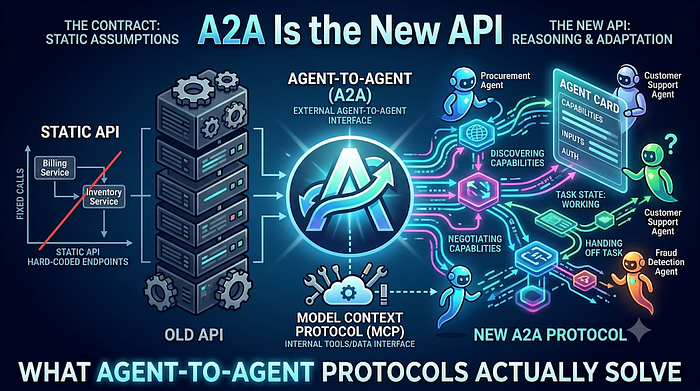
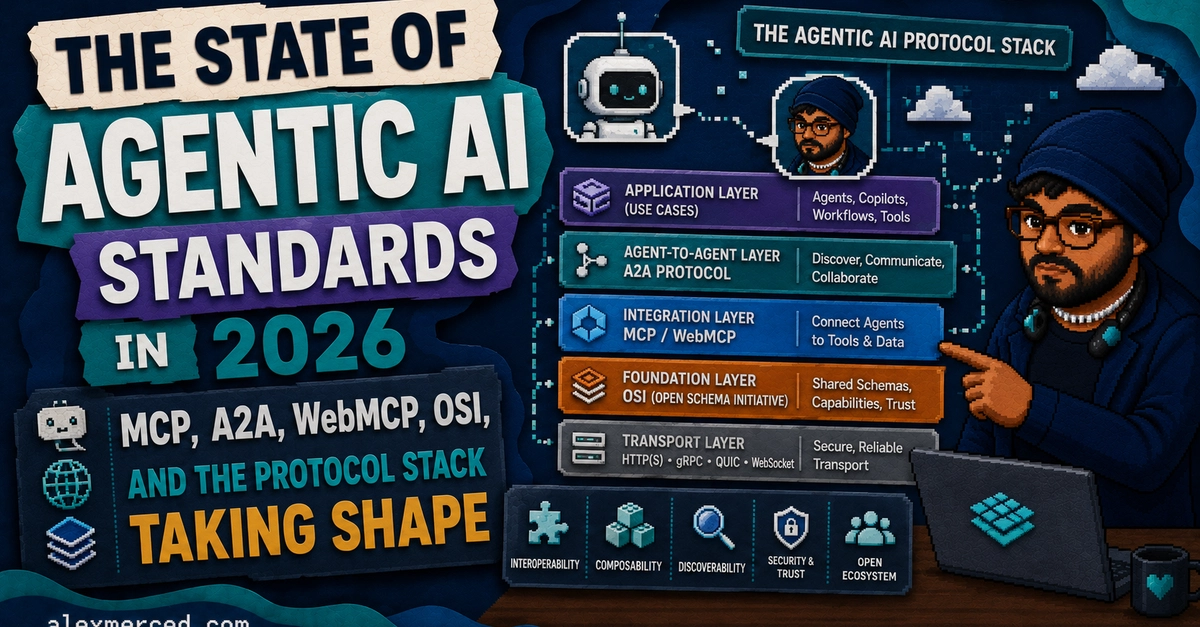
Some developers saw A2A as the missing agent-to-agent layer for the emerging agentic stack. Others saw it as yet another Google protocol, another acronym, and another attempt to define a market before the market had real production needs. The skeptical take came down to a single question: "We already have MCP. Why do we need A2A?" That was a fair question in 2025, and it remains a fair question in 2026 — though the answer has shifted considerably.
A2A is not dead, but it is also not universally useful. The practical reality is that A2A is becoming genuinely valuable in a specific context: where agents are independent systems with their own ownership, tools, and trust boundaries, rather than just internal functions or tool wrappers. That distinction between tool integration and agent delegation is what the protocol is actually designed to address, and understanding it is the key to evaluating A2A without the hype in either direction.