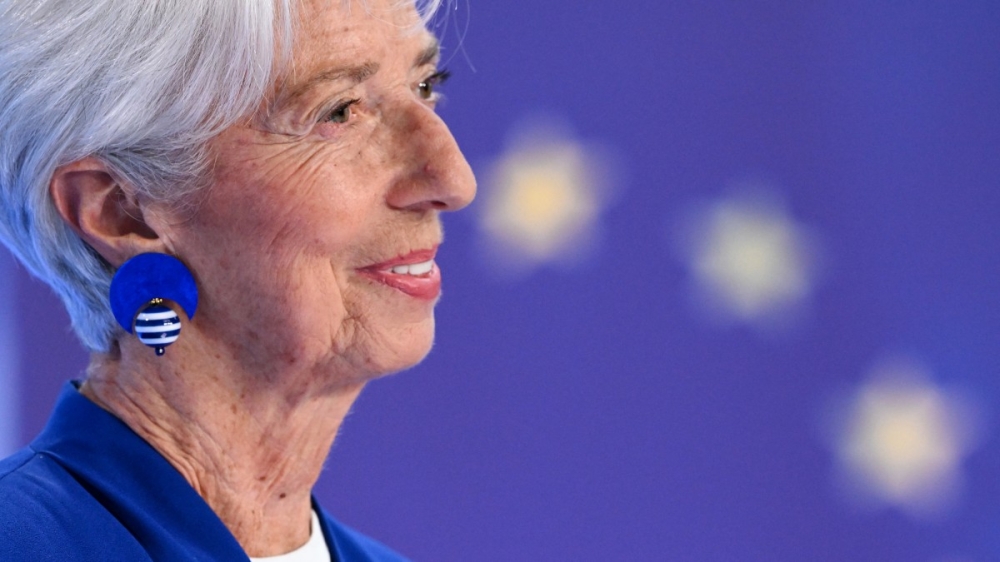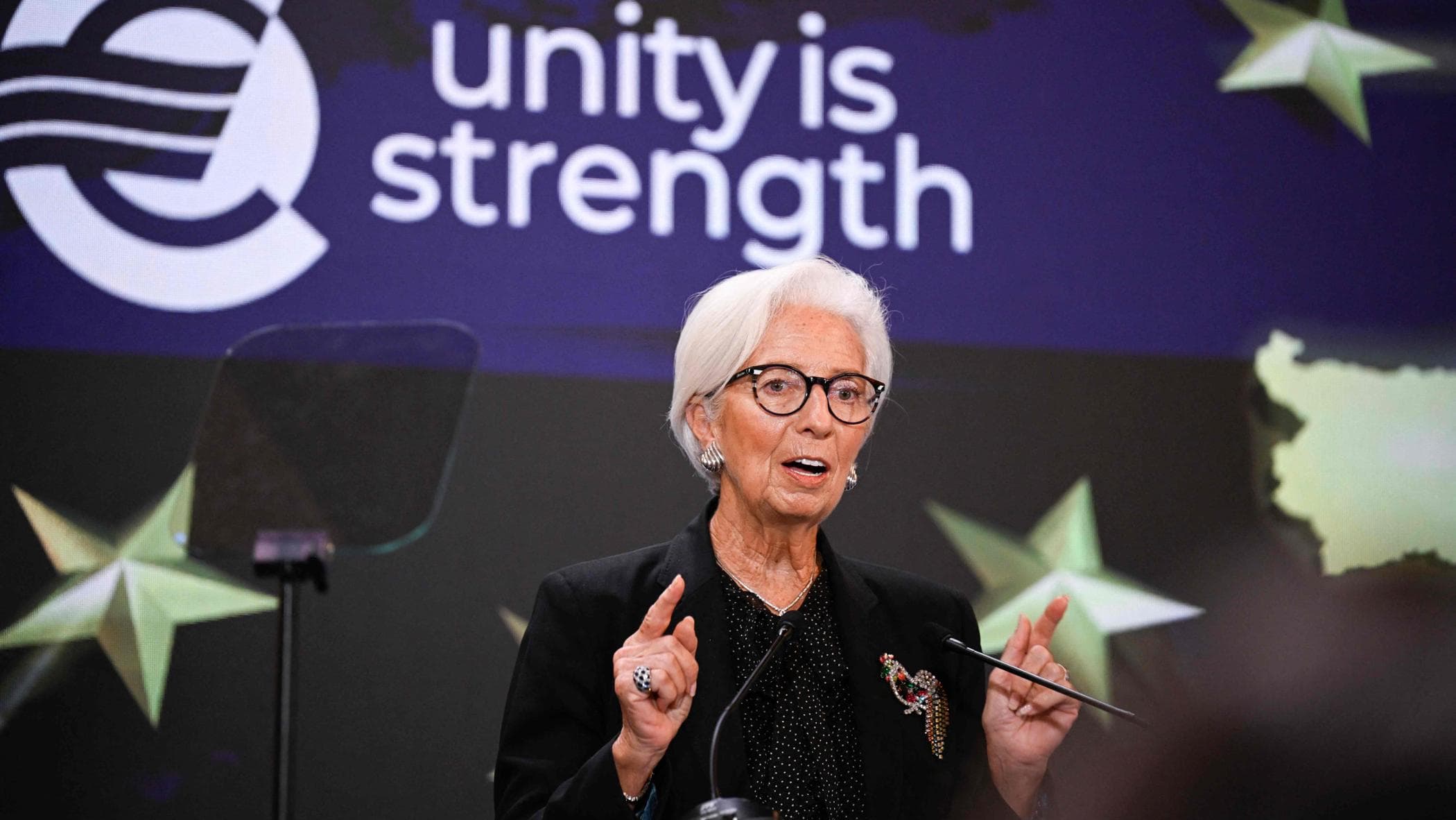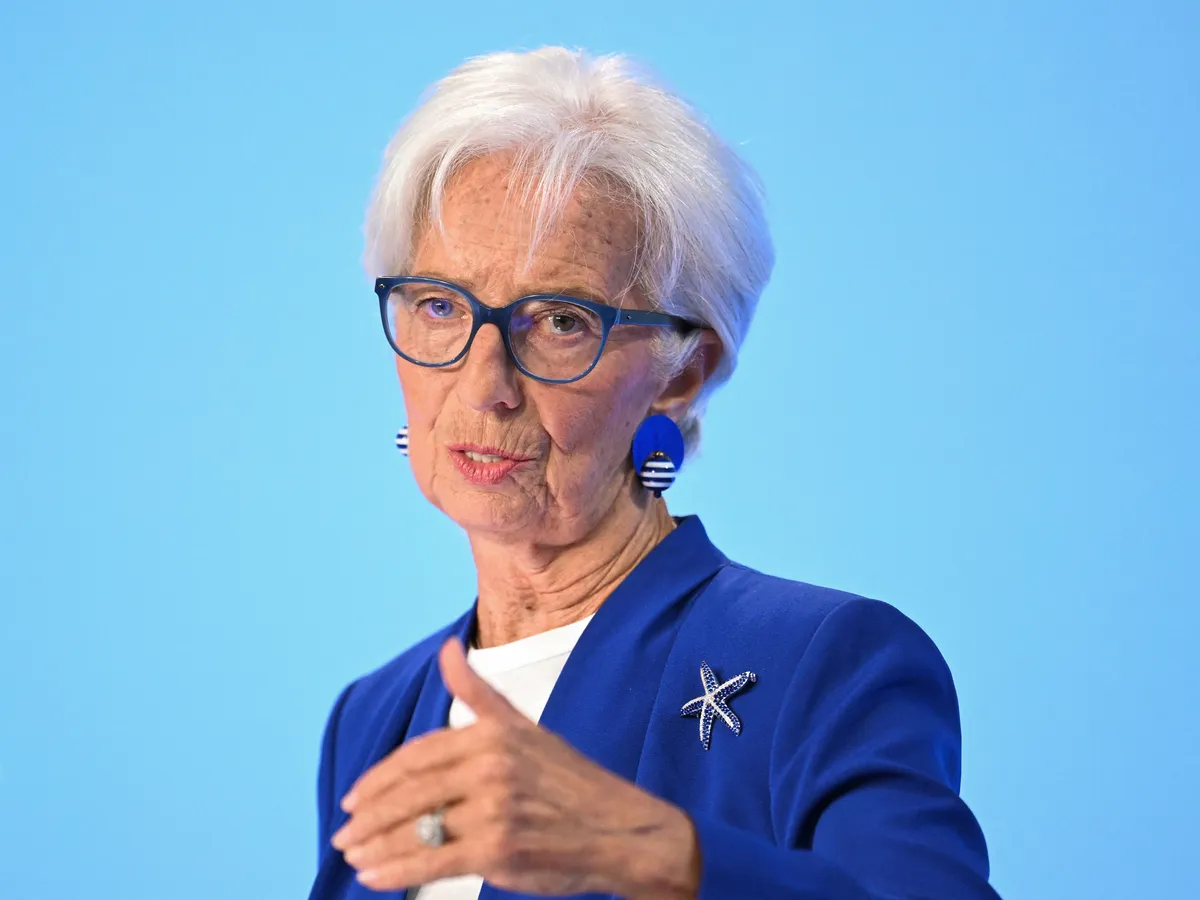
Skip to Content News Archives Economy Energy Oil & Gas Renewables Electric Vehicles Mining Commodities Agriculture Real Estate Mortgages Mortgage Rates Finance Banking Insurance Fintech Cryptocurrency Work Wealth Smart Money Wealth Management Investor Personal Finance Family Finance Retirement Taxes High Net Worth FP Comment Executive Women Puzzmo Newsletters Financial Times Business Essentials More Innovation Information Technology FP500 Podcasts Small Business Lives Told Tails Told Shopping Financial Post Store Obituaries Place a Notice Advertising Advertising With Us Advertising Solutions Postmedia Ad Manager Sponsorship Requests Classifieds Place a Classifieds ad Working Profile Settings My Subscriptions Saved Articles My Offers Newsletters Customer Service FAQ News Economy Energy Mining Real Estate Finance Work Wealth Investor FP Comment Executive Women Puzzmo Newsletters Financial Times Business Essentials HomeNewsEconomyLagarde says Europe is getting more resilient to economic shocksAs tensions subside amid a peace deal, policymakers must decide whether further monetary tightening is neededAuthor of the article:Last updated 35 minutes ago You can save this article by registering for free here. Or sign-in if you have an account.Christine Lagarde spoke in the same week that a euro-zone inflation report is set to show probably the first slowdown since the Iran war began. Photo by Kirill KUDRYAVTSEV/AFP via Getty ImagesEurope is becoming less vulnerable to outside shocks thanks to a better financial framework and progress on the green transition, Christine Lagarde said.Subscribe now to read the latest news in your city and across Canada.Exclusive articles from Barbara Shecter, Joe O'Connor, Gabriel Friedman, and others.Daily content from Financial Times, the world's leading global business publication.Unlimited online access to read articles from Financial Post, National Post and 15 news sites across Canada with one account.National Post ePaper, an electronic replica of the print edition to view on any device, share and comment on.Daily puzzles, including the New York Times Crossword.Subscribe now to read the latest news in your city and across Canada.Exclusive articles from Barbara Shecter, Joe O'Connor, Gabriel Friedman and others.Daily content from Financial Times, the world's leading global business publication.Unlimited online access to read articles from Financial Post, National Post and 15 news sites across Canada with one account.National Post ePaper, an electronic replica of the print edition to view on any device, share and comment on.Daily puzzles, including the New York Times Crossword.Create an account or sign in to continue with your reading experience.Access articles from across Canada with one account.Share your thoughts and join the conversation in the comments.Enjoy additional articles per month.Get email updates from your favourite authors.Create an account or sign in to continue with your reading experience.Access articles from across Canada with one accountShare your thoughts and join the conversation in the commentsEnjoy additional articles per monthGet email updates from your favourite authorsSign In or Create an AccountorBetter banking and fiscal regulations as well as investments in low-carbon energy have paid off recently, the European Central Bank president said in a speech opening her institution’s annual retreat in Sintra, Portugal.Lagarde cited how the collapse of Silicon Valley Bank didn’t destabilize any euro-zone lenders, how the region took United States President Donald Trump’s tariff onslaught in its stride, and how more recently it has withstood arguably the biggest oil-supply disruption in history.SUBSCRIBER EXCLUSIVE: FP West: Energy Insider brings you behind the oilpatch’s closed doors with exclusive insights from insiders every Wednesday morning.By signing up you consent to receive the above newsletter from Postmedia Network Inc.A welcome email is on its way. If you don't see it, please check your junk folder.The next issue of FP West: Energy Insider will soon be in your inbox.We encountered an issue signing you up. Please try again“While we are more likely to face shocks that push inflation away from target, the resilience Europe has built means their effects on our economy are more contained,” she said on Monday. “We may therefore more often find ourselves in an intermediate zone, between shocks we can look through and those we must react to forcefully.”ECB officials are convening in the Portuguese hillside resort weeks after they raised interest rates to contain price pressures triggered by the conflict in the Middle East.As tensions subside amid a peace deal — whose durability Lagarde described as “far from assured” — policymakers must decide whether further monetary tightening is needed.While oil prices have retreated since the ECB’s hike, officials including Executive Board member Isabel Schnabel argue that, as things stand, borrowing costs probably still need to rise further.Lagarde reiterated that the move in June was a “robust decision” and that “nothing we have observed since then has called this assessment into question.” She added that it wasn’t accurate to describe it as an “insurance hike.”Instead, she lauded the ECB’s progress on understanding how real-time data affect medium-term inflation, as well as improvements in the quarterly projections that often proved wrong during the consumer-price spike in 2022.June’s rate increase “was a decision based on what we saw in front of us,” Lagarde said. “Our ability to take it with confidence, in an environment of considerable uncertainty, is the product of years of investment in our data, our indicators and our projections.” ECB President Christine LagardeLagarde spoke in the same week that a euro-zone inflation report is set to show probably the first slowdown since the Iran war began. Analysts think consumer prices rose three per cent in June, down from 3.2 per cent the previous month.Some have pared expectations for future rate increases as energy prices retreat. Oxford Economics and Capital Economics are among those saying the ECB won’t raise further, though investors are still pricing one more quarter-point move, which would bring the deposit rate to 2.5 per cent.The president highlighted that the ECB’s reaction function is now “well understood” by markets as they adjust financial conditions in response to new data on their own.“Monetary policy begins to take effect before we have made a decision,” she said. “That buys us time to assess how a shock is developing before we commit to a course of action, which is highly valuable in conditions of high uncertainty.” Join the Conversation This website uses cookies to personalize your content (including ads), and allows us to analyze our traffic. Read more about cookies here. By continuing to use our site, you agree to our Terms of Use and Privacy Policy.
Lagarde says Europe is getting more resilient to economic shocks
Europe is becoming less vulnerable to outside shocks thanks to a better financial framework, Christine Lagarde said. Find out more here
1,041 words~5 min read