This article has been supplied.As civil engineering contractors navigate tight margins in a constrained economic climate, there is growing recognition of the value that predictable employment conditions and fair wage structures bring to the sector.
In an intensely competitive environment, contractors are grappling with rising input costs, compressed timelines and increasingly complex infrastructure projects - all while being expected to deliver safely, on time and within budget.
According to Lindie Fourie, Operations Manager at the Bargaining Council for the Civil Engineering Industry (BCCEI), contractors must also maximise community benefit on their projects and often contend with volatile social dynamics and even criminal activity on site.
“In this context, the positive impact of labour stability and workforce morale should not be underestimated,” Fourie says. “When employees feel heard and valued, and are earning a fair wage, this lays the foundation for a committed workforce that can drive productivity.”
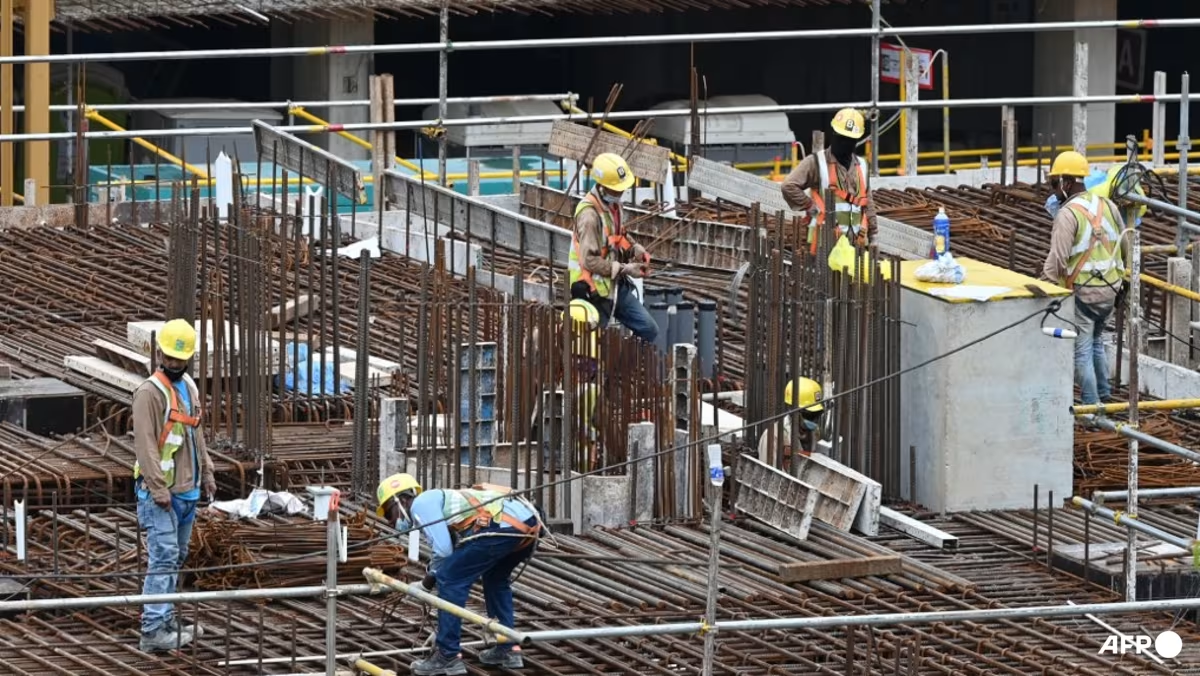
Construction remains a highly labour-intensive industry, with significant potential not only to create employment but to open pathways into the formal working environment. Particularly on public sector contracts, contractors frequently employ unskilled local labour and provide foundational training that enhances individual capability and improves overall workflow efficiency.