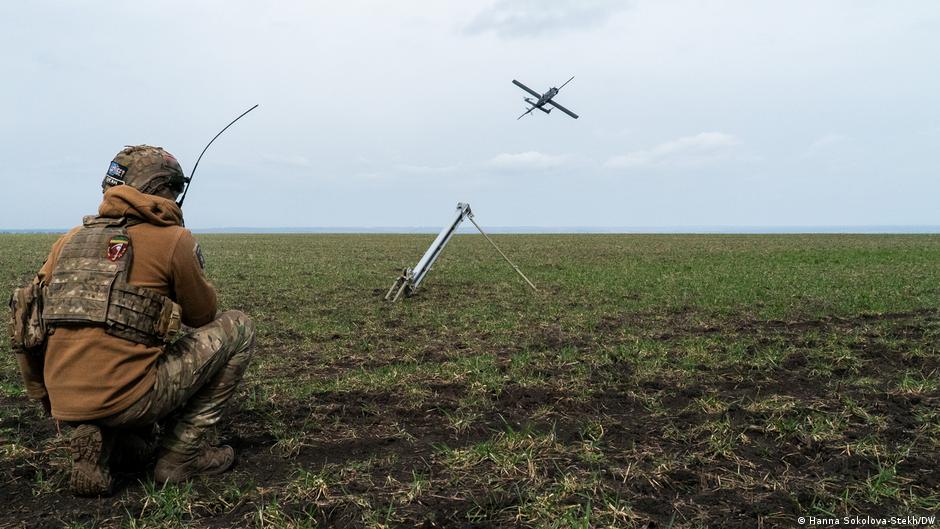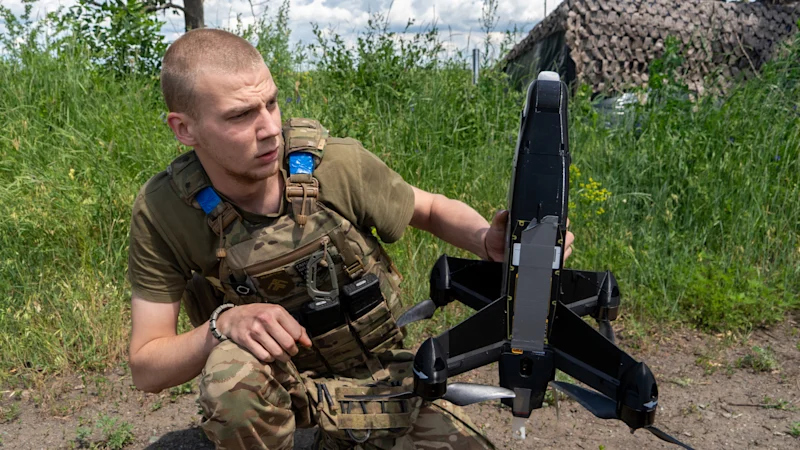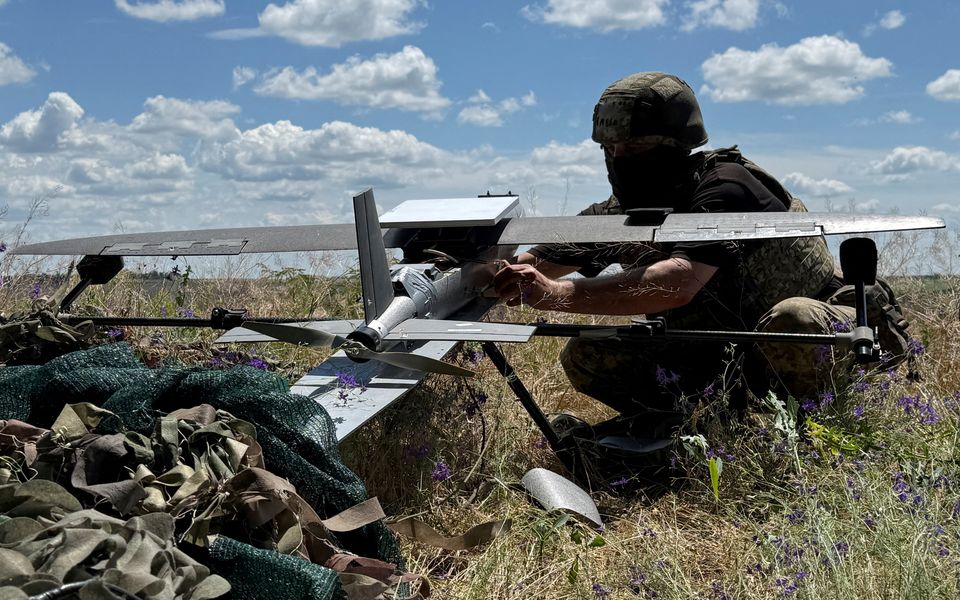
A serviceman of the 25th Separate Airborne Brigade of the Air Assault Forces of Ukraine prepares to launch a Hornet middle strike drone towards Russian troops from a position near a front line, amid Russia's attack on Ukraine, in Donetsk region, Ukraine June 23, 2026. [Stringer/Reuters]
A few months ago, the head of Germany’s giant arms manufacturer Rheinmetall saw fit to mock Ukraine’s efforts to resist Russia with many cheap drones. “This is how to play with Legos,” company CEO Armin Papperger scoffed in an interview with the Atlantic. “It’s Ukrainian housewives. They have 3D printers in the kitchen, and they produce parts for drones.”
Facing a tsunami of global ridicule, as Ukraine’s inspired improvisations have won the world’s admiration, the company was forced to apologize, declaring its “utmost respect” for Ukraine’s defense achievements. A couple of months later, when the United States and Israel attacked Iran, Ukraine offered its know-how in drones and air defenses to America and Gulf countries that had come under Iranian drone and missile attacks.
On Friday, South Korea’s defense minister announced that all members of the armed forces – some 500,000 people – would be trained in the use of drones, in a major restructuring of the country’s defenses. Greece, among many other countries, builds drones. The Defense Ministry’s Hellenic Center for Defense Innovation (ELKAK) is cooperating with companies in the domestic defense ecosystem to develop various types of drones and anti-drone systems.