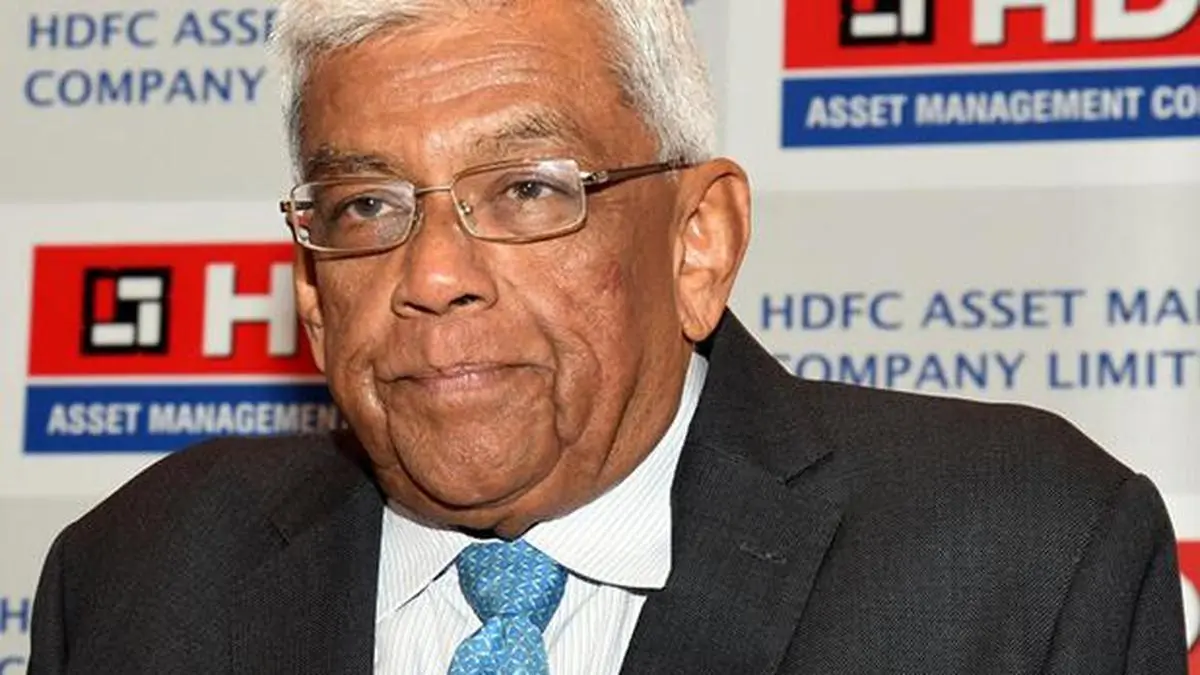
Mumbai: HDFC Bank Chairman Deepak Parekh on Monday stated that India's future growth will depend on the quality of governance in public and private sector institutions, stressing that good governance, ensuring transparency, and adhering to the spirit of the law are non-negotiable principles.Addressing the 118th Annual General Meeting of the city-based IMC Chamber of Commerce and Industry here, Parekh also said the reforms that the country is seeing today will lay the foundation for India's future growth and stressed the need for further consolidation in the banking sector."India's future growth will rest on the quality of governance of its institutions, both the public and the private sector. The premium on good governance, transparency, and abiding by the spirit of law is non-negotiable," Parekh said.There is a need to take a call on how to expedite pending judicial cases, he said, adding that land acquisition needs to be simplified and taxation regimes need better clarity and consistency.There is a strong pivot to build domestic capacity in critical sectors like defence, energy, and technology, amongst others, he said."The funding needs are immense, and India will need to rely on both domestic capital as well as a lot of international funding," he said."Today, more than ever before, self-reliance and faith in India have become a crucial strategy and an economic necessity for us. Similar strategies are being pursued by all major economies," Parekh said."We have been advocating that India needs a few large banks rather than many small banks. The public sector banks have already consolidated, but there is a case for further consolidation. The government has announced this and is working toward this momentum."Raising foreign direct investment limits in public and private sector banks will be beneficial and bring much-needed foreign exchange into the country, according to Parekh.Stating that foreign capital flows are closely tied to the geo-economics environment, he said, "As we see, geopolitics is the new macroeconomics. We cannot predict the future, but there is a unanimous view that the India of tomorrow will be exponentially better than the India of today"."The MSME segment, which accounts for a third of India's GDP, has the potential to unlock significant growth. Yet it remains most vulnerable to economic shocks. Building in these projections is imperative for businesses to thrive and to attract investors," Parekh stated.He also said that achieving the ambition of becoming a USD 30-trillion economy by 2047 requires scale and speed."The Indian economy will need to grow substantially from today's levels over the next two decades to meet this goal," he said.India has demonstrated a rare combination of political, economic, monetary and fiscal stability, he said, maintaining that medium-to-long term macro fundamentals remain structurally intact.The government has demonstrated its commitment to staying on the reform express, he said, noting that the government has implemented taxation reforms and ease of doing business reforms."The reforms that we are seeing today will lay the foundation for India's future growth. The financial sector, which is very heavily involved in resilience today, with gross non-performing loans of all banks put together having been at a multi-decade low of under 2 per cent and the banks' capital buffers at an adequate level, he said.Geopolitical tensions have disrupted businesses unexpectedly, and resilience is getting tested every time, he noted.
Future growth will depend on governance quality in public, private institutions: HDFC's Parekh
India's future prosperity hinges on robust governance across public and private sectors, emphasized HDFC Bank Chairman Deepak Parekh. He highlighted that ongoing reforms are building a strong foundation for growth, with a call for further banking sector consolidation. Parekh also stressed the immense funding needs for domestic capacity building and the crucial role of self-reliance in a shifting global landscape.
542 words~2 min read