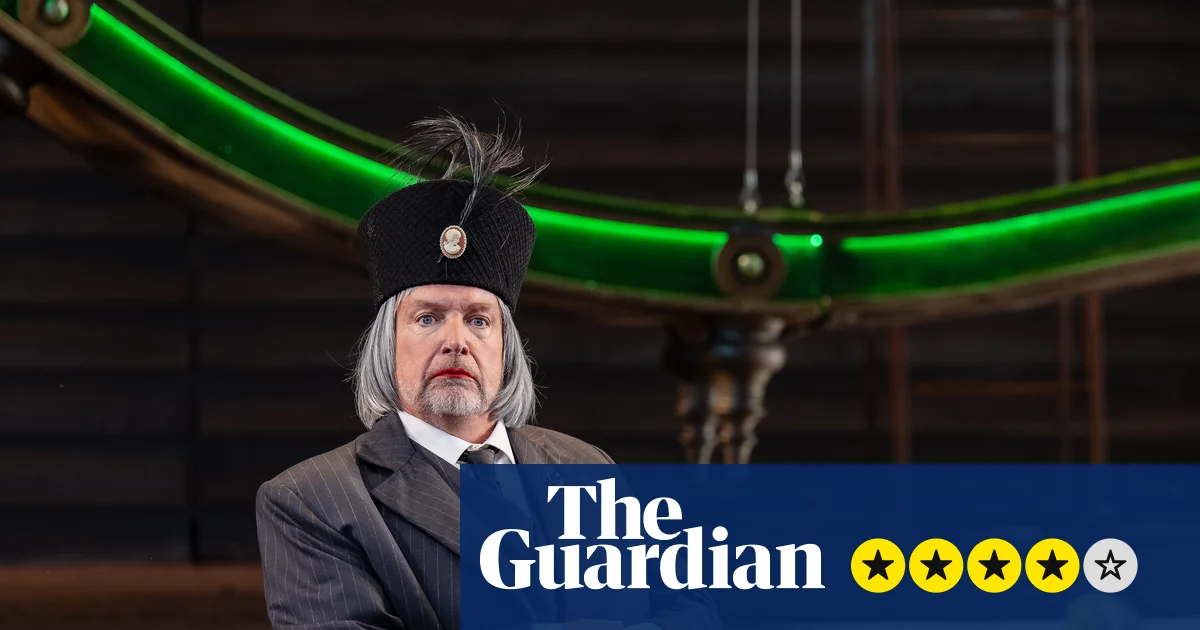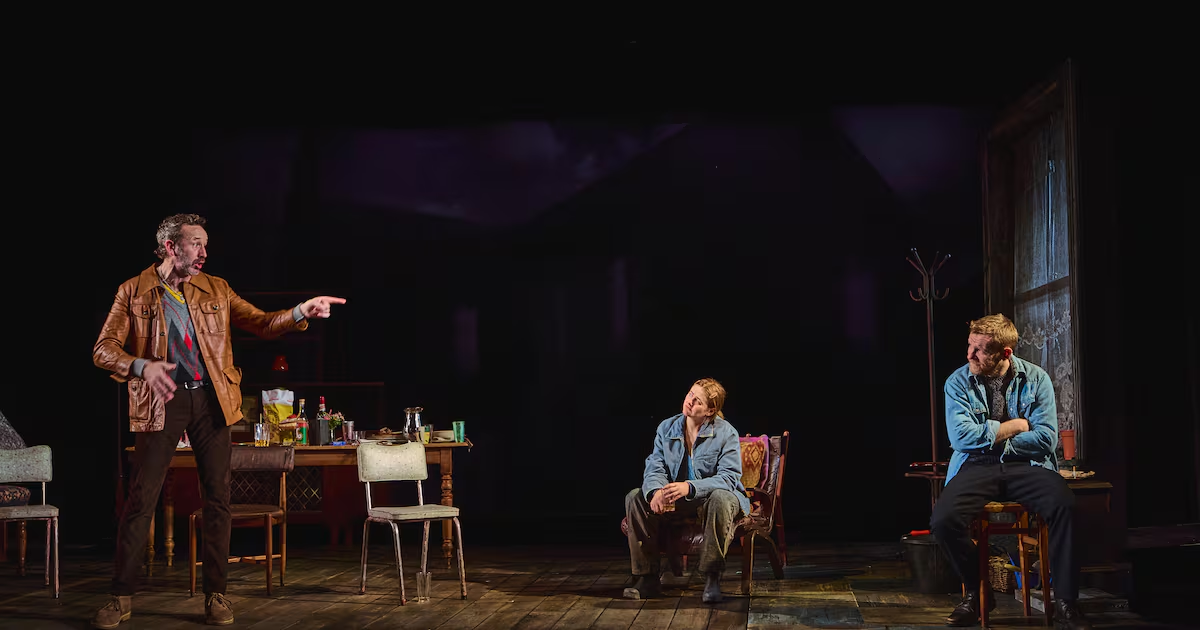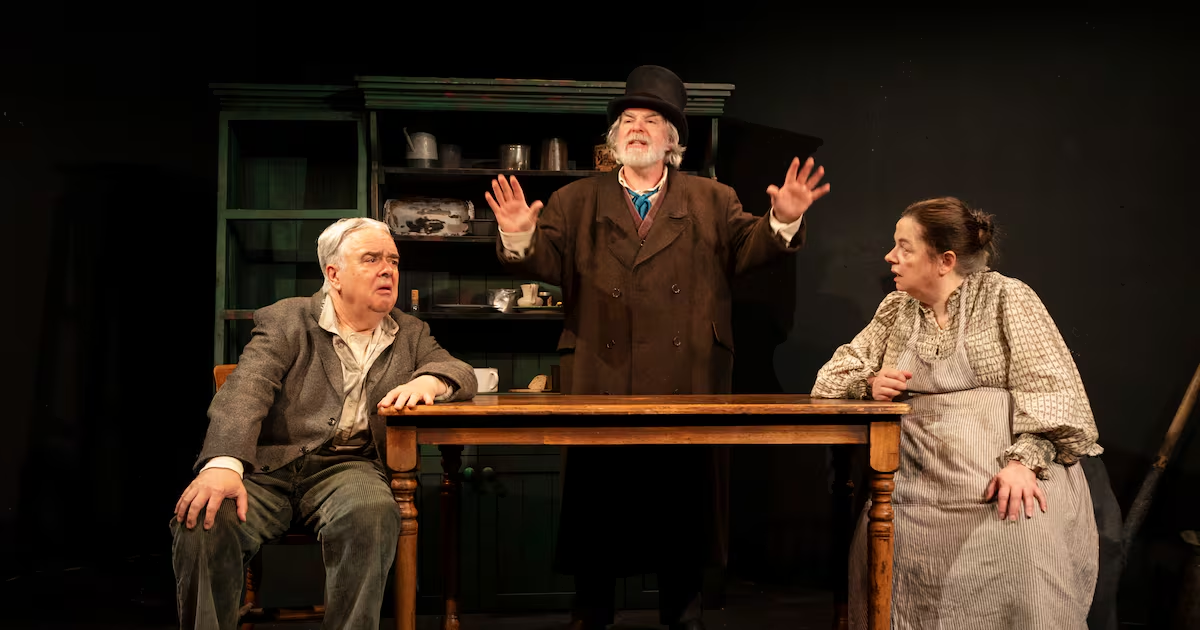
The Magic GlassesBewley’s Cafe Theatre, Dublin★★★☆☆Written in 1913, and receiving a rare revival, George Fitzmaurice’s one-act comedy, first performed at the Abbey, is a curiosity championed by a band of academics who argue that its author was unfairly maligned by the theatrical establishment and deserves reinstatement to the canon. It’s clearly a passion project for its director, Conall Morrison.The play tells the story of Padden, a farmer, who is played with trembling sweetness by Jonathan White, and his slightly more competent wife, Maineen, who is brought to life by Helen Norton. They live in fear of their 38-year-old son, Jaymony (a memorably bullying Ross Gaynor), who refuses to leave the attic where he spends his days absorbed by a collection of magic glasses.Bewildered by his behaviour, and desperate for a cure, Padden and Maineen enlist the services of a travelling miracle worker, Mr Quille, who is played by Malcolm Adams with great drunken swagger, delusion and charisma. Sinéad Lawlor’s costumes make clear the social hierarchy of the play: Mr Quille, in top hat and cane, cuts a more affluent and vain figure than the humbly dressed, threadbare country people he so gladly exploits.Visually, the production resembles a late-19th-century rural realist painting. Liam Doona’s cramped kitchen interior, with its worn furniture and battered tin mugs, is beautifully complemented by Colm Maher’s warm lighting.So what exactly are these magic glasses? That’s the question driving the play, and one that Mr Quille attempts to answer by interrogating Jaymony. Unfortunately, the explanation is surprisingly muddled, not helped by Fitzmaurice’s archaic dialogue. One imagines spectacles that reveal another reality, but the “glasses” themselves seem more like differently coloured drinking glasses, each offering a separate vision.One reveals magnificent palaces, another beautiful women, while a third allows Jaymony to see himself as the heroic leader of an army. After experiencing such intoxicating visions, why would he ever choose to return to the drab realities of farm life?The Magic Glasses: Helen Norton, Ross Gaynor, Malcolm Adams and Jonathan White. Photograph: Al Craig A play about people disappearing into strange objects that offer a more seductive reality than everyday life inevitably speaks, however accidentally, to our phone-addicted age. Perhaps that’s why Morrison is one of those who believe The Magic Glasses to have been worth reviving. (This is reportedly the first professional production since 1967.) It’s hard to think of many other reasons.It seems less likely that Fitzmaurice was the victim of a conspiracy than that Lady Gregory and WB Yeats sidelined The Magic Glasses because they didn’t think it was very good. That seems a fair evaluation. What might ultimately defeat you isn’t the rambling dialogue or the baffling plot but Fitzmaurice’s view of people. They gossip, bully and swindle. They’re superstitious, incurious and emotionally limited. Jaymony calls his home “an ugly spot, the people ignorant, grumpy and savage,” and the play offers little reason to disagree.Ireland at the turn of the 20th century was probably grim in many ways, but was life really so small, so mean, so devoid of spiritual feeling or beauty? It’s a shame, because everything around the script – the acting, the direction and the design – is excellent.The Magic Glasses is at Bewley’s Cafe Theatre, Dublin, until Saturday, July 18th
The Magic Glasses review: Excellent acting, direction and design. It’s just a shame about the script
George Fitzmaurice’s one-act comedy from 1913 is clearly a passion project for Conall Morrison, who is directing it at Bewley’s Cafe Theatre. It can be hard to see why
538 words~2 min read