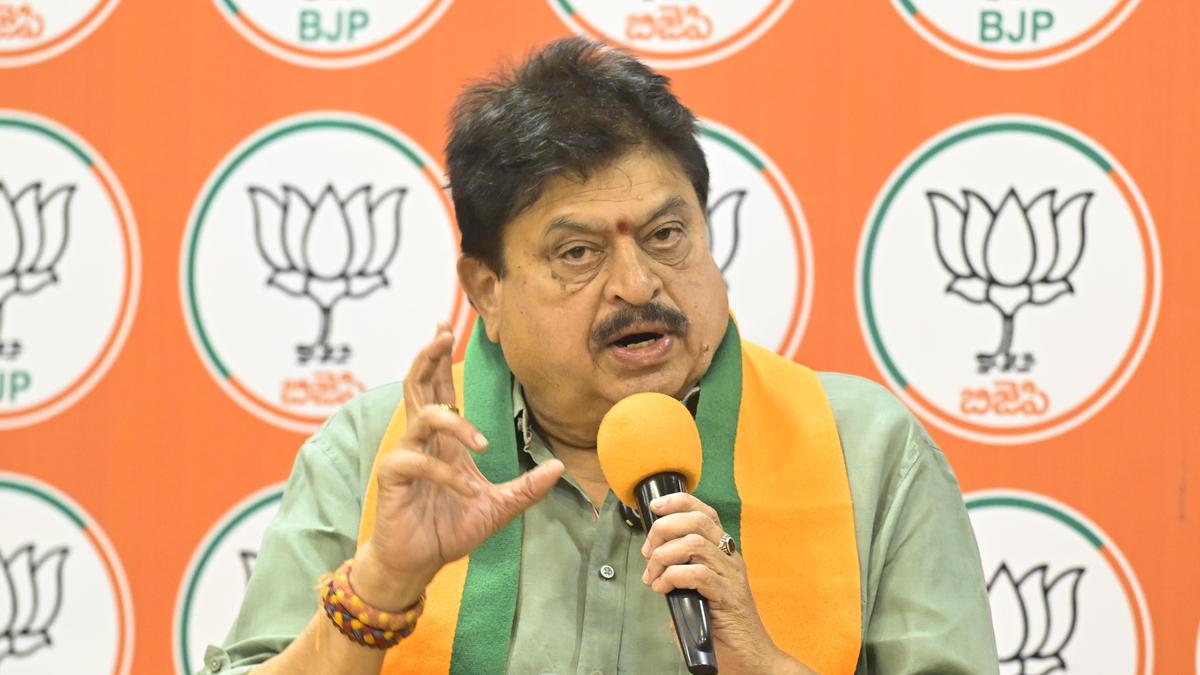
Stating that the claims of the Shirpur model’s success in Aland taluk are at odds with the ground reality, a BJP party worker, Basavaraj Shastri, has demanded an independent inquiry into the project, contending that several villages in the taluk continue to face acute drinking water shortages despite crores of rupees being spent on it.Addressing a press conference in Kalaburagi on Monday, Mr. Shastri questioned the claims of success, pointing out that if water problem in the taluk was indeed resolved, the issue would not have figured prominently in a recent Task Force Committee meeting nor would there have been a demand for an additional ₹4.37 crore to address drinking water shortages.He said that even Sarasamba, native village of MLA B.R. Patil, is receiving drinking water only once every 10 days. The demand for the release of water from the Narayanpur Canal because of inadequate water in the Bhima river course is another indication of the prevailing water scarcity in Aland taluk, he said.Mr. Shastri said that 24 gram panchayats in Aland taluk continue to face acute drinking water shortage. Since the onset of summer, several villages have become dependent on water supplied through tankers, he said.He said that despite spending crores of rupees under the Shirpur model project, there has been no significant improvement in groundwater levels. “The project has become merely a bill-raising exercise with no tangible benefit to the people,” he said.Seeking greater transparency, Mr. Shastri demanded that the works executed under the Shirpur model be subjected to an independent technical audit and that details of expenditure be placed in the public domain.He also said that officials have failed to provide information sought under the Right to Information Act following which the matter has been taken up before the State Information Commission. Published - June 29, 2026 07:29 pm IST
BJP seeks independent audit of water supply project in Aland
BJP demands an independent audit of Aland's water supply project, citing discrepancies between claims and reality in local water shortages.
303 words~1 min read