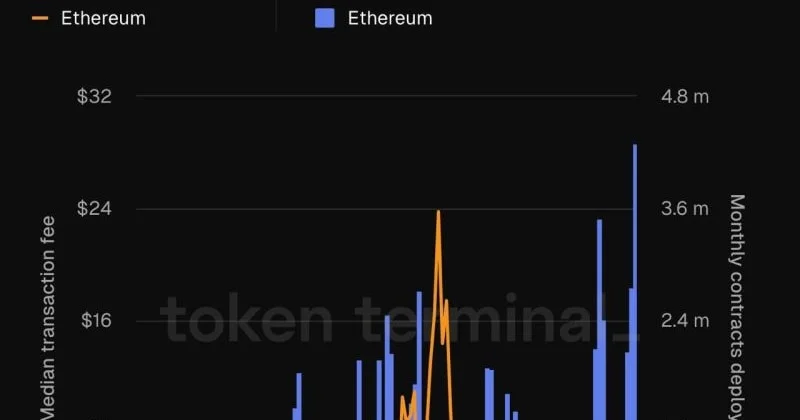
When I first started architecting blockchain solutions over a decade ago, the dream was simple: build decentralized applications that anyone, anywhere, could use without friction. Reality, however, had other plans. Anyone who tried to mint an NFT or swap tokens on Ethereum during the 2021 bull run remembers paying $50, $100, or even $200 in gas fees for a single transaction. That painful experience exposed Ethereum's Achilles' heel — scalability. The good news is that the ecosystem responded with one of the most elegant engineering answers in Web3: Layer 2 solutions.
The Root of the Problem: Why Ethereum Cannot Scale Alone
To understand why Layer 2 matters, we need to revisit the blockchain trilemma — the tension between decentralization, security, and scalability. Ethereum's base layer (Layer 1) prioritizes the first two, processing roughly 15 to 30 transactions per second (TPS). Compare that to Visa's theoretical capacity of 24,000 TPS, and the gap becomes obvious.
The constraint is intentional. Every full node must validate and store every transaction to preserve decentralization. Simply increasing block size or reducing block time would push hardware requirements higher, centralizing the network into the hands of a few well-funded operators. In my consulting work, I have seen institutions abandon promising tokenization projects precisely because Layer 1 throughput could not support their settlement volumes.