Click here to visit the Scotland home page for the latest news and sport See more Daily Mail on Google - save us as a Preferred SourceBy NICK FORBES Published: 12:17 BST, 29 June 2026 | Updated: 12:17 BST, 29 June 2026
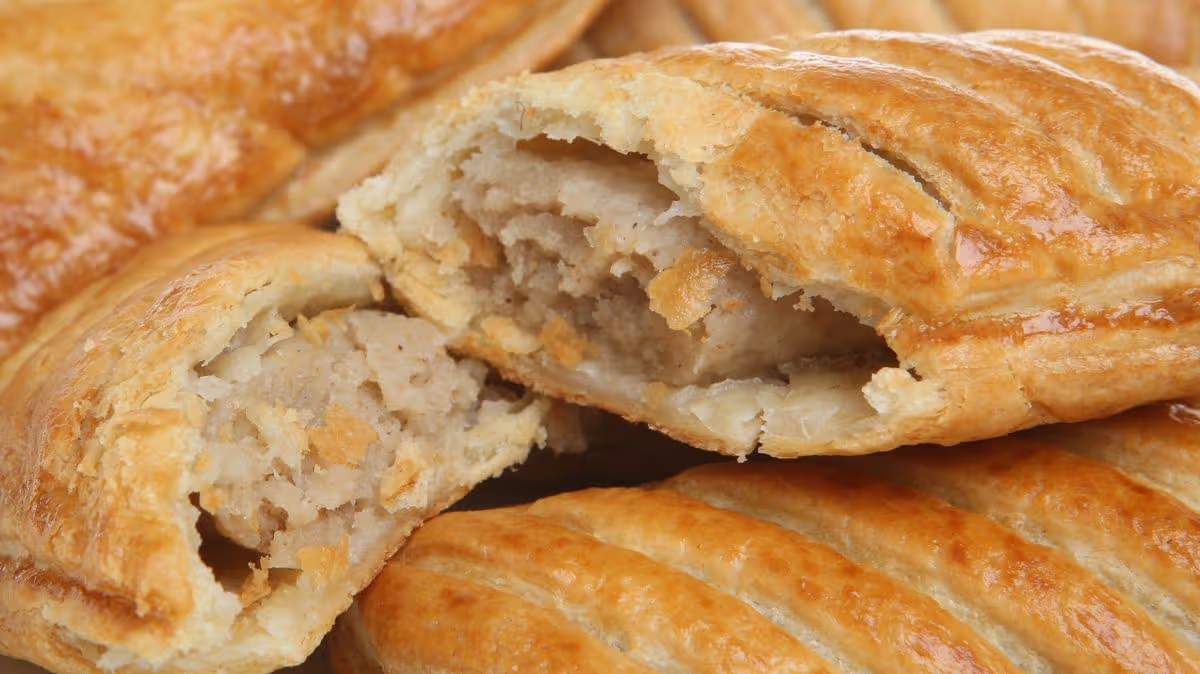
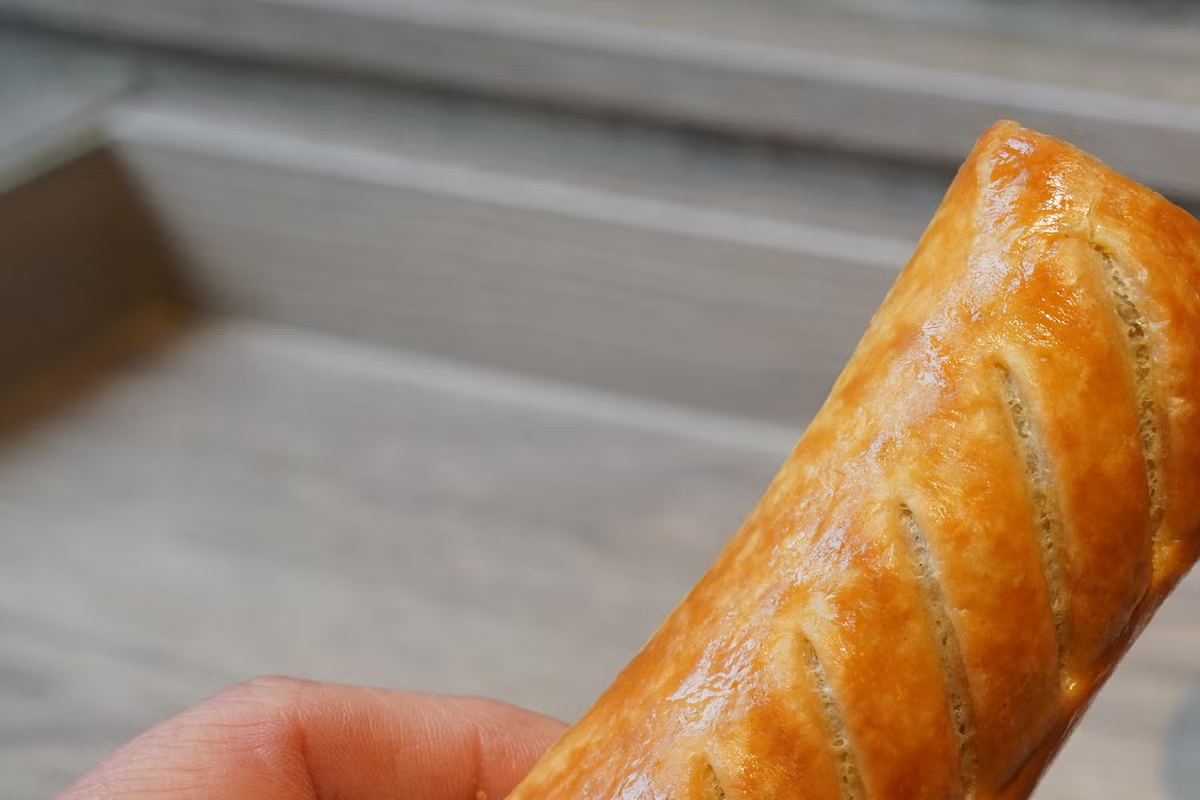
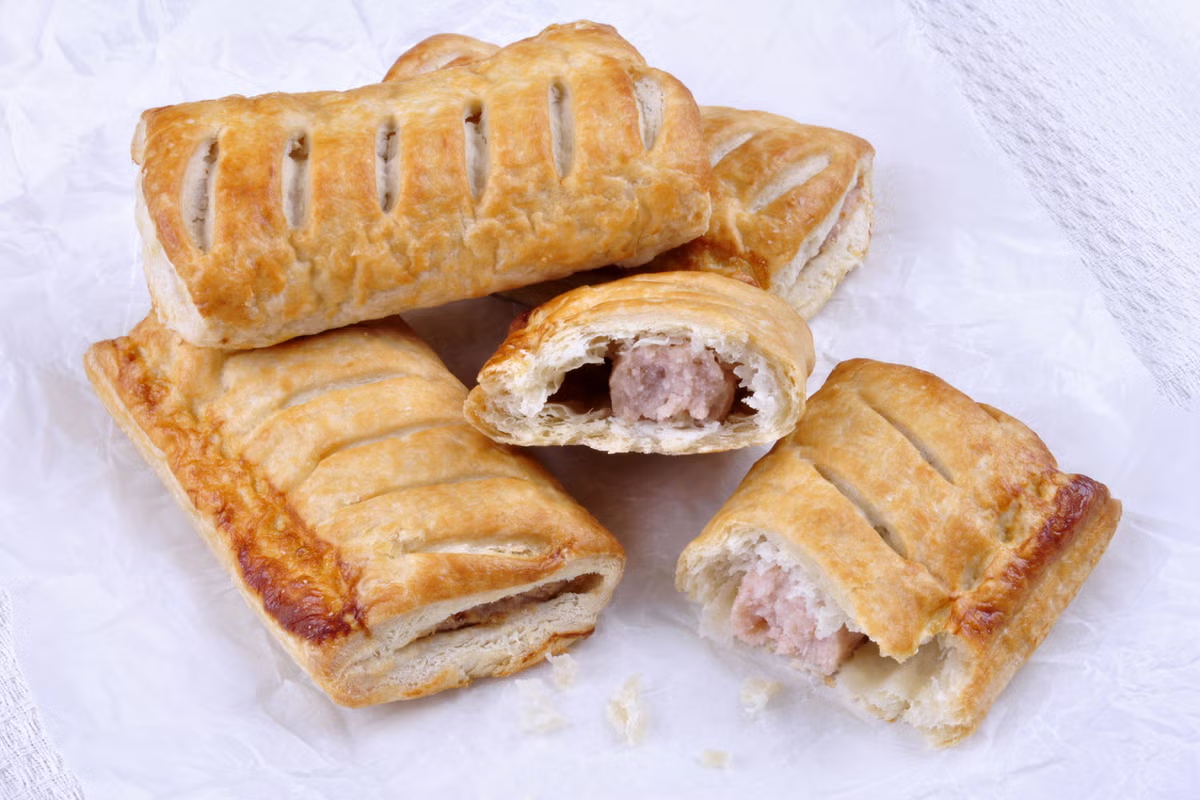
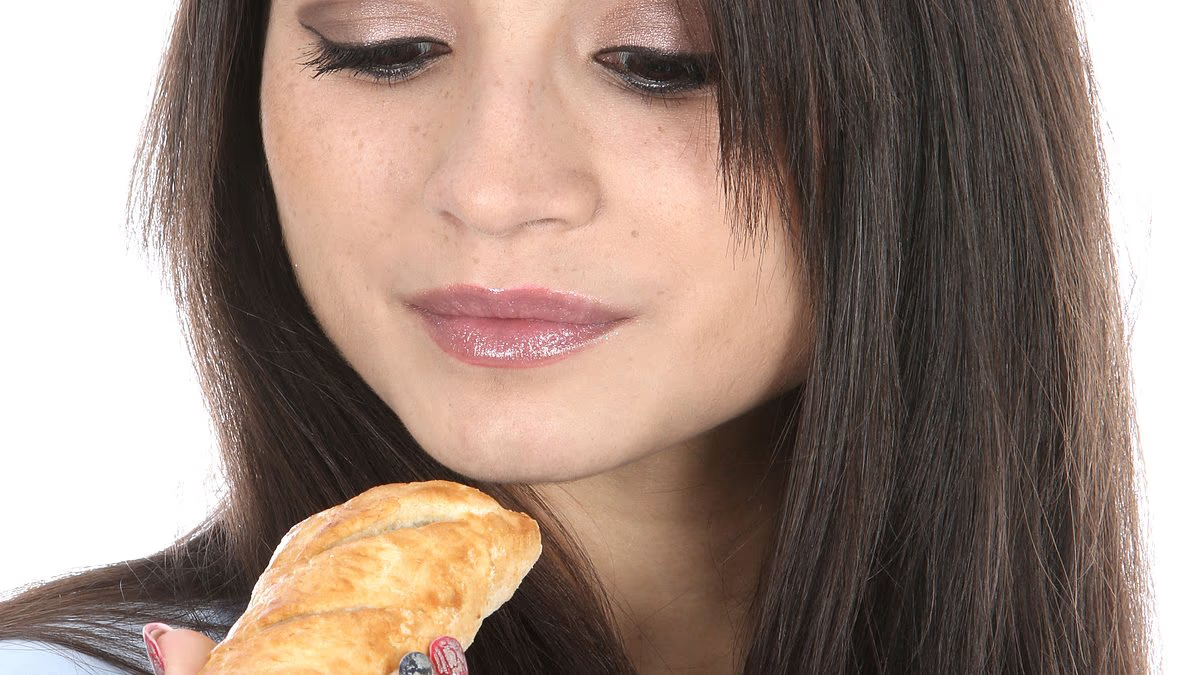
It is the latest treat to fall foul with the health police.And now Scots scientists are trying to create a less artery bursting version of sausage roll without compromising its flavour or texture.Up to 15 million of the puff pastry covered snack are sold in the UK every week each containing more than 60 per cent of an adult’s recommended daily saturated fat intake.Researchers at Heriot-Watt University in Edinburgh are developing a new way to make their flaky, layered pastry, saying this could make it ‘significantly’ healthier.If it works, the team said the process could be applied to a range of popular pastries.Professor Stephen Euston, from the university’s School of Engineering and Physical Sciences, said: ‘We want to lower the level of saturated fat while keeping the taste and texture that people love. Scientists are working on a way to make one of Britain's favourite snacks healthier ‘We’re focused on sausage rolls, but this also applies to other baked goods that contain laminated pastry such as croissants, Danish pastries and sweet or savoury turnovers.‘Reducing the saturated fat content of these ubiquitous snacks could have a very positive impact on the nation’s health and waistlines.’The puff pastry used in sausage rolls and other baked goods relies on fat for its distinctive flaky texture.The team is hoping to find a way to replace the solid fats currently used with healthier liquid oils like sunflower or rapeseed, which are lower in saturated fat.Using a process called oleogelation they attempt to turn them into a ‘solid-like fat’ in a bid to mimic the behaviour of traditional fats and deliver the same flaky texture.Prof Euston explained: ‘Making flaky pastry is surprisingly complicated.‘The fat is not just there for flavour - it plays a crucial structural role in the pastry.‘You need the fat sitting between the layers of dough so that when the pastry bakes, steam forces those layers apart and gives you that flaky texture people expect.‘Simply replacing the fat with a healthier oil doesn’t work, because liquid oils lack the structure needed to separate the pastry layers.’The team said they are focusing on oils from crops that can be grown in the UK, in order to minimise the impact of the approach on the environment.They also think there’s the potential to bypass the chilling process required by traditional laminated pastry.Prof Euston said: ‘We are hoping our oleogels will stay stable at higher temperatures, which means manufacturers may not have to chill the pastry as much.‘If we are lucky, they might not need to chill it at all.’The 10-month project is seeing researchers at Heriot-Watt working with industry collaborators New Food Innovation and AB Mauri.The team has been funded by the UK Research and Innovation Engineering and Physical Sciences Research Council (UKRI EPSRC), with the aim of moving their modified pastry from the lab into the kitchen, and putting its taste to the test with real people.Dr Andrew Bourne, UKRI ESPRC’s executive director for innovation and partnerships, said: ‘By taking innovative food science out of the lab into the kitchen and testing it with everyday consumers, it has the potential to make the nation’s favourite snacks healthier and make a genuine difference to our health and wellbeing.’Alongside pastry, the researchers are also exploring whether the same technology could reduce saturated fat in vegan cheese alternatives.