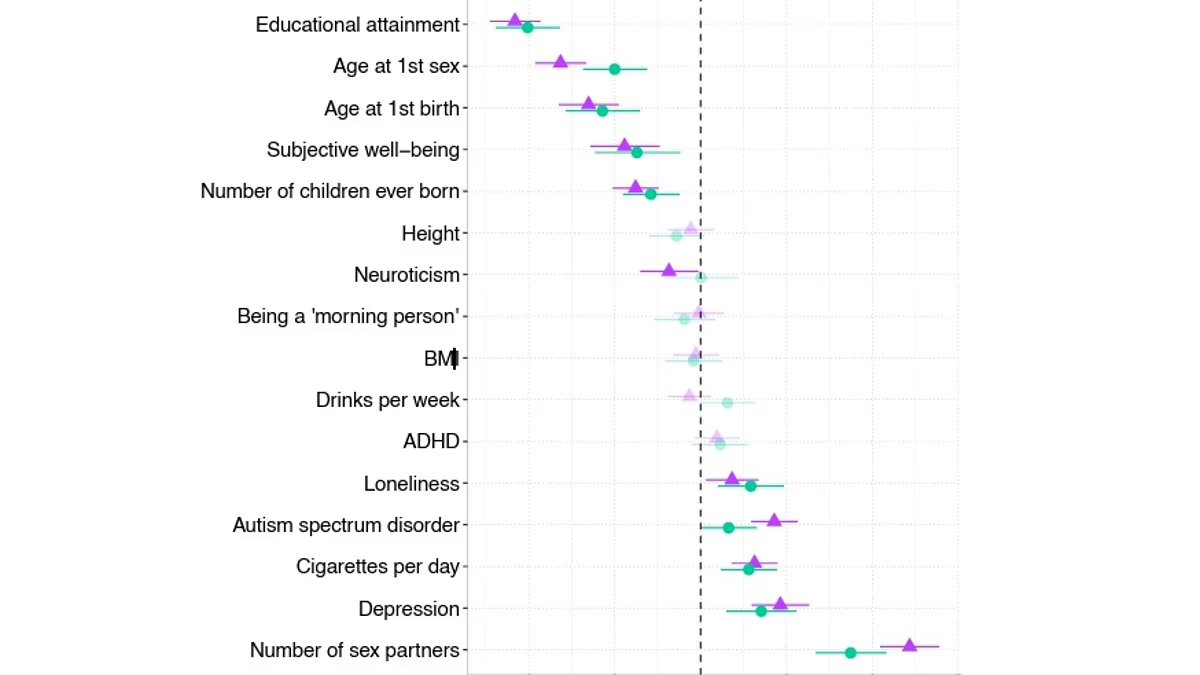
If you’re unlucky in love, your DNA could be to blame.Scientists have discovered that the genes you inherit may influence whether you're more likely to split from your partner or stay together.Researchers found that certain genetic traits linked to higher education, greater wellbeing and having children later in life were associated with more stable relationships.Meanwhile, people with genetic tendencies linked to smoking, risk-taking and having sex at a younger age were more likely to experience a relationship breakdown.The researchers stress there is no such thing as a single 'divorce gene' that is solely responsible for your love life.Instead, thousands of tiny genetic differences appear to combine to nudge people's chances of a relationship lasting.Lead researcher Ruth Eva Jørgensen, a sociologist at the University of Oslo, said: 'Our destiny does not lie in our genes, but if a relationship were a jigsaw puzzle, our genetics would make up some of the pieces that can influence the risk of a breakup.'‘It is the sum of these that can give some of us a slightly higher or lower risk of leaving our partner.’ Ms Jørgensen's dissertation included previous papers that found genetic traits linked to higher education and greater wellbeing are linked with more stable relationships. However, people with genetic tendencies linked to loneliness, smoking and promiscuity were more likely to have a relationship breakdownThe study analysed DNA from thousands of participants in the Norwegian Mother, Father and Child Cohort Study, one of the world's largest family health studies.Rather than searching for a single gene responsible for relationship problems, researchers examined 'polygenic scores' – measures that combine the effects of thousands of genetic variants associated with different traits.The team found that people with higher genetic scores for educational attainment, subjective wellbeing and an older age at first birth were less likely to see their relationships end.By contrast, those with higher genetic scores linked to smoking and earlier sexual debut had a modestly increased risk of separation.One surprising finding was that people with a higher genetic tendency towards neuroticism were slightly less likely to experience a breakup.‘One could think that neuroticism would lead to an increased risk of relationship breakdown,’ Ms Jørgensen said. ‘On the other hand, if you are somewhat more anxious and vulnerable, you may need the security a relationship provides.’To rule out the possibility that family upbringing was driving the results, the researchers compared siblings, who share much of the same childhood environment but inherit different combinations of genes.When genetic differences between brothers and sisters were linked to different relationship outcomes, it strengthened the evidence that inherited DNA plays a role. Known for his iconic 'we were on a break' drama, three failed marriages, and being left at the altar, Ross Geller from the sitcom Friends is arguably very unlucky in loveOverall, the researchers estimated that common genetic variants explained around nine per cent of the differences in women's likelihood of relationship breakdown and around three per cent in men.Ms Jørgensen emphasised that environmental factors remain crucial.'The same genetic variants can have different impact depending on what kind of environment, opportunities and relationships you encounter throughout life,' she said.The researcher warned against interpreting the findings to mean relationships are predetermined by biology.'Genes contribute to making us different, but they act together with our life history, our environment, our partner and everything else that happens in life,' she added.The findings suggest that while our genes may stack the odds slightly in one direction or another, the success of a relationship still depends overwhelmingly on the choices people make, the partners they choose and the lives they build together.Ms Jørgensen published her findings in her dissertation, titled: ‘Partnership Dissolution, Intergenerational Consequences and Partner Influence. A Socioeconomic Perspective on Family Dynamics.’
Unlucky in love? DNA influences relationship breakdowns, study says
If you're unlucky in love, your DNA could be to blame. Scientists have discovered that the genes you inherit may influence whether you're more likely to split from your partner or stay together.
617 words~3 min read