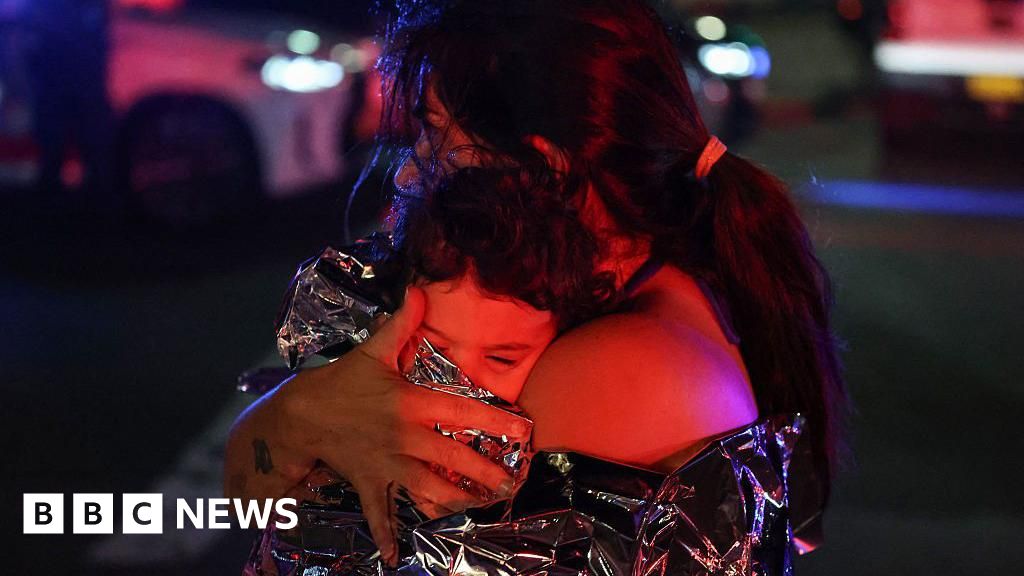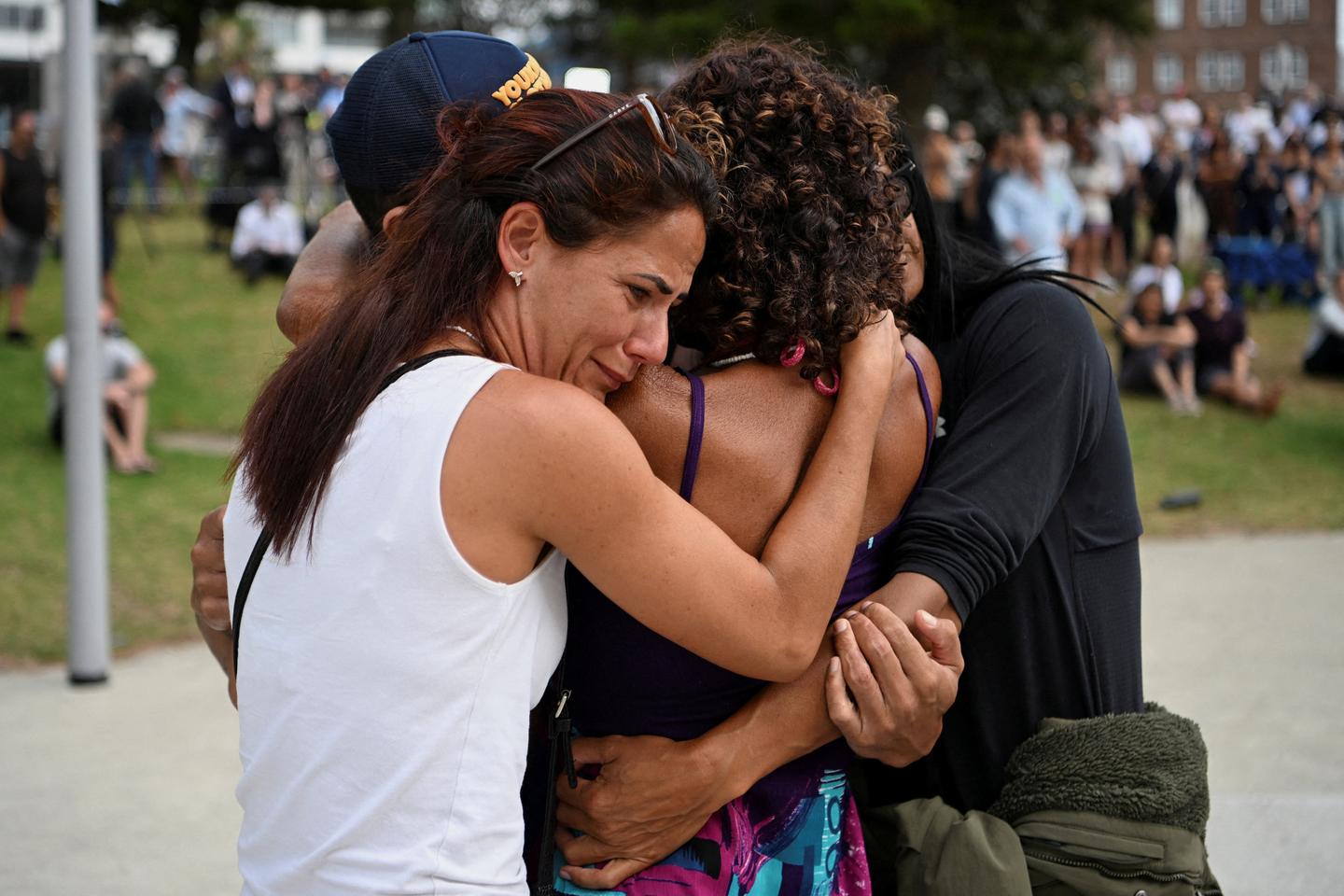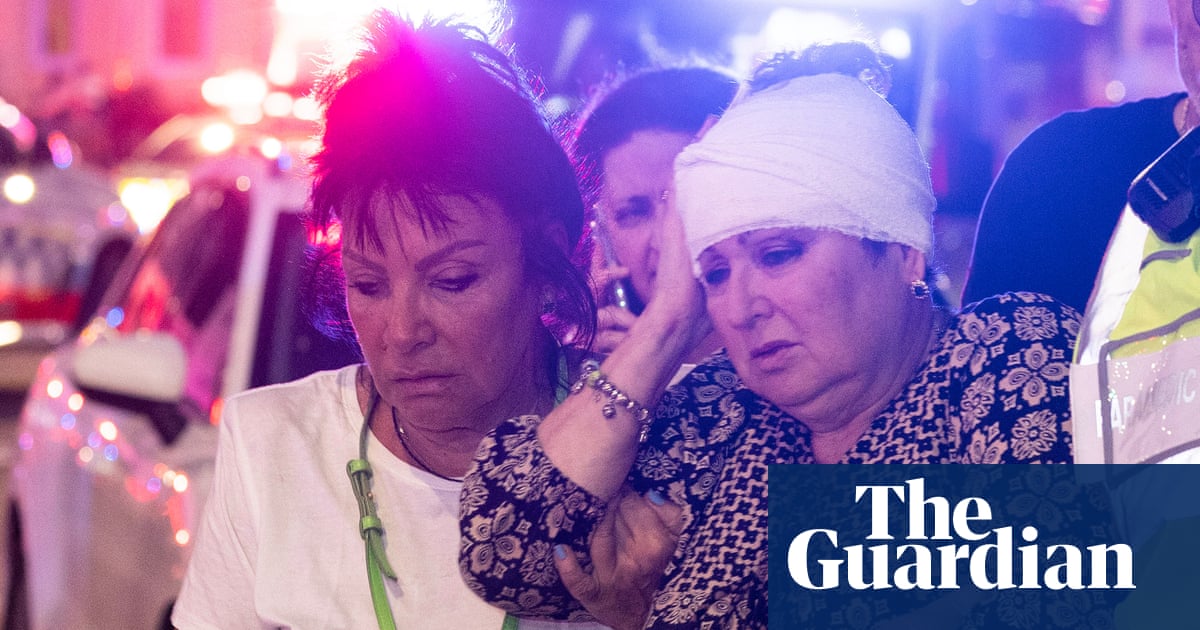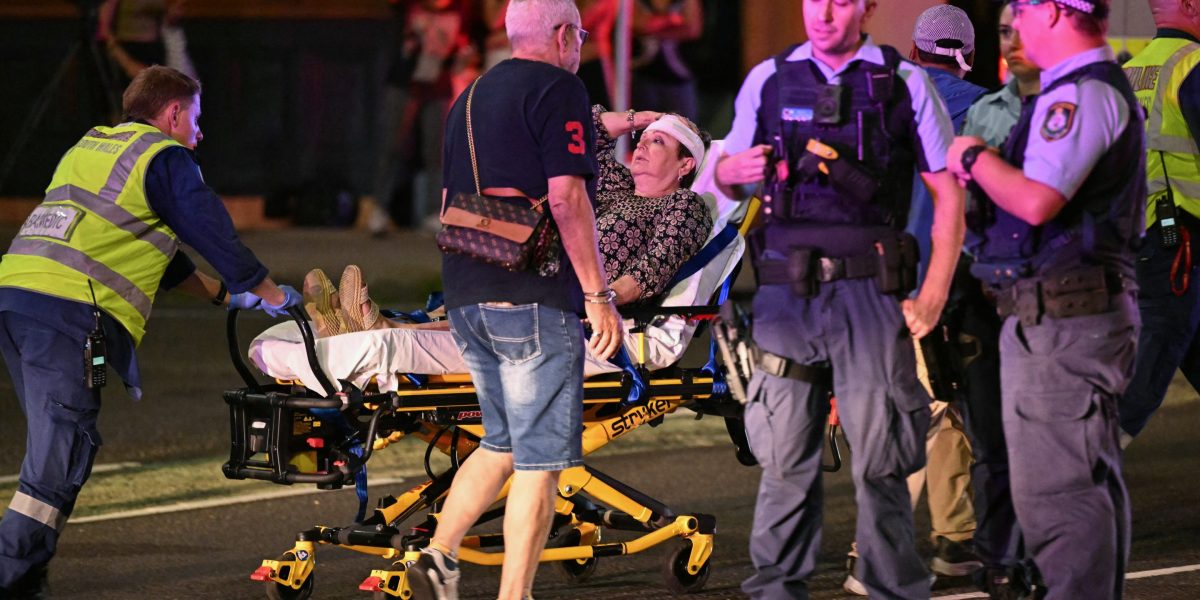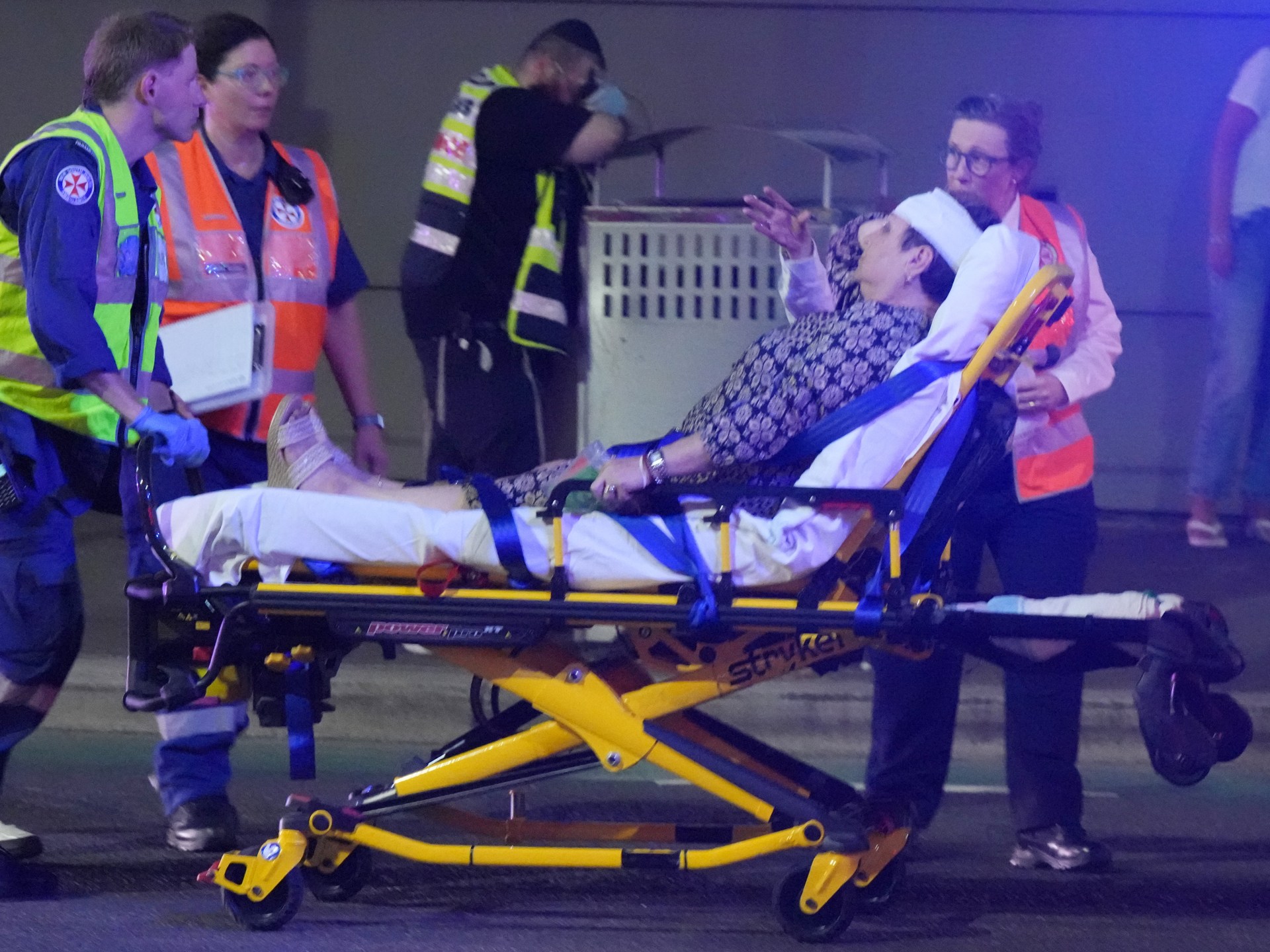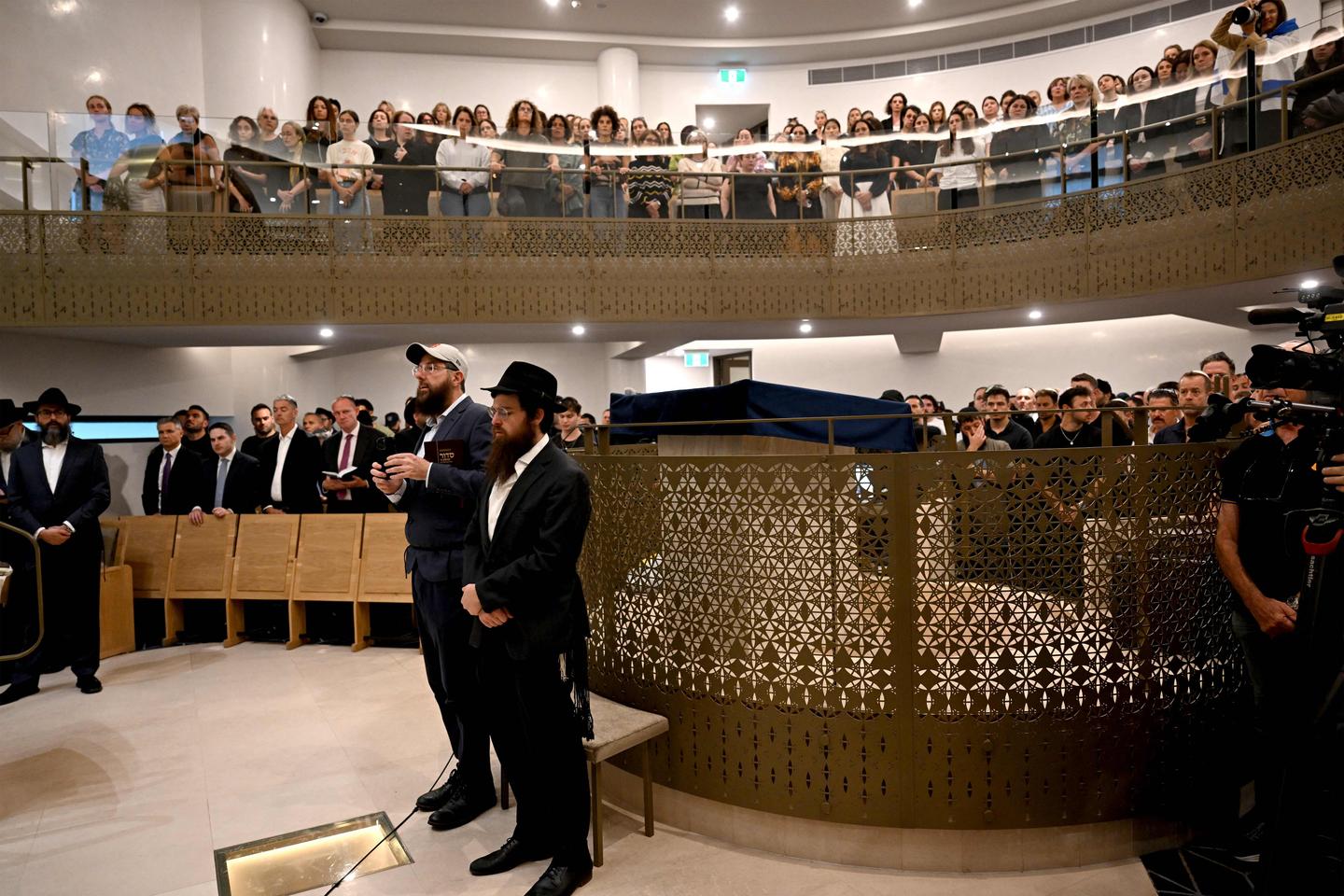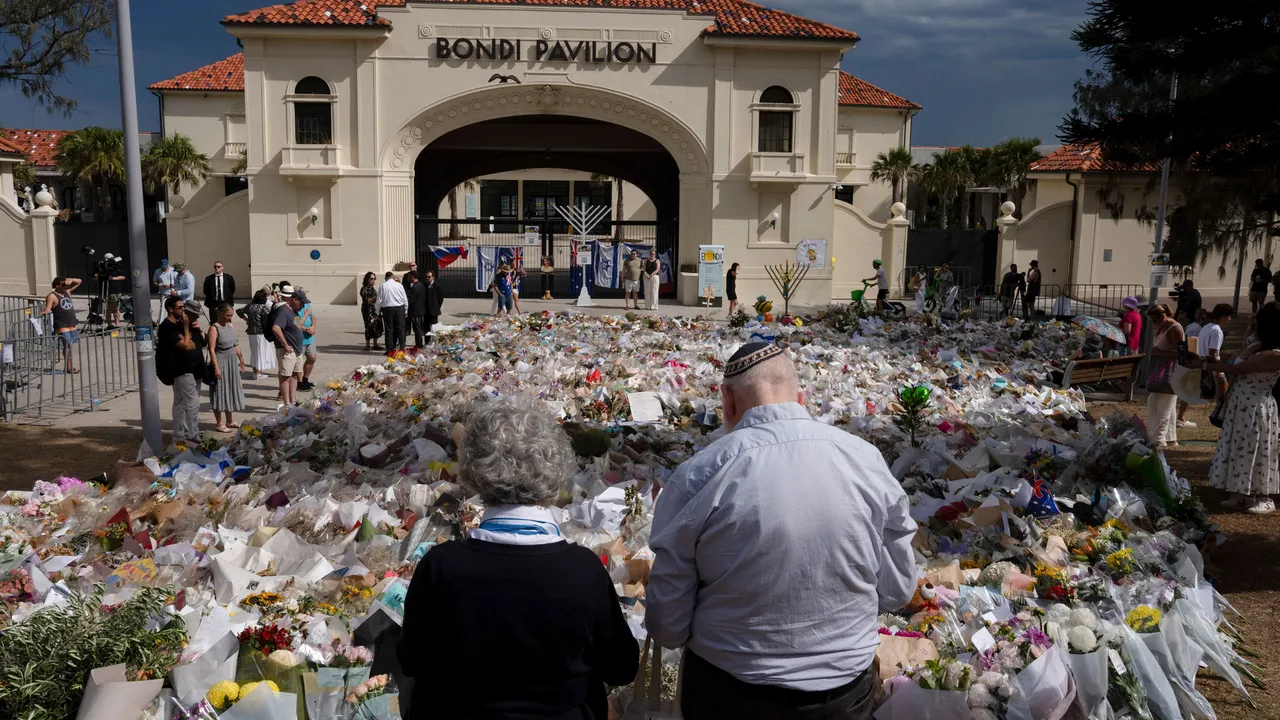
On the evening of December 14, 2025, two gunmen opened fire on a crowd of several hundred people celebrating the first night of Hanukkah at Bondi Beach, in Sydney, Australia. In six minutes and eleven seconds, they had killed fifteen people and injured at least forty more. For those of us who live in Australia, there was a surreal quality to witnessing the frenzied panic of a mass shooting unfold against one of the country’s most iconic backdrops. Footage of civilians scrambling for cover or compressing bullet wounds typically arrives here from overseas. In 1996, a massacre at Port Arthur, a popular tourist destination in the island state of Tasmania, killed thirty-five people and galvanized the country into passing sweeping gun reforms—the biggest advance in gun-control policy in Australian history, and possibly anywhere in the world. Since then, mass shootings of this scale have been almost unthinkable.For many Jewish Australians, however, the Bondi attack felt less like a rupture of the status quo than a culmination of an alarming trend. Since October 7, 2023, Jewish spaces in Australia have been subject to a sharp rise in harassment. Jewish schools, kosher businesses, and the offices and homes of Jewish politicians have been vandalized. In December, 2024, a synagogue in Melbourne was destroyed in an arson attack; seven months later, another was set alight during Shabbat. For a community of a hundred and fifteen thousand, many of whom are descended from Holocaust survivors, these incidents have been profoundly unsettling. Until December, there had never been a lethal antisemitic attack here. After Bondi, whatever sense of sanctuary that fact conjured was shattered.In the immediate fallout of the mass shooting, Australia’s political discourse was dominated by two topics, gun control and antisemitism, with some casting the issues in oppositional terms. The current Prime Minister, Anthony Albanese, of the center-left Labor Party, addressed both, proposing to bolster gun laws and condemning the massacre as an antisemitic act of “pure evil.” But many politicians on the right argued that the attacks were solely the consequence of Albanese’s failure to take antisemitism on Australian soil seriously.Yet soon, details emerged suggesting that regulatory shortcomings did indeed play a central part. The shooters were a father and son, Sajid and Naveed Akram. Sajid moved to Australia from India in 1998; Naveed was born in Australia in 2001. The pair seemed to be motivated by religious extremism. (When police searched the car that the Akrams drove to the beach, they discovered several ISIS flags.) Ostensibly, the six firearms they owned—which included high-powered rifles and shotguns—had been acquired legally by Sajid, even though security services had been aware of both men since 2019, when they identified Naveed as potentially linked to an Islamic State cell. Investigators also found that several of the guns they used could fire eight rounds per second—a feature that the policies passed in the nineties were meant to restrict to holders of the most stringent firearms licenses. Since then, however, gun companies have redesigned their products to exploit loopholes and make them available to broader markets. (Sajid was shot by police and died at the scene. Naveed has been charged with, among other things, murder and terrorism. His trial is yet to be scheduled.)Speaking the morning after the shooting, Albanese sought to reinforce Australia’s existing suite of gun-control laws, which were first championed by the conservative former Prime Minister John Howard. These laws are considered by almost every Australian to be a point of pride, and their many successes included a ban on all automatic and semi-automatic weapons, stringent storage and licensing requirements, and a twelve-month buyback scheme whereby gun owners were paid the market value of any prohibited guns that they owned and handed in.Howard unveiled his reforms in January, 1996, less than two weeks after a man used an AR-15 in the Port Arthur massacre. The laws’ passage was a coup: when Howard first proposed the policies, in 1996, he had been in power for less than two months. Howard faced pushback within his own ranks—the Liberal Party, to which he belongs, long formed a coalition with the more conservative, more gun-friendly National Party, which had previously resisted any push for stricter legislation. He also faced aggressive opposition from Australia’s gun lobby, which accused Howard of diverting Australians’ attention from the real causes of mass shootings: inadequate policing, violence in movies and video games, and the breakdown of social harmony and the nuclear family. When Howard campaigned with the leader of the Nationals in Australia’s vast rural regions, they were sometimes met with open hostility—that June, Howard addressed a three-thousand-person pro-gun rally in a country town while wearing a bulletproof vest. At the fringes of the debate, the tone could sometimes be genuinely threatening. Nevertheless, Howard kept his nerve. The reforms were not a distraction, he insisted, but represented the collective aspiration of the Australian people not to go down “the American path.”By all measures, Howard was right. The reforms were implemented nationwide in Australia in 1998. In America, there have been thirty-seven mass shootings with eight or more fatalities since then; in Australia, there were none—until Bondi. Even Howard’s political and ideological opponents view the reforms as a moment of unity. Internationally, Howard’s name is often invoked to show that gun reform can be a humanitarian imperative rather than a left-wing cause. (After Sandy Hook, for example, he wrote an op-ed for the New York Times titled “I Went After Guns. Obama Can, Too.”)It came as a surprise, then, when, two days after Bondi, during a televised interview, Howard expressed contempt for Albanese’s plan for further gun reform. The massacre, Howard said, was a product of rising antisemitism. Albanese had failed to “insure that the citizens of his or her country feel safe, secure, and wanted.” As for the Prime Minister’s call for gun reform, Howard said, “We’re now being treated to a big attempt at a diversion.”One month after the shooting, I met Howard at his office in central Sydney, on a high floor of a skyscraper overlooking the harbor. (In Australia, all former Prime Ministers are furnished with offices and staff. In addition to crafting a second life as a political commentator, Howard has served as a patron of various cricket organizations.) When I walked in, he gestured at the scores of sailboats cutting across the water. “You can enjoy the view for thirty seconds, then let’s get down to it,” he said. As Prime Minister, Howard—a lifelong conservative who has lived abroad once, campaigning for the Tories in London—was known for having an almost schoolboy zeal for the job. At eighty-six, he looked a little less sprightly than he once did, but his eyes, tucked underneath famously expressive brows, betrayed an obvious eagerness to still be in the arena.Howard’s framing of what happened at Bondi very quickly became a fulcrum for the discourse. A few days after his remarks, the former Nationals leader David Littleproud echoed him almost word for word, denouncing gun control as “nothing more than a cheap political diversion” from “the real problem in this country, which is radical Islamists.” In conversation with me, Howard suggested that it was not just fringe extremism but also the climate of antisemitism that had been allowed to “fester” since October 7th that had led to the massacre. He pointed the finger squarely at Albanese, whose rhetoric, he argued, had failed to show full-throated support for the country’s Jews. “The natural and probable consequence” of this, he said, was to give “license for a continuation of antisemitism.”Since 2023, Albanese, like many other Western leaders, has presided over a country that is host to a pro-Palestine protest movement of unprecedented scale. It has involved weekly solidarity marches, encampments at all the country’s major universities, and blockades at factories producing parts for Israeli F-35s and at ports where Israeli-owned containers attempt to unload cargo. The protests have been disruptive but mostly peaceful, though some have displayed concerning features. At a march that took place on October 9, 2023, estimated to have included around a thousand people, a handful of attendees called out a phrase that was at first reported in the media as “gas the Jews,” and was eventually found by police to be “where’s the Jews.” (The demonstration’s organizers condemned the chants, claiming that they were made by a small, unaffiliated group of gate-crashers.)In Howard’s view, Albanese had allowed a “tone” and “mood” of anti-Jewish hatred to take root in Australia. As in the rest of the world, this is a line of argument that has been vigorously prosecuted by conservative media outlets and pro-Israel groups, including the Executive Council of Australian Jewry, which characterized Hamas’s October 7th attack as a “signal” for “many Islamists and left-wing extremists that it was open season on Jews.” Jillian Segal, a prominent lawyer whom the Albanese government, in 2024, appointed to serve as the country’s Special Envoy to Combat Antisemitism, thereby becoming the highest government authority on the matter, said much the same thing in a written statement published shortly after Bondi: “It began on 9 October 2023 at the Sydney Opera House. Now death has reached Bondi Beach.”The idea that Albanese has failed to address antisemitism is questionable. His response to Bondi has certainly alienated Australians across the political spectrum—when many called for him to instate a national inquiry into antisemitism, he initially resisted; then, in early February, he invited the Israeli President, Isaac Herzog, for a series of visits to Australian cities that sparked confrontations between protesters and police. But he has also consistently condemned anti-Jewish prejudice and taken official steps to address hate crimes, including by establishing a special unit within the Australian Federal Police, the country’s equivalent of the F.B.I., to investigate antisemitic threats. During Albanese’s tenure, the Australian Security Intelligence Organization has been focussed on gathering intelligence about antisemitic attacks; last August, it found that two major such incidents were carried out at the direction of Iran’s Islamic Revolutionary Guard Corps, leading Albanese to expel Iran’s Ambassador. (Iran denied the allegations.)To Howard, though, nothing Albanese has done has been strong enough, and all of it has been compromised by Albanese’s stance on Palestine. Last September, after Albanese announced his plans to take the largely symbolic action of recognizing Palestinian statehood, alongside the governments of the U.K., Canada, and France, Howard co-authored a statement calling the move a “reckless and dangerous course.”Yet, in Australia as in many other Western countries, support for a two-state solution is not a fringe position. A poll conducted in July, 2025, found that forty-five per cent of Australians backed the recognition of a Palestinian state—a ten-per-cent increase over the previous year—and that less than a quarter opposed it. When I suggested to Howard that Albanese had a duty to consider these constituents, Howard replied, “You see, balancing—that’s the problem, right? That’s dealing with it politically, right?”Howard was wielding the word “politically” as an accusation. He saw Albanese’s actions as an attempt to hedge Jewish and pro-Palestinian support, not as a choice derived from both the exigencies of electoral politics and of genuine moral judgment. The exchange revealed much about how Howard governed during his eleven years in power. He was a conviction politician. Throughout his leadership, his economic program was stridently neoliberal (he once referred to Margaret Thatcher as his “guiding light”) and socially conservative (an observant Anglican, he has argued that “a united, caring, loving family is the best social-welfare system that mankind has ever devised”). Howard had shaped the country around his own narrow ideals. If your convictions happened to align with his—if you agreed that Australia’s head of state should remain a British monarch, that modern Australians bore no responsibility for the sins of their colonial forebears, or that the war on terror was necessary—he fought for you. If not, then you were sidelined.Gun reform is the exception that proves the rule. The laws that Howard pushed through in the nineties, after Port Arthur, were a rare instance when his conviction happened to coincide with the wishes of the majority, and his staunchness resulted in change that benefitted all Australians. Howard was buoyed by the support of his traditional political opponents, the Labor Party. The shooting was one of the largest news events in Australian media history, and in the deluge of letters to the editor and in radio interviews, support for reforms was almost universal. The laws allowed the victims, and the nation, to move forward. As the Tasmanian gun-reform advocate Roland Browne told me, “They were just very important for people in coming to terms with the grief and sorrow they experienced after that kind of event. To see that there was light at the end of the tunnel, knowing that something like that was hopefully not going to happen again.”The success of Howard’s gun reforms established his authority and endow him with credibility that would help him become the second-longest-serving Prime Minister in Australian history. But his term was also marked by social division. Though Howard claims that he would have “set the right mood” after October 7th by condemning and excoriating antisemitism, he has not historically dispensed the same unvarnished criticism of other kinds of prejudice. In 2005, when riots erupted on Cronulla Beach, in Sydney, with five thousand predominately white Australians attacking people apparently of Middle Eastern descent while holding posters with slogans such as “We grew here, you flew here,” Howard called the racial nature of the attacks “unacceptable,” but refused to label those who carried them out “racist.”When, in the lead-up to the 2001 election, his popularity was waning, Howard spread a story about Afghan asylum seekers headed for Australia throwing their children overboard, forcing the Navy to rescue them. A subsequent Senate inquiry found that the claims were false, and that Howard either knew or should have known as much. But the scandal unfolded during the panic following the September 11th attacks, when fears about immigration from the Middle East were high. For many Australians, Howard’s hard line projected strength. His popularity surged, and he won.Howard’s response to Bondi had a whiff of the opportunism that he displayed in 2001. It came at a moment of instability for the Liberals, who lost by a substantial margin in last May’s federal election, and have struggled to unite the coalition that they form with the Nationals, which has been torn between moderates and a far-right faction. If reinvigorating the Party was Howard’s goal, however, the strategy has backfired spectacularly. In the weeks following our conversation, Albanese’s government introduced a new package of laws that included both gun reforms and hate-speech policies, which passed only after a fractious debate period that led, along with other political scandals, to the Liberals and Nationals splitting up. Recent polling shows that support for the coalition is at an all-time low, with many longtime voters switching allegiances to One Nation, a once fringe far-right populist party. In March, One Nation received twenty-three per cent of the vote in South Australia’s state elections—four per cent more than the Liberals, and its best result in a federal or state election since 1998. In May, it won its first-ever lower-house seat, in New South Wales, with fifty-seven per cent. And, as of June, the Party’s leader, Pauline Hanson, has overtaken Albanese as the preferred Prime Minister in national polls.There is an irony here. One Nation was established after Hanson was ousted by Howard’s Liberals for making racist remarks about Indigenous Australians. As an independent, Hanson became a vocal critic of Howard, courting votes from every disaffected, anti-government constituency she could, including the so-called shooter’s vote. One of its earliest central promises was to relax Howard’s gun laws. Since then, One Nation has been the only Australian party consistently and unapologetically pushing for weaker firearms regulation. Hanson has long tried to dismantle the crown jewel of Howard’s legacy—yet after Australia’s worst mass shooting since Port Arthur, her rhetoric and Howard’s converged.Howard’s intervention is certainly not the only factor that has steered Australia toward a more polarized political reality. In recent years, Australian leaders, like those in many Western liberal democracies, have struggled to grapple with the more vexing questions that have arisen alongside new expressions of antisemitism and their connection to ongoing war in the Middle East. These questions are now under a spotlight in Australia, in the form of the Royal Commission on Antisemitism and Social Cohesion. Community testimony began in early May, and the many accounts of how life has changed for Australian Jews after October 7th, and the subsequent destruction of Gaza, have been disturbing. One Jewish woman recounted taking her eight-year-old daughter to a restaurant at Bondi only for her daughter to start crying. “Now when I come to Bondi, I think about dying,” the girl said.Australian royal commissions tend to have narrow remits, such as veteran mental health or misconduct in the finance industry. It is unusual that this one’s purview extends beyond what happened at Bondi, to the far broader topic of “social cohesion”—as if antisemitism is the defining symptom of a society undergoing momentous transformation. One in three Australian residents today was born overseas, compared with about one in six in the United States. Australia’s cultural ties no longer flow predominantly to the United Kingdom but extend across Asia and the Middle East. For now, our strongest military ally remains the United States, but the country’s largest trading partner, by far, is China. In the two decades since Howard left office, Australian society has changed faster than his political narrative could have foreseen. The self-image of a predominantly Anglo civilization on the far side of the world—a distant, lucky country insulated from global conflict—no longer holds.The political backlash to the shooting at Bondi can be seen as a product of fear stoked by the attack, of course, but beneath that a deeper anxiety about the transformations occurring in Australian society can be detected. Howard’s comments were an attempt to shape this fear. Guns aren’t the problem, he was saying, but, rather, the people who wield them—the implicit argument being that keeping Australia safe means keeping certain kinds of people out, and restoring his idealized version of the country. By establishing a false binary between controlling guns and addressing antisemitism, Howard enlisted the Jewish community in this political mission. His comments also gave cover to right-wing politicians such as Hanson, who have invoked concern for Jews as a cynical way to further their own agendas.The tragedy is that stronger gun laws are precisely how Australia might protect its citizens—including its Jewish ones. Yet in choosing to abandon his status as the country’s conservative gun-reform champion, Howard may have condemned both gun violence and the Jewish community to becoming pawns in a national culture war that appears to be heading down the American path. ♦
How a Mass Shooting Shattered Australia’s Political Consensus
After the country’s most deadly act of gun violence in nearly thirty years, some politicians asked whether the real problem wasn’t gun control but antisemitism. Were they right?
3,133 words~14 min read