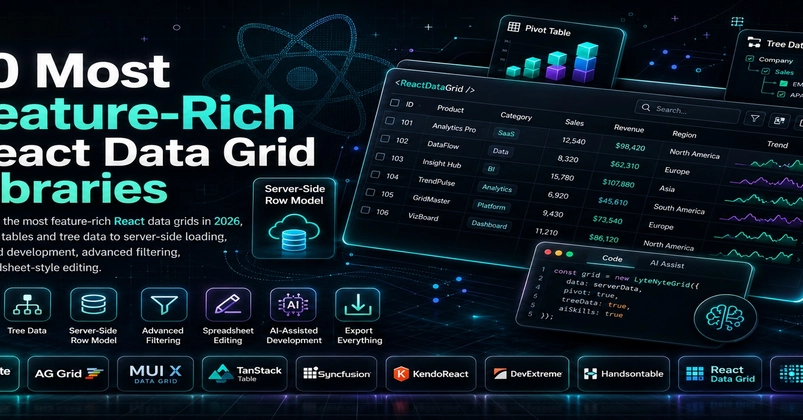
Comparing the most feature-rich React data grids in 2026, from pivot tables and tree data to server-side loading, AI-assisted development, advanced filtering, and spreadsheet-style editing.
When you're evaluating a React data grid in 2026, the challenge usually isn't finding a React data grid that supports sorting or filtering.
Almost every grid can do that.
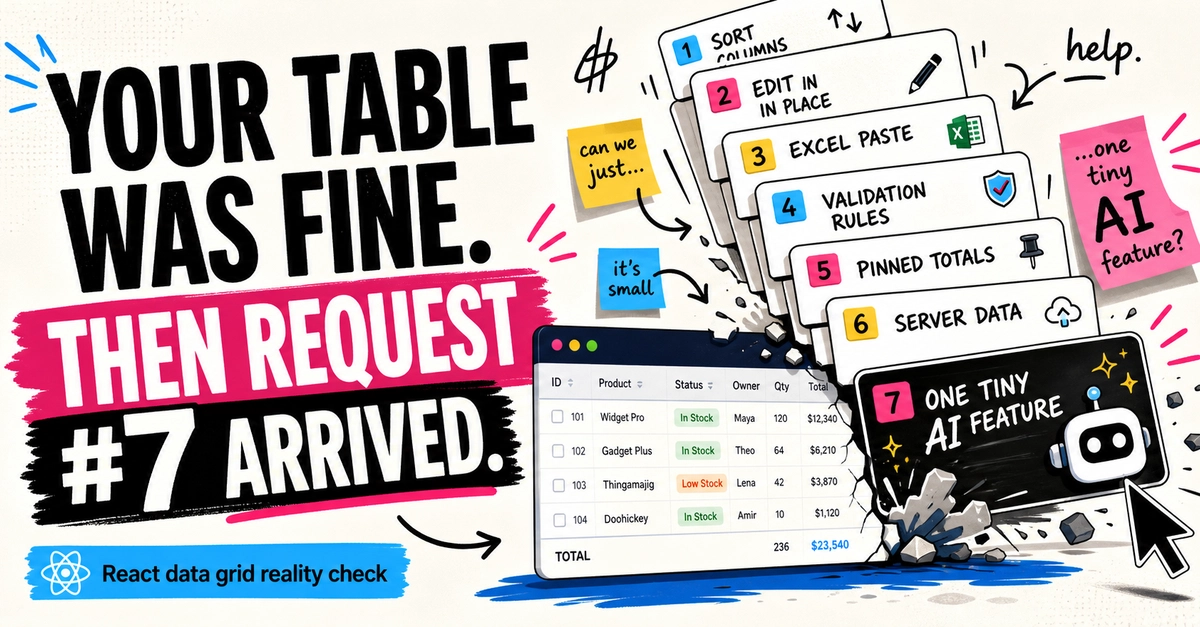
The real challenge is figuring out which libraries go beyond the basics and provide the advanced capabilities that tend to appear six months after launch: pivot tables, tree data, aggregation, master-detail views, server-side operations, bulk editing, spreadsheet-style interactions, export tools, and everything else product teams ask for once the application starts growing.
This article focuses strictly on feature coverage rather than performance, pricing, or subjective developer experience rankings.