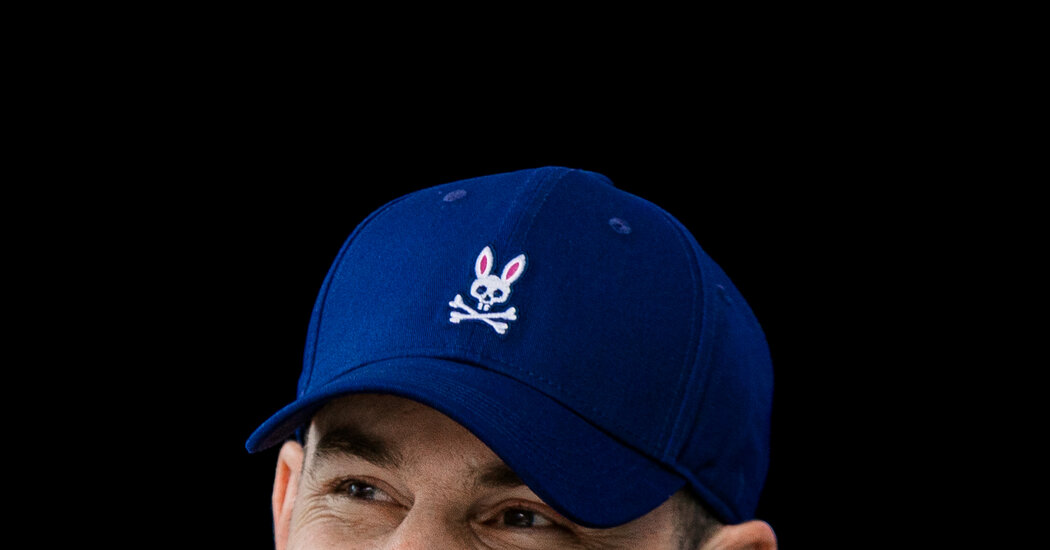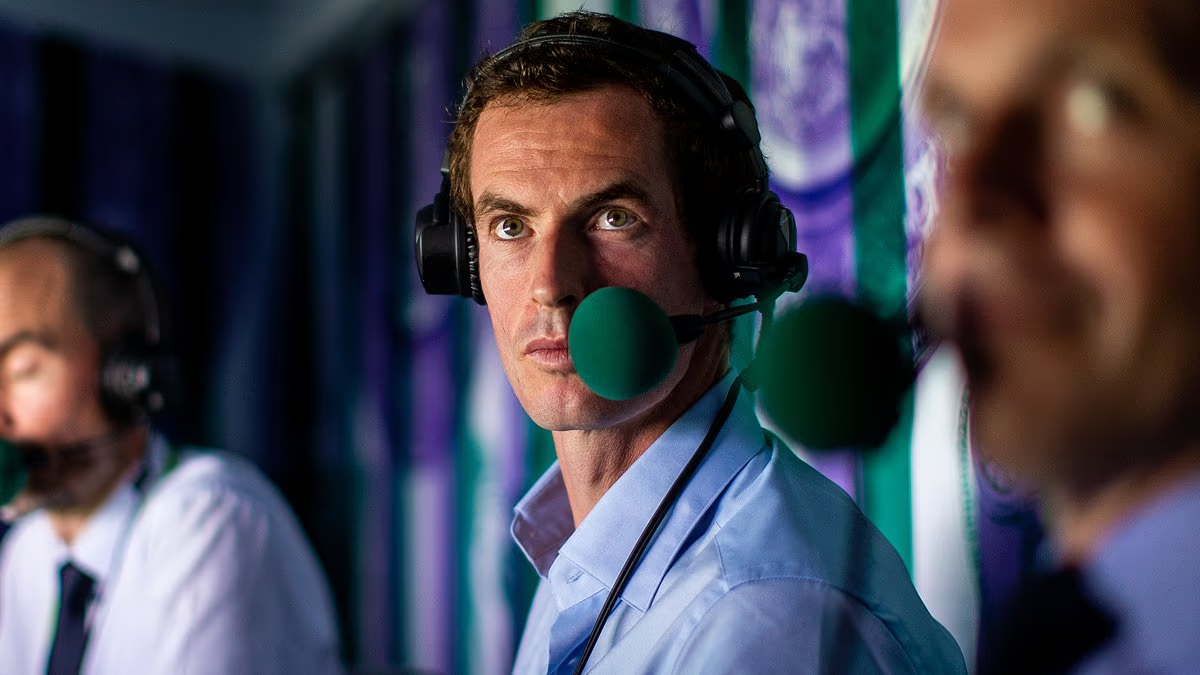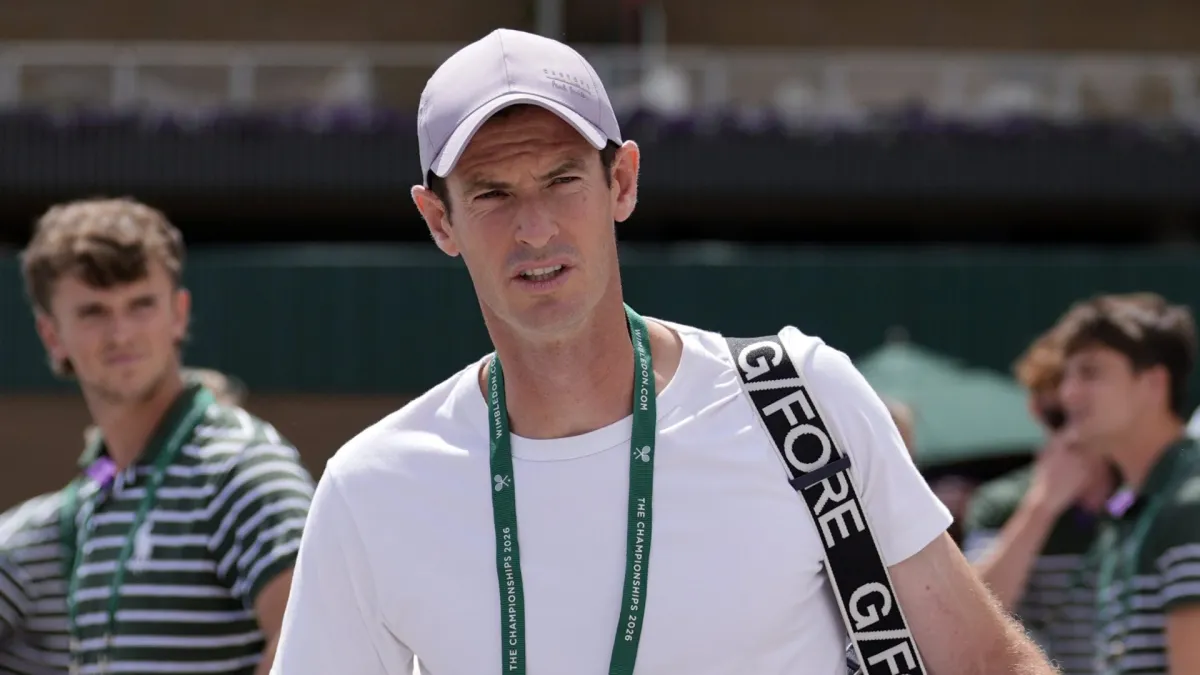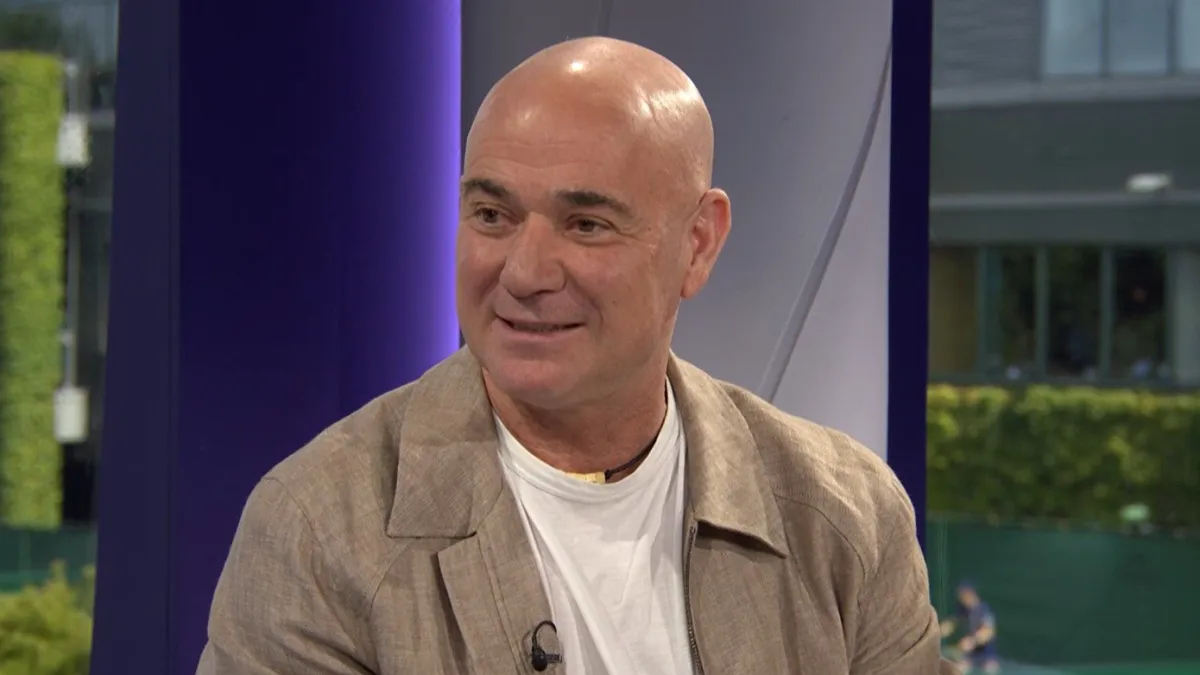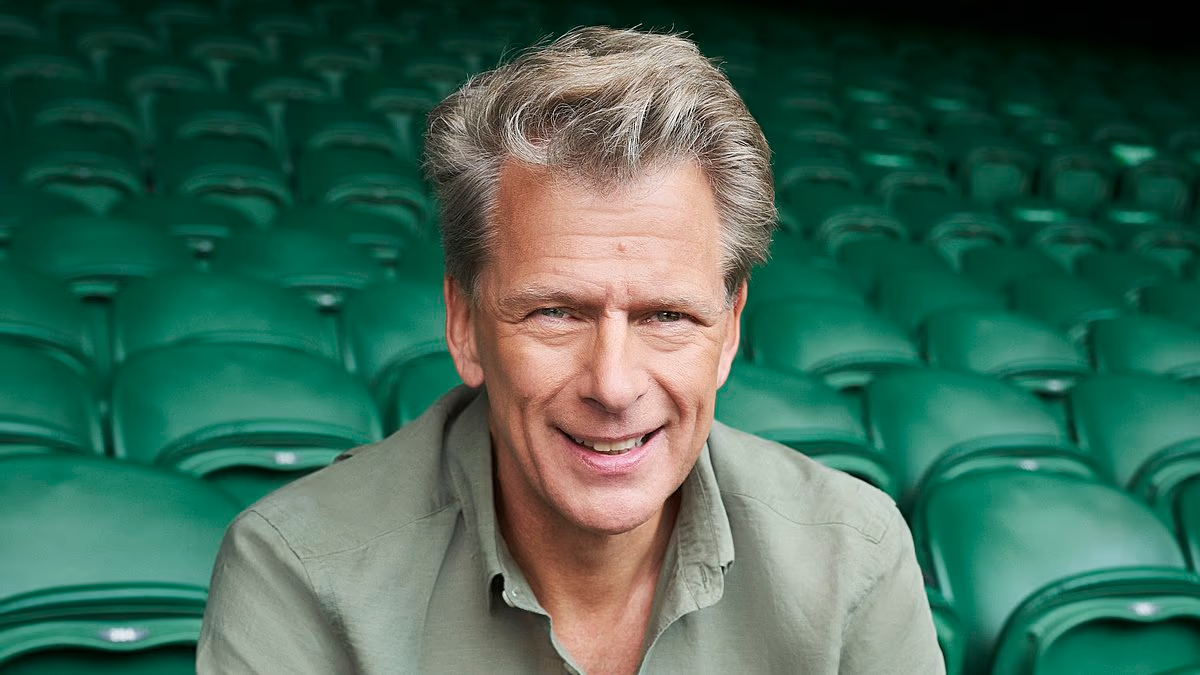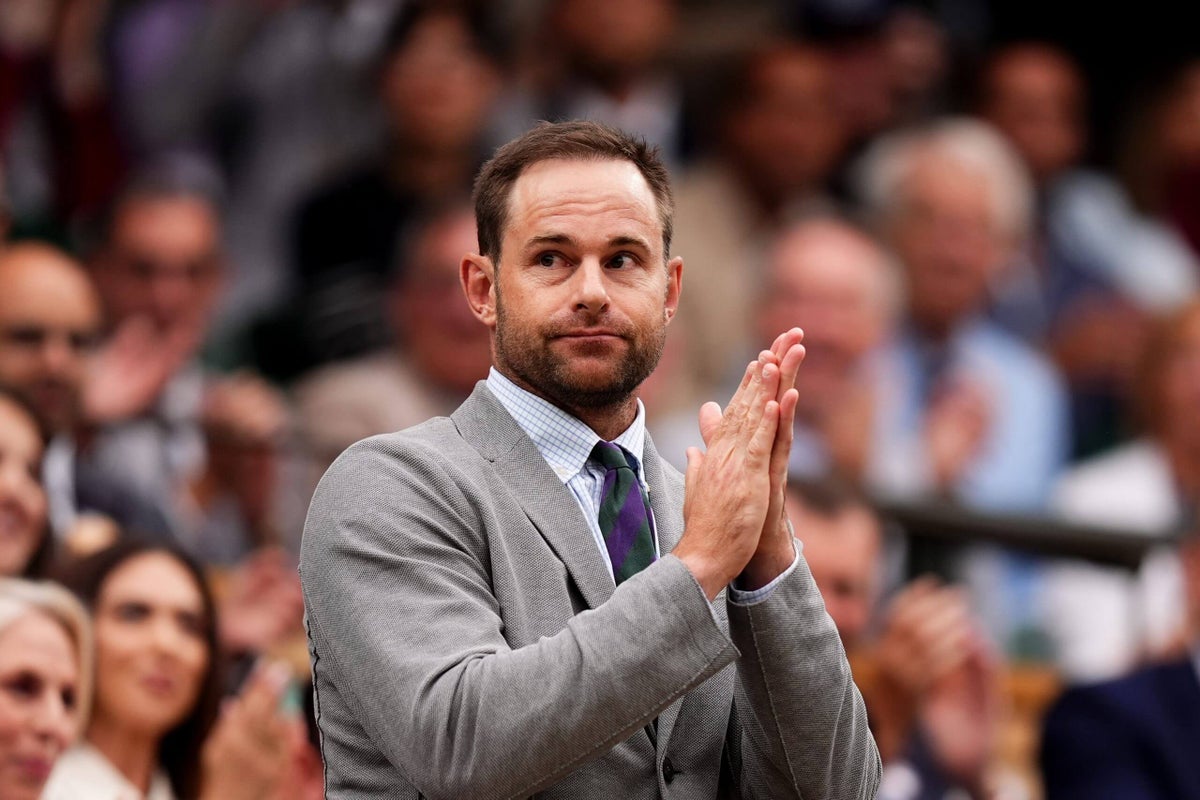
ALL ENGLAND CLUB, London — For a man who was synonymous with Wimbledon for a few years, Andy Roddick has tended to keep his distance.The three-time finalist between 2004 and 2009, who is so popular at the All England Club that he is an honorary member, has largely been a stranger following his retirement from tennis, aged 30, in 2012. There was a brief stint covering the tournament for the BBC in 2015. There was an afternoon in the Royal Box last year, while on holiday in the Cotswolds.Otherwise, save for the odd lunch and hit during non-tournament time, Roddick has been absent from the venue he so reveres.Not this year. For the first time in more than a decade, Roddick will be covering a Grand Slam for a television network. He will be part of the ESPN team for the entire Wimbledon fortnight, which starts Monday, and Roddick has spent the lead-up reaching out to people who have been in his shoes — and who know him well.“So I can say what parts of my personality could be annoying on air, and how do I stay away from those?” he said in a phone interview a couple of weeks ago, from his home in North Carolina.Despite his long absence from the broadcast world, Roddick, 43, will occupy his role at one of the most prestigious events in sports not as a rookie, but as one of the most prominent and thoughtful voices in tennis. In that time, he has developed “Served”, the podcast produced by Roddick and sports television producer Michael Hayden, which now has more than 200,000 YouTube subscribers.“Served”, which sees Roddick interview top stars, go deep on the minutiae of competitive tennis and analyze the ways in which matches are won and lost with a disarming alacrity, has become a vehicle for his expertise. But his role with ESPN brings him into a wider, ongoing shift in the tennis broadcasting world.When the “multi-year” deal was announced in February, fellow former world No. 1 Andy Murray said on social media: “This is a great deal for tennis. Great knowledge of the game, well researched, speaks well, loves tennis, good fun, enjoys a debate and my god tennis needs way more of that on its broadcasts.”Why is Wimbledon still played on grass?Tifo SportsMurray has eschewed traditional media work, announcing last week that he had set up his own YouTube channel instead, but other changes are afoot across the sport. The BBC will part ways with Andrew Castle, its main Wimbledon commentator of 23 years, after this year’s event. Recently retired former finalist Eugenie Bouchard, 32, has joined its team, and the BBC has retained eight-time major champion Andre Agassi after a very impressive debut in 2025, when his incisive focus on what was happening on the court cut through observations more focused on who was in the crowd.ESPN has also rung the changes this year. Pam Shriver (a stalwart of 36 years), Brad Gilbert (22 years) and Darren Cahill (19 years) have not been part of their Australian Open and Wimbledon lineups. Chris Eubanks, who retired from the sport last year aged 29, and CoCo Vandeweghe, a 34-year-old who retired in 2023, joined the team for both.Danielle Collins, currently taking a break from the sport aged 32, covered the Australian Open for Tennis Channel, which over the last few years has employed current players as part of their team. Last week, it announced that Coco Gauff will executive produce a two-part series this summer, exploring the history of tennis fashion and the legacy of trailblazing American player Zina Garrison.Even though Roddick won his only Grand Slam title at the 2003 U.S. Open, many of the most compelling storylines of his career played out at Wimbledon — none more dramatic than the 16-14 fifth-set defeat to Roger Federer in the 2009 final — which makes it an appropriate venue for his return to the mainstream.His role as a match commentator and studio analyst for ESPN over the next two weeks also represents an evolution in the tennis media landscape: The ongoing melding of two largely divergent approaches to covering the sport.Andy Roddick’s three Wimbledon finals ended in defeats to Roger Federer. (David Ashdown / Getty Images)Roddick has near-universal respect because of his desire to avoid cliché and easy generalizations, and instead really try to explain what’s going on to the listener or viewer.“Not just what’s happening, but why it’s happening,” Roddick said. “That’s a concept I’m a little obsessed with.”When speaking to ESPN staff, he has been reassured that “they didn’t hire me not to be me,” but some allowances will be made. The cap and t-shirt that Roddick dons in the “Served” studio a few minutes from his home will be replaced with something a little more Wimbledon.“Yeah, well, my wife did make me go shopping, so that was something,” Roddick said. Then there’s the language. As he put it in an interview in February: “I can’t go and drop 16 F-bombs on ESPN.” Hayden said in a phone interview last week that the ESPN Roddick would be the same Andy, “minus the (Corentin) Moutet-style language that we get to have.”Roddick, Eubanks and Vandeweghe will be joined by other recently retired players, including 2018 Australian Open champion Caroline Wozniacki and Roddick’s fellow American player-turned-podcaster Sam Querrey. Roddick described Eubanks as “the most natural broadcaster I’ve seen in a long time.”Veterans like Shriver and Mary Carillo, whom Roddick describes as “fantastic” and has sought out for counsel, remain extremely well-respected but some, like John McEnroe (another member of the ESPN team this fortnight), have come in for criticism for a perceived lack of originality and insight. Roddick has his own views on how analysis should go — especially when he has a legend of the sport next to him in the chair.“I’m going to bring the audience in on what I’m curious about and kind of unlock it. The other thing is that tennis isn’t easy. And I think it’s our job to explain why it’s really hard. You get into something like, ‘Well, this guy’s just missing everything.’“That’s no accident. It’s because of what the other player is doing. So part of my job is explaining patterns and why certain patterns are working and why they’re not. And what are the mid-match adjustments that are being made.”Roddick, and other analysts like Eubanks and former world No. 9 Andrea Petkovic, have focused on explaining why things are going wrong, rather than just lambasting players who are watching a match slip away.“If someone does something wrong, you can say it,” Roddick said. “And a lot of times if you say it, it’s not, ‘They are terrible,’ or, ‘This person is never going to win.’“Let’s explain why it could be difficult. Let’s actually explain the hurdles. Again, let’s talk about the why.”Eubanks is similarly keen to talk about the why. “I used to ask my coaches all the time, ‘Why? Why?’ Some coaches liked it, some didn’t,” he said during an interview at last month’s Italian Open.“I want to have an understanding if I have to implement something, and it’s kind of the same thing now. … How can I find a middle ground, so that someone who plays doubles league tennis at 60 can understand the same as a high-level junior?”Both Eubanks and Roddick cited the humility and knowledge of Jim Courier, the former world No. 1 who has worked for Tennis Channel, TNT, ABC and other broadcasters, as a touchstone.“Are you prepared? Are you just kind of figuring it out and freestyling it, or do you know the recent results?” Eubanks said.“If you’re wrong on a particular instance, but you’re in the ballpark. It’s like, ‘Oh, I appreciate that.’ Because I know you put in some work for that take.”During the Wimbledon fortnight, Roddick may resemble a kid in a candy shop. He’s excited by the data and footage he will have access to with ESPN, which will be incomparable to what he has on “Served”. But Roddick’s output won’t be affected by his ESPN appearances, which he called his “single biggest non-negotiable” during a segment on the show after the ESPN deal was announced.In September 2025, The New York Times reported that “Served” had surpassed $2 million in revenue for the year up until that point, doubling its previous year. Last week, Hayden said via text message that Served had booked more revenue by February 2026 than it generated in all of last year.Having stayed away from conventional tennis media for so long, Roddick decided to take the plunge this time, partly because his son Hank (10) and daughter Stevie (eight) are a little older and there’s more scope to travel.He was also ready to take on a role like this because, having kept his distance from the sport, he is now fully immersed in it again and feels comfortable giving his opinions. Roddick said he won’t need to do much additional preparation because, as he puts it, he knows who won the Challenger events four weeks ago, and what excites him most are the stories that don’t have endings yet. The uncertainties around the world No. 1s Jannik Sinner and Aryna Sabalenka, the possibility of a record-breaking 25th Grand Slam for Novak Djokovic, and Roddick’s peers and friends, Venus and Serena Williams, teaming up for doubles.“Sports is like the ultimate reality show,” Roddick said. “There’s no script.”Though at least as an analyst, there’s a bit less uncertainty than Roddick usually experienced at Wimbledon: “Well, it’s probably going to be a decent feeling (arriving) because every other time I’ve gone there, you hope to be there two weeks, but most of the time it doesn’t work out that way.“So this time, at least I know I’ll be there for two weeks.”
Andy Roddick served tennis a fresh brand of analysis. ESPN and Wimbledon are next
Roddick's insightful, high-tempo analysis on his podcast, “Served”, has garnered new fans. Now comes traditional broadcasting.
1,632 words~7 min read