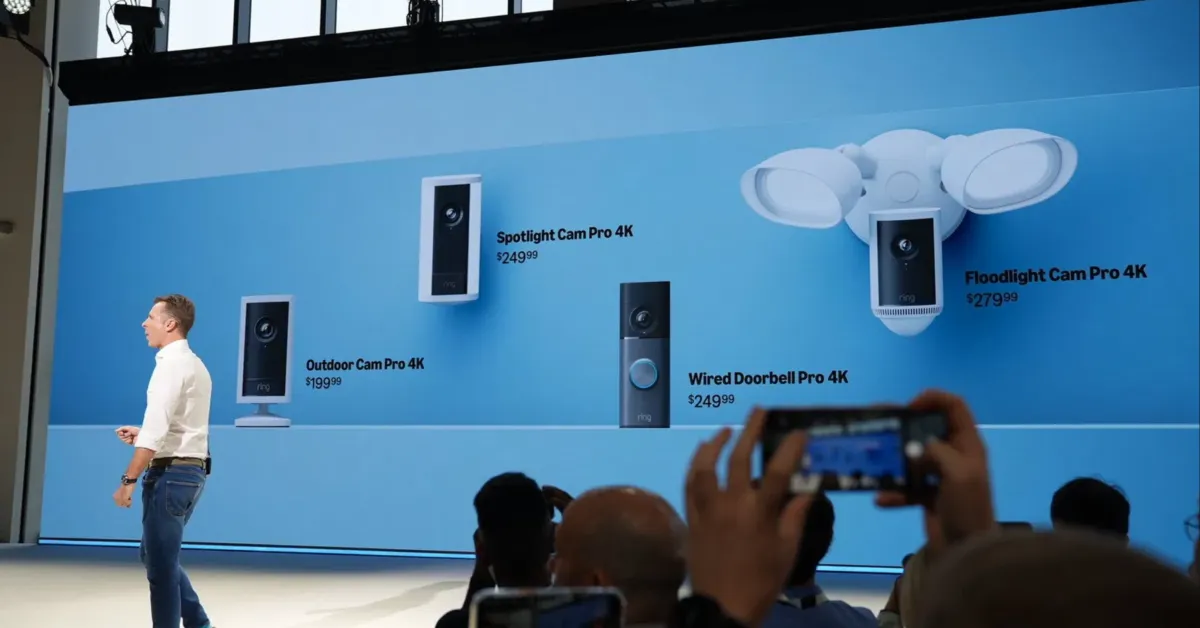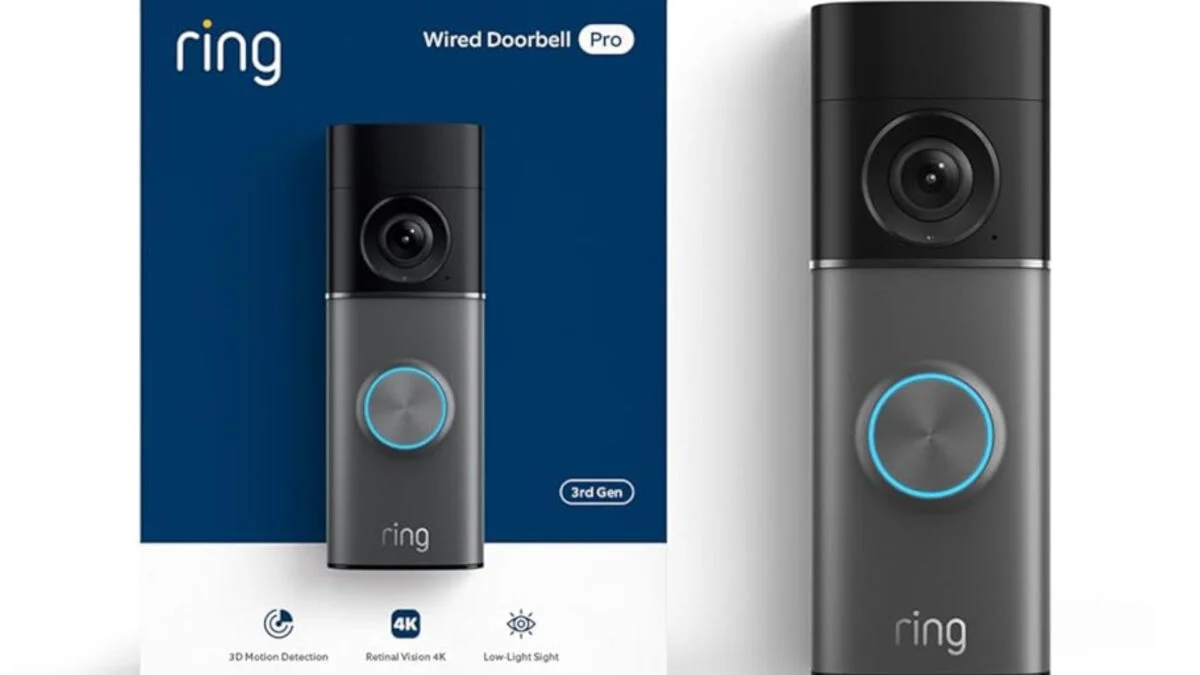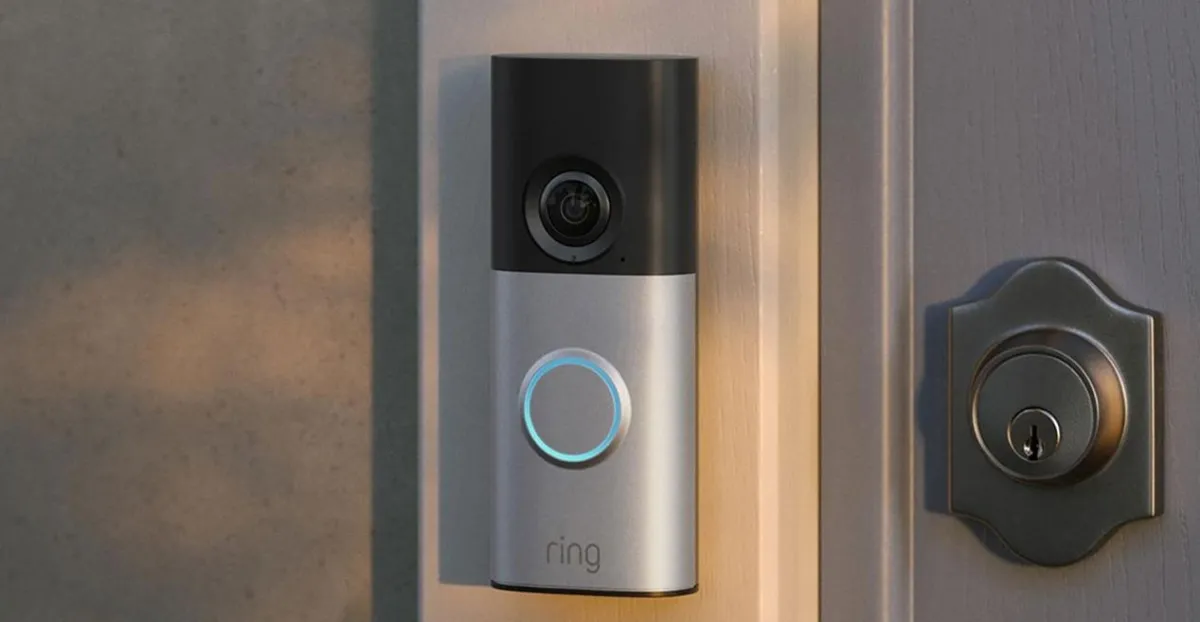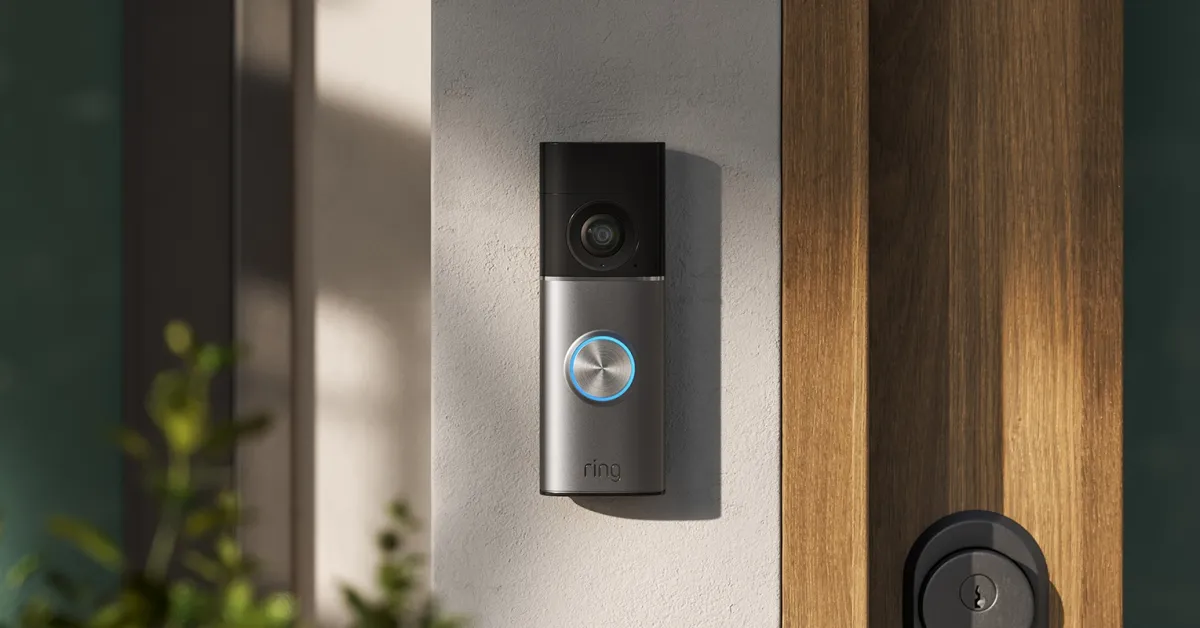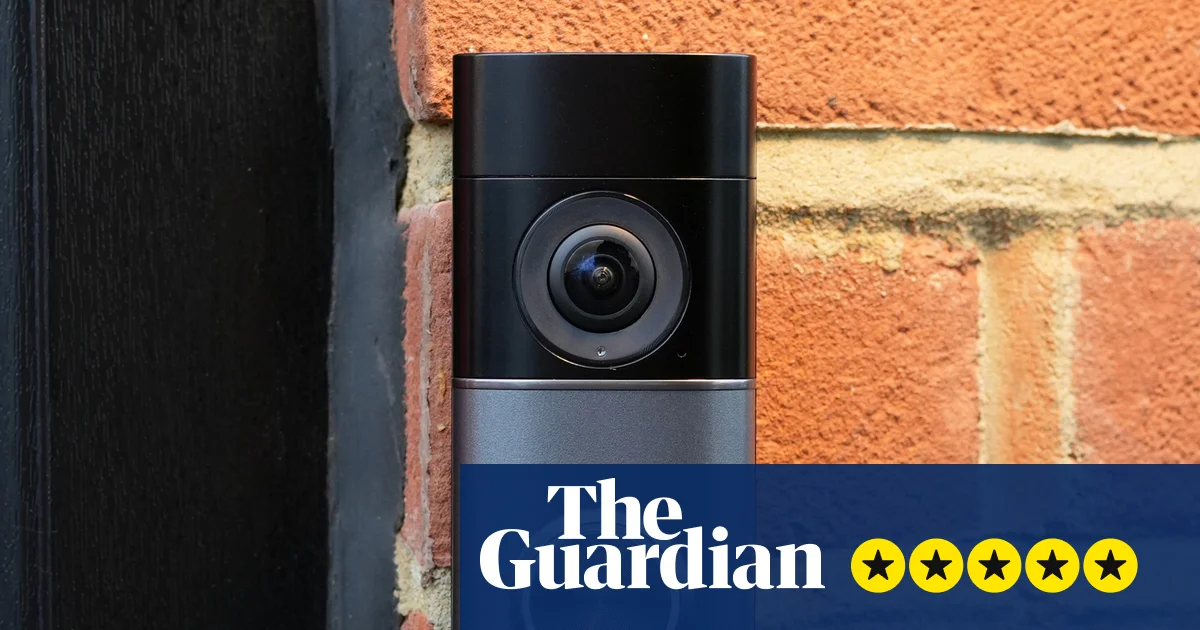
Ring’s recent revamp of its popular video doorbells with a more modern design is led by the top-of-the-line Video Doorbell Pro 3, which gains much-needed upgrades with a 4K camera and better wifi plus new interesting AI features.The new doorbells are sleeker but keep the unmistakable two-tone Ring colour scheme, button, logo and ringtone. Battery models start at £80 or equivalent, with the top model costing £219.99 (€249.99/$249.99/A$329.99) with either a battery or wired, which is roughly in line with the competition.Despite looking slimmer, the new Video Doorbell Pro 3 is slightly bigger than the outgoing 2021 model. The wired model, as reviewed, comes in a choice of coloured faceplates to match your decor with a glowing blue ring around the large bell button.Despite the more rounded, modern design the doorbell is still unmistakably a Ring, replete with the ubiquitous chime when you press the button. Photograph: Samuel Gibbs/The GuardianThe doorbell has Ring’s new 4K camera, which is quite a big leap over the previous version used in the wired and battery doorbells, capturing far more fine detail. It makes it much easier to see writing, such as name badges, and allows much improved digital zoom up to 10x magnification. It is good enough to read a car numberplate from about nine metres away, day or night.But a bigger improvement is in its low-light performance, particularly in tricky mixed conditions with street or outside lights in and around the doorbell, where many cameras struggle. A monochrome infrared-illuminated mode takes over when the lights are off that is crisp enough to see every movement of people, or in my case foxes, crossing your door.Both day and night vision is much sharper than previous models but it is the performance in street-lit conditions that has been significantly improved. Composite: Samuel Gibbs/The GuardianThe wide 140-degree square field of view allows you to see head to toe of visitors, even when they stand right in front of the door. It also has package detection, which alerts you to boxes left at your door within a customisable zone.The Doorbell Pro has radar-based motion tracking, which gives you a trace of a person’s movement overlaid on an aerial view of your driveway. It is not particularly useful for my short drive but the radar allows you to customise the distance from your door that motion is detected to help reduce the number of unwanted recordings of the street in front of your home. Privacy settings, which block out parts of the field of view, also help stop recordings of your neighbours.The 4K camera is a lot sharper and captures more detail than previous versions. Photograph: Samuel Gibbs/The GuardianThe upgrade to dual band wifi 6 connectivity from the ancient wifi 5 of previous generations is another welcome change. It may not be the latest wifi 7 standard, which is rapidly becoming available in home routers, but wifi 6 offers significantly increased bandwidth and lower latency in the congested or weaker signal areas typically seen at your front door. As a result, I no longer needed a wifi booster to reach the doorbell, and live view sessions started significantly faster, which helped to see callers more quickly.Unlike a limited selection of rivals connected by ethernet, wifi 6 can still be jammed by criminals, which would disconnect the feed and stop recordings. The Doorbell Pro has a wired option, however, requiring a traditional low-voltage transformer (included in the box) or Ring’s plug-in adaptor for power, which saves having to remember to charge a battery.The wired Doorbell Pro also offers six seconds of full colour, HD pre-roll video with sound before an event recording is triggered, including in low light, which helps you see more of what just happened. Or it can continuously record 24/7 for an extra monthly fee. The battery model is limited to four seconds of lower definition pre-roll video without sound that does not work in low light.Specifications
Ring Video Doorbell Pro review: night and day better with new 4K camera
Camera, wifi and design updates bring welcome upgrades to Ring’s top model in wired or battery flavour
1,512 words~7 min read