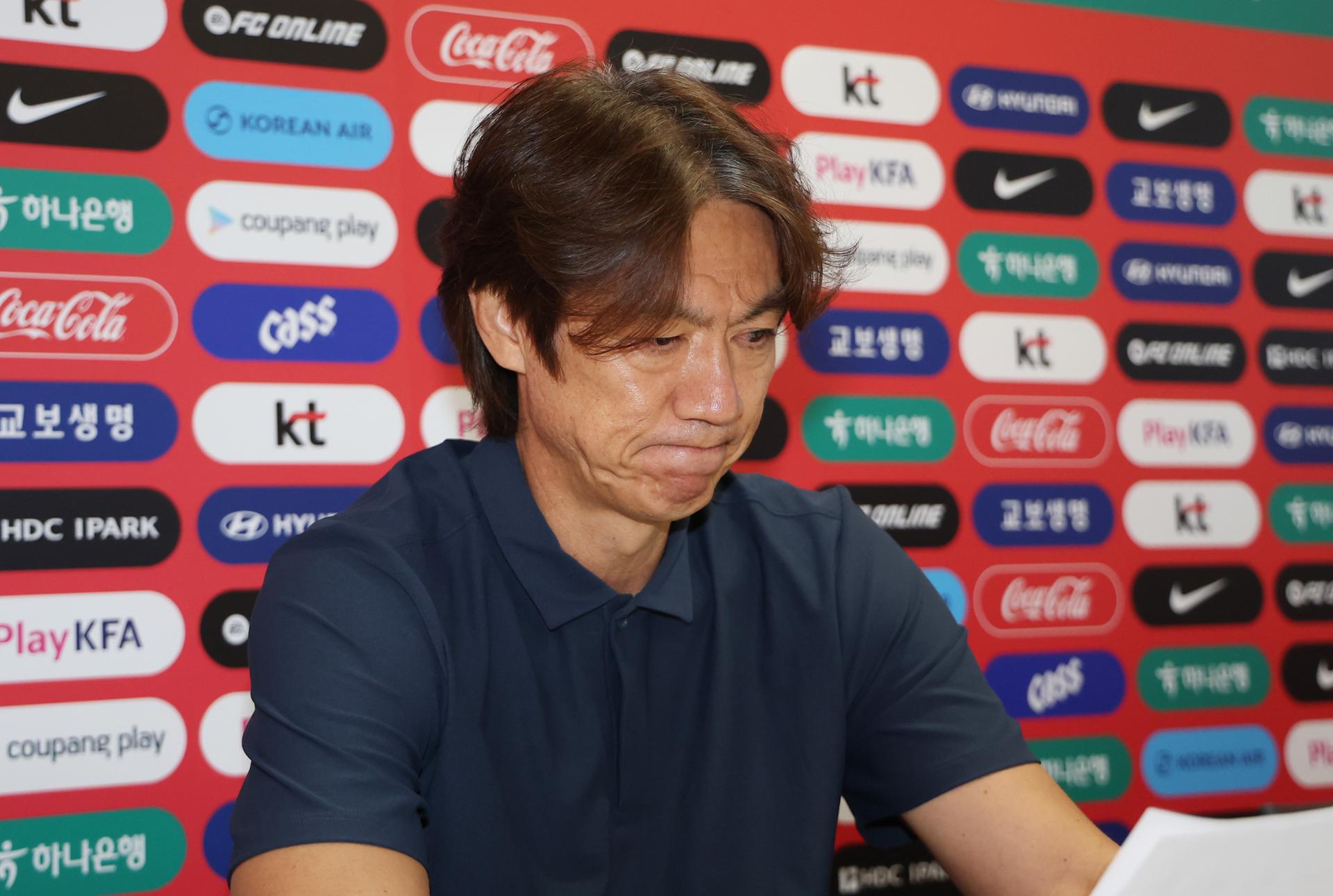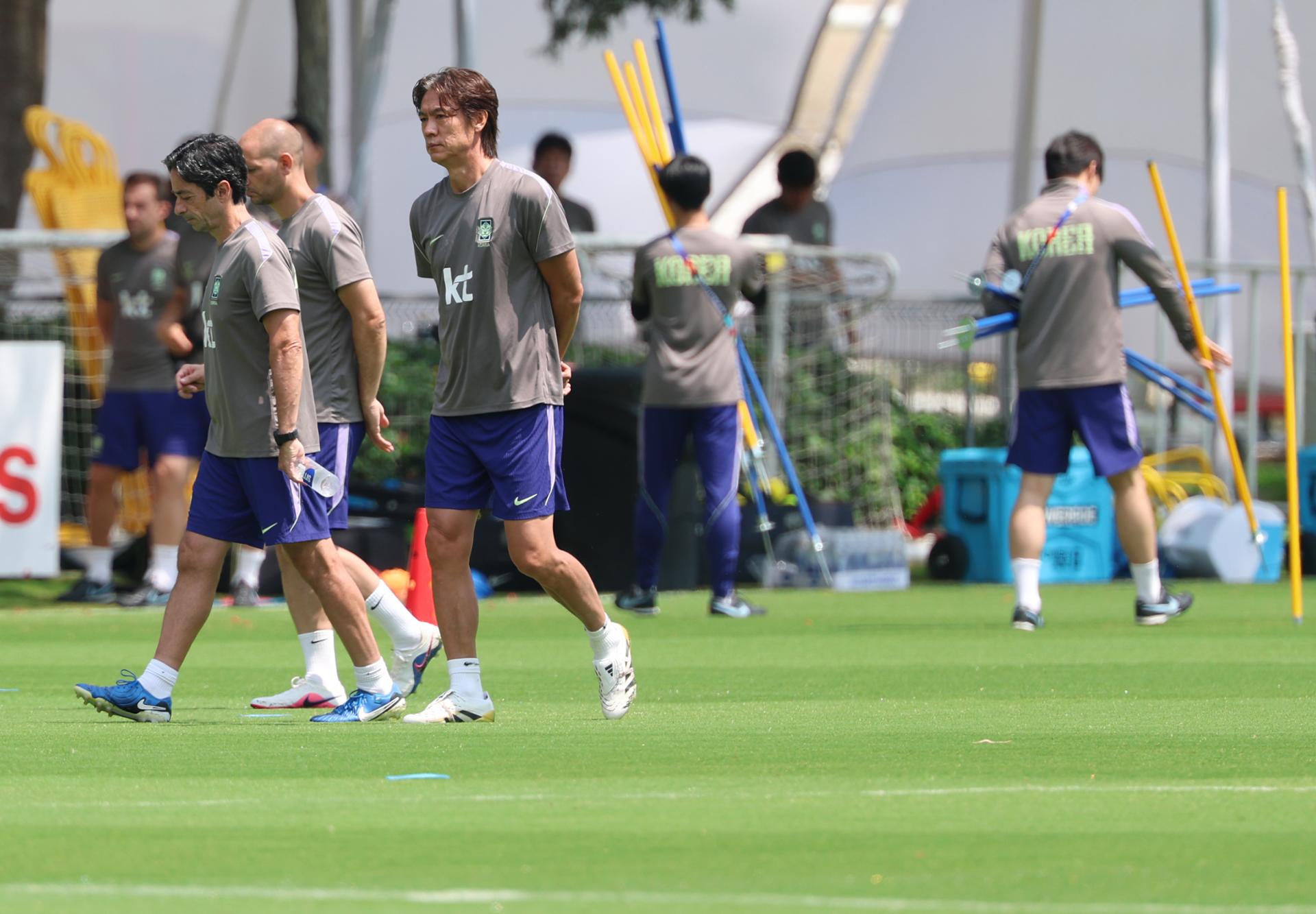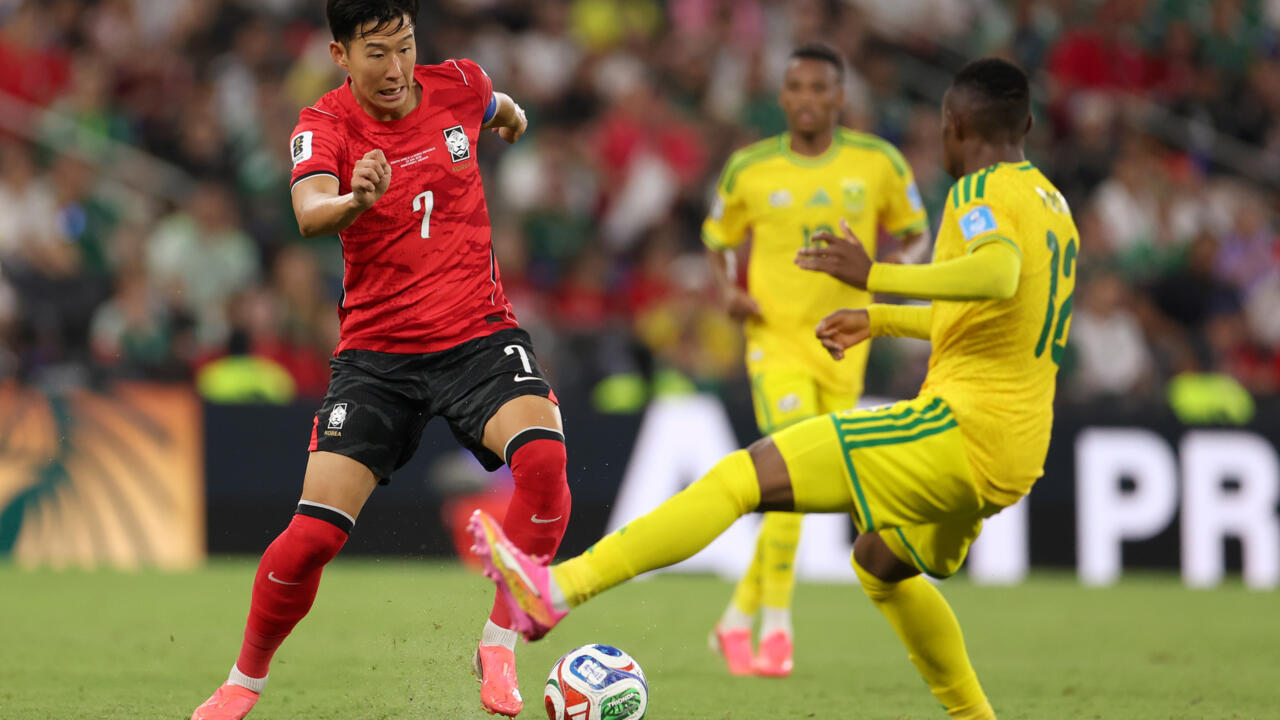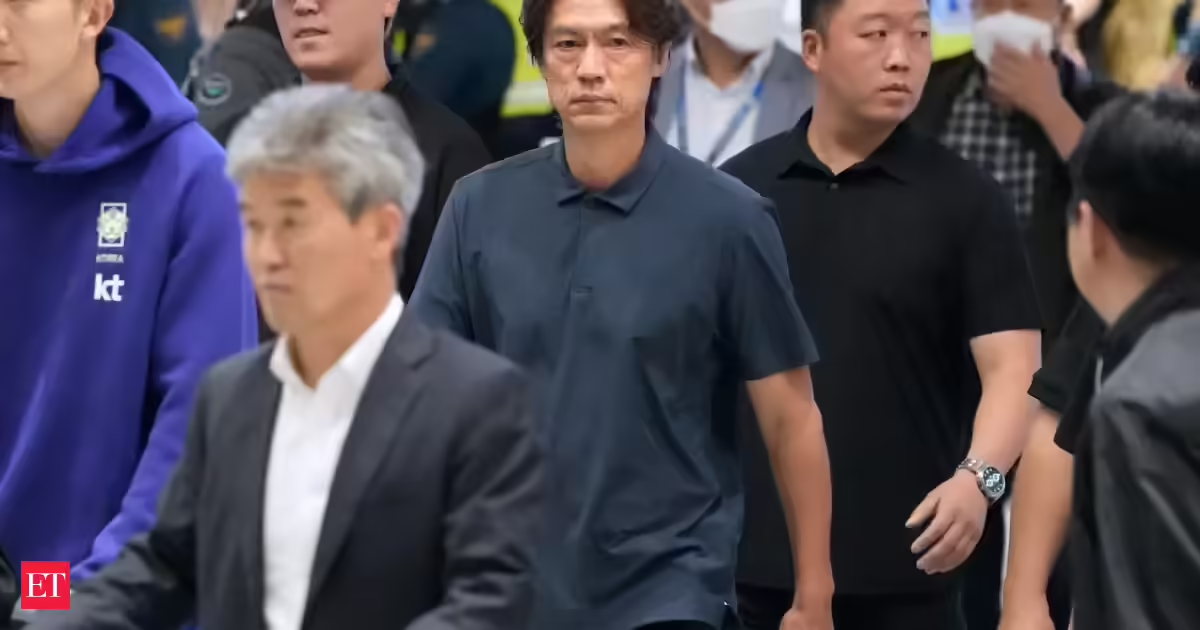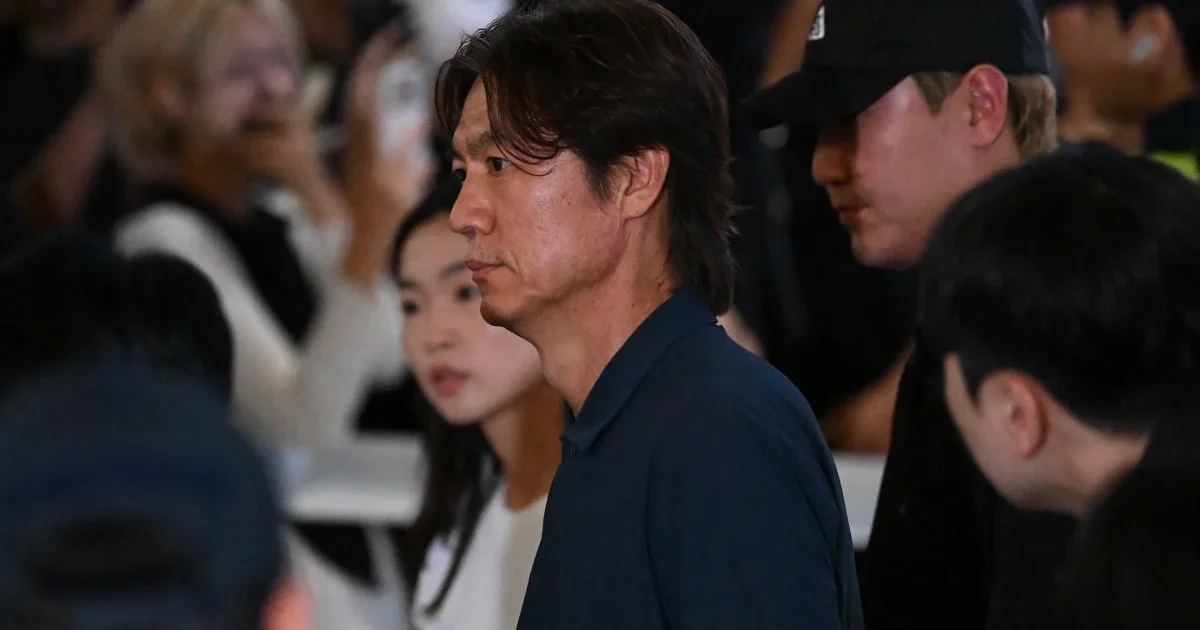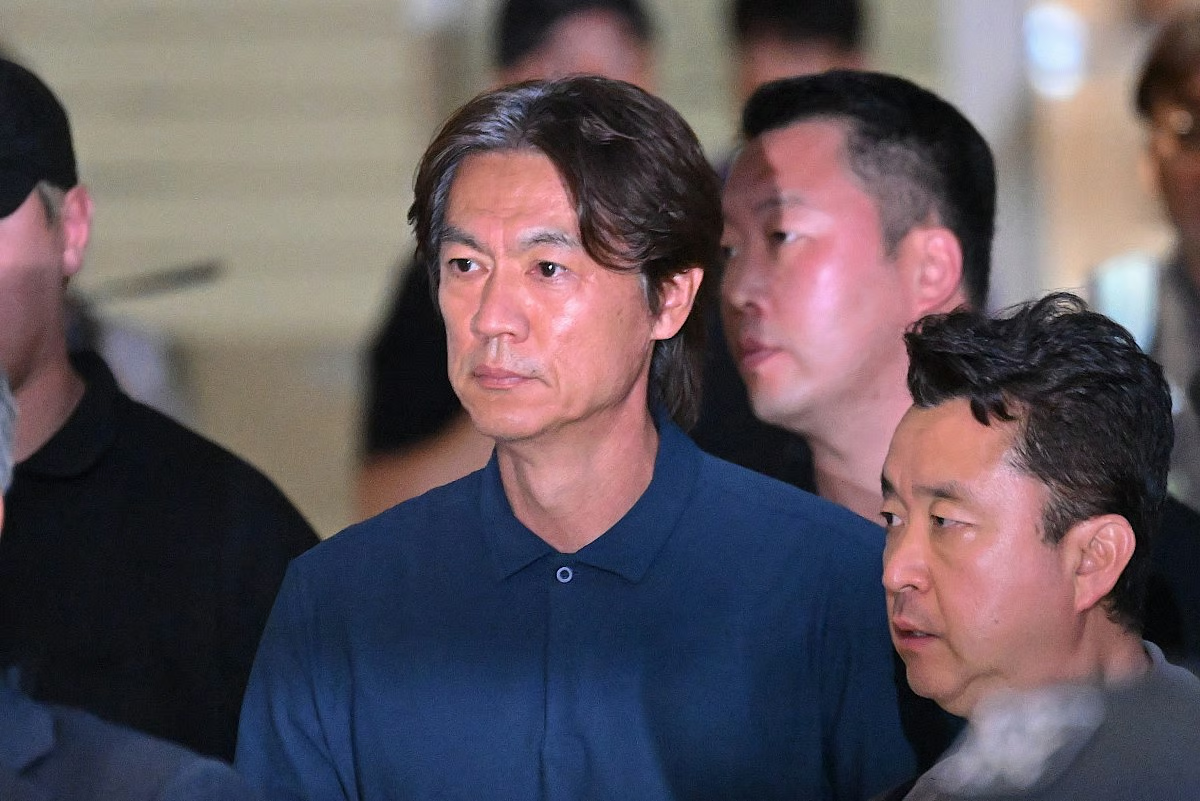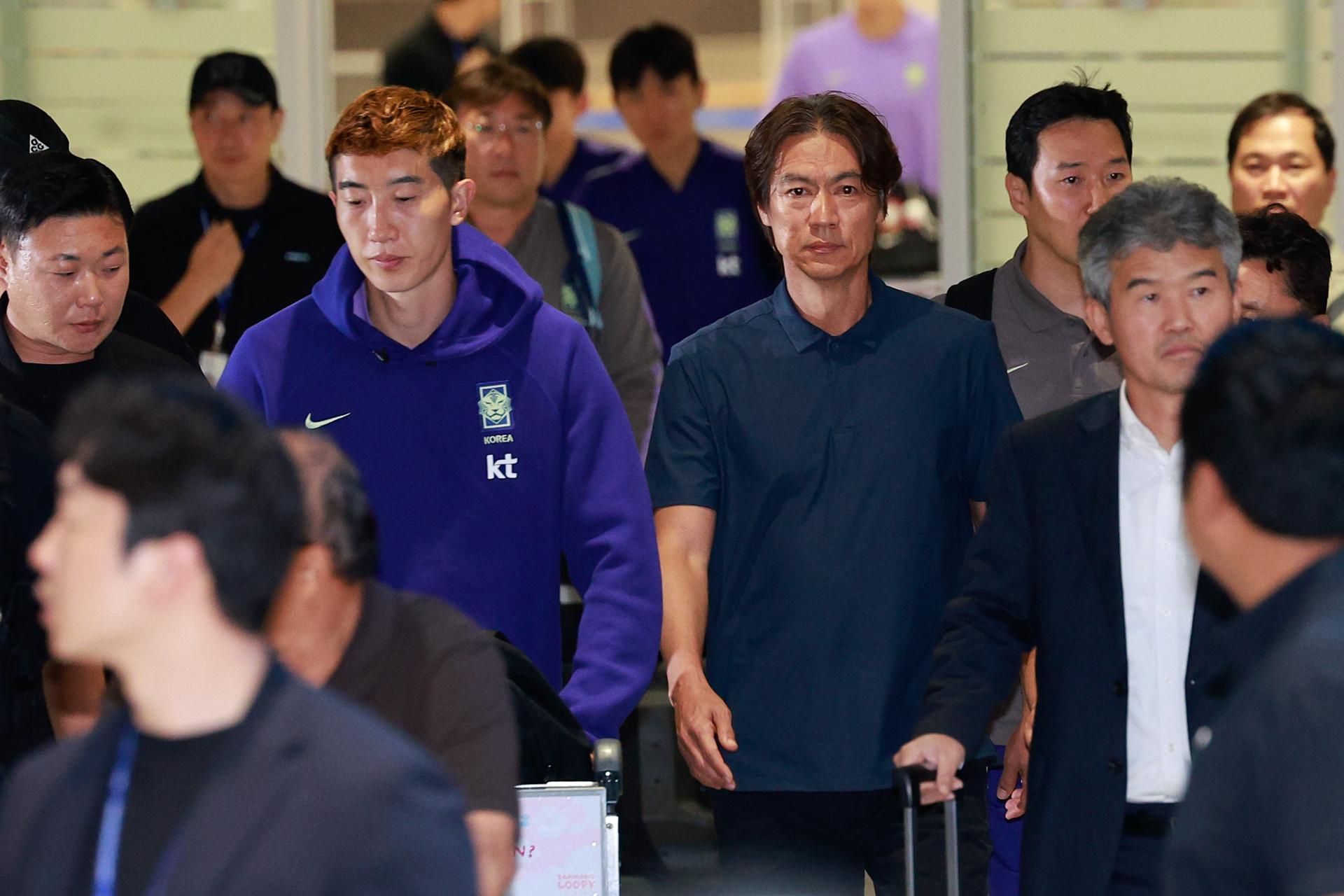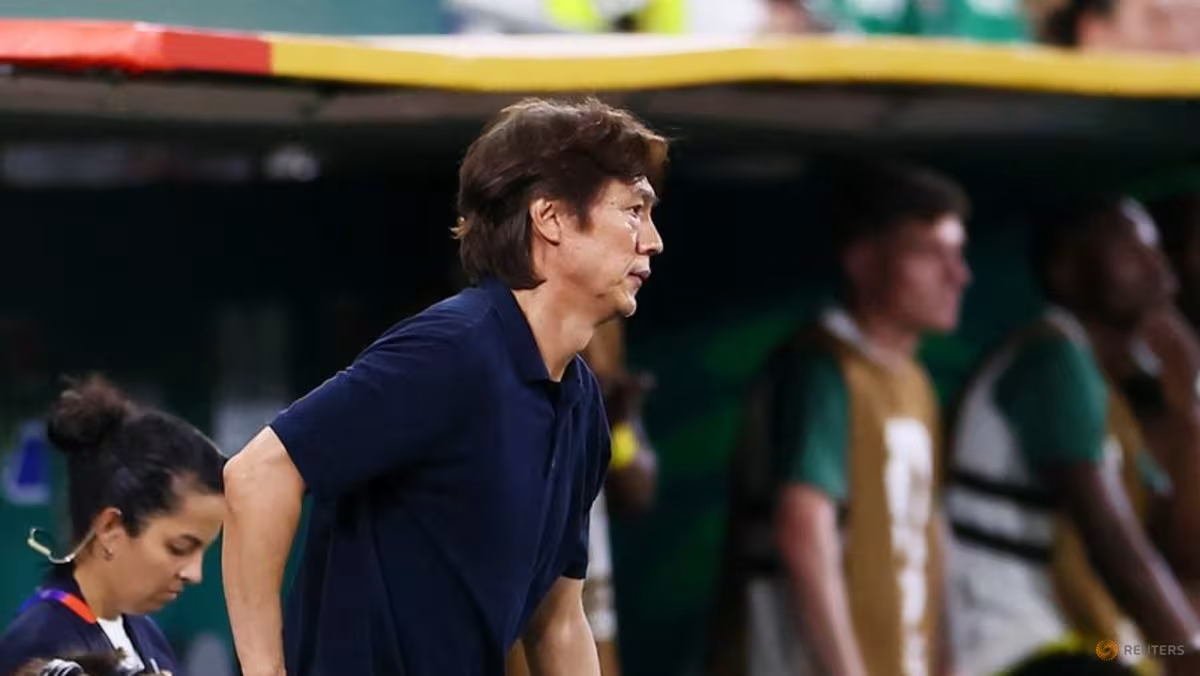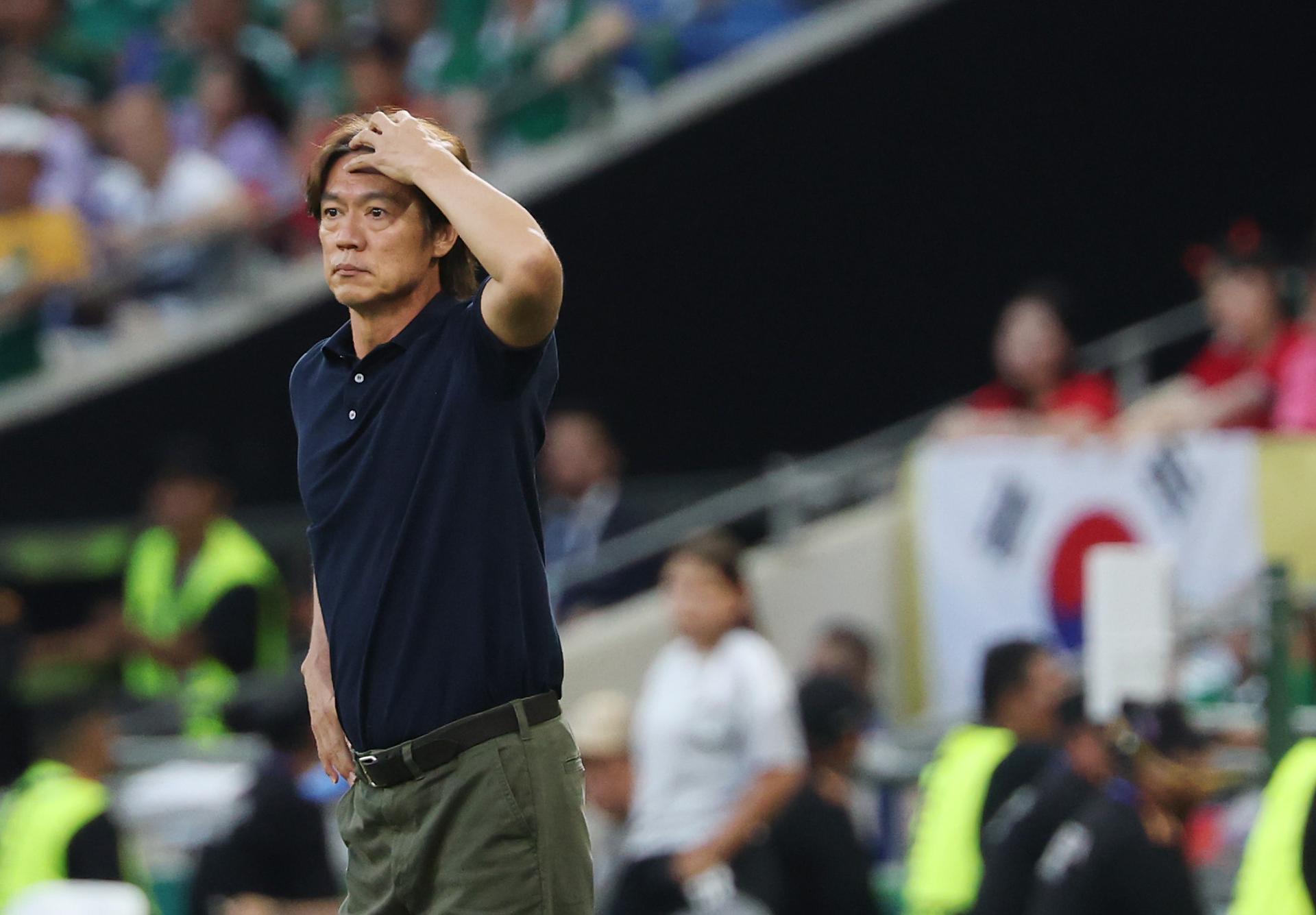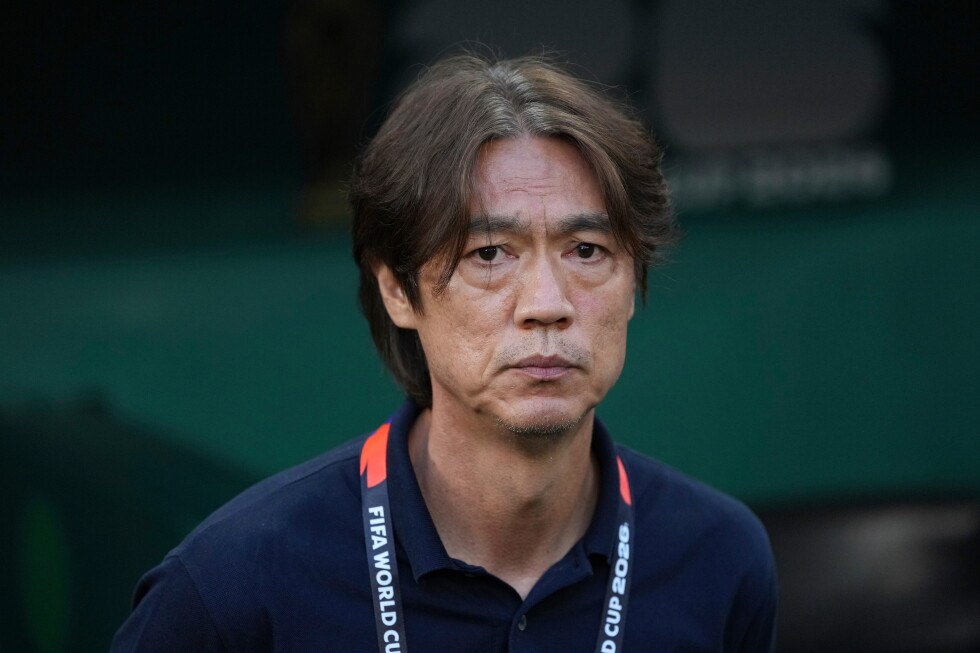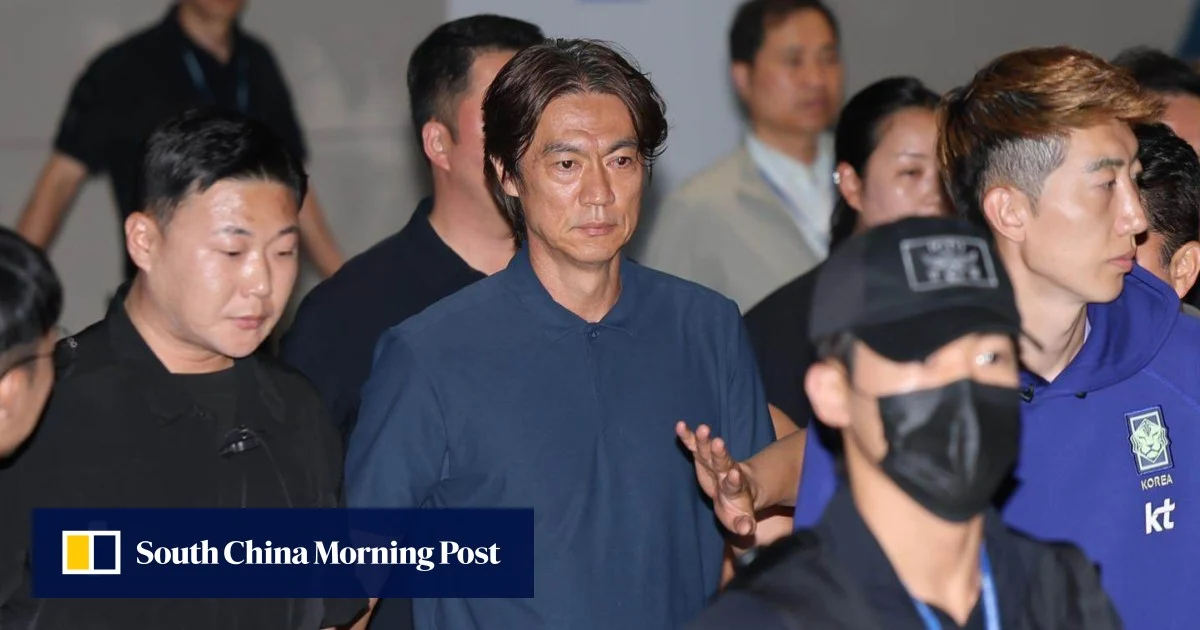
From coaching exits to angry airport receptions, South Korea has familiar post-World Cup ritual of criticism, accountability Hong Myung-bo speaks at a press conference announcing his resignation as head coach of the South Korean men's national soccer team, at Chivas Verde Valle in Zapopan, Mexico, Sunday. (Yonhap) For South Korean soccer fans, the pain of an early World Cup exit rarely ends with the final whistle.Instead, disappointment spills into days of public anger, resignations and soul-searching, as the country grapples with another campaign that failed to meet lofty expectations.Under mounting pressure, with criticism reaching as high as President Lee Jae Myung, who called for sweeping reforms of Korean soccer, head coach Hong Myung-bo resigned Sunday, after the team was eliminated in the group stage of the World Cup."I would like to apologize to everyone who supports Korean soccer and the national team," Hong told reporters in Mexico. "We failed to deliver the results our fans were hoping for, and the responsibility lies entirely with me as head coach."For South Korean soccer, however, the fallout has become almost ritual.The cycle dates back to the 1998 World Cup in France.After the Netherlands beat Korea 5-0 in their second group match, then-head coach Cha Bum-kun was dismissed during the tournament, marking a rare mid-World Cup firing. Korea ended the campaign winless, managing only a draw against Belgium in the final game of the group stage.When the Korea Football Association’s technical committee asked Cha to resign voluntarily, Cha reportedly fought back, saying a coach “could not abandon his team” midway through a tournament. Nevertheless, the soccer body eventually dismissed him. South Korean national team players leave their hotel in Guadalajara, Mexico, Sunday, after having been eliminated in the group stage of the 2026 FIFA World Cup. (Yonhap) At the 2014 World Cup in Brazil, Hong — then in his first stint as national team coach — resigned after South Korea failed to win a match and exited in the group stage.Public anger also greeted the team at home.At the airport, one fan threw pieces of “yeot,” a traditional Korean taffy, at the players as they stood before reporters. In Korean, the phrase “eat yeot” is used as a vulgar insult, roughly meaning “get lost” or “screw you.”Similar backlash followed four years later, after the 2018 World Cup in Russia.Although the squad returned home following a surprise 2-0 victory over Germany, the 2014 World Cup champions, several fans threw eggs and cushions at the players over their early exit, reflecting the public’s disappointment and anger.Now, Hong and eight players are scheduled to return to Korea early Tuesday, with the rest of the squad to return later in smaller groups, raising concerns that a similar scene could unfold and prompting authorities to step up security at the airport.Police on Monday said they were tracking the author of an online post threatening to kill Hong upon the team’s arrival at Incheon Airport.Frustration has extended beyond social media.Businesses across the country have posted “Hong Myung-bo banned” signs on their doors and windows. Photos circulating online showed notices posted at a pub in Anyang, Gyeonggi Province, at restaurants in Gimje, North Jeolla Province, and even at a cafe in Seoul’s Mapo-gu.
For Korea, World Cup disappointment rarely ends at the final whistle
For South Korean soccer fans, the pain of an early World Cup exit rarely ends with the final whistle. Instead, disappointment spills into days of public anger,
533 words~2 min read