The Auto-Increment Vulnerability
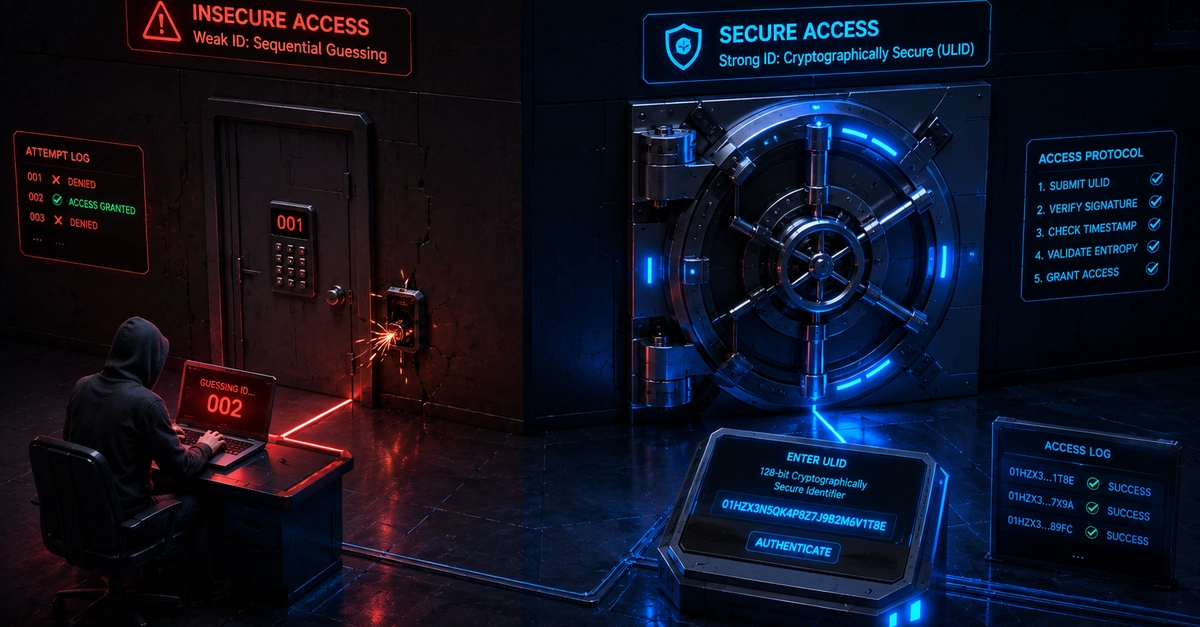
When scaffolding a new database table at Smart Tech Devs, the default framework reflex is to use auto-incrementing integers for primary keys: $table->id(). In a closed system, this is fine. But the moment you expose your database records to a public-facing API, sequential IDs become a catastrophic security vulnerability known as Broken Object Level Authorization (BOLA).
Imagine your SaaS generates an invoice at /api/invoices/450. An attacker registers for a free account, gets invoice 450, and simply writes a script to request /api/invoices/449, 448, etc. If your authorization middleware has even a tiny flaw, the attacker instantly downloads your entire corporate financial history. Even if your authorization is perfect, you are still leaking sensitive business intelligence to competitors, revealing exactly how many invoices you generate a day. To secure your perimeter, your identifiers must be mathematically unguessable.
UUIDs vs. ULIDs
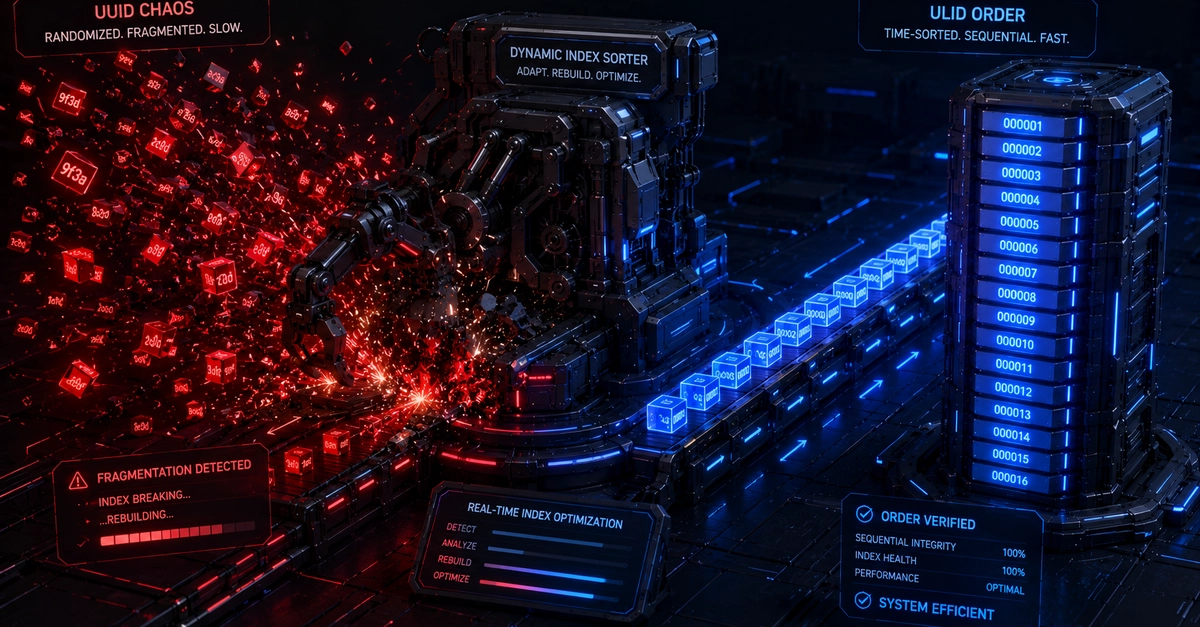
The traditional solution is a UUIDv4 (Universally Unique Identifier). While unguessable, standard UUIDs are entirely random. When you insert millions of random strings into a PostgreSQL B-Tree index, the database has to physically re-sort and fragment the index tree on the disk constantly, causing massive write-amplification and killing insertion performance.