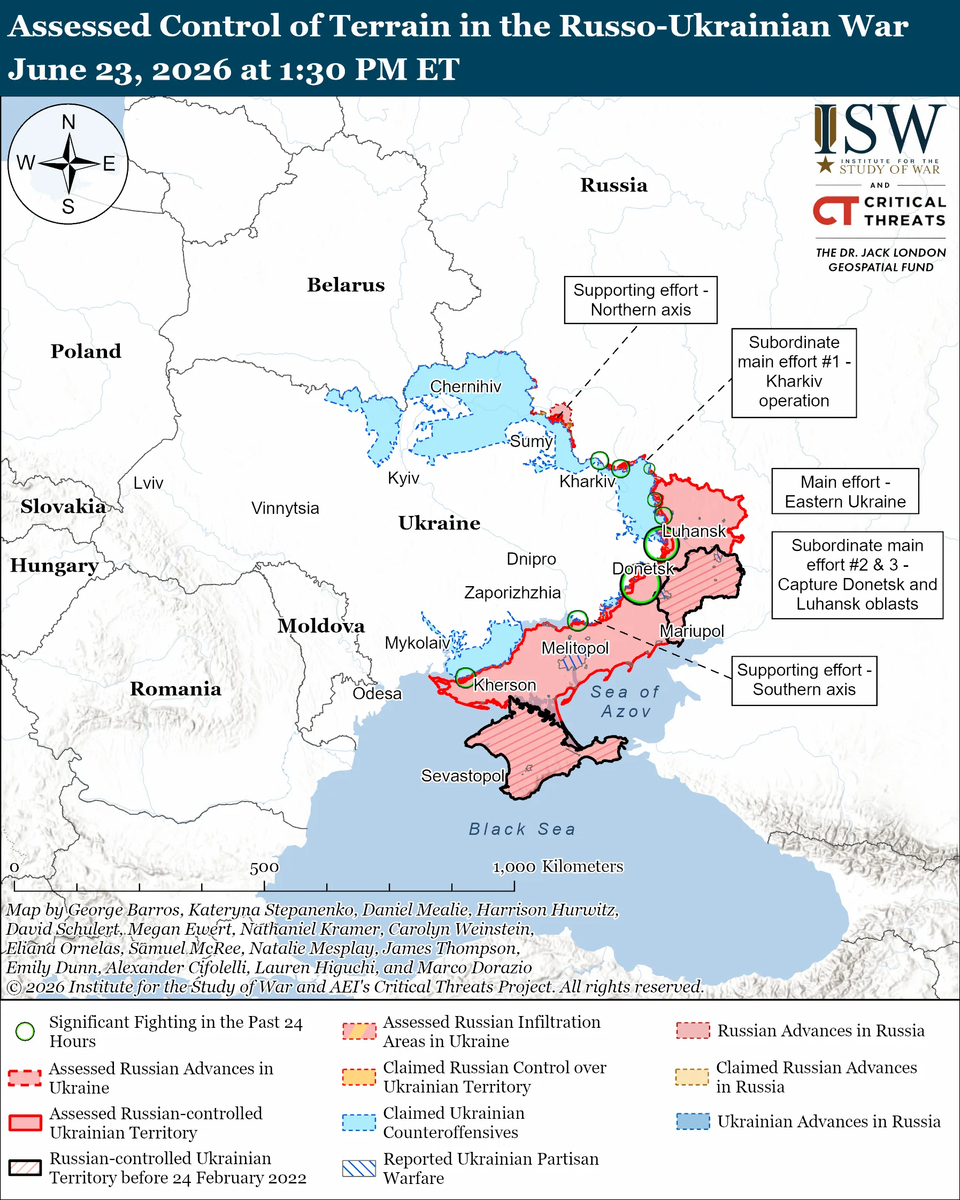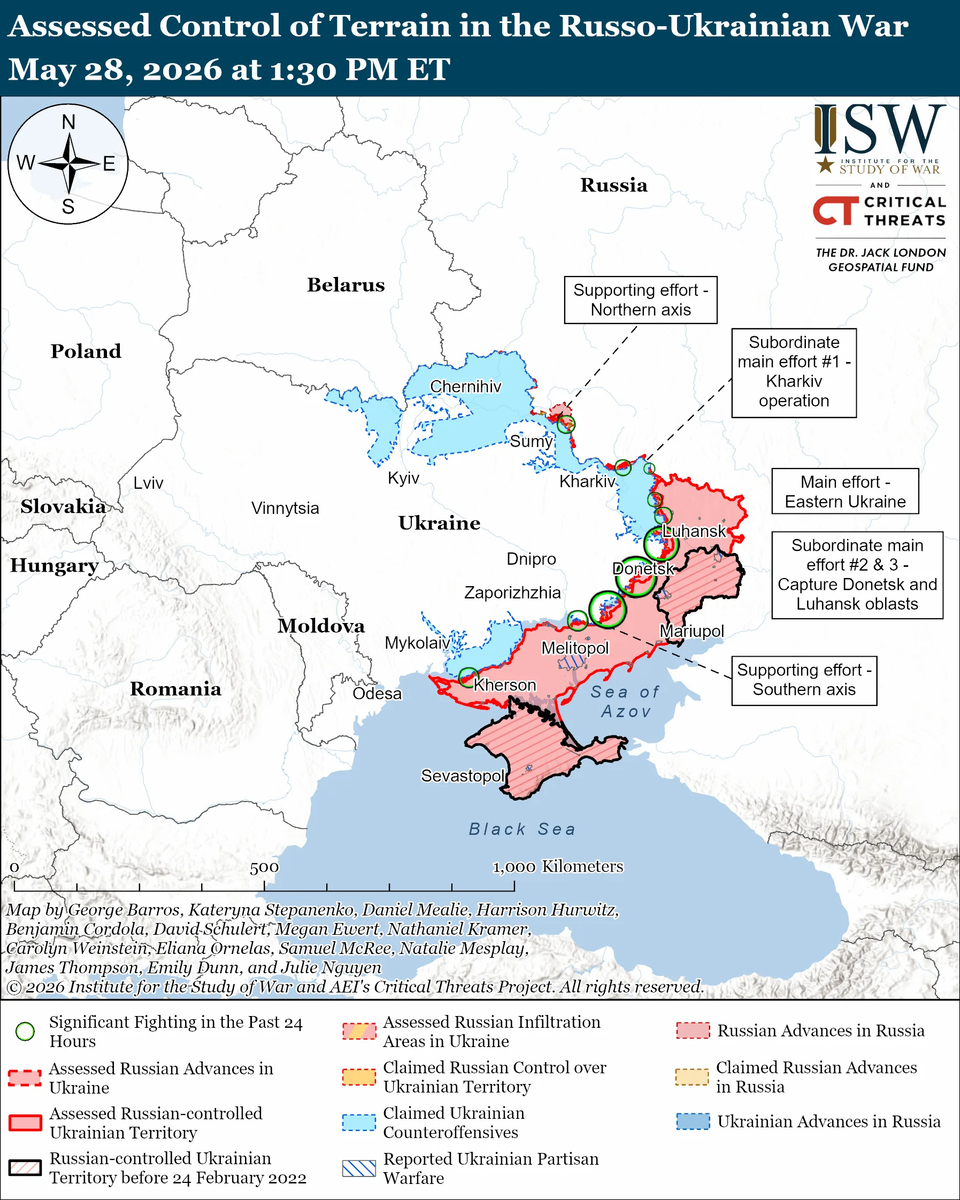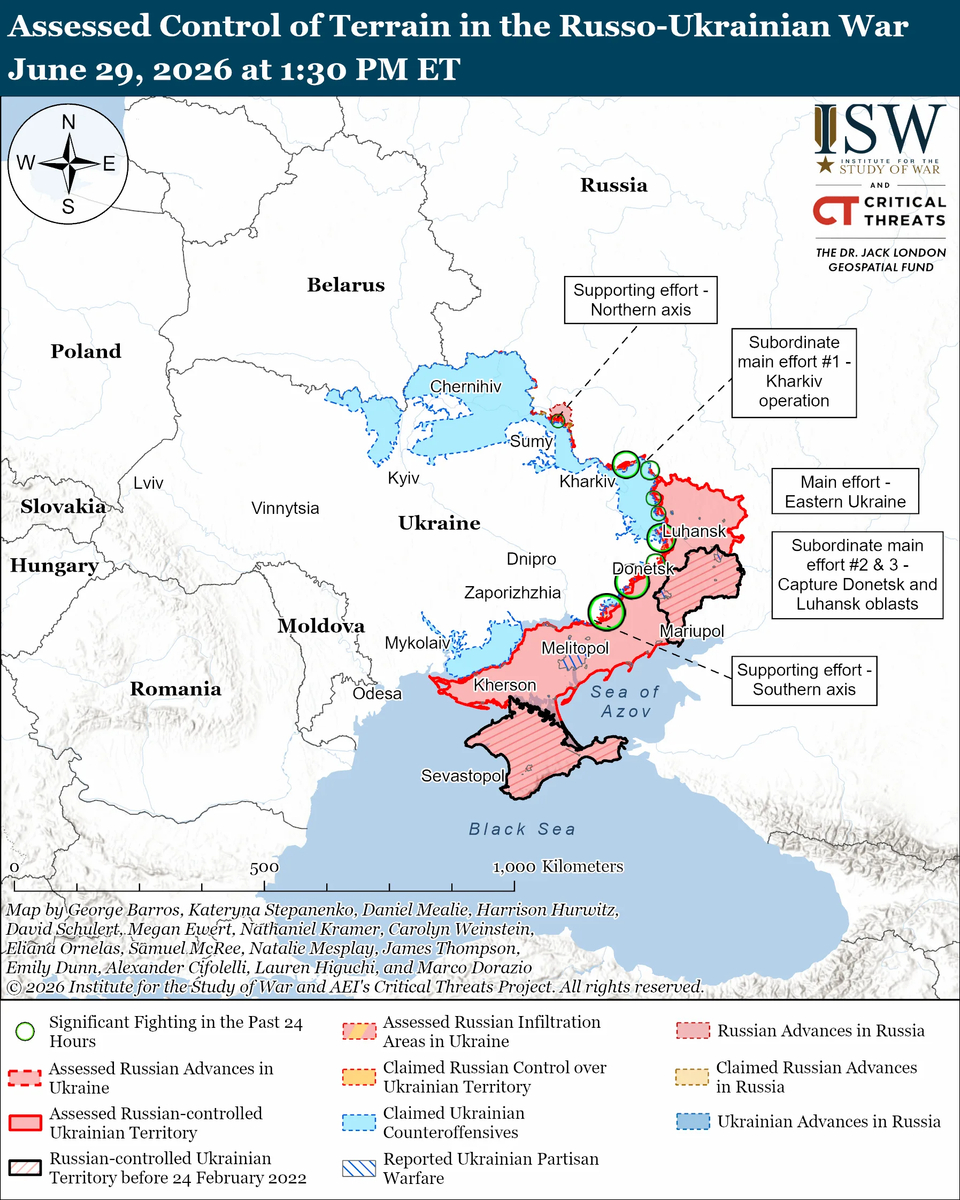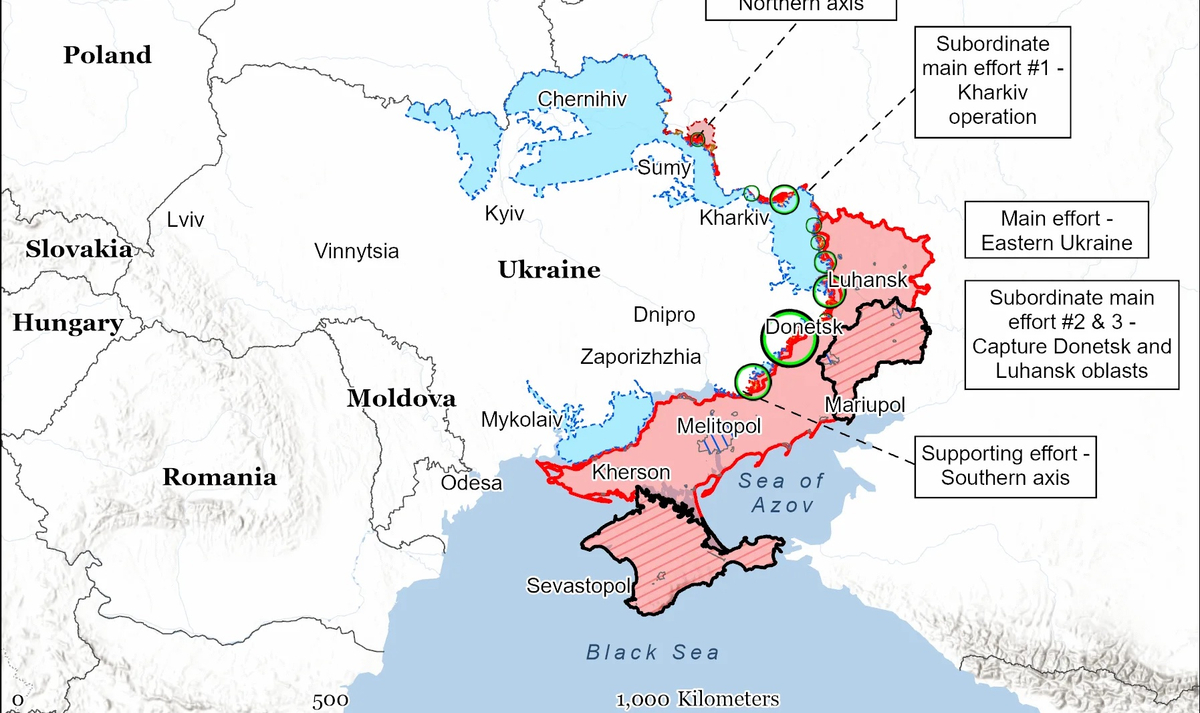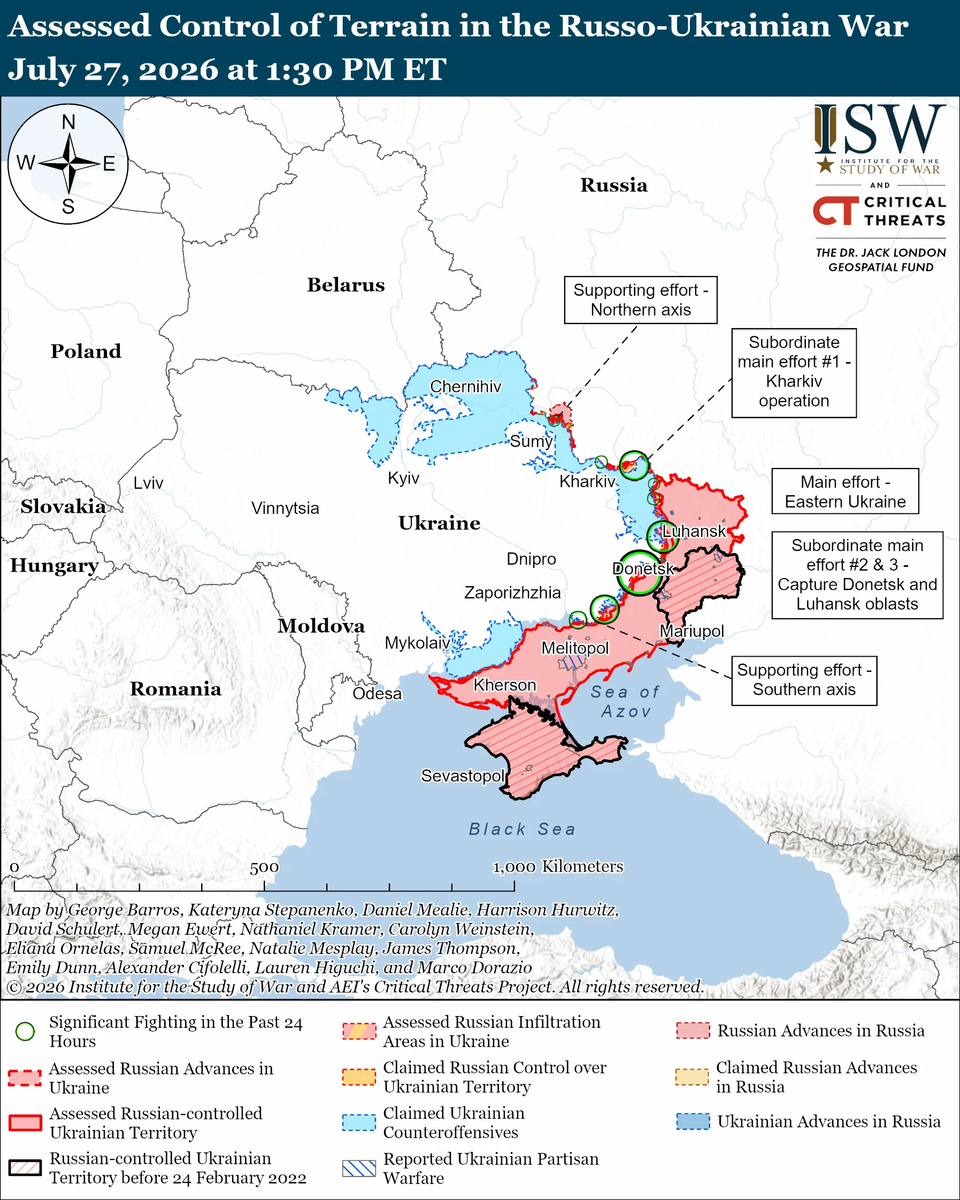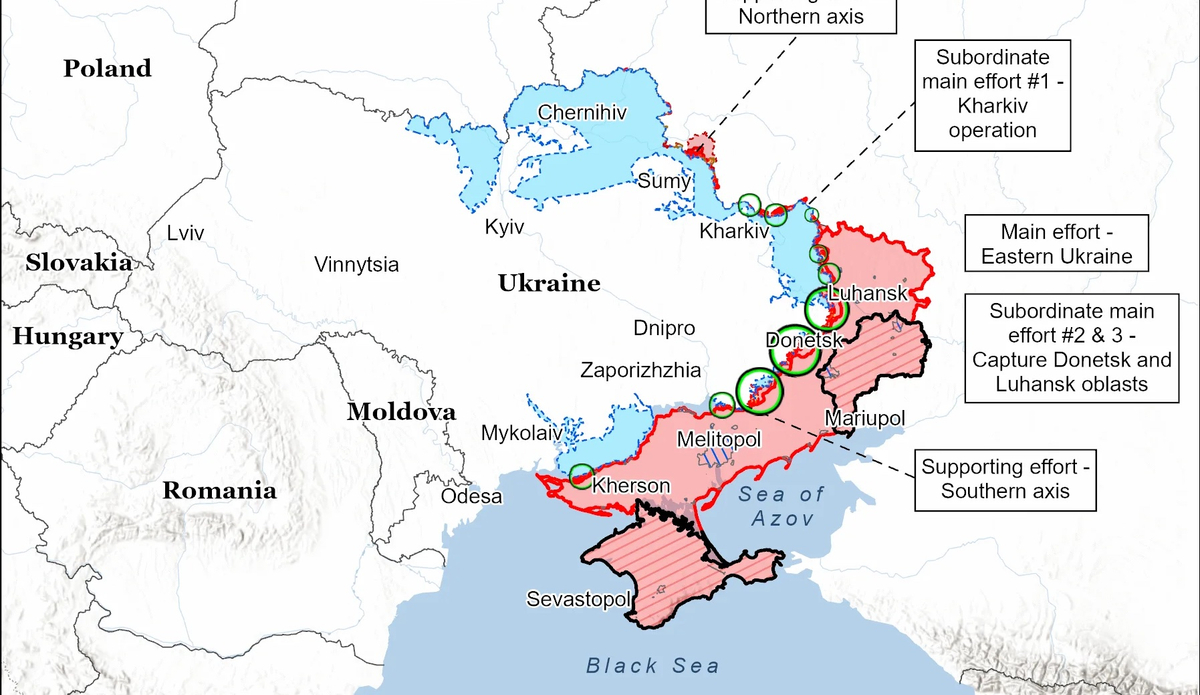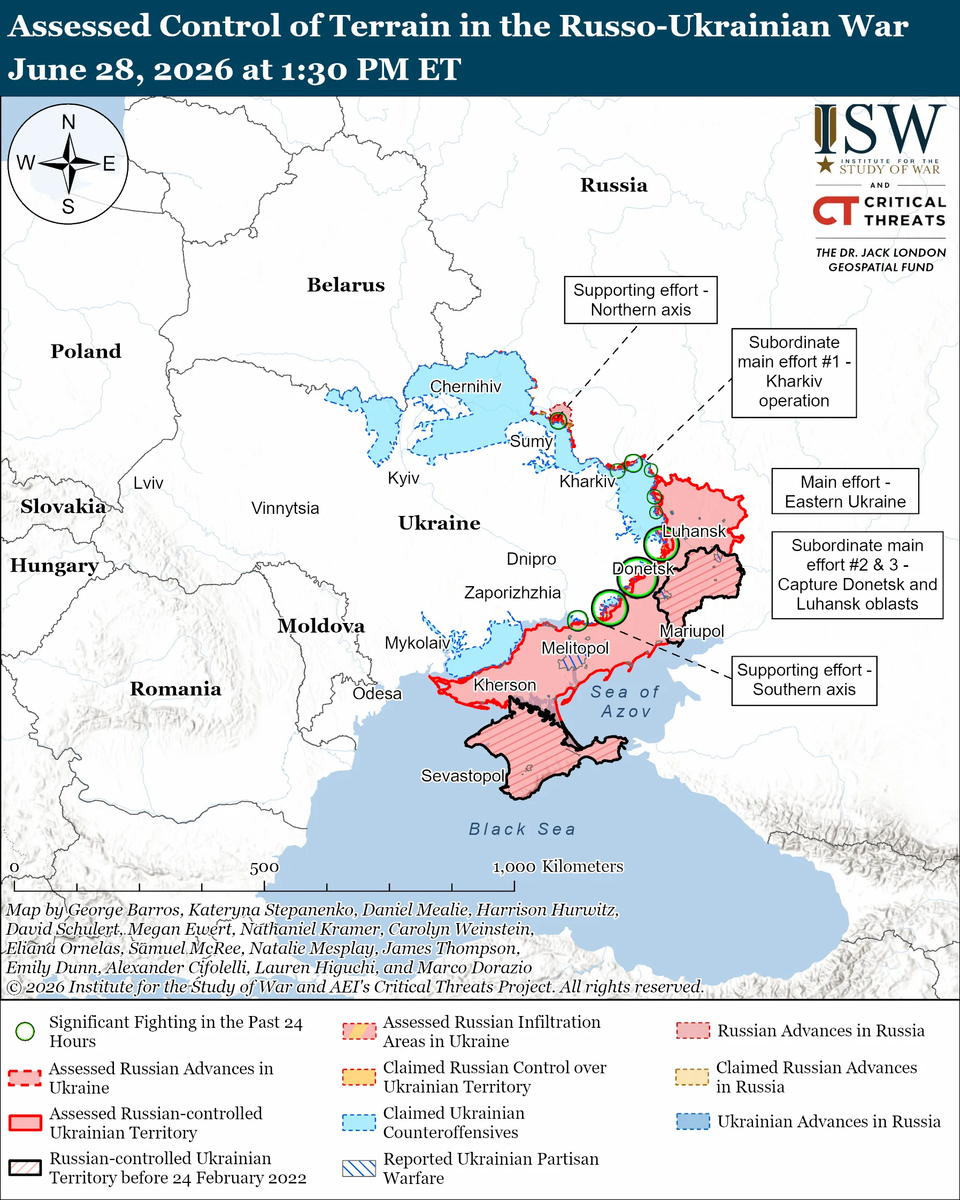
Key Takeaways from the ISW: Russian President Vladimir Putin used his speech to the ruling United Russia Party Congress on June 28 to project Russia’s strength, reinforce his resolve to achieve Russia’s objectives militarily, and reject diplomatic solutions to end his war in Ukraine. Putin vaguely acknowledged the effects that Ukraine’s long-range strike campaign is having on Russia but attempted to dismiss concerns and promote a facade of stability. The United Russia Party formally claimed to be Putin’s party for the first time since 2007. United Russia’s top five State Duma candidates for the September 2026 State Duma elections are mostly long-standing Putin loyalists. Ukrainian forces continued their long-range strike campaign against Russian oil infrastructure on the night of June 27 to 28. Russian forces launched two Zirkon/Onyx anti-ship missiles, six Iskander-M/S-400 ballistic missiles, and 142 drones against Ukraine overnight. Russian forces recently advanced in the Kupyansk direction. JOIN US ON TELEGRAMFollow our coverage of the war on the @Kyivpost_official. See the original here.
ISW Russian Offensive Campaign Assessment, June 28, 2026
War in Ukraine - Latest update, key takeaways and map from the Institute for the Study of War on June 27, 2026
TL;DRAI
Putin rejected diplomacy for Ukraine on June 28, downplaying impact of Ukrainian long-range strikes on Russian oil infrastructure. For IT leaders: escalating geopolitical risk directly affects European energy supply chains, forcing reevaluation of hosting, sourcing, and infrastructure resilience strategies.
164 words~1 min read