Europe’s gas cupboard is looking worryingly bare. Storage facilities across the EU are projected to reach only about 76% capacity by the end of September 2026, with a slight improvement to roughly 77% by the end of October under scenarios where LNG supplies remain constrained.
That’s a problem, because the traditional target is 90% full by November 1. Missing it by 13 to 14 percentage points isn’t a rounding error. It’s the kind of gap that turns a cold snap into a price crisis.
How Europe ended up here
The story starts with an unusually punishing winter that drained reserves faster than expected. By early April 2026, EU storage facilities sat between just 28% and 31% full, the lowest levels since 2018.
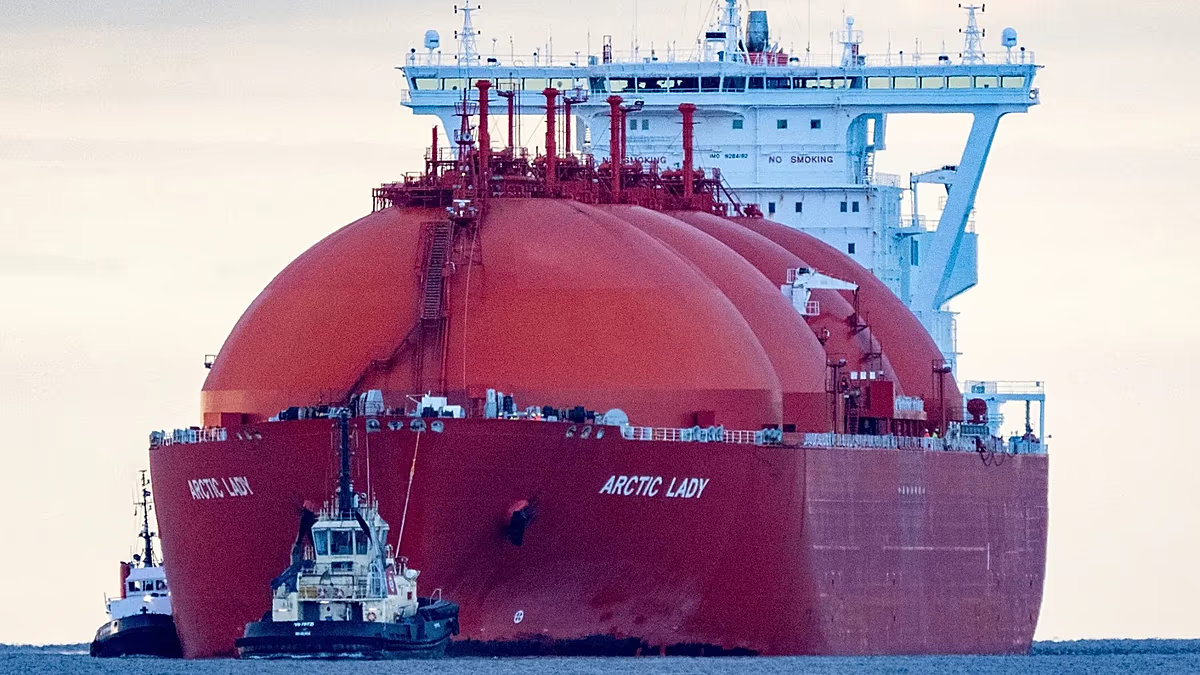
Geopolitical tensions in the Middle East have slowed LNG deliveries, with disruptions in shipping routes, particularly through the Strait of Hormuz, creating bottlenecks in the global LNG supply chain. The loss of Russian pipeline gas continues to limit the continent’s options. Add constrained Qatari LNG flows to the mix, and you get a market where simply finding enough gas to inject is a genuine challenge.