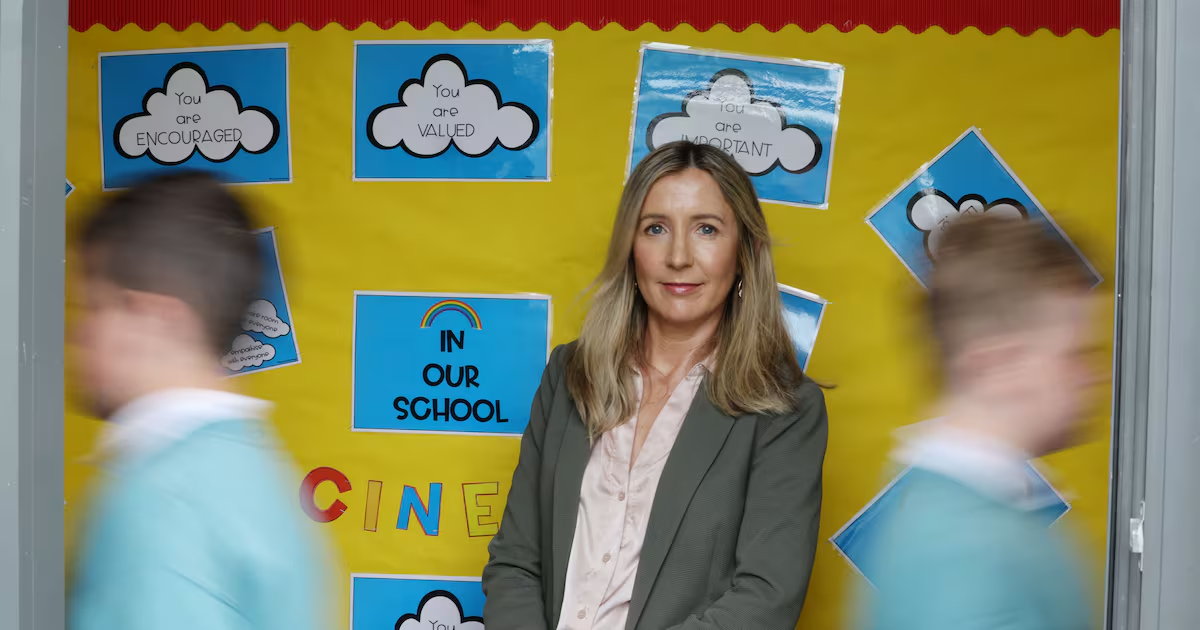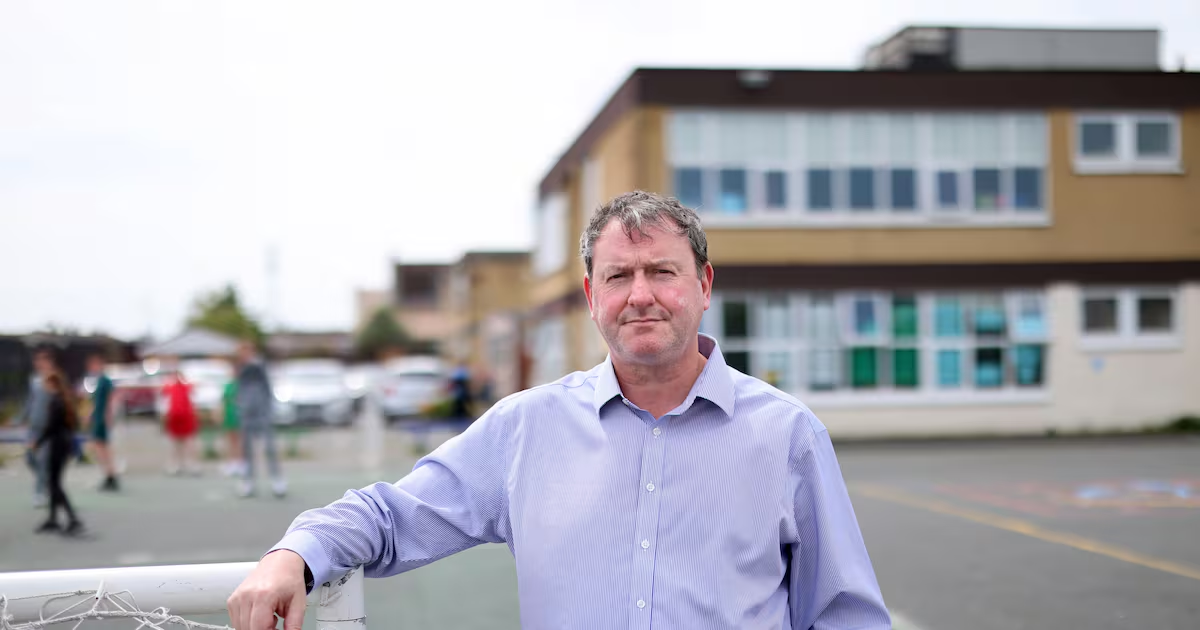
Meeting the basic needs of schoolchildren – for rest, food and hygiene – in the most deprived areas can dramatically improve their “emotional literacy and regulations skills”, a landmark study has found. Our Lady Immaculate Senior National School in Darndale, Dublin, is the subject of the study. Its principal, Shane Loftus, describes as “infuriating” that the Department of Education refused to fund implementation of trauma-informed practice (TIP) when first asked in 2022. The report is entitled The Green Zone School Project: An ED-TARA Primary School Evaluation. “TARA”, in this context, stands for Trauma, Attachment and Resilience into Action. The report details the “strong evidence of a positive impact” of TIP on the school’s children. The first study of TIP in an Irish school says children’s understanding of, and ability to, regulate their emotions increased, while empathy grew between children, and between children and teachers. Ultimately, the approach left them better positioned to learn. Darndale is described as “extremely disadvantaged” by the Government agency Pobal. Drawing on Census 2022, it found a male unemployment rate of 29.8 per cent, female unemployment of 25 per cent and just 6.5 per cent of adults in the area had third-level education. A total of 36.5 per cent had only primary-level education and 75 per cent of households with children were headed by lone parents. “Poverty in itself is a trauma,” says Loftus. “There is intergenerational poverty here, intergenerational abuse of drugs. There are gangs that take control, identify vulnerable people. “You are talking about a small minority that takes its toll on the majority – intimidation, money-lending, attacks on houses.”The impact on children is not only emotional but physiological, he says. They may be over-producing hormones related to stress, fear and depression. The school began to look seriously at trauma in 2020 following the publication of a report on the area by retired assistant Garda commissioner Jack Nolan. Nolan suggested the impact of adverse childhood experiences (ACEs) could be mitigated in schools with training and investment. Some of the school’s teachers trained in TIP in University College Cork. Their successes led Loftus to seek funding to have all staff trained. Advice for pupils geared towards emotional regulation at Our Lady Immaculate Senior National School in Darndale, Dublin. Photograph: Dara Mac Dónaill/The Irish Times Requests to the Department were met with “blank refusal . . . it was infuriating”, says Loftus. The school successfully approached Dublin City Council, the HSE and anonymous benefactors. Loftus notes, however, “the difference in the people we are dealing with in the Department now is huge . . . They listened to schools [in areas like Darndale] identifying trauma as a massive issue”. Trauma is named as a key factor by the Department in its new Deis-plus scheme targeting enhanced supports at the 121 schools whose pupils are at greatest risk of educational disadvantage. Our Lady Immaculate in Darndale is one of the 121 schools.TIP involves shifting from “traditional, punitive approaches to behaviour management” towards understanding why children are acting in certain manners and responding in preventive, relational ways.A crucial tool has been the “thermometer of regulation”. Colour-coded cardboard thermometers, similar to traffic lights, are posted around the school illustrating feelings. The colours include blue, green, amber and red. A 'thermometer of regulation' chart at Our Lady Immaculate Senior National School in Darndale, Dublin. Photograph: Dara Mac Dónaill/The Irish Times “Green is where we want the children to be – calm and confident,” says Loftus. “Amber means you are beginning to get anxious or annoyed. Red is when you have lost control of emotions. [Those children] are easy to see. “The ones in blue are kids who are freezing, fawning – absolutely quiet at the back of the class. They are ones we might have missed in the past. They can be very sad in themselves, depressed; the ones who, further down the road, might have suicidality.”Staff regularly check in with children, asking which coloured zone they are in. The children are taught breathing exercises and counting techniques to help regulate themselves. Other measures include new “calm areas” in classrooms and around the school, which have couches and beanbags. “Regulation boxes” are another measure. They are provided for in each class and contain items geared towards calming and comforting children, such as Play-Doh, fidget-spinners and weighted blankets. A sensory pod, which can help calm emotional overwhelm in pupils, at Our Lady Immaculate Senior National School in Darndale, Dublin.
‘Poverty in itself is a trauma’: Dublin school sees benefits in emotion-focused education
Regular meals and an ability to regulate moods gives Darndale pupils a better chance
941 words~4 min read