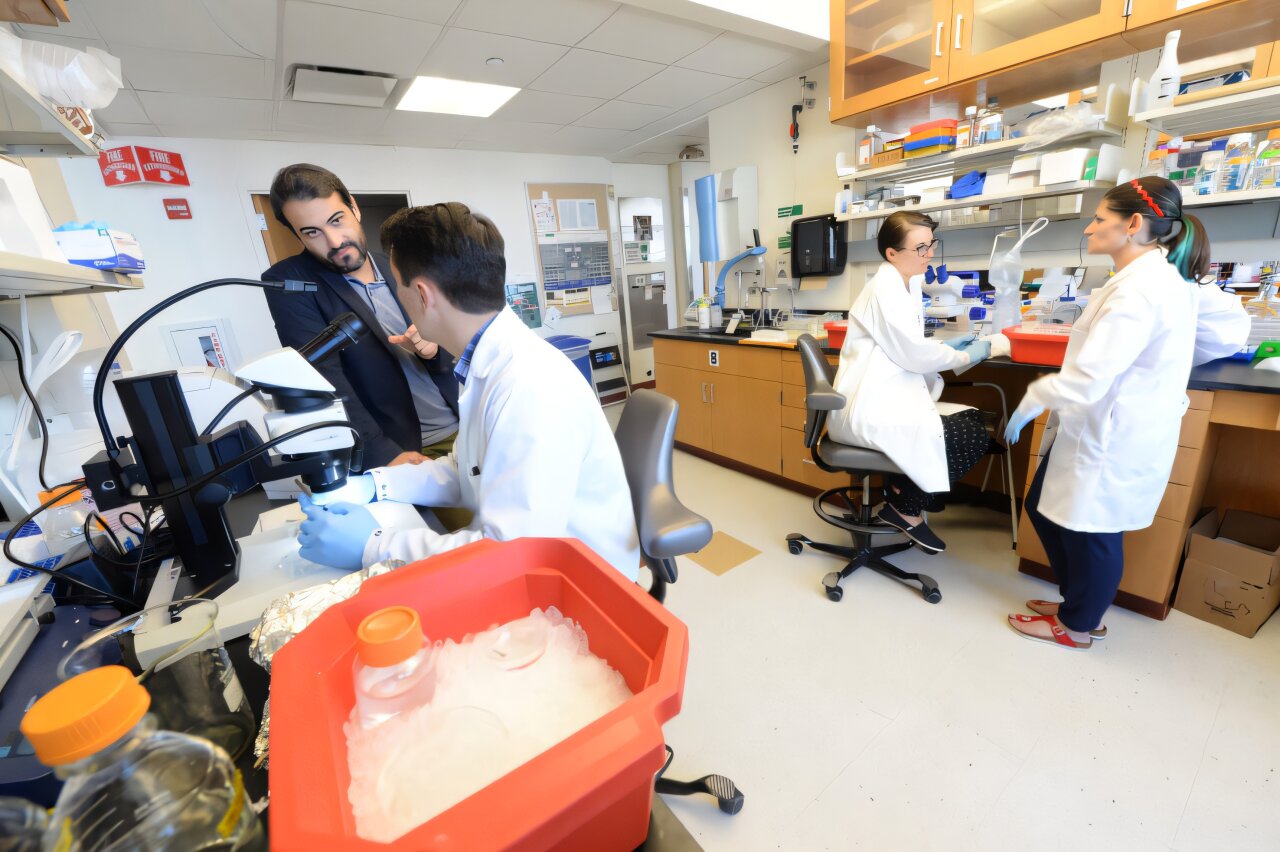
Lab of Dr. Evangelos Kiskinis at Northwestern Medicine. Credit: Les Turner ALS Foundation
Digging deep into the molecular mechanisms behind ALS, researchers at the Les Turner ALS Center at Northwestern Medicine have discovered why nerve cells overfire in the disease. Not only that—they have also designed a new drug to stop this overfiring, which could potentially slow or stop the disease from progressing.
"If we figure out the cause and we get the mechanism right, we can actually treat the disease," said Evangelos Kiskinis, associate professor of neurology and neuroscience at Northwestern University's Feinberg School of Medicine, who led the research.
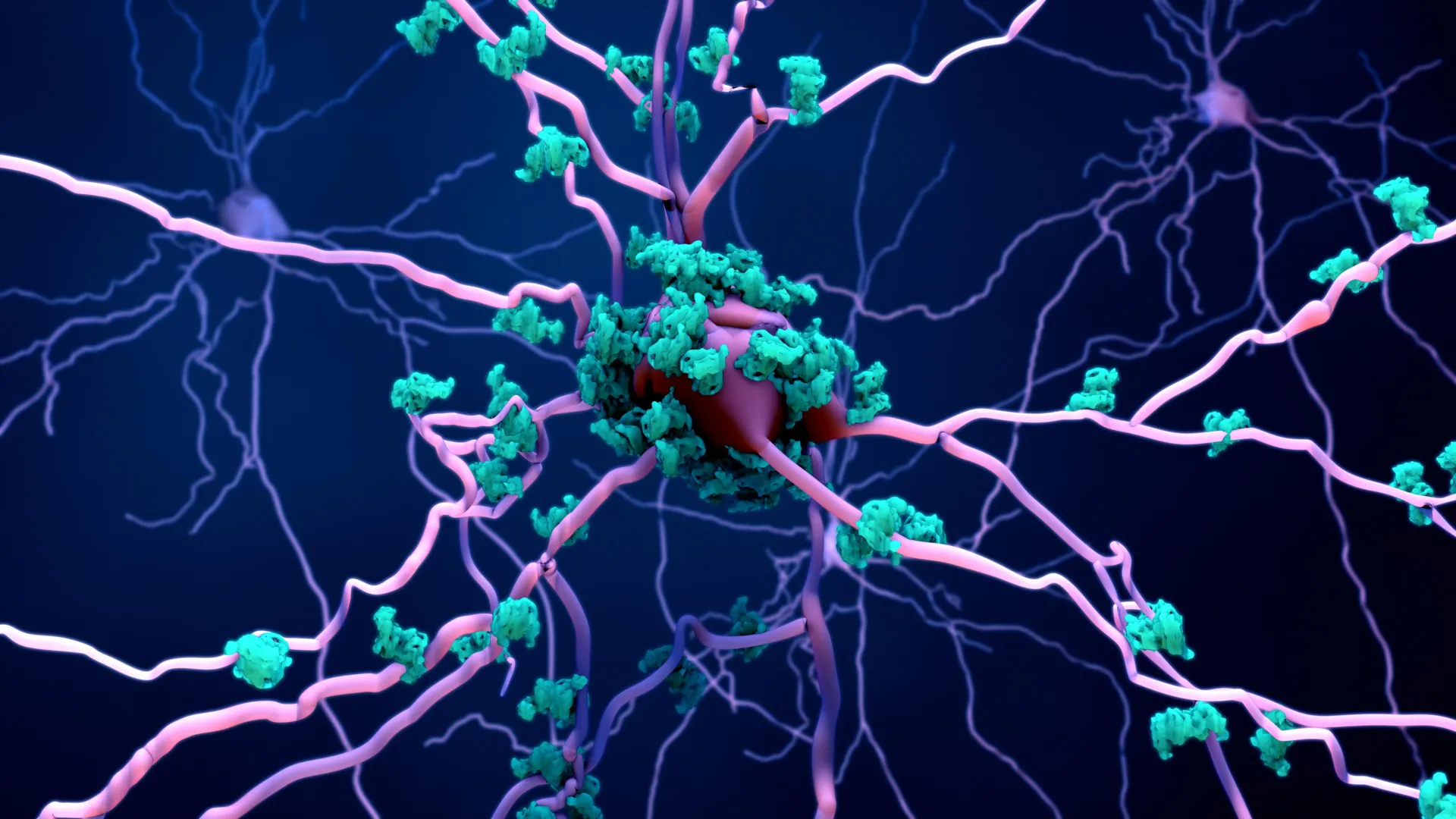
Using patient nervous tissue and lab-grown human neurons—which he develops from stem cells—Kiskinis has focused his research on the protein TDP-43.
In ALS patients, this protein moves from its normal cellular location and disrupts cellular function. "We believe that understanding the functional process of TDP-43 pathology is the key to understanding what happens in sporadic ALS," he said. Sporadic ALS accounts for the vast majority of cases of the disease.