Building a Production Grade Authentication System with NestJS
Security is not a feature you bolt on after the fact. It is an architectural decision that shapes every layer of a system, from how requests are received to how identities are verified and how access is enforced. NestJS, with its opinionated structure and enterprise level design philosophy, makes it possible to build authentication systems that are not just functional but genuinely production ready.
The architecture of NestJS is where the conversation starts. Built on top of Node.js and fully written in TypeScript, every concern lives in its own module. Authentication logic does not bleed into user management. Guards do not live inside controllers. This separation is not cosmetic. It is what makes a system maintainable at scale.
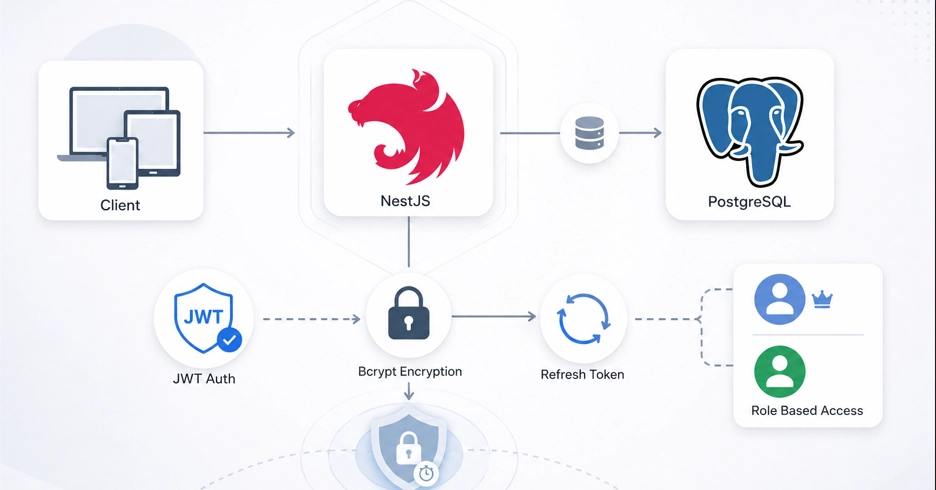
The authentication system here is structured around two core pillars: identity and access. An access token with a short expiry window handles active sessions, while a refresh token manages session continuity. When a user logs out, the refresh token is blacklisted in the database, making it permanently invalid regardless of its remaining lifespan. This is the difference between authentication that looks secure and authentication that actually is.