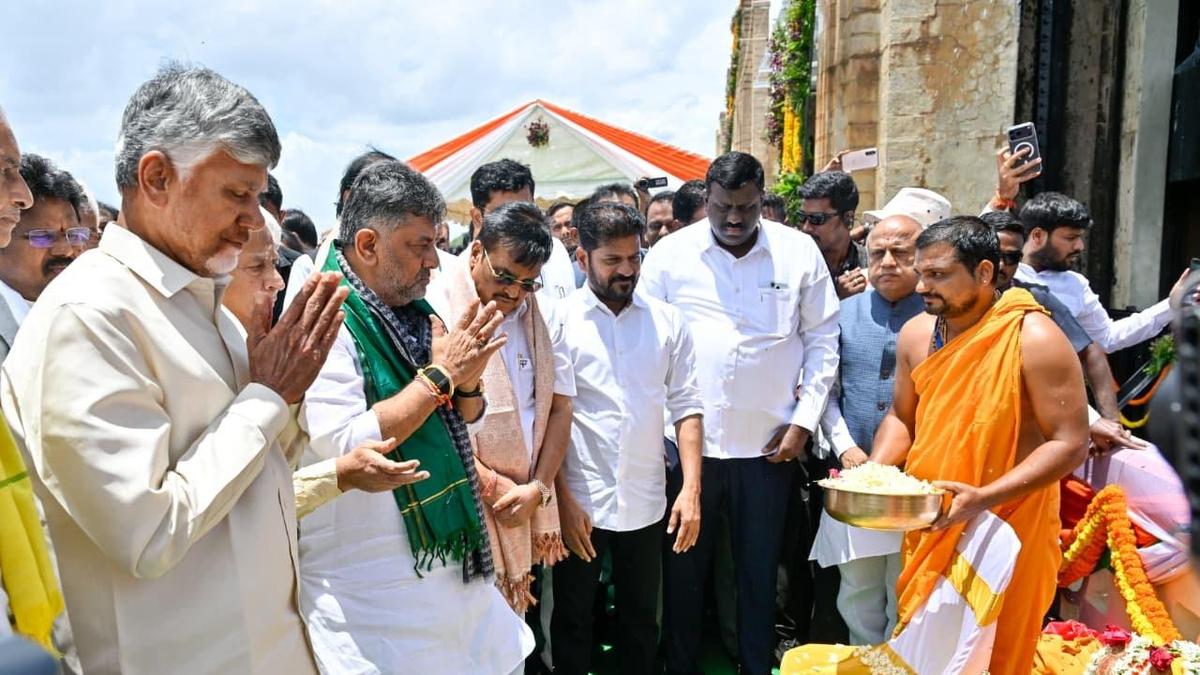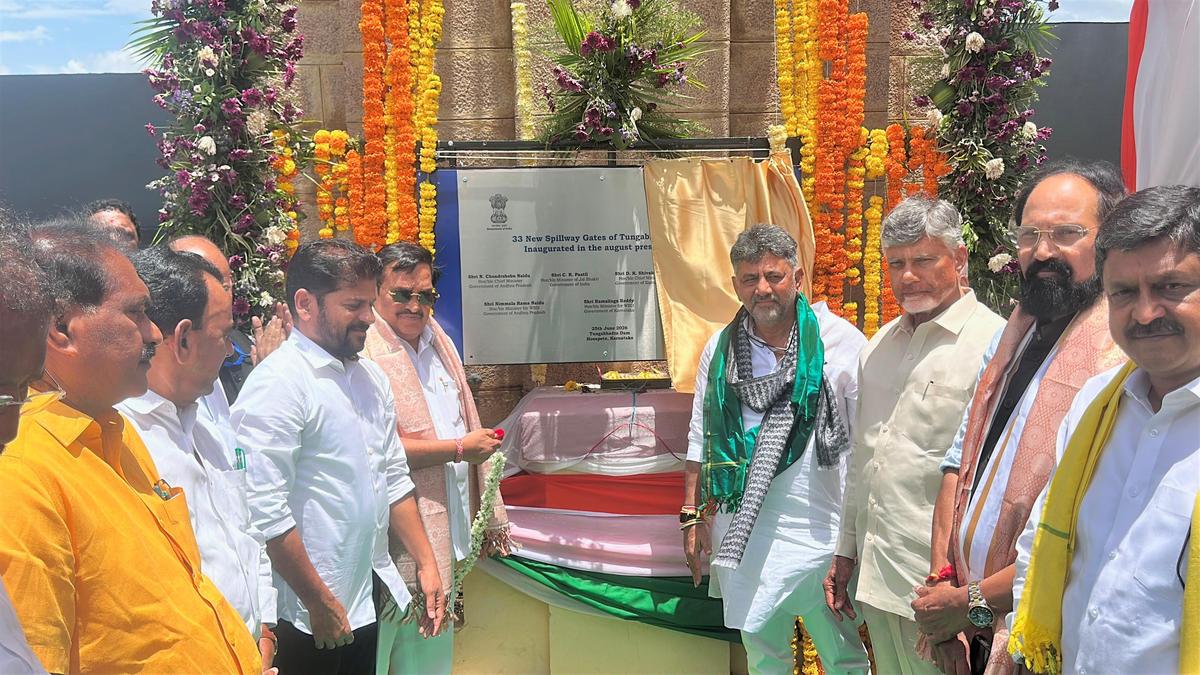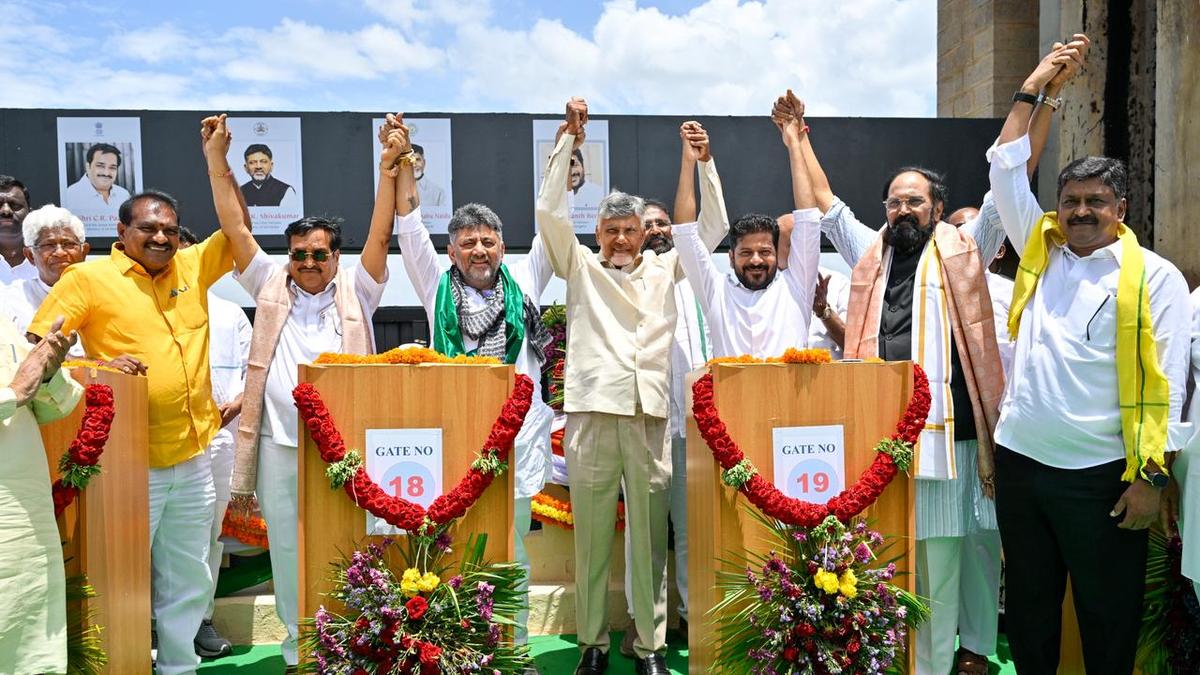
The coming together of the Chief Ministers of Karnataka (D.K. Shivakumar), Telangana (A. Revanth Reddy) and Andhra Pradesh (N. Chandrababu Naidu), along with Union Jal Shakti Minister C.R. Patil, at the inauguration of the 33 spillway gates of the Tungabhadra dam on June 25 was significant beyond the optics. The three leaders pledged greater inter-State cooperation, which is welcome given that the dam has largely remained free of major disputes due to an established water-sharing formula and the Tungabhadra Board’s regulation of releases. Located in Karnataka’s Koppal district, the dam is considered to be the lifeline of the three southern States, providing irrigation to about 16.4 lakh acres — 9.26 lakh in Karnataka, 6.25 lakh in Andhra Pradesh, and 87,000 in Telangana. It hit the headlines in August 2024 when a crest gate was washed away during heavy inflows — which also happened when the dam was full with 105 thousand million cubic feet (tmc ft) of water. The damaged gate was replaced with a temporary one, but with much water wasted, the authorities, who did not want to take chances with the other 32 gates, chose to install high-grade steel gates, at ₹51 crore and which are expected to last 60 years.Notwithstanding the bonhomie, the differences among the leaders on some issues concerning the larger Tungabhadra project cannot be brushed aside. The Upper Bhadra project, a major lift irrigation scheme under implementation in the central region of Karnataka and upstream of the Tungabhadra dam, has emerged as an irritant for Andhra Pradesh and Telangana. At one stage, the BJP-led Union government had made a provision of ₹5,300 crore in its budget for 2023-24, a few months before the Karnataka Assembly elections. However, the Centre later chose not to include it under any of its schemes, but this is being implemented by a Karnataka government undertaking. It remains to be seen whether the spirit of camaraderie will help the three neighbours to overcome their differences on the Upper Bhadra issue. The Tungabhadra dam is also facing excessive siltation, which has reduced its storage capacity from the original 133 tmc ft to about 106 tmc ft. Mr. Patil has assured the Chief Ministers about the Centre’s plan to remove silt from water reservoirs across the country including the Tungabhadra. More importantly, the Union government should closely monitor and expedite, wherever required, the execution of dam rehabilitation and improvement projects being taken up in 19 States. Any laxity with regard to dam safety may have disastrous consequences. The focus must be on prevention, not reparation. Published - June 29, 2026 12:10 am IST
Sharing waters: The Hindu Editorial on the tungabhadra model
The Tungabhadra dam stands as a model of inter-State cooperation
431 words~2 min read