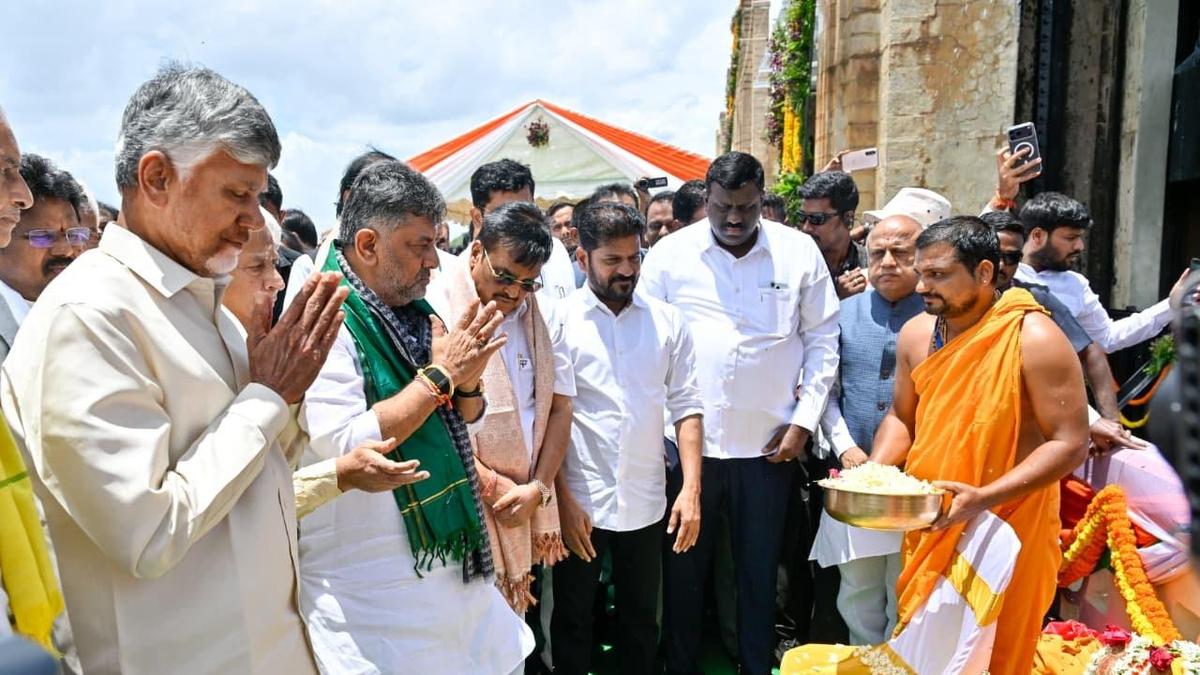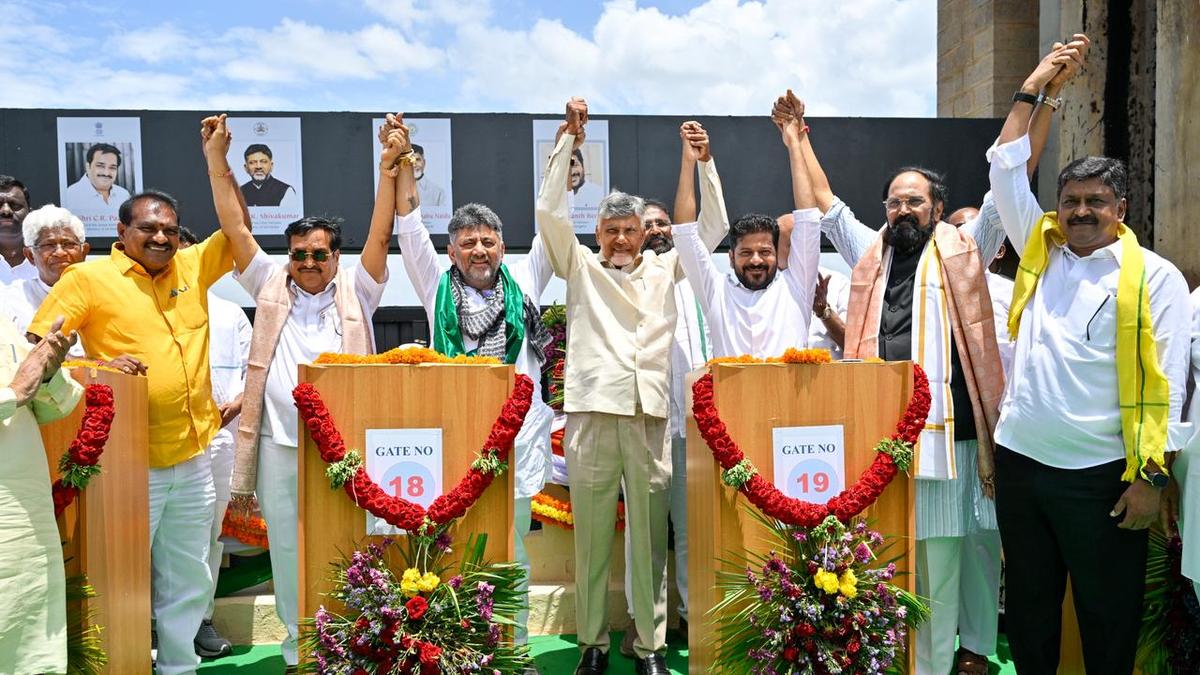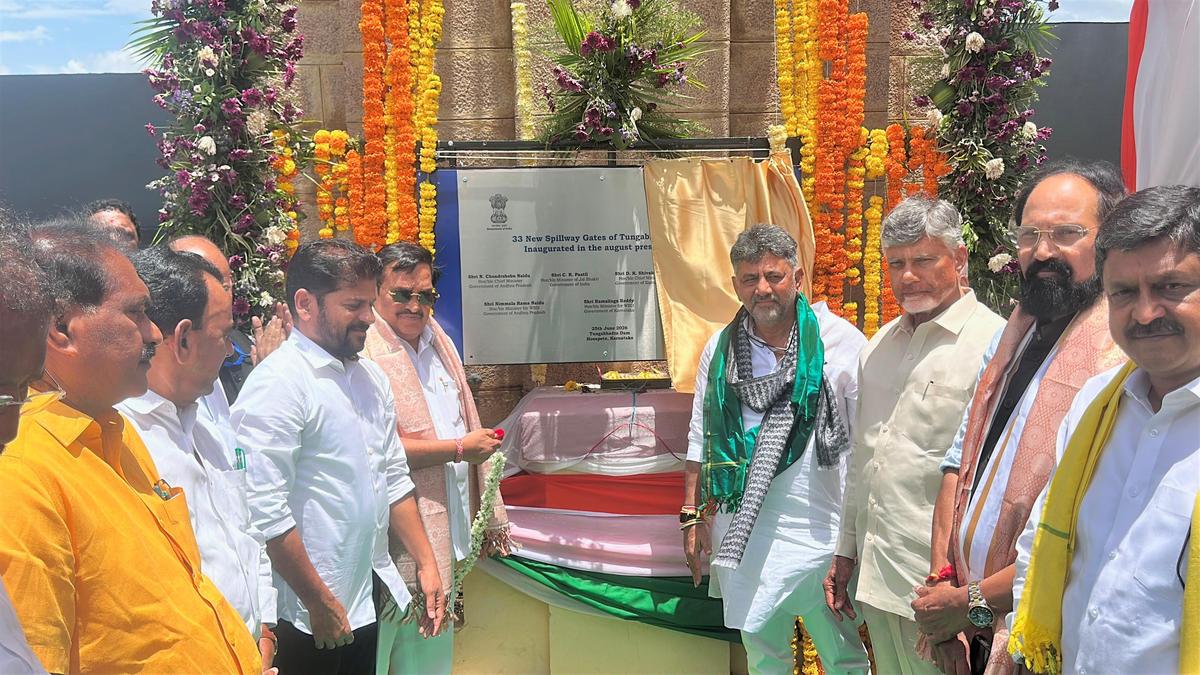
Tungabhadra Dam wears a festive look ahead of Thursday’s inauguration of all 33 newly replaced crest gates at Munirabad.
| Photo Credit: SPECIAL ARRANGEMENT
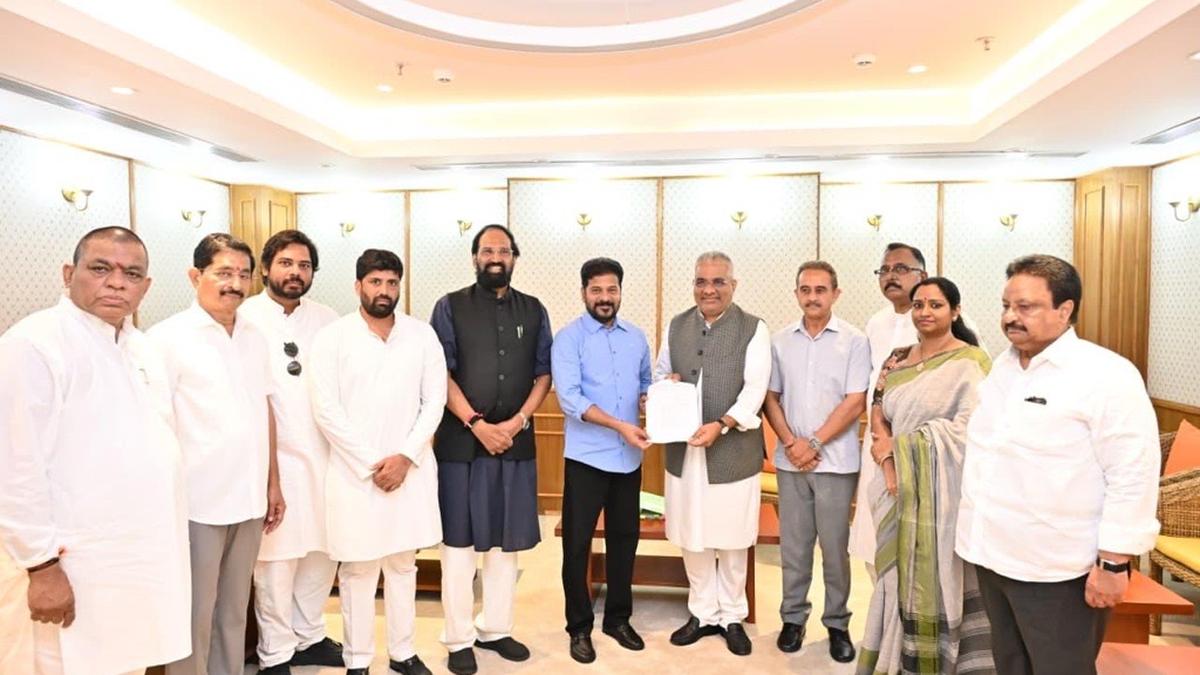
Chief Minister A. Revanth Reddy has sought the intervention of the Central government in ensuring effective coordination with other riparian States for utilising the allocated share of Tungabhadra water to the State.He expressed concern that the State was not getting 5 to 6 TMCFT of water from Tungabhadra against its allocated share of 15.9 TMCFT. As many as 83,987 acres ayacut in 75 villages of Jogulamba Gadwal district was dependent on Tungabhadra water for irrigation needs.Since three States — Telangana, Karnataka and Andhra Pradesh — were depending on the river, the Central Water Commission should take steps to further strengthen the Tungabhadra board for effective utilisation of water. The Chief Minister made the comments during a high level meeting on Tungabhadra project and inter-State river water disputes on Wednesday. The meeting expressed concern over the status of RDS anicut and wanted immediate steps to be taken.The State government deposited ₹59 crore towards modernisation of RDS canal, but works were yet to be completed. Officials told the meeting that works on package one and two were yet to start and those pertaining to package three and four were completed. The meeting has decided to raise the issue during the meeting with Union Jal Shakti Minister slated on Thursday.The meeting resolved to identify immediate and long term solutions to safeguard its rightful share of waters under the Rajolibanda Diversion Scheme (RDS).The development comes amid continuing concerns over poor water availability, silt accumulation and structural constraints affecting canal flows. The State could hardly avail 5 to 6 TMCft water against its entitlement of close to 16 TMCft annually.It reviewed the challenges confronting the decades-old irrigation system and examined a range of engineering, administrative and inter-State coordination measures to ensure effective utilisation of Telangana’s allocated waters.The Chief Minister and Irrigation Minister wanted the State officials to prepared the ground to engage with Karnataka, Andhra Pradesh and the Centre to evolve mutually acceptable solutions that could improve water management within the Tungabhadra basin while safeguarding Telangana’s legitimate rights.The discussions focused on the persistent difficulties in drawing adequate water into the RDS canal despite allocations available to Telangana. Heavy silt deposits near the canal head regulator, changes in river morphology and structural impediments had significantly affected free flow of water into the canal system over the years.The meeting reviewed the status of the Tummilla Lift Irrigation Scheme, which was conceived as a supplementary source to stabilise the RDS ayacut and provide greater irrigation security to farmers in the region. The Chief Minister wanted the irrigation officials to examine the scope for enhancing the storage capacity of the Mallammakunta reservoir to 5 to 6 TMCFT even if it involved acquisition of more land.The project was planned in two stages, with Stage-I involving the construction of three pump houses and Stage-II comprising three balancing reservoirs, including the one at Mallammakunta to augment water availability and improve irrigation reliability.Sructural and hydraulic challenge requiring a durable solution capable of serving the system for the next 15 to 20 years were discussed threadbare. Several recommendations made by an Expert Committee in 2004 were revisited during the deliberations.Among the key recommendations discussed were the removal of silt mounds and sediment deposits near the canal entrance, restoration of proper gradients to facilitate smooth water entry, and execution of revetment works to stabilise river flows and protect vulnerable stretches.Experts pointed to the need for construction of a retainer wall to prevent silting of the RDS water source putting Telangana farmers at the receiving end. . According to technical assessments, a substantial portion of the river flow tended to move towards the Andhra Pradesh side under certain conditions, reducing water availability at the Telangana canal head.As an immediate measure, dredging emerged as one of the most practical options under consideration. Engineers explained that systematic dredging near the canal head could remove accumulated silt and improve water conveyance during critical irrigation period.The Chief Minister directed officials to prepare a comprehensive action plan examining all available alternatives, including dredging, canal head improvements, modernisation works, supplementary lift irrigation options and inter-State coordination mechanisms.Irrigation Minister Uttam Kumar Reddy said that Telangana would continue to pursue solutions to protect the interests of farmers dependent on the RDS ayacut. The objective was not merely to secure allocations on paper but to ensure that allocated waters physically reach farmers’ fields. Published - June 24, 2026 09:13 pm IST