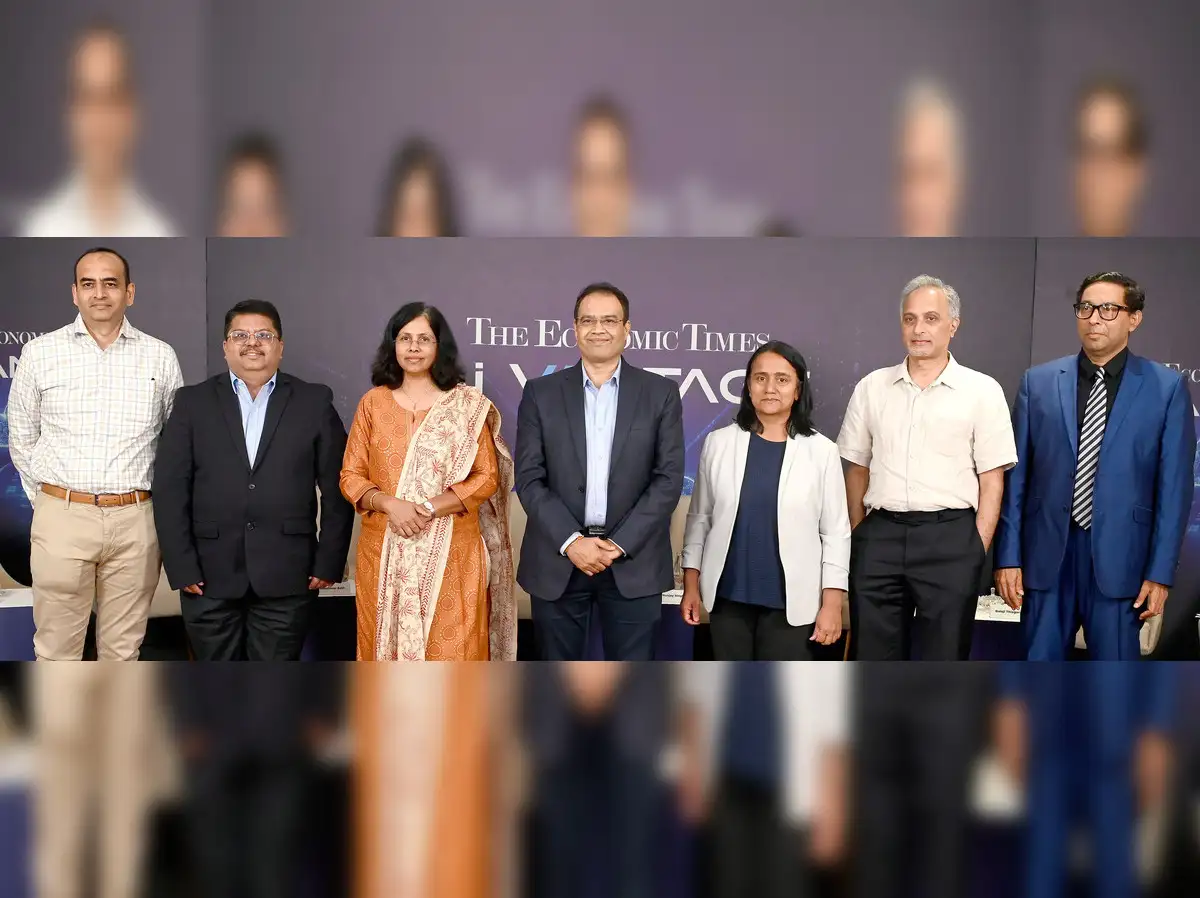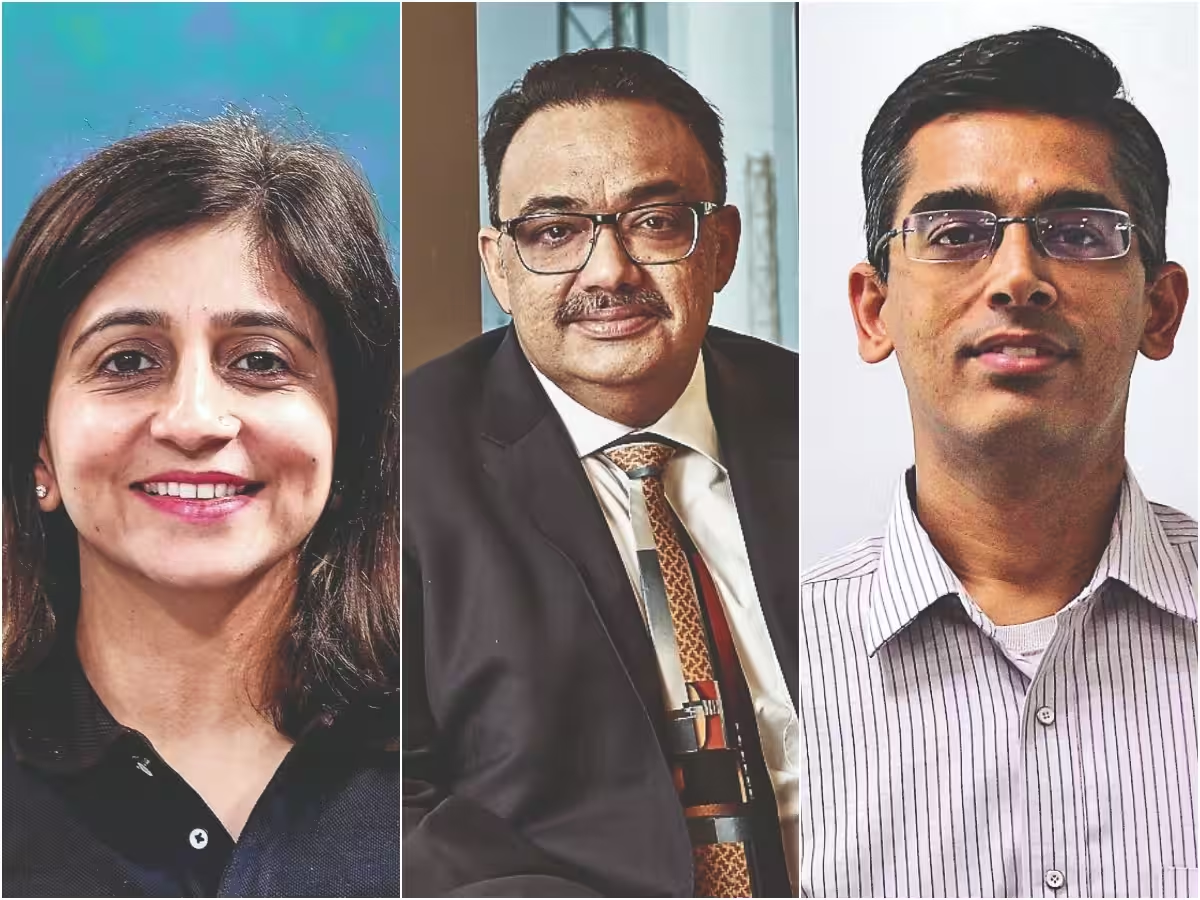
Indian enterprises are bullish about adopting artificial intelligence (AI), but face the challenge of scaling pilot projects with adequate security, governance or return on investment, top corporate leaders said at the Economic Times AI Vantage roundtable on Privacy, Security & Risk: Building Trustworthy AI Through Strong Governance in Mumbai. Companies are discovering that AI adoption is less about choosing the latest frontier model and more about redesigning workflows, securing data, training employees and building resilience, they said."There is no lack of ambition, but there is significant technical debt, along with trust issues and governance challenges," said Cisco India and South Asia president Daisy Chittilapilly. Citing Cisco's latest AI Readiness Index, she said more than 80% of organisations want AI agents integrated into their workforce this year, but less than 30% believe they are ready from a security, infrastructure and data perspective.Parminder Singh, chief executive of Reliance Enterprise Intelligence, said industry is now entering the second phase where enterprises need help answering more fundamental questions. They first need to determine which model best suits each workflow instead of defaulting to the latest frontier model. "The winners on the podium will continue to keep changing. Don't get too excited by a particular model," he said.For financial services, where a single AI error could have significant consequences, security can no longer be treated as an afterthought, said Ambarish Kenghe, group CEO of stock trading and broking platform Angel One.He identified three key risks enterprises must guard against: AI generating incorrect information, leakage of sensitive customer data and autonomous systems behaving unpredictably. "The more powerful the technology, the more careful you have to be," Kenghe said, stressing that organisations must build security and safety by design into AI systems from the outset.Prashant Thakkar, executive director, LIC Mutual Funds, which runs one of India's largest on-ground agent networks, said the temptation to chase flashy AI for its own sake has to be resisted. His priority, Thakkar said, is to equip the field force with relevant and personalised information.Security BottleneckTata Motors Digital.AI Labs chief information security officer Pawan Sharma called for AI systems to be "secure by design", meaning security must be integrated from the planning stage instead of being added after deployment.AI systems no longer behave predictably. "Earlier you could just imagine what the system will do.... Now you have to imagine what the system can do," he said. Designing for that cannot be left to security teams alone. "Business process owners need to be in the room because the failure of an ecosystem is... a failure of imagination," he said.Amol Deshpande, chief digital officer at the RPG Group, said enterprises must evaluate business value, redesign processes and prepare employees before deploying AI widely.LIC MF's Thakkar said enterprises must continuously revisit their resilience mechanisms. "If an AI system goes rogue, are you in a position to plug it out? And if you do, how will your business continue to operate?"Cisco's Chittilapilly agreed. "The question is not whether bad actors will get in; it is how you manage them once they get in," she said.RPG's Deshpande warned about growing use of synthetic data for AI training and predicted enterprises will increasingly deploy "guardian agents" to monitor other AI agents. "It will be the good agents versus the bad agents," he said.Tata Motors' Sharma highlighted the rise of "bring your own AI" as one of the biggest governance challenges. Employees increasingly experiment with consumer AI tools using enterprise data, often without organisational oversight, he said.Need for RegulationExecutives said India should avoid rushing into AI regulations, instead look towards a broad, principles-based framework developed jointly by industry and policymakers.Singh of Reliance Enterprise Intelligence said one of the biggest unanswered questions is accountability when AI systems fail. "If something goes wrong in an AI system, where does the accountability lie? Is it with the organisation, the hyperscaler, the implementer or the orchestration provider? These are still early days and the governance framework has to answer these practical questions."Angel One's Kenghe said industry should not wait for regulators to step in. "The best thing is for participants to regulate themselves. The more the industry regulates itself, the less the regulator has to intervene," he said.(This article is part of the AI Vantage series, developed in partnership with Cisco)
India Inc keen to take bite of AI, but RoI and security hold it from sinking teeth
Indian businesses are eager to embrace AI but face hurdles in scaling projects securely and with clear governance. Leaders at an Economic Times roundtable emphasized that successful AI adoption hinges on workflow redesign, data security, and employee training, not just advanced models. Key concerns include technical debt, trust issues, and the need for "secure by design" principles to mitigate risks like data leaks and unpredictable AI behavior.
TL;DRAI
Indian enterprises target AI agent adoption (80%) but only 30% feel ready: security, infrastructure, and governance remain critical gaps. Winners build security-by-design and governance frameworks, not chase frontier models; resilience and oversight unlock enterprise scale.
708 words~3 min read