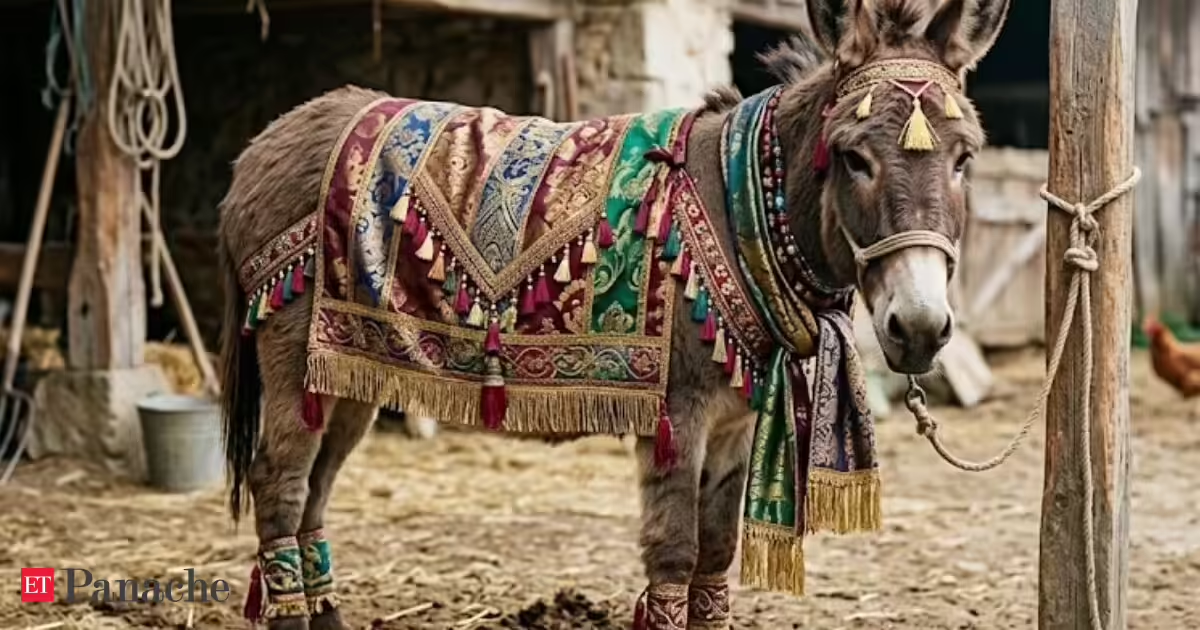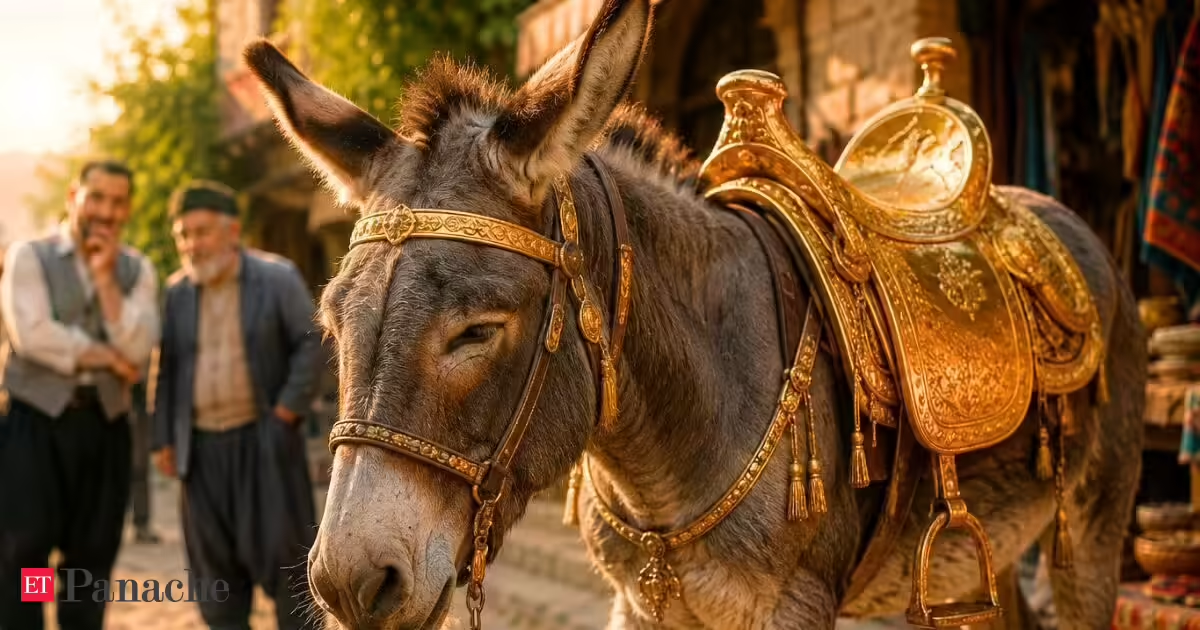
People across the world have used proverbs for centuries to pass on lessons that remain useful even today. Many of these sayings are short, but they carry meanings that go far beyond the words themselves. Turkish proverbs are known for using simple images from everyday life to explain human nature, values, and common sense. One such proverb continues to be shared because its message is as relevant now as it was generations ago.The Turkish proverb says, "Even if you put a saddle of pure gold on a donkey, it remains a donkey. The true worth of a human being is not measured by the satin they wear, but by the conscience and intellect they carry in their chest." At first glance, the words may sound blunt. But they are not really about donkeys or expensive saddles. They are about the difference between appearance and character. The saying reminds people that wealth, luxury, or social status cannot change who someone truly is.It also speaks about what should actually be valued in a person. Instead of judging someone by costly clothes, titles, or possessions, the proverb says that conscience and intelligence are what really define a person's worth. These qualities stay with an individual even when material things come and go.Saying that goes back to Ottoman literatureThe best-known part of this proverb has its roots in the writings of 19th-century Ottoman poet and statesman Ziya Paşa. The opening line is adapted from a famous stanza in his well-known work Terkîb-i Bend, where he criticised people who relied on status or appearance rather than merit.His original words read: "Bed-asla necâbet mi verir hiç üniforma? Zer-dûz palan ursan eşek yine eşektir."Its literal translation is: "Does a uniform ever give nobility to a person of bad origin? Even if you put a gold-embroidered saddle on a donkey, a donkey is still a donkey."Through this comparison, Ziya Paşa questioned the idea that expensive clothing, official uniforms or positions of power could make an undeserving person respectable. His words were aimed at people who looked important on the outside but lacked the qualities expected of someone in such positions.How the modern version became more directThe second part of today's proverb is a modern anonymous addition that expands on the lesson found in Ziya Paşa's writing. It says, "The true worth of a human being is not measured by the satin they wear, but by the conscience and intellect they carry in their chest."While the original poem relied on metaphor, this newer version explains the message more clearly. It leaves little room for misunderstanding. Instead of focusing only on outward appearances, it tells readers exactly what should matter when judging a person. Conscience reflects a person's moral sense, while intellect points to wisdom, understanding and sound judgement. Together, these qualities are presented as the real measure of character.Looking beyond wealth and appearancesThe proverb serves as a reminder that external success cannot replace inner values. A person may own luxury items, wear expensive clothes or hold an impressive title, but those things alone do not reveal honesty, kindness or intelligence.The image of a donkey wearing a golden saddle is meant to show that changing the outside does not change what is underneath. In everyday life, this idea can apply to many situations. Someone may try to impress others with money, fashionable clothing or social standing, yet still fail to earn genuine respect if their actions tell a different story.At the same time, the proverb also encourages people not to underestimate those who may not appear wealthy or powerful. Good judgement, compassion, integrity and wisdom often have nothing to do with material success.The tradition of Turkish proverbsTurkish proverbs, known as atasözleri, have been passed down through generations, mainly through oral tradition. Many of them draw inspiration from nature, farming, travel and everyday life. Their language is usually simple, but the ideas behind them are practical and easy to relate to.Like many traditional sayings around the world, they often use familiar objects or animals to explain larger truths about human behaviour. This makes them memorable and easy to pass from one generation to the next.The proverb about the golden saddle is one example of how a simple image can communicate a lesson that remains meaningful even after many years. Its continued popularity shows that people still recognise the difference between what can be bought and what must be earned.
Proverb of the day from Turkey: 'Even if you put a saddle of pure gold on a donkey, it remains a donkey. The true worth of a human being is not measured...' Can money or luxury change who you really are? This Turkish saying has an answer
The Turkish proverb, "Even if you put a saddle of pure gold on a donkey, it remains a donkey," reminds us that wealth, luxury and status cannot change a person's true character. Rooted in the writings of Ottoman poet Ziya Paşa and later expanded with a modern moral, the saying highlights that real worth comes from conscience, wisdom and integrity rather than outward appearances.
728 words~3 min read