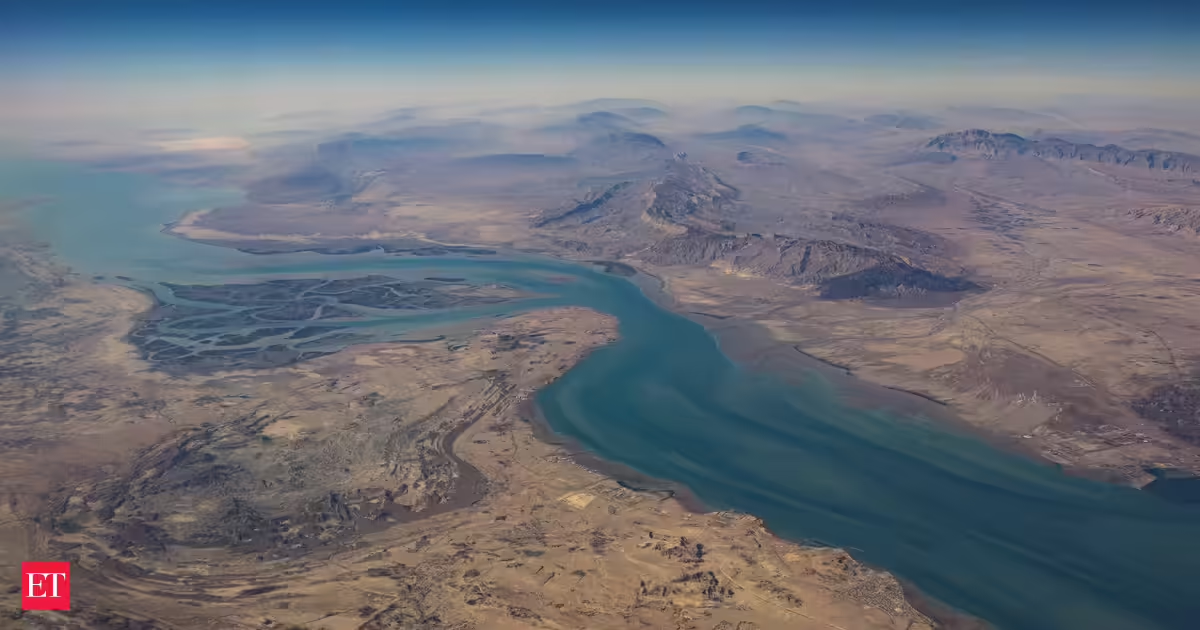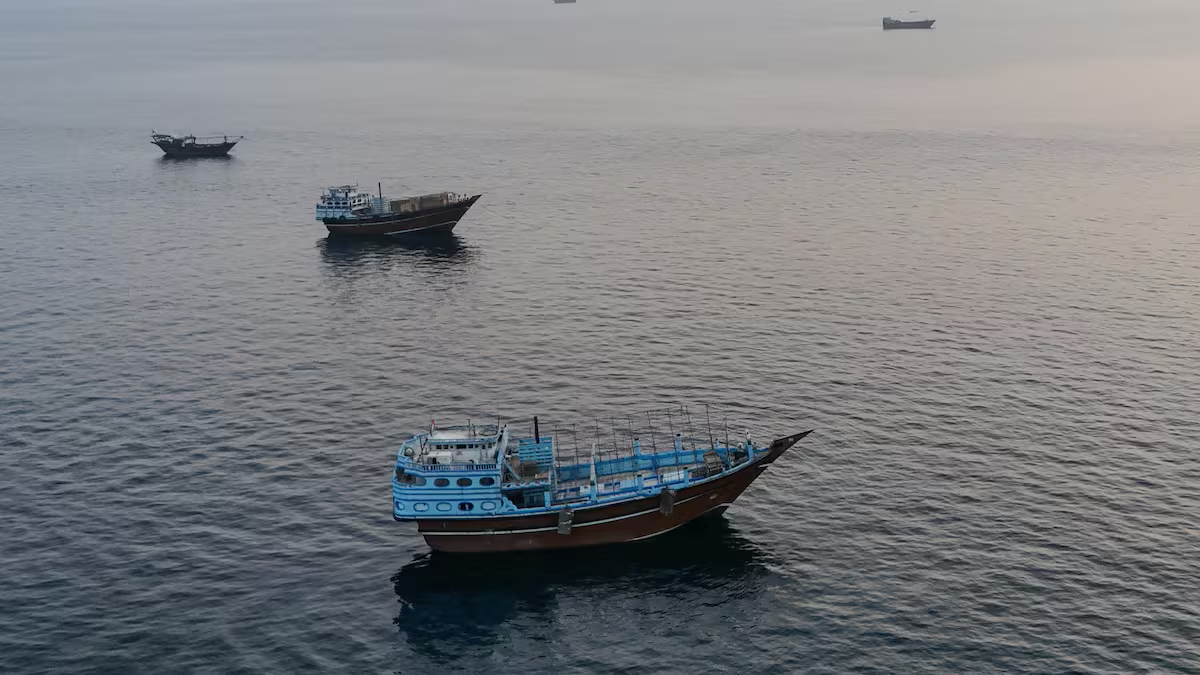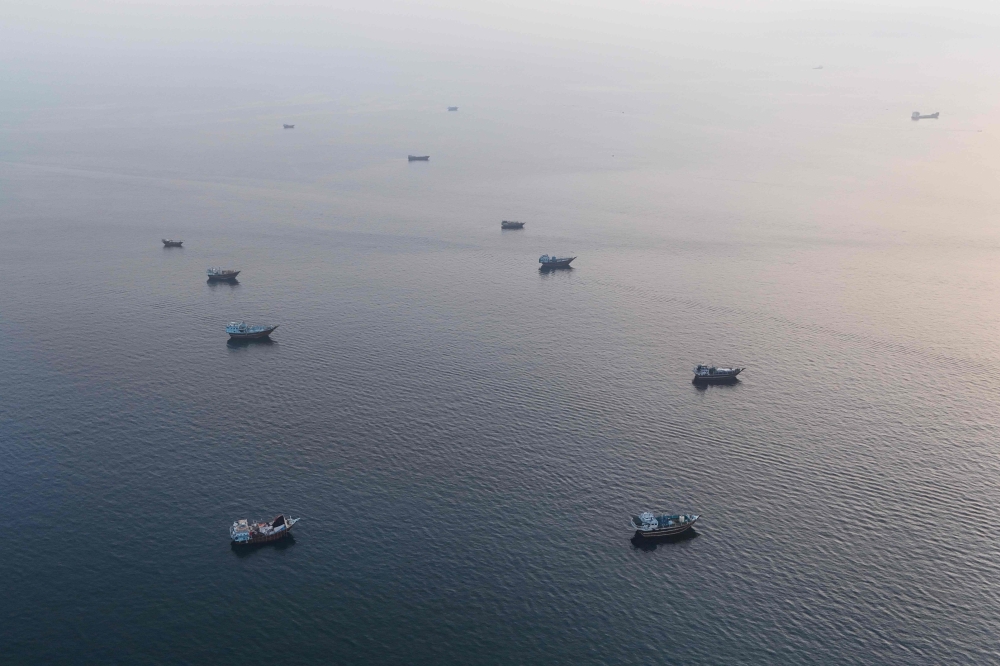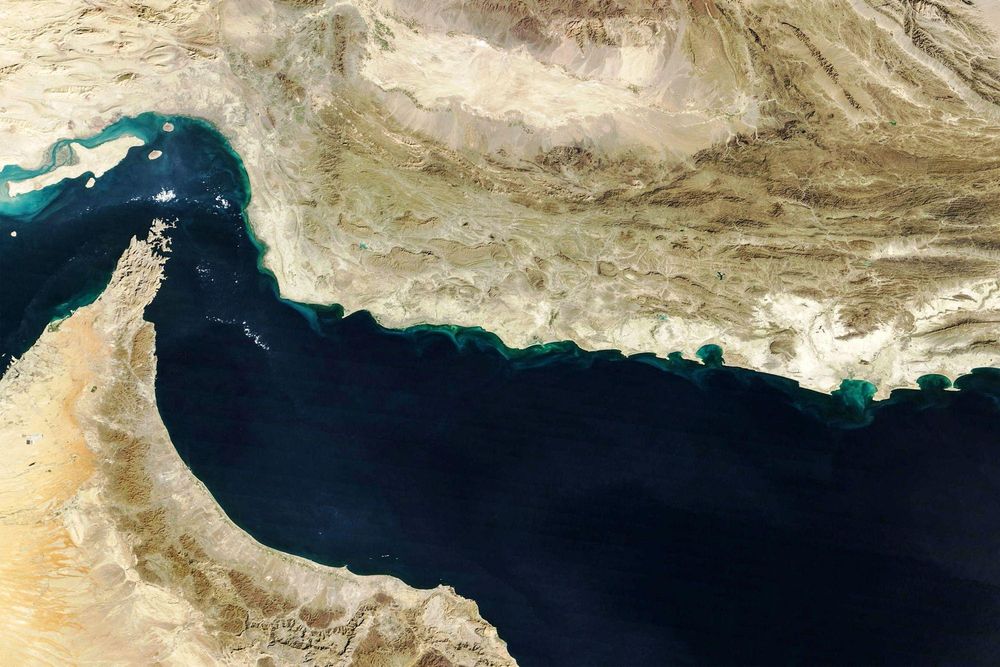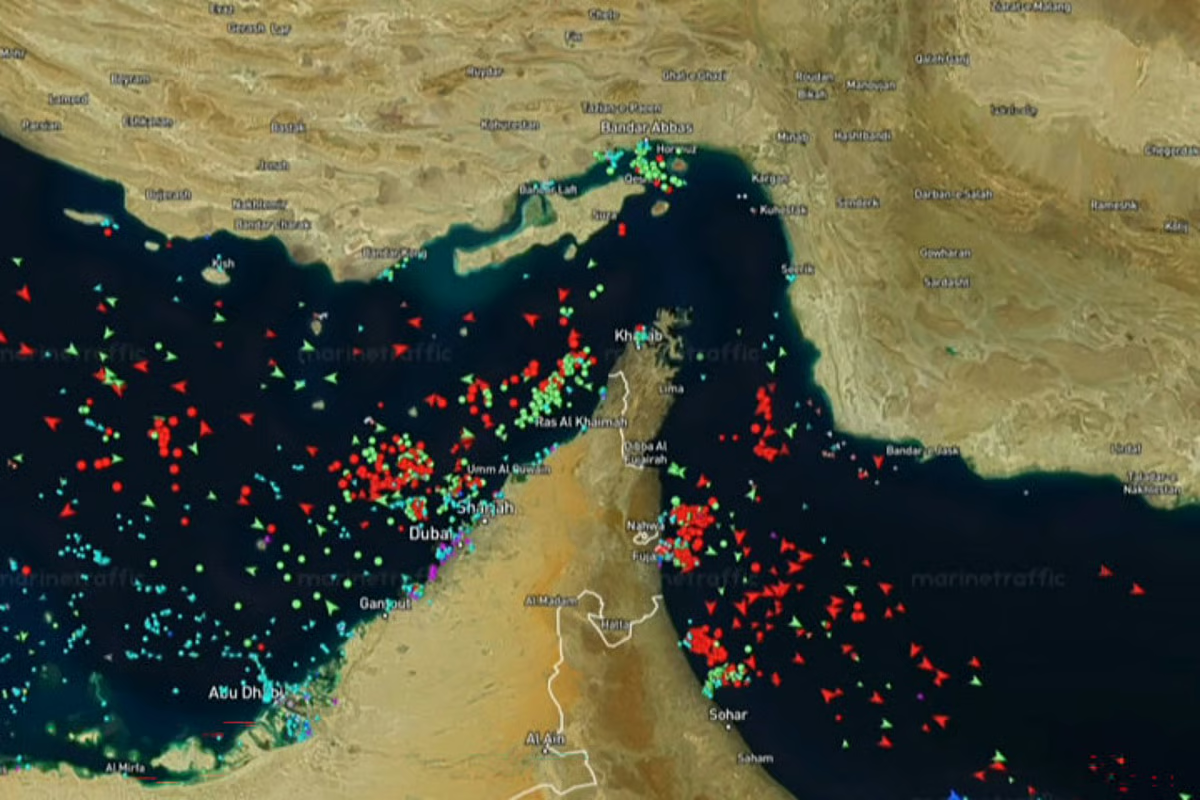
Latest exchange of strikes between US and Iran is about far more than retaliationLast updated: June 28, 2026 | 20:363 MIN READThis screen grab taken from a screen recording of the MarineTraffic website on April 21, 2026, shows data visualisation of maritime traffic in the Gulf, Strait of Hormuz and Gulf of Oman from April 18 to April 20, amid a fragile US-Iran truce. AFPDubai: At the centre of the crisis lies a growing dispute over one of the world’s most strategically important waterways — the Strait of Hormuz — and, more specifically, who has the authority to manage it.That disagreement is rapidly emerging as the biggest threat to the US-Iran agreement signed earlier this month.Iran draws a red lineSpeaking in Baghdad on Sunday, Iranian Foreign Minister Abbas Araghchi warned that any attempt to create shipping arrangements outside those agreed with Tehran would only worsen the crisis.“Any attempt to adopt new or separate arrangements... will only lead to more complicated situations, delays in the reopening of the Strait of Hormuz, and will increase tensions,” he said.His remarks came after vessels continued using a southern shipping corridor close to Oman instead of routes approved by Iran.The Iranian Revolutionary Guard Corps (IRGC) said Oman and the International Maritime Organization (IMO) announced the alternative corridor without consulting Tehran and warned ships against using it.Araghchi urged all parties to abide by the memorandum of understanding reached with the United States and called for a new regional security framework involving Gulf states, Iran and Iraq, without outside powers.Five flashpoints over HormuzIran insists it should oversee shipping under the MoU. Ships are increasingly using a corridor close to Oman. Tehran warns alternative routes will “increase tensions”. US and Iran accuse each other of violating the ceasefire. Military clashes are now centred on protecting and controlling the Strait.More than a shipping laneThe Strait of Hormuz links the Arabian Gulf with the Gulf of Oman and carries about one-fifth of global oil trade as well as much of the region’s liquefied natural gas exports.Keeping the waterway open formed the centrepiece of the ceasefire agreement between Washington and Tehran.Iran pledged to use its best efforts to ensure safe passage for commercial shipping, while the memorandum also envisaged Iran and Oman working together on the future administration of the Strait.But that wording has now become one of the agreement’s most disputed provisions.Ships are changing courseMany commercial vessels are increasingly avoiding Iranian-controlled routes.Instead, a growing number are hugging Oman’s coastline while passing through Hormuz.Maritime analysts say more than half of vessels leaving the Gulf recently chose the southern corridor.The shift gathered pace after attacks on merchant ships and reports that Iranian forces instructed several tankers to turn back.Although demining operations have widened the southern passage, shipping companies remain cautious.Military tensions growThe dispute has increasingly been backed by military action.The United States carried out strikes on Iranian missile sites and coastal radar installations after accusing Tehran of attacking merchant shipping.Iran responded by launching missiles and drones at US bases across the Gulf.Washington says the attacks violated the ceasefire, while Tehran insists US strikes breached the agreement first.Each side now accuses the other of undermining the memorandum intended to restore stability.A clash over controlAnother sticking point is transit fees. President Donald Trump has repeatedly insisted there should be “no tolls, no insurance costs, and no other charges of any kind” for ships using the Strait of Hormuz, saying Iran had assured Washington it would not impose them. He has warned that negotiations could collapse if Tehran failed to honour that commitment.Tehran, however, has maintained that the Strait should remain under its exclusive management and has warned that any alternative shipping arrangements or efforts to bypass its role would increase tensions.Trump has also repeatedly stressed that the Strait must remain open to commercial shipping, accusing Iran of jeopardising global energy supplies and warning that any further disruption to maritime traffic would draw a strong US response.Why it mattersWhat began as an agreement to reopen one of the world’s busiest energy corridors is increasingly turning into a struggle over who controls it.For Washington, uninterrupted freedom of navigation remains non-negotiable.For Tehran, management of the Strait has become a question of sovereignty and regional influence.With shipping routes now disputed, military strikes continuing and diplomacy under growing pressure, the Strait of Hormuz is no longer merely part of the agreement.It has become the issue that could determine whether the entire US-Iran deal survives.-- With AFP inputsA Senior Associate Editor with more than 30 years in the media, Stephen N.R. curates, edits and publishes impactful stories for Gulf News — both in print and online — focusing on Middle East politics, student issues and explainers on global topics.
Why the Strait of Hormuz could sink the US-Iran agreement
Rising tensions over control of the Strait of Hormuz threaten to derail the US-Iran agreement, as disputed shipping routes and military strikes raise global stakes.
847 words~4 min read