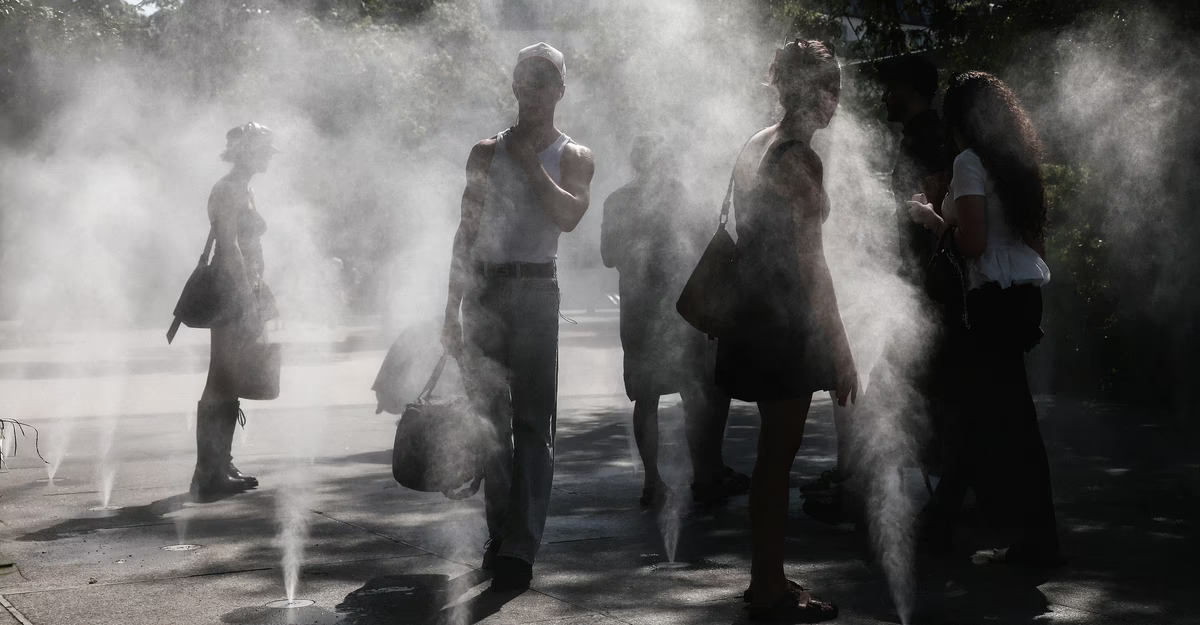
Skip to Content Subscribe Our Offers My Account Manage My Subscriptions FAQ Newsletters Canada Canadian True Crime Canadian Politics Health World Israel & Middle East Financial Post NP Comment Longreads Puzzmo Diversions Comics NP News Quiz New York Times Crossword Horoscopes Life Eating & Drinking Style Sponsored Play for Ontario Travel Travel Canada Travel USA Travel International Cruises Travel Essentials Culture Books Celebrity Movies Music Theatre Television Business Essentials Advice Lives Told Tails Told Shopping Buy Canadian Home Living Outdoor Living Kitchen & Dining Tech Style & Beauty Personal Care Entertainment & Hobbies Gift Guide Travel Guide Amazon Prime Day Deals Savings National Post Store More Sports Hockey Baseball Basketball Football Soccer Golf Tennis Driving Vehicle Research Reviews News Gear Guide Obituaries Place an Obituary Place an In Memoriam Classifieds Place an Ad Celebrations Working Business Ads Archives Healthing Epaper Manage Print Subscription Profile Settings My Subscriptions Saved Articles My Offers Newsletters Customer Service FAQ Newsletters Canada World Financial Post NP Comment Longreads Puzzmo Diversions Life Shopping Epaper Manage Print Subscription HomeNewsWorldHow Paris is using the Seine to keep cool during Europe's latest heatwaveScorching temperatures forced the Louvre and the Eiffel Tower to close earlier than usual this weekAuthor of the article: You can save this article by registering for free here. Or sign-in if you have an account.River water that has been chilled in special plants is being sent across the city, as temperatures soar in the French capital. Photo by Benjamin Girette /BloombergUnder the streets of Paris, a 75-mile (120km) labyrinth of pipes is at work trying to keep the parts of the city cool. They’re carrying water that’s been chilled in special plants before being sent across the French capital, to offices, malls and museums, including the Louvre.Enjoy the latest local, national and international news.Exclusive articles by Conrad Black, Barbara Kay and others. Plus, special edition NP Platformed and First Reading newsletters and virtual events.Unlimited online access to National Post.National Post ePaper, an electronic replica of the print edition to view on any device, share and comment on.Daily puzzles including the New York Times Crossword.Support local journalism.Enjoy the latest local, national and international news.Exclusive articles by Conrad Black, Barbara Kay and others. Plus, special edition NP Platformed and First Reading newsletters and virtual events.Unlimited online access to National Post.National Post ePaper, an electronic replica of the print edition to view on any device, share and comment on.Daily puzzles including the New York Times Crossword.Support local journalism.Create an account or sign in to continue with your reading experience.Access articles from across Canada with one account.Share your thoughts and join the conversation in the comments.Enjoy additional articles per month.Get email updates from your favourite authors.Create an account or sign in to continue with your reading experience.Access articles from across Canada with one accountShare your thoughts and join the conversation in the commentsEnjoy additional articles per monthGet email updates from your favourite authorsSign In or Create an AccountorIn a country where air conditioning is rare, the district cooling network offers just that. Operator Fraicheur de Paris, part of Engie SA, says it’s more environmentally friendly, using 50 per cent less electricity than a standalone system and cutting emissions by half.The network, which uses water from the Seine as part of the cooling process, is under intense strain right now from record high temperatures that have taken hold across the continent. Managing Director Marie Carlo said chilling plants are working round the clock, and huge demand as well as occasional power outages means sometimes they can’t get the water as cold as usual.Get a dash of perspective along with the trending news of the day in a very readable format.By signing up you consent to receive the above newsletter from Postmedia Network Inc.A welcome email is on its way. If you don't see it, please check your junk folder.The next issue of NP Posted will soon be in your inbox.We encountered an issue signing you up. Please try againDespite the stresses on operations, Carlo says district cooling is going to become even more important as a response to climate change and more extreme weather patterns.The latest heatwave in Europe arrived before the usual summer temperature peak in July. In Paris, it forced the Louvre and the Eiffel Tower to close earlier than usual this week. Across the continent, transport was disrupted, crops were damaged, and schools and nurseries had to shut.It’s also been linked to a number of deaths, something that’s become a recurring theme in Europe. More than 60,000 people were likely killed by scorching temperatures in the summer of 2022, and about 47,000 people in 2023. The Louvre was forced to close earlier than usual this week. Photo by Benjamin Girette /Bloomberg“What used to be seen as a comfort solution is now becoming a health issue,” Carlo said this week while presenting a tour of Fraicheur de Paris’s operations. “We have a lot of demand for connections these days.”District cooling is being used in a number of cities, including Zurich, Singapore and Chicago. The basic process is to use refrigerants to chill water to as low as 4 C (39.2F). The water, in a closed loop system, is pumped to the buildings of clients to produce fresh air. As it warms, it’s circulated back to plants for cooling again. Water from a local source is tapped via heat exchangers as part of the cooling process.It’s been used on a small scale in Paris since the 1970s, but started to really grow in the 1990s. Since then, Fraicheur de Paris has expanded to 14 chilling plants, as well as large reservoirs and ice tanks.One facility, under the banks of the Seine near the Place du Canada, is a hive of pumps, pipes and machinery. There’s a loud permanent buzz as “chillers” — deep underground — cool large volumes of water before sending it via scores of pipes to serve air conditioning systems of clients. Above them, as part of the cooling operations, heat exchangers use water from the Seine, which is regularly flushed back slightly warmer into the river.Fraicheur de Paris, which operates under a concession from the city, supplies more than 900 clients, from office buildings to landmarks like the Opera Garnier. It aims to add more plants and almost 100 miles of pipes to triple the number of premises connected by 2042, when its concession expires. Sheets and blinds cover apartment windows during the heat wave in Paris. Photo by Benjamin Girette /BloombergThe company says there are calls to accelerate its planned expansion. And requests for connections are coming in from a range of businesses and public services, including commercial landlords, department stores, entertainment venues and hospitals.Carlo said one of the challenges with expansion is space for new cooling plants. To expand the pipe network, about half requires ripping up sidewalks, while the rest can be installed in the existing sewage grid, meaning that new clients can sometimes be connected in less than a year.Paris Mayor Emmanuel Grégoire says district cooling is now vital for the city.“It’s strategic to develop this cooling network, which doesn’t use individual air conditioning, which has huge drawbacks in terms of overuse of energy and heat emissions,” he said. “The heatwaves must no longer be managed as crisis situations but as recurring phenomena.”Our website is the place for the latest breaking news, exclusive scoops, longreads and provocative commentary. Please bookmark nationalpost.com and sign up for our daily newsletter, Posted, here. Join the Conversation This website uses cookies to personalize your content (including ads), and allows us to analyze our traffic. Read more about cookies here. By continuing to use our site, you agree to our Terms of Use and Privacy Policy.
How Paris is using the Seine to keep cool during Europe's latest heatwave
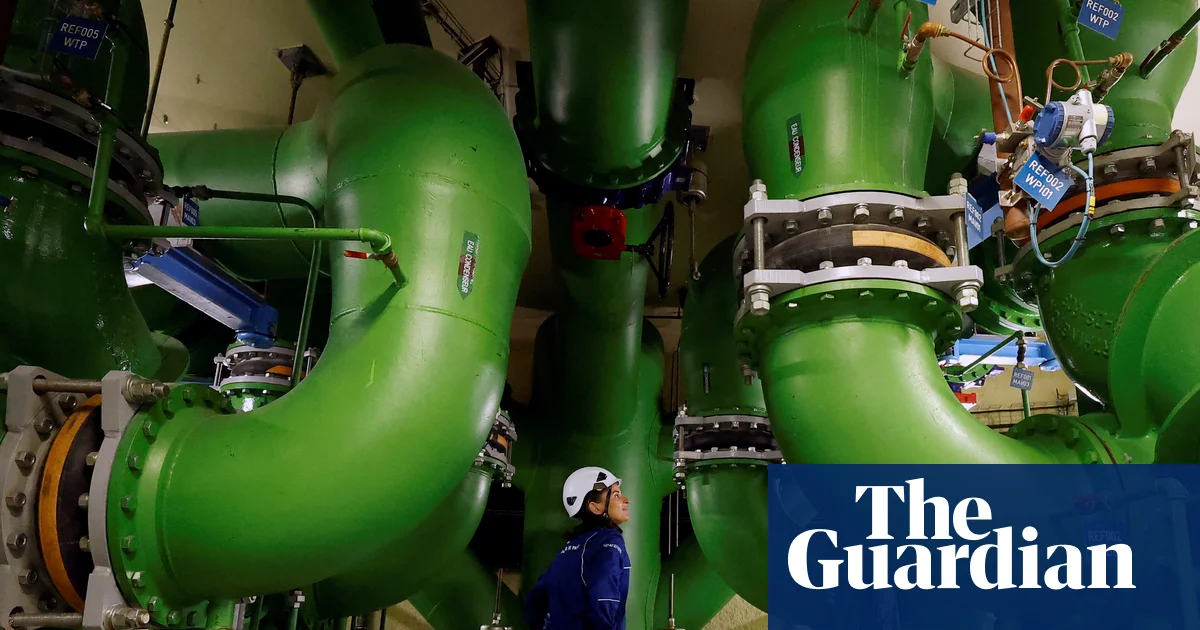
River water that has been chilled in special plants is being sent across the city, as temperatures soar in the French capital.
TL;DRAI
Fraicheur de Paris (Engie SA) operates a 120km underground chilled water network serving buildings, museums and offices across the city, with the Louvre forced to close early during Europe's record heatwave. District cooling cuts electricity consumption by 50% versus standalone systems and halves carbon emissions, positioning itself as essential infrastructure for urban adaptation as extreme weather patterns intensify.
1,278 words~6 min read