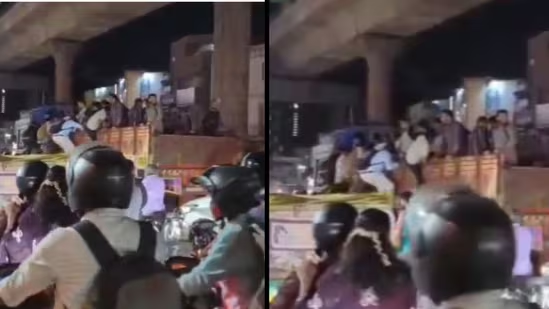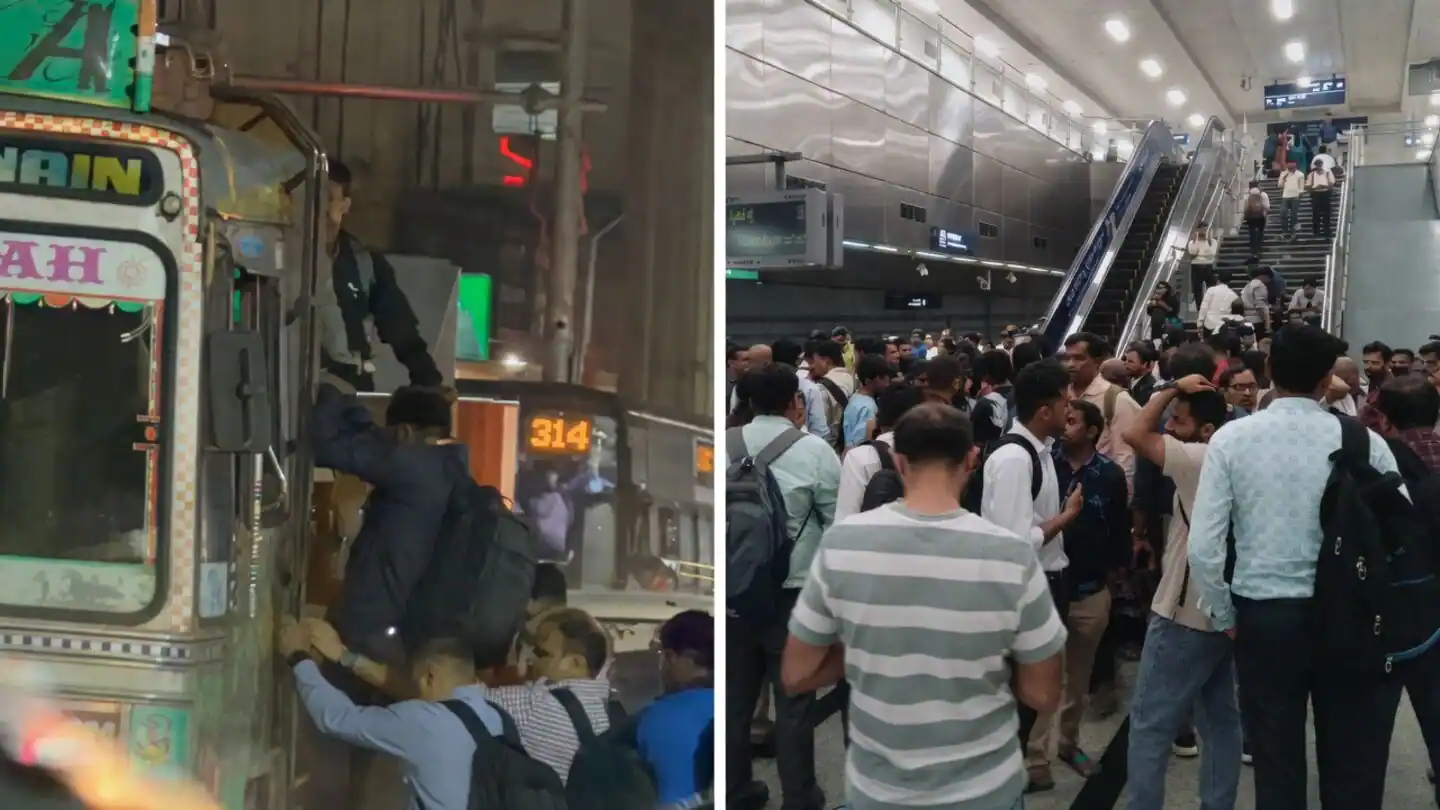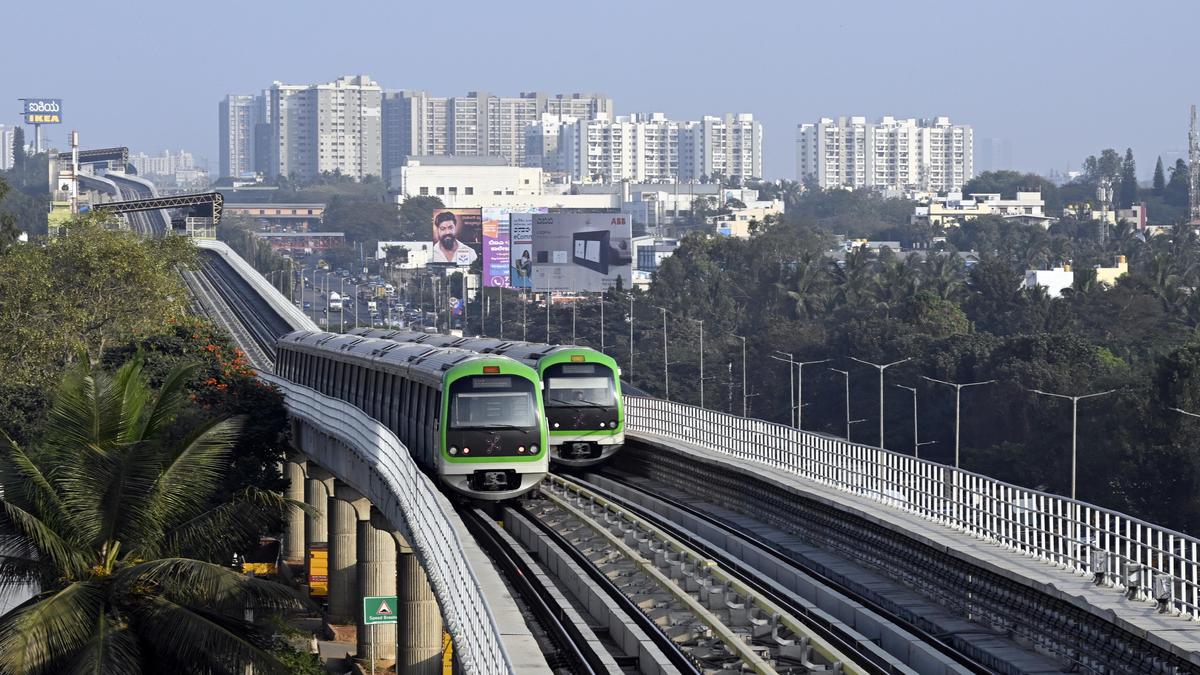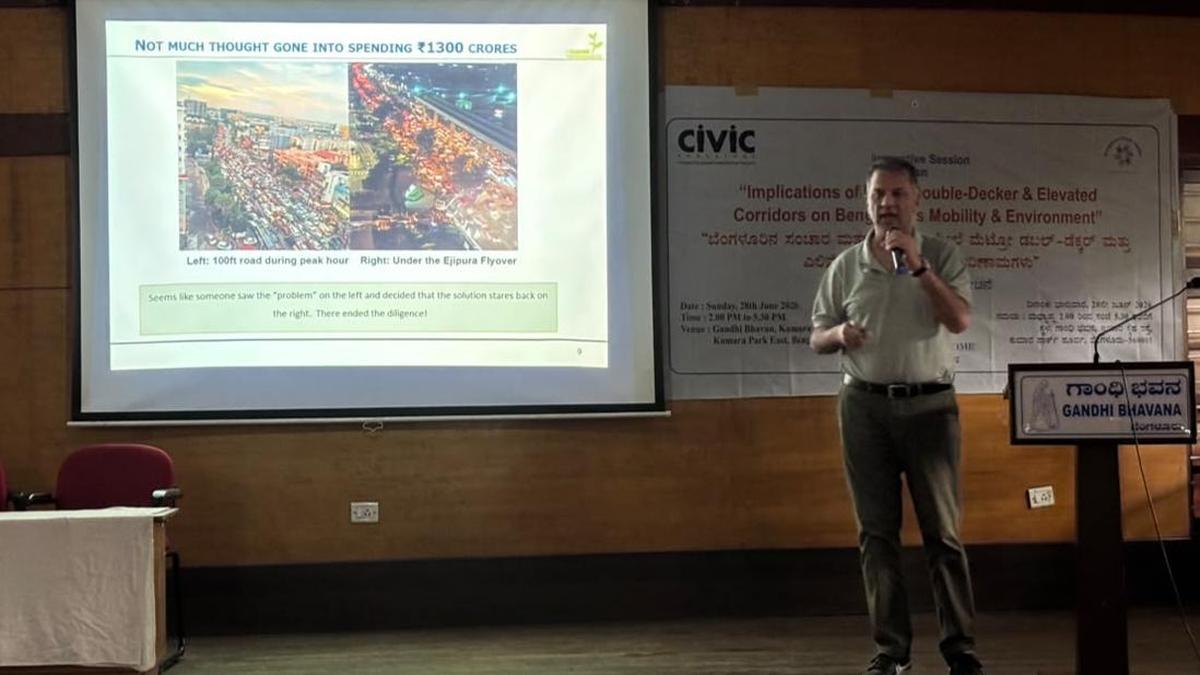
A presentation on ‘Implications of Metro Double-Decker & Elevated Corridors on Bengaluru’s Mobility & Environment’ being organised at Gandhi Bhavan in Bengaluru on Sunday.
| Photo Credit: ALLEN EGENUSE J.
Daily ridership on Bengaluru’s Namma Metro phase-3 corridors is expected to decline from 8.09 lakh passengers under a metro-only scenario to 7.98 lakh passengers if double-decker road infrastructure is introduced, says a study, ‘Implications of Metro Double-Decker & Elevated Corridors on Bengaluru’s Mobility & Environment.’In the study, led by Ashish Verma of the IISc Sustainable Transportation Lab (IST Lab), the researchers argue that the additional road capacity would induce commuters to shift from public transport to private vehicles, contrary to the objectives of mass rapid transit systems. The findings are based on a presentation on the implications of metro double-decker and elevated corridors and a detailed technical report submitted to the Ministry of Housing and Urban Affairs (MoHUA).Shift private vehiclesThe researchers argue that the additional road capacity would induce commuters to shift from public transport to private vehicles, contrary to the objectives of mass rapid transit systems.The assessment projects a significant change in travel behaviour by 2041. Bus mode share is estimated to fall by 6.4%, while metro mode share would decline by 1.4%. At the same time, car usage is projected to increase by 3.8%, two-wheeler trips by 1.28%, and auto and taxi trips by 2.8%, indicating a clear shift towards personal modes of transport.The study noted that although double-decker corridors may initially appear to improve traffic movement, they ultimately encourage additional private vehicle usage, resulting in higher vehicle kilometres travelled (VKT), increased congestion and greater environmental impacts.The report estimates that the proposed double-decker corridors would generate an additional 17,012 kg of carbon dioxide (CO₂) every day, besides 85.9 kg of carbon monoxide (CO), 12.6 kg of nitrogen oxides (NOx), 19.5 kg of hydrocarbons (HC) and 1.1 kg of PM2.5 emissions daily. Fuel consumption is projected to rise by more than 7,000 litres per day, translating into an additional daily fuel expenditure exceeding ₹6.45 lakh.What the study foundFall in Metro ridership