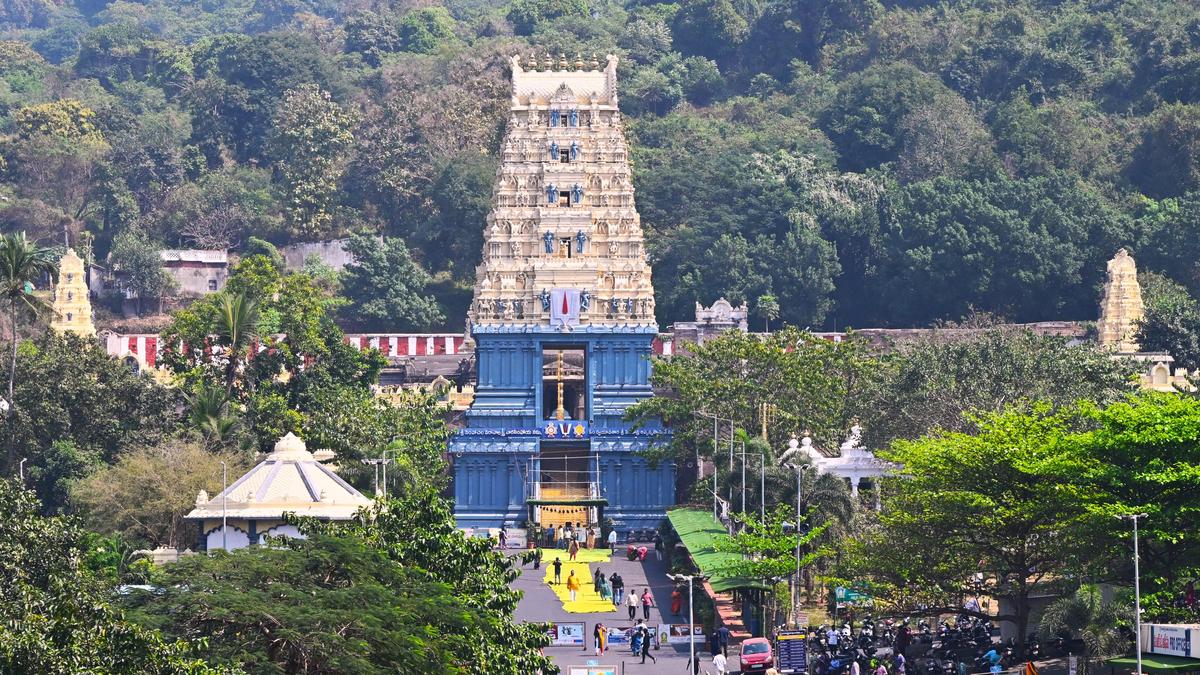
The Simhachalam temple requires around 500 kg of premium sandalwood annually for its Chandanam ritual
| Photo Credit: File photo
In a significant move to ensure a sustainable supply of sandalwood for its unique religious practices, the Sri Varaha Lakshmi Narasimha Swamy Devasthanam at Simhachalam is preparing to develop a large-scale sandalwood plantation on the temple hills.The initiative, aimed at achieving long-term self-sufficiency, will initially cover 500 sandalwood saplings and will be implemented with the active participation of devotees.The proposal gained momentum after the temple’s hereditary trustee and Chairman, P. Ashok Gajapati Raju, who is also the Governor of Goa, directed the administration to prepare a scheme enabling devotees to contribute to the project. Under the proposed initiative, pilgrims and well-wishers will be able to purchase premium sandalwood saplings and donate them to the Devasthanam for planting on the hill slopes.Speaking to The Hindu on Sunday, Executive Officer J. Venkata Rao confirmed that the proposal was under active consideration.“We are working out the operational details. A dedicated scheme will be introduced to implement the project with the support of devotees. In the first phase, around 500 sandalwood saplings will be planted on suitable vacant lands across the temple hills,” Mr. Rao said.The plantation is intended to address the temple’s long-standing dependence on external sources of sandalwood, which is indispensable for the shrine’s distinctive ritual traditions.Unlike most Vaishnavite temples, the presiding deity of Lord Varaha Lakshmi Narasimha at Simhachalam remains covered throughout the year with a thick layer of sandalwood paste, known as Chandanam, believed to cool and pacify the deity’s fierce manifestation. The sandalwood coating is renewed in four stages every year, with about 125 kg of sandalwood used for each application.The deity’s original form, or Nijarupa, is revealed to devotees only once a year for about 12 hours during the Chandanotsavam festival on Akshaya Tritiya, before a fresh layer of sandalwood paste is applied.To meet these ritual requirements, the Devasthanam consumes nearly 500 kg of premium sandalwood annually. With genuine sandalwood heartwood costing between ₹15,000 and ₹20,000 per kg, the annual expenditure ranges from ₹75 lakh to ₹1 crore.At present, the temple depends on allocations from the State Forest Department and government forest depots, including those at Tirupati. Officials say supplies are often affected by regulatory procedures under the Indian Forest Act, depletion of naturally available sandalwood and delays in obtaining clearances, making procurement increasingly challenging.Temple authorities believe that developing an in-house plantation will provide a long-term and reliable source of sandalwood while reducing dependence on external supplies.The Simhachalam hills, situated about 300 metres above sea level, are considered suitable for sandalwood cultivation because of their favourable microclimate. Officials are consulting forestry and horticulture experts to identify appropriate planting sites and improve the survival rate of the saplings.Given the high commercial value of mature sandalwood trees and the long period required for them to reach harvestable age, the Devasthanam also plans to establish comprehensive security measures. The proposed plantation areas will be protected with fencing, CCTV surveillance and regular patrolling by temple security personnel to prevent theft and illegal felling. Published - June 28, 2026 06:17 pm IST