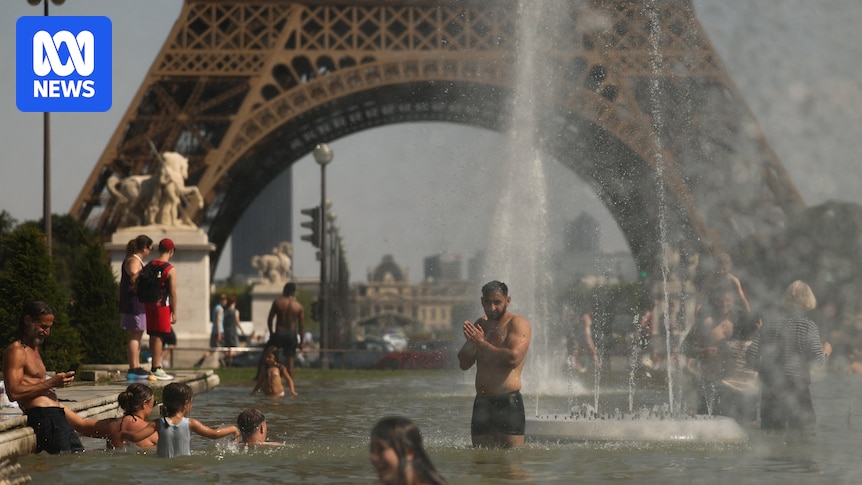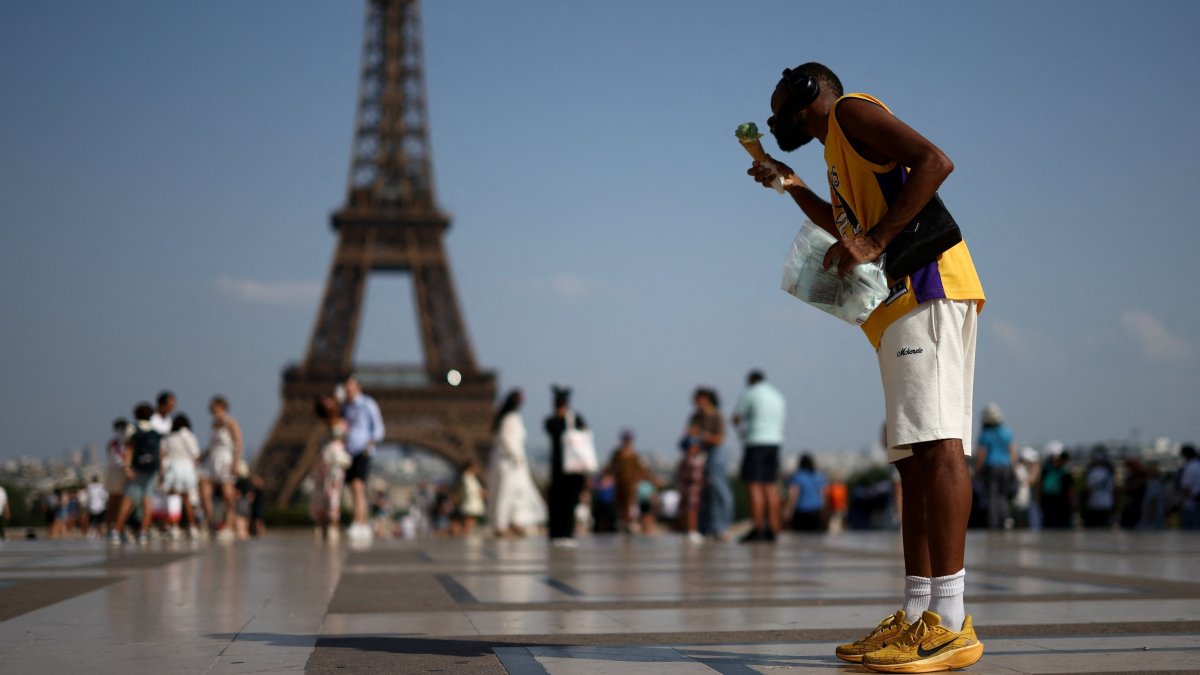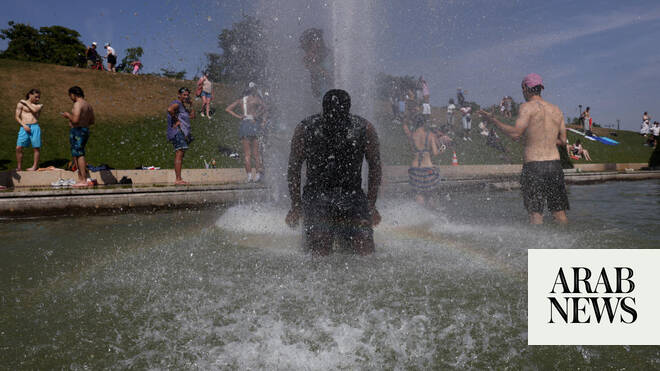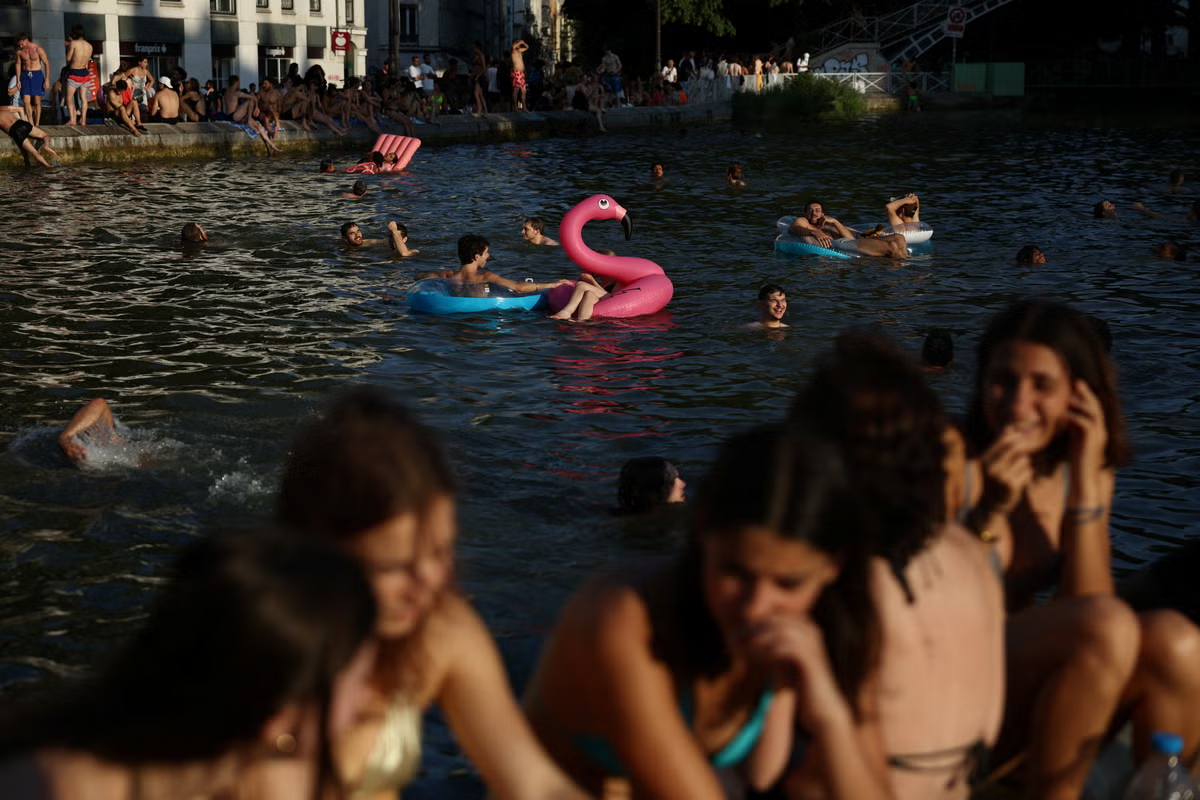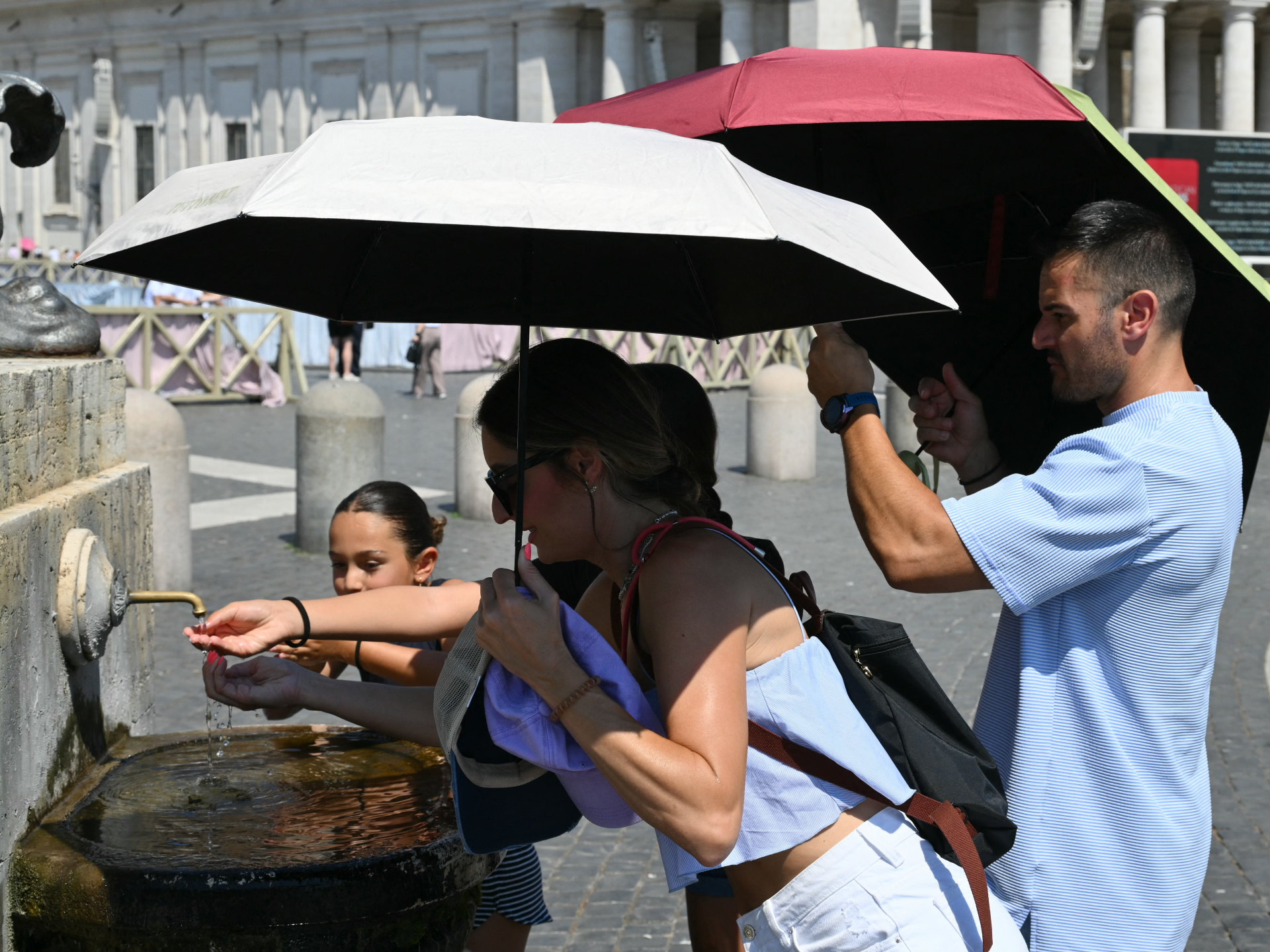
France recorded about 1,000 excess deaths this week because of an “exceptional” heat wave that’s continuing to scorch Europe.Record temperatures pushed daily deaths above 1,400 on Thursday and Friday, from 900 to 1,000 per day in April and May, Santé Publique France said in a statement Sunday. The figures are likely to be revised higher because they’re based on digital certificates, which typically account for about 60 per cent of fatalities nationwide, the public health authority said.Of the deaths recorded since Wednesday, 85 per cent were people aged 65 or higher, it said.“Extreme heat of these past days has a lagged effect, notably for fragile people but also for some young people,” French health minister Stéphanie Rist said in an interview with La Tribune Dimanche. The effects can persist for weeks for people suffering chronic diseases, which means that pressure on health services is expected to last beyond the drop in temperatures, she said.The government recently earmarked €100 million in emergency spending to buy air conditioners, fans and other equipment for hospitals.France experienced its hottest day on record on Wednesday with 40.3 degrees recorded in Paris. Video: Naomi O'Leary From Scandinavia to the Alps, Europeans endured sweltering conditions on Saturday, shattering records with temperatures in some areas soaring above 40 degrees. Preliminary all-time temperature records were set yesterday in Germany, Denmark and the Czech Republic, and a new mark for the month of June in Switzerland. Similar records had been broken earlier this week in France and Britain.Scientists said the stifling heatwave would have been virtually impossible without man-made climate change, which has made this week’s night-time temperatures 100 times more likely than they would have been even two decades ago. “This heat isn’t pleasant summer weather. It’s a health crisis,” Katrin Goering-Eckardt, a German federal lawmaker and former parliamentary leader of the Green Party, said on X. Such was the heat in Berlin, where temperatures climbed to 39 degrees on Saturday, that police deployed two water cannons in the city to lightly spray people trying to cool down.Police water canon sprays tourists at the Brandenburg Gate during a heat wave in Berlin, Germany, on Saturday. Photograph: Krisztian Bocsi/Bloomberg Saturday’s new preliminary German record of 41.5 degrees in Moeckern-Drewitz in the eastern state of Saxony-Anhalt topped a record set just the day before of 41.3 degrees near Saarbruecken on the French border, Germany’s Meteorological Service said. The Danish Meteorological Institute meanwhile reported a 37 degrees reading north of the city of Aarhus on Saturday, the highest on record since measurements began in 1874.Officials in the Czech Republic measured a record 40.9 degrees north of Prague, the Czech Hydrometeorological Institute said.In the Slovak capital Bratislava, authorities recorded the hottest night on record on Friday.German authorities issued extreme heat warnings nearly nationwide on Saturday. As the heatwave moved east, temperatures rose well above 30 degrees across almost all of Poland. The heating up of the River Danube led Hungary’s Paks nuclear power plant to cut output on one of its reactors. Earlier, Switzerland’s Beznau nuclear power station temporarily shut down its reactors due to the temperature of the River Aare.Parisians swimming in the Canal Saint-Martin during the heatwave in the city of Paris on Saturday. Photogra[h: Brune Simon/Hans Lucas / AFP via Getty Images Italy’s health ministry issued a red alert for the heatwave in 18 cities including Milan, Rome, Turin, Venice, Genoa, Florence and Bologna for Saturday and Sunday. The flow of the River Po has dropped dramatically, with seawater advancing deep inland, posing threats to local farming and the ecosystem of Italy’s most important waterway.Even at night in the Alps there was little relief, with temperatures in Bolzano in Italy’s South Tyrol never falling below 25.4 degrees, the city’s meteorologist Dieter Peterlin said, a June record. Ecologists fear for Europe’s glaciers.Struggling with the prospect of damage to infrastructure, including buckling roads and swelling train tracks, some rail providers have sought to reduce traffic.German national rail operator Deutsche Bahn allowed customers to cancel long-distance travel into early next week. Another operator, National Express, said it suspended some trains on Saturday afternoon in North Rhine-Westphalia, Germany’s most populous state, as a precaution.[ The media should treat this heat as the very bad news it isOpens in new window ]Near Hamburg, the main traffic lane on one of Germany’s busiest motorways was partially closed after heat split the asphalt.In Switzerland, the Lausanne Pride march had extra water fountains and first responders, while Milan’s Pride march was pushed back until 5pm local time (4pm Irish time) to curb the heat’s impact.The most extreme heat is forecast to begin fading over the weekend, with heavy thunderstorms expected on Sunday. Across Europe, cultural landmarks have had to close, farming has suffered, and some hospitals have struggled to cope. The heatwave has pushed temperatures well above their seasonal average, according to the Reuters Climate Monitor, driven by a phenomenon known as an Omega block because of a shape similar to the Greek letter.This weather pattern traps a bulging ball of hot air over regions for extended periods, with cooler air on its fringes. - Agencies
France records 1,000 excess deaths this week due to ‘exceptional’ heatwave
Scientists say heatwave would have been virtually impossible without man-made climate change
TL;DRAI
France reported ~1,000 excess deaths this week as heatwaves surpassed 40°C across Europe. Nuclear plants shut down reactors due to river warming; infrastructure buckling (roads, rail, power)—cooling and grid stability are now operational risks.
848 words~4 min read