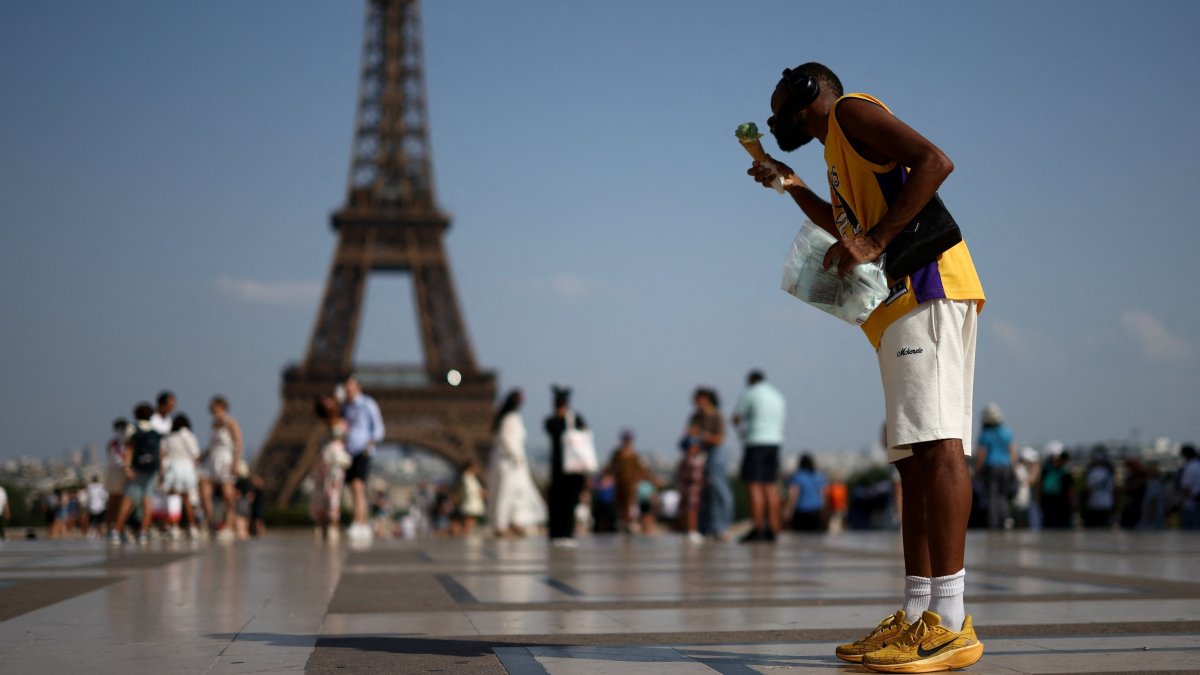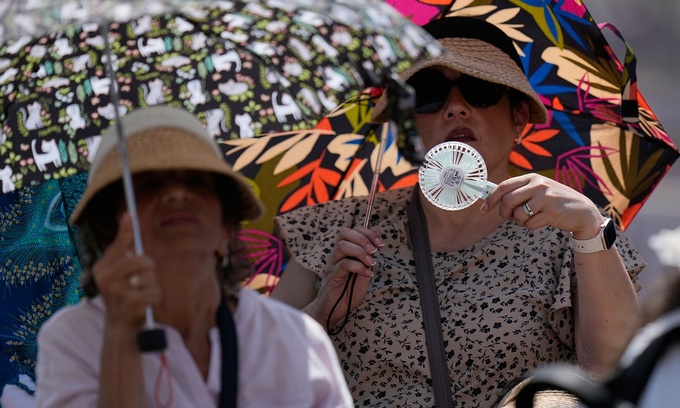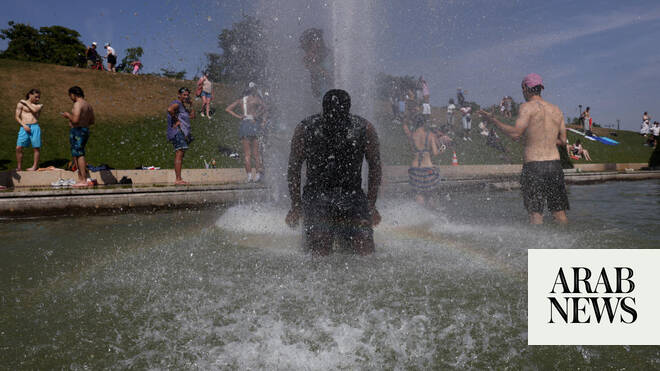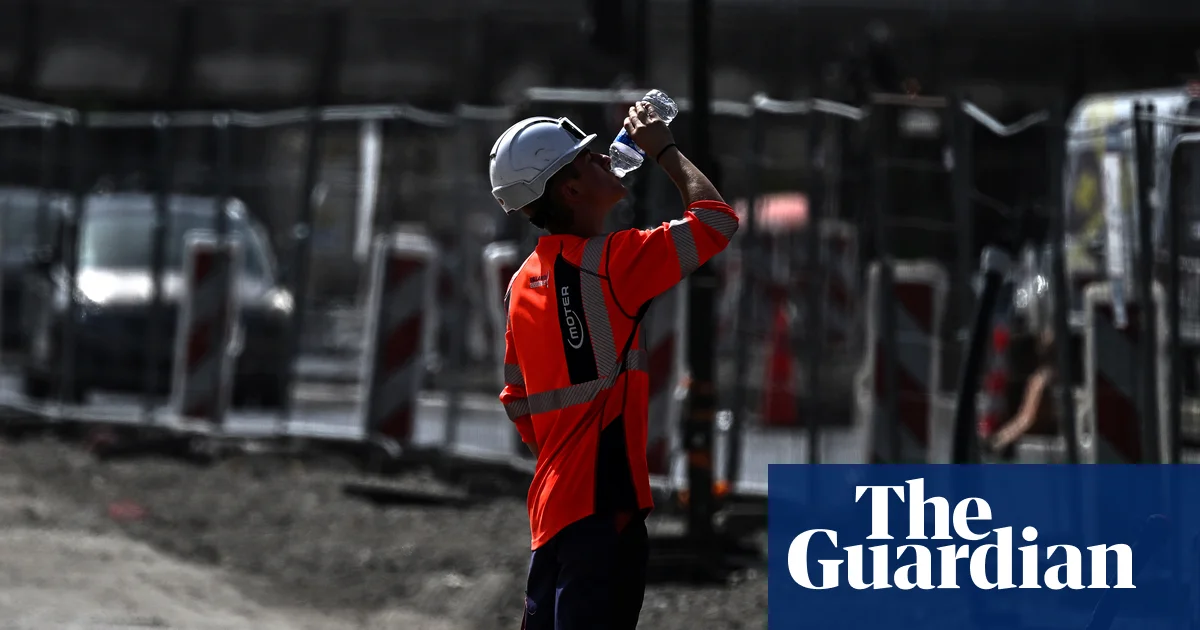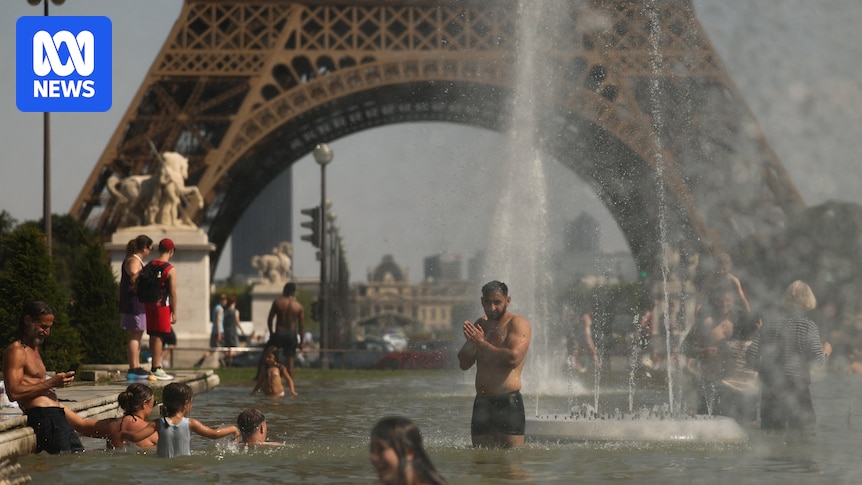
France has recorded 1,000 more daily deaths than expected during the worst three days of a record-breaking heatwave in Europe, according to the country's public health agency.As temperatures soared toward 40 degrees Celsius, more than 1,200 deaths were recorded on June 24 and an additional 1,400 per day on both June 25 and June 26, the agency said preliminary data had shown.In April and May — before the heatwave began — France's rate of deaths was about 900 to 1,000 per day, meaning the country recorded an additional 1,000 deaths over the worst three days of heat last week.The World Health Organization later said more than 1,300 excess deaths had been recorded since June 21 in connection with the heatwave.The spike in deaths occurred mostly at private homes, especially in the Paris region, but also in nursing homes and hospitals, a statement from the agency said.The increase was sharpest in areas under red warnings of extreme heat, which blanketed about three-quarters of the country at the peak of the heatwave.The agency said that 85 per cent of the deaths involved people aged 65 and above, and the temperatures had broken France's all-time heat record.European nations swelter through all-time heat highsTemperature records were toppled in several European countries over the weekend, wildfires were sparked in Germany and Berlin police used water cannons to cool down the crowds.Scientists have said the heatwave, which began on June 20, was the worst recorded in Europe and the blistering conditions had disrupted power generation, damaged infrastructure and overwhelmed healthcare systems.In Germany, water cannons typically used to disperse crowds of protesters were used to help cool people down. (AP: Marcus Golejewski/dpa)The hot weather has slowly moved toward eastern parts of the continent.Germany marked a new record for the third day in a row with 41.7C in Neißemünde, near the border with Poland, which baked under its new all-time high of 40.5C.In Berlin, two huge water cannons — usually used to disperse unruly protesters — were deployed in front of the Brandenburg Gate and sprayed cool water across a cheering crowd.The intense heat disrupted road and transport infrastructure in multiple countries, where services were halted due to melting tar and power outages. (AP: Heiko Rebsch/dpa)The heat worsened damage to infrastructure, with the concrete surface on countless highways breaking up, and a weekend warning by national rail operator Deutsche Bahn to avoid all unnecessary train travel.More than 600 passengers had to be evacuated from an overheated train in Brandenburg after a tree fell onto an overhead power line during a storm on Saturday evening.The train, which was on its way from Hamburg to Prague, lost power. The air conditioners stopped working and the doors were locked until emergency responders forced them open.As the heatwave slowly moved east, an extreme red warning was issued for parts of Romania. (AP: Andreea Alexandru)Two people were hospitalised with heat-related problems, the DPA reported.In the eastern city of Leipzig, no trams will be running until early Monday due to heat damage to tracks and switches.The Leipzig Public Transportation Authority said the high temperatures had caused the joint sealant for asphalt and concrete in switches and tracks to run and clump together in many places throughout the city's network.In Gohrischheide, in eastern Germany, a fire broke out in a large forest that is still contaminated with ammunition from World War II, complicating efforts by firefighters.At the Vatican, Pope Leo XIV thanked people who attended his Sunday mass at St Peter's Square during the heat. (AP: Alessandra Tarantino)Similarly, a major firefighting operation was underway in south-west Germany near the village of Traisen, where the heat sparked a forest fire in an area that also contained unexploded ordnance.Firefighters had to stop work temporarily after explosions took place and an ordnance disposal unit was brought in to continuously assess the situation, German news agency DPA reported.Some 650 people in Traisen had to leave their homes on Sunday because the fire continued to spread.In Munich, people sought to cool off in Germany's Isar river. (Reuters: Angelika Warmuth)In Sweden, several people were injured when they were hit by lightning at an amusement park, the country's TT news agency reported.Three adults were taken to the hospital, among them a woman with serious injuries, after the lightning struck the Tosselilla Sommarland park in Tomelilla in the south of the country.Across Europe, the extreme heat has been followed by severe thunderstorms.Denmark, which marked new temperature records on Saturday, recorded 1,156 lighting strikes by Sunday morning, according to public broadcaster DR.The intense heat sparked thunder and lightning storms across parts of Europe. (Reuters: Tom Nicholson)The Czech Republic also experienced its hottest day ever with 41.9C, up from the previous record of 40.9C on Saturday.The extreme heat also affected Europe's rivers, depleting and warming their waters, and causing problems for electricity generation and agriculture.Hungary's Paks nuclear power plant reduced output again on Sunday due to the high temperature of the Danube River that it uses as a coolant, the government said.In Italy, the flow of the Po has dwindled, allowing seawater to advance as far as 18 kilometres inland and raising fears for agriculture and protected wetlands in the river delta.Dozens of people seeking relief from the heat are reported to have drowned.A study into the heatwave, which attributed it to climate change, found it would have been virtually impossible five decades ago. (Reuters: Maryam Majd)More than 150 million people living in 'once-in-a-generation' heatA new study from the World Weather Attribution, a Europe-based collaboration of scientists, reported on Friday that the record-breaking heat and humidity in Europe this past week would not have been possible without climate change.The rapid study found the heat would have been virtually impossible just five decades ago, and is 200 times more likely today than it would have been 20 years ago."Europe is the fastest-warming continent on Earth, heating at twice the global average," WHO Director-General Tedros Adhanom Ghebreyesus said Sunday on X."Right now 150 million people are living under extreme heat, hundreds have died, schools are shut, grids are buckling."Driven by climate change and global warming, the phenomenon of the 'once-in-a-generation' heatwave is now occurring nearly annually. We were warned.""Heat stress is often called the 'silent killer' — and European homes, workplaces and schools were not built for these temperatures," he warned as he called on European countries to implement action plans.He said they should focus on preparedness, prevention and stronger health system responses.AP/Reuters
France records 1,000 excess daily deaths in record European heatwave
More than 150 million Europeans swelter in "extreme heat", which scientists say has been the worst the continent has ever recorded.
TL;DRAI
Record heatwave killed 1,000+ excess daily in France at 40–41.9°C; healthcare, nuclear, and rail halted across Europe. For IT: datacenter cooling and thermal resilience become mission-critical—climate-driven infrastructure failure is now core operational risk.
1,066 words~5 min read