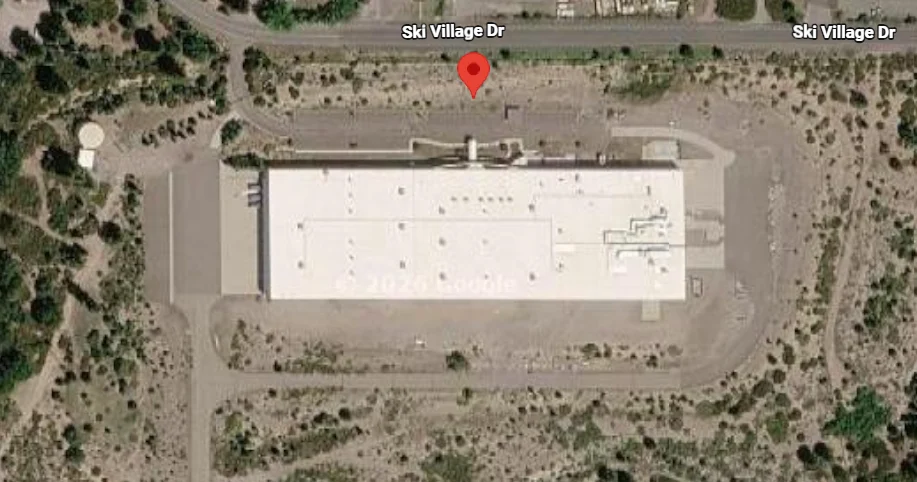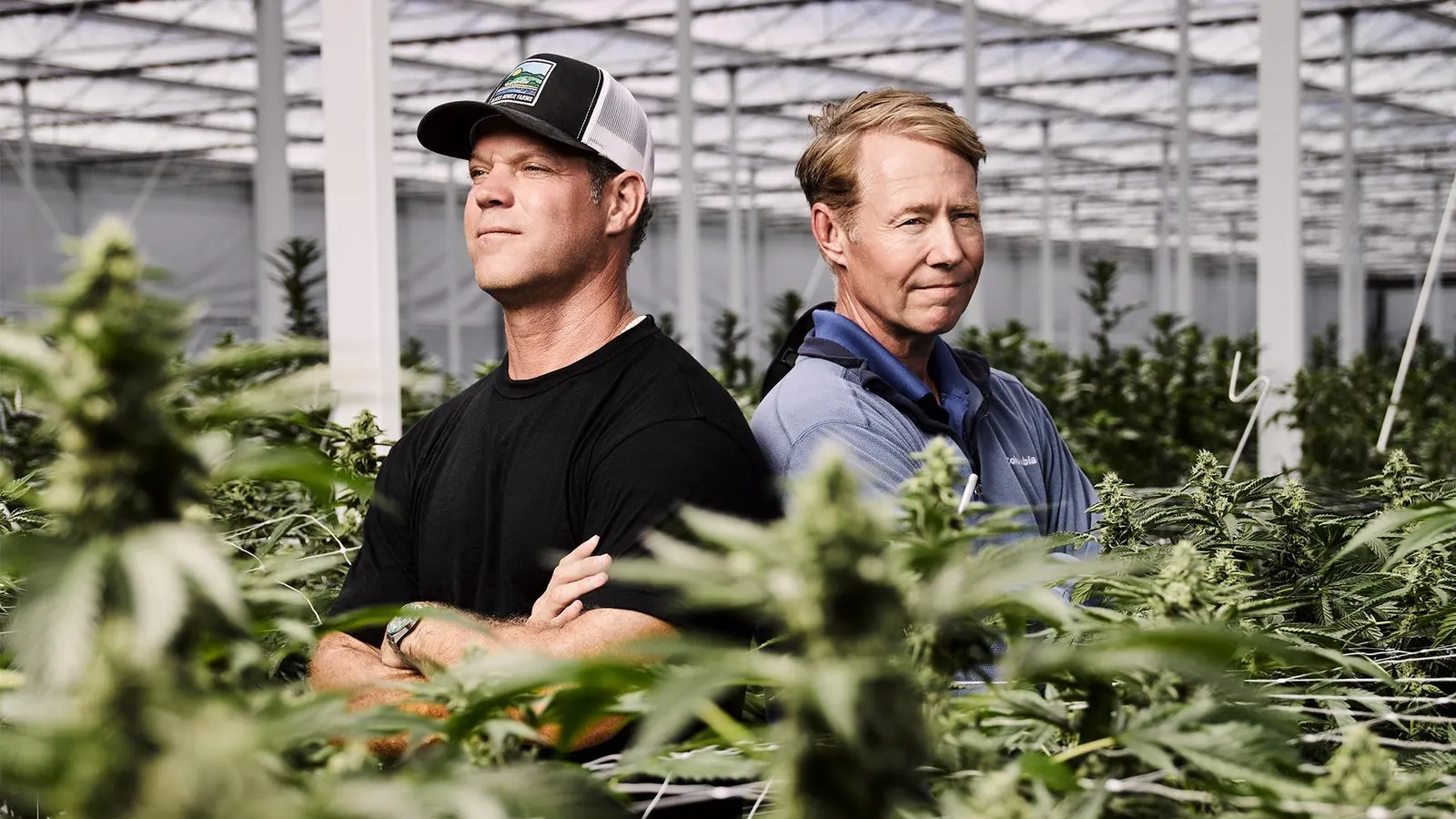
America’s largest cannabis cultivation facility is cradled between the foothills of the Santa Monica Mountains, across the street from a bean farm in Camarillo, California. And if it were not for the 7,000-volt electric fence surrounding the 165-acre property, or the skunky smell of marijuana, it would look like any other nearby property that grows tomatoes and cucumbers. Last year, Glass House Brands grew 666,000 pounds of weed, generating $182 million in revenue. That number is lower than 2024, when it generated $201 million, partly because of a federal immigration raid on two of its three facilities last summer. But, by the end 2026, Glass House, which will start trading on the New York Stock Exchange on June 30 (they currently trade on the Cboe exchange in Canada), projects it will cultivate 1 million pounds of cannabis and generate up to $245 million in sales. Once it starts trading on the NYSE, it will become the second American marijuana company to hit the Big Board after Florida-based Trulieve uplisted earlier this month.“In high school, I did say I wanted to be the biggest drug dealer in the world,” says president and cofounder Graham Farrar, 49, who looks like any other farmer as he inspects a cannabis plant in one of his many greenhouses, wearing a ballcap, jeans and boots—except for the Rolex on his wrist. “And I accomplished that in some measure.”Glass House is not the biggest cannabis company when it comes to sales—that’s Connecticut-based Curaleaf with $1.3 billion in revenue in 2025—but it does have the country’s largest greenhouse cultivation site at 5.5 million square feet across six buildings, each the width of two footballs fields and the length of eight. (It has two other greenhouse properties in Santa Barbara County totaling 500,000 square feet.) In eleven years since its founding, Glass House has become California’s premier industrial wholesale cannabis supplier. Green Giant: Glass House has the the country’s largest greenhouse cultivation site for cannabis at 5.5 million square feet across six facilities, each the width of two footballs fields and the length of eight.glasshouseFarrar and his co-founder, Kyle Kazan, 59, certainly grow enough pot to be considered drug dealers. There are about 1.2 million plants in various stages of the growing cycle inside their Camarillo property, with around 100 different strains—from Oreoz to Jack Herer to an unnamed plant still in R&D with bright purple leaves dusted with fine white crystals of THC. And like many drug dealers, Farrar and Kazan have experienced the violent power of the federal government. On July 10, 2025, Immigration and Customs Enforcement and Border Patrol agents in masks and toting assault rifles jumped out of armored vehicles and unmarked cars and swarmed Glass House’s facilities in Camarillo and Carpinteria.The agents came for undocumented and illegal immigrants, the government said, and arrested and detained more than 300 people and removed about 14 children who were on the property. During the raid, a farmworker from Mexico, Jaime Alanis Garcia, was hiding on the roof of a greenhouse, fell and later died from his injuries. Farrar, while standing near where Garcia fell, says the tragedy was the worst day he’s ever had “professionally and personally.” “They were not here to talk to anybody,” he says. “Machine guns, Humvees, helicopters. It looked more like Iraq than America.”The search warrant is still sealed and no charges have yet been filed against the company. But a DHS spokesperson said an investigation is ongoing. “At the California marijuana facilities, ICE and CBP law enforcement rescued 14 migrant children from what looks like exploitation, forced child labor, and potentially human trafficking or smuggling. Our law enforcement also arrested 361 illegal aliens,” Acting Assistant Secretary Lauren Bis said in a statement to Forbes. “The investigation into immigration and potential child labor violations is ongoing. Information will be released as it becomes available.”Glass House was fined $21,000 by California’s Department of Cannabis Control for a couple of violations found during a state investigation after the federal raid, including a lack of adequate procedures and documentation to verify and record worker ages on site. Farrar and Kazan both say that the workers detained on their farm were not their employees, but contractors from a company they hired to staff the facility. They add that their agreements with the firm clearly state that anyone who comes to their facility must be at least 21. Since the raid, Glass House has revamped its agreements with farm labor contractors and hired compliance firm Guidepost Solutions, run by former Assistant Secretary of Homeland Security Julie Myers Wood, to institute stronger employment eligibility verification. “We work every day to follow all laws,” says Kazan, explaining that they have no knowledge anybody underage was at the facility. “They conducted their operation and we’re fully cooperative. Any investigations that were opened are closed at this point, to our understanding.”The raid took a big bite out of Glass House’s business, costing about $20 million. The feds did not seize any marijuana, but Glass House lost about 60% of its plants while the company was restaffing and training new contractors. But today, the company has added 1 million square feet of grow space and is on track to grow more cannabis and make more money than the year before the raid. Then in April—in an only-in-Donald-Trump’s-America plot twist—the Department of Justice reclassified medical marijuana as a less dangerous drug, from Schedule I, where it had been grouped with heroin and LSD since 1970, down to Schedule III, alongside ketamine, steroids and Tylenol with codeine. While falling far short of full legalization, rescheduling is a monumental change for the cannabis industry, particularly for Glass House. After some accounting and licensing maneuvers, using the same strategy Trulieve trailblazed earlier this month, Glass House is now preparing to trade on the New York Stock Exchange. Glass House and other U.S.-based cannabis companies had gone public in Canada due to America’s federal ban on marijuana, but rescheduling is ushering in a new future for the $30 billion (2025 sales) state-regulated marijuana industry with access to premier financial markets at home. “President Trump has been like my best and worst friend at the same time,” says Farrar, standing at his desk, examining four half-pint Ball jars filled with one of his favorite strains, Gorilla Glue.Farrar and Kazan founded Glass House Brands in 2015 after meeting on a greenhouse farm in Carpinteria in Santa Barbara County. Farrar, a high school dropout, made decent money during the dot-com boom while working at email server company Software.com, and then later as an early employee at home speaker company Sonos, both of which went public. But weed was always a side hustle for him. He began selling it as a sophomore at Santa Barbara High School and started growing weed in his closet in Boulder (he got his GED and attended University of Colorado for a year). In the early 2000s, he bought a few homes in Santa Barbara and his longtime friend Jason Downs transformed them into cannabis grows under the medical marijuana regulations at the time. Downs is now Glass House’s head growerKazan started his career as a special education teacher in Los Angeles in 1990 before he became a police officer in Torrance. Starting in 1994, he spent five years arresting drug dealers and gangbangers. “I made a lot of drug arrests, and I don’t think I helped society,” says Kazan, who is a member of the organization Law Enforcement Against Prohibition. “I was dealing with drug addicts, people that needed help for their addictions.”On the side, he started building a business with his wife and a friend, investing in distressed multi-family buildings. Kazan, who was dubbed a “vulture investor” for his tactics, had a knack for convincing undesirable tenants to leave a property so it could be renovated and rented out again. “Mainly gang and drug infested,” he says. “That's when investors started investing with me in non-traditional assets that needed repositioning. And I built up a little bit of a following.” In 1999, he founded Beach Front Property Management, which now has thousands of units and about half a million square feet of commercial space, and Kazan remains the owner and chairman. Along the way, he became interested in the cannabis space and in 2015, he found himself looking at a 150,000-square-foot greenhouse property in Carpinteria. Farrar was looking at the property for an interested buyer, but the buyer had just been arrested for attempted murder, and he connected Kazan with Farrar, and the two hit it off. Ready To Roll: “We’re built for interstate commerce," Kazan says of rescheduling cannabis, "and it feels like we're right there at the door."Ethan Pines for Forbes“I would say [Graham] was good at helping me unfuck myself,” says Kazan. “And we just liked working with each other.” They bought the property with investors and formed Glass House Brands, which included a few dispensaries that each had owned separately. They went public in Canada with a SPAC in 2021, raising $126 million, bought the Camarillo facility for about $90 million, and started growing 1.5 million square feet of cannabis with the remaining 4 million square feet dedicated to tomatoes and cucumbers. Today, Glass House has filled the greenhouses with pot and prides itself on growing “the most, best weed for the least amount of money,” says Farrar. Last year, the company averaged a cost of $111 per pound and an average selling price of $177 per pound. (The average selling price is so low because of their scale, but also because Glass House sells trim, which is used to make vapes and edibles, for about $15 a pound and buds, which is higher quality, for around $500 a pound.) The average wholesale price in California for a pound of greenhouse-grown pot was $611 in 2025, according to Cannabis Benchmarks, while trim went for between $25 to $35 a pound. According to multiple industry sources, the average cost to grow a pound is $300, meaning Glass House boasts one of the lowest costs to grow in the industry. While Glass House has about $143 million in liabilities, and posted a net loss last year of $30 million, it was cash flow positive with $11.4 million. But thanks to rescheduling, which will erase the punitive tax burden cannabis companies had to pay under Schedule I, the company’s financials should improve. It's no secret that the illicit market is thriving in California and the U.S. Legally grown cannabis is smuggled and sold throughout the country. Glass House’s products, and products from many other big brands in California, have been found out of state. Farrar and Kazan say they have never participated in the illicit market and have no visibility as to where their cannabis goes after they sell to a distributor. In 2023, Glass House was sued by a dispensary chain Catalyst who alleged the company was “one of the largest, if not the largest, black marketers of cannabis” in California. Glass House denied the allegations and the lawsuit was dismissed with prejudice. Standing atop an 80-foot water tower on the property, Kazan says the future Glass House is betting on is one where it can sell its cannabis to retailers and manufacturers in other states at higher margins, and throughout Europe’s burgeoning market. To prepare, Glass House is now registered with the U.S. Drug Enforcement Agency, and the company is in talks with the state of California to figure out how to export legally. Rescheduling has, potentially, opened the door to interstate commerce, but it is not legally viable just yet. With its low production costs, and the demand for California weed across the world, Kazan says those changes will super charge its margins, which currently sit at about 42%. “We’re built for interstate commerce, and it feels like we're right there at the door,” he says. “We’re trying to be the Sunkist of cannabis.” Kazan climbs down the ladder and walks to a stage set up under a tent in the parking lot for Glass House’s fifth annual investor day. About 200 investors, bankers and analysts are sitting in the audience while Farrar and Kazan take turns on the microphone, talking about how selling their product in other states will transform their company and soon, Big Alcohol, Big Tobacco and Big Pharma will be hunting for acquisition targets.Marc Cohodes, the famed short seller who was one of the first to predict the fall of FTX and Signature Bank, eagerly sings the company’s praises after the presentation. “I think this is the biggest thing I’ve ever seen: they are the largest cultivator of the fastest growing product in the world. No one can compete with them in terms of price, their costs, and quality,” says Cohodes, who owns about $10 million worth of Glass House stock. “They will dominate.”Being uplisted, of course, does not mean the stock will be red hot. Cannabis stocks are up modestly up since the Trump Administration rescheduled medical marijuana, but Trulieve is down 27% since its uplisting to the NYSE in early June. Later this month, the federal government will hold a hearing on whether to reschedule adult-use marijuana.Brian Vicente, a longtime cannabis attorney who runs his own firm in Denver, says interstate commerce is not imminent. The pathway to allow cannabis companies to export and import medical marijuana is about 90% finished, but it will take time. States need to create laws allowing for import and export of licensed medical marijuana, some Food and Drug Administration oversight needs to be worked out, and if states decide to block licensed cannabis companies from importing out-of-state cannabis, then lawsuits citing the Dormant Commerce Clause will have to be litigated. “The exciting news is that we’re closer to interstate transport and export than we have been in 50 years,” Vicente says. “That said, we are years away.”But Glass House is not slowing down now. Farrar says he never dreamed that he would become a pioneer of the industrial wholesale cannabis model. After a long day at the farm, he says he’s going to open one of his jars of Gorilla Glue and roll a joint. “It might be business, but it’s the business of growing weed,” says Farrar. “We don’t take ourselves too seriously.”More from ForbesForbesA New York Apple Orchard Bet The Farm On Cannabis. Now Ayrloom Is The State’s Best-Selling BrandBy Will YakowiczForbesMeet The Cannabis Industry’s Trump WhispererBy Will YakowiczForbesWeed vs. Greed: How America Botched Legalizing PotBy Will YakowiczForbesHow Nabis Became The Amazon Prime Of The Cannabis IndustryBy Will Yakowicz
America’s Biggest Cannabis Greenhouse Wants To Become ‘The Sunkist Of Weed’
A year after a deadly ICE raid on its massive cannabis farms, Glass House is preparing to trade on the New York Stock Exchange, harvest 1 million pounds of weed and export its product all over the world.
2,422 words~11 min read