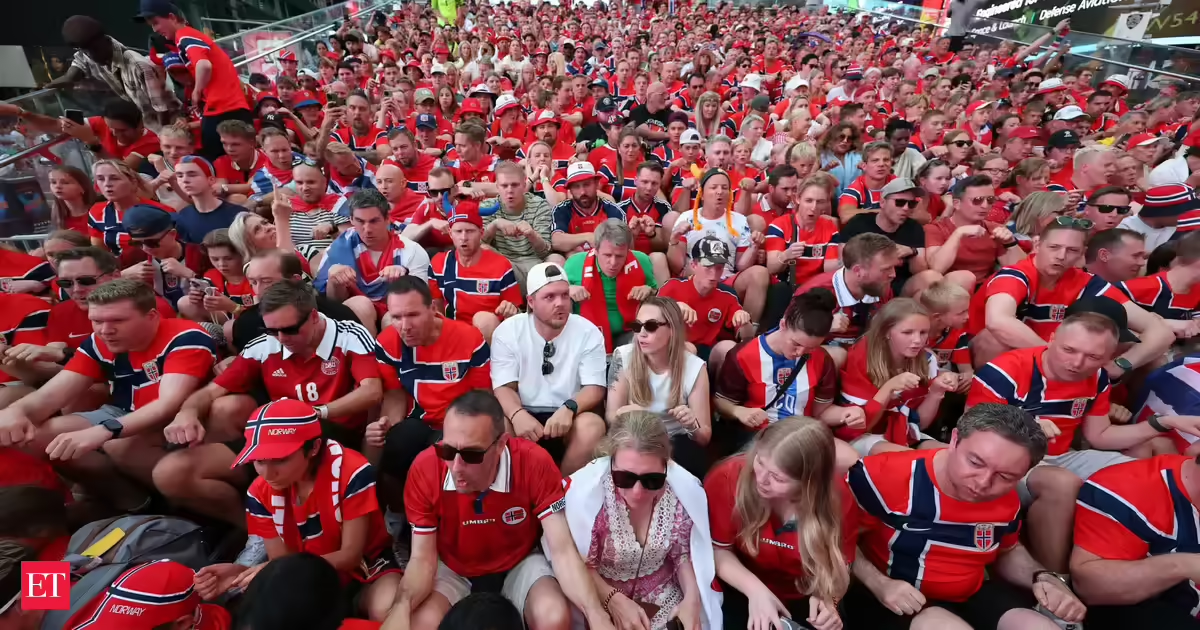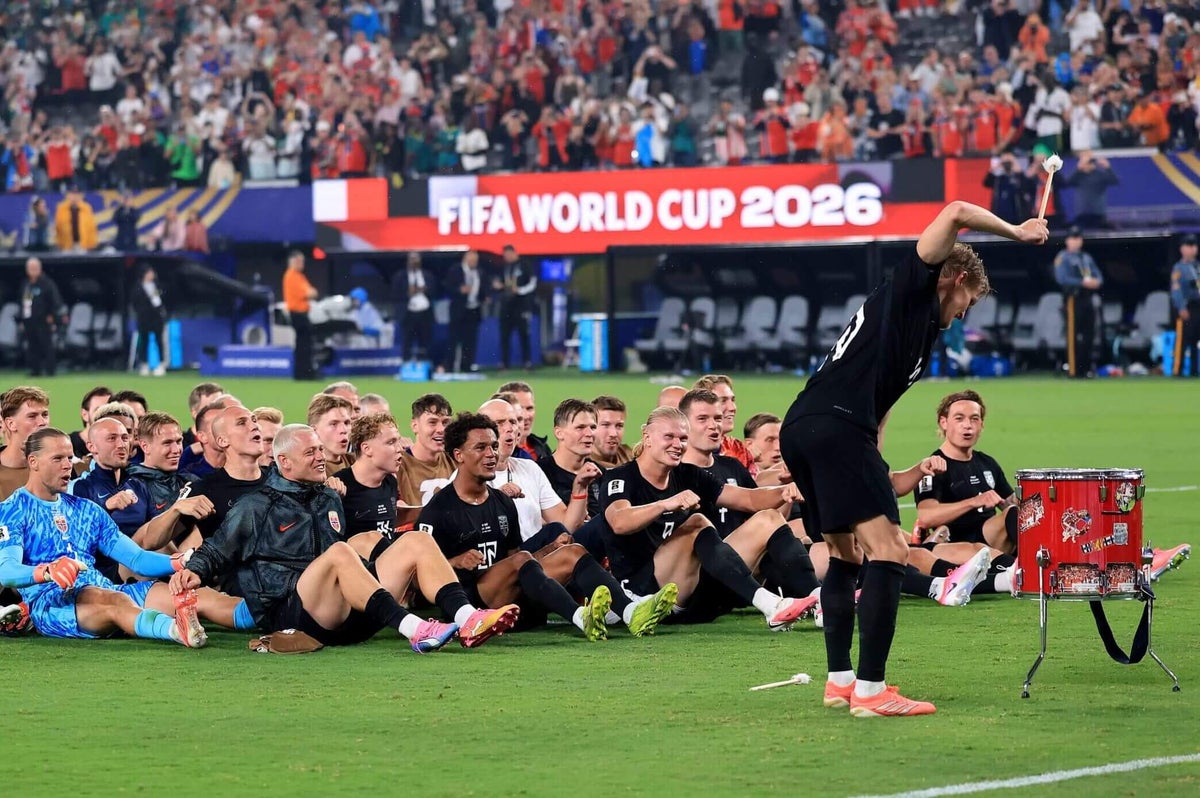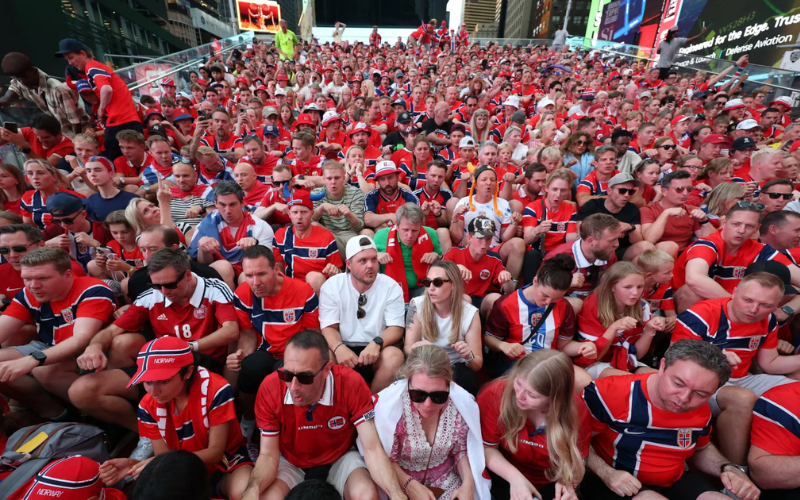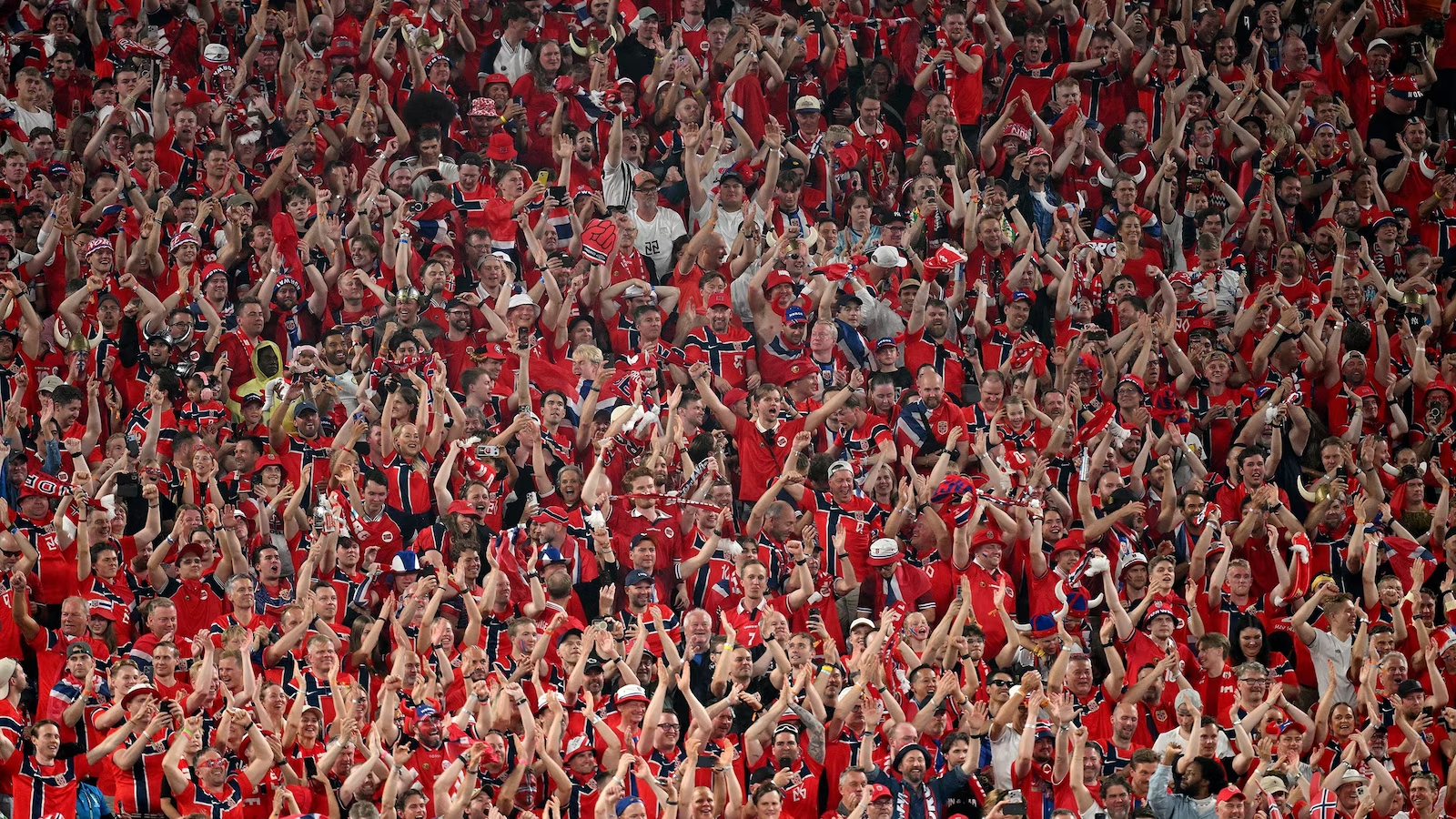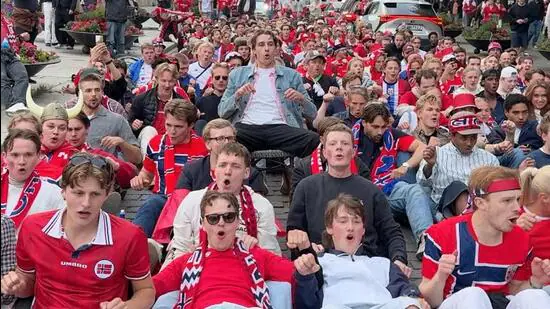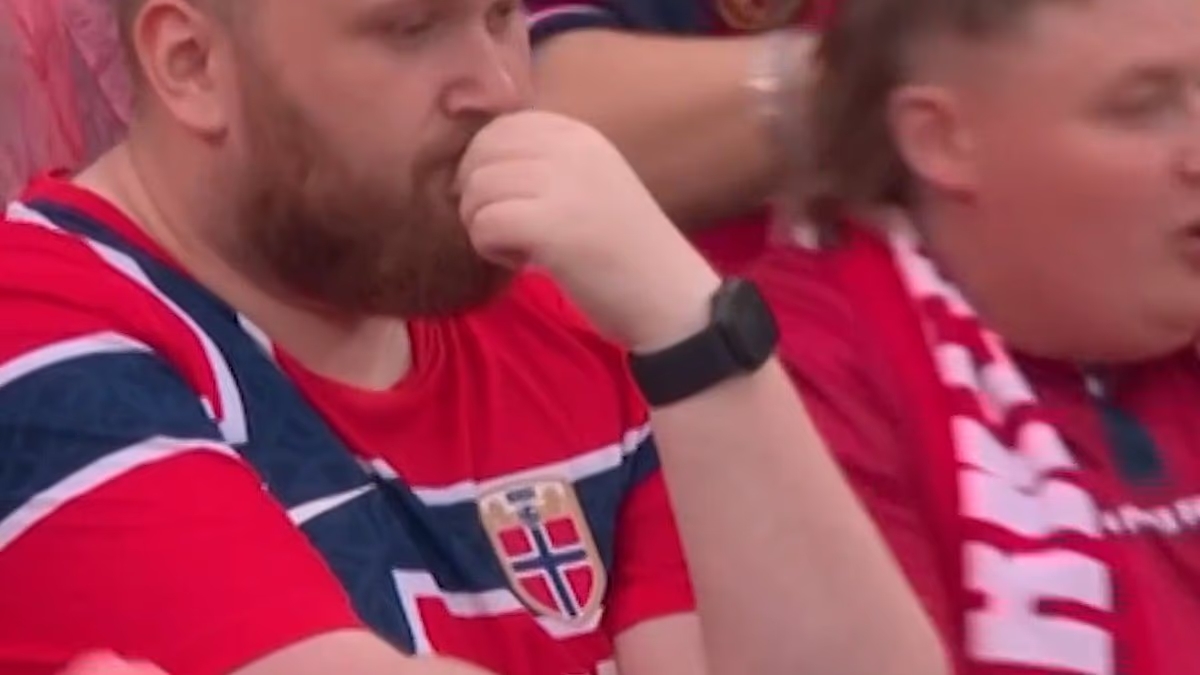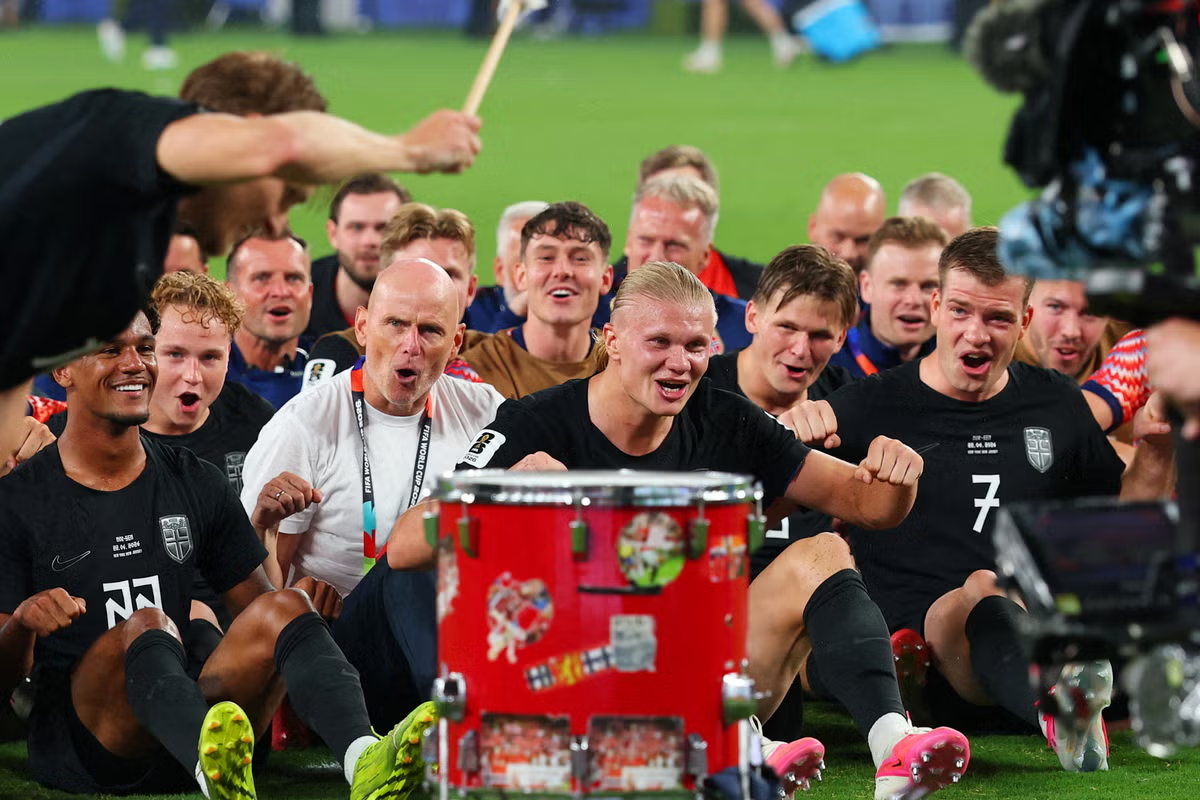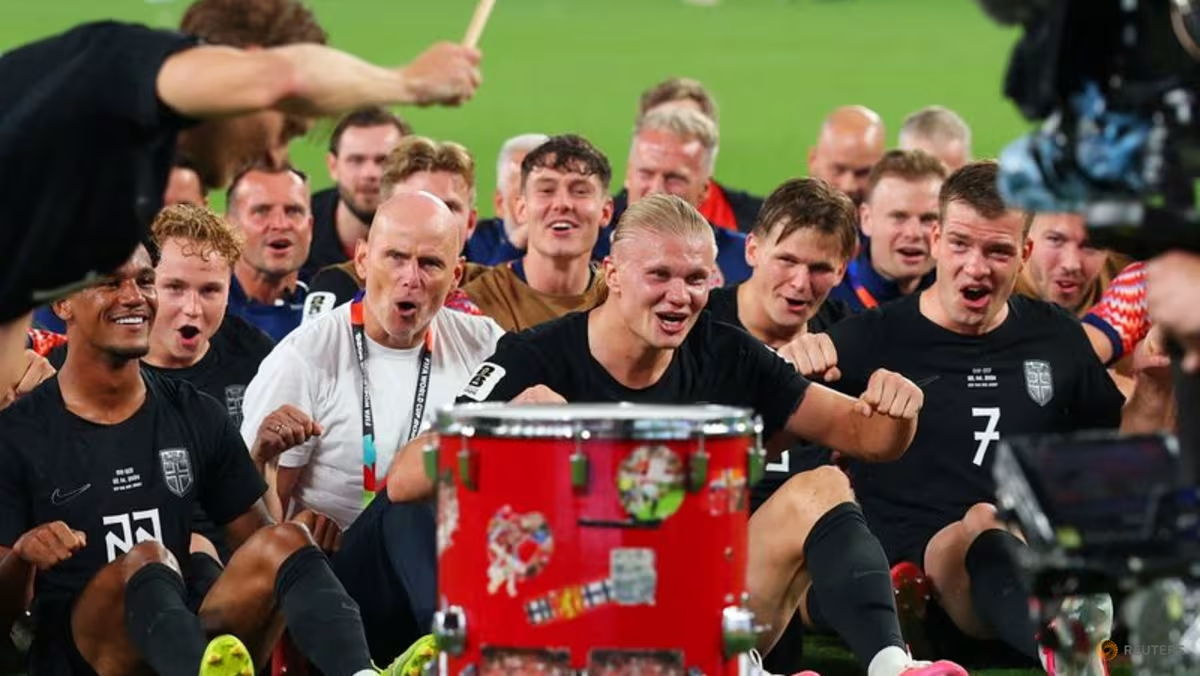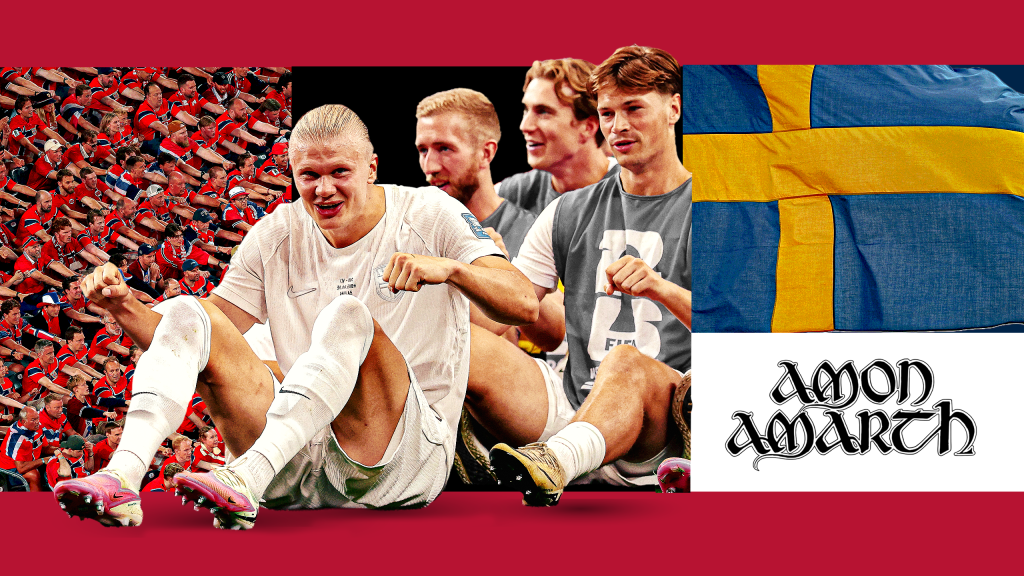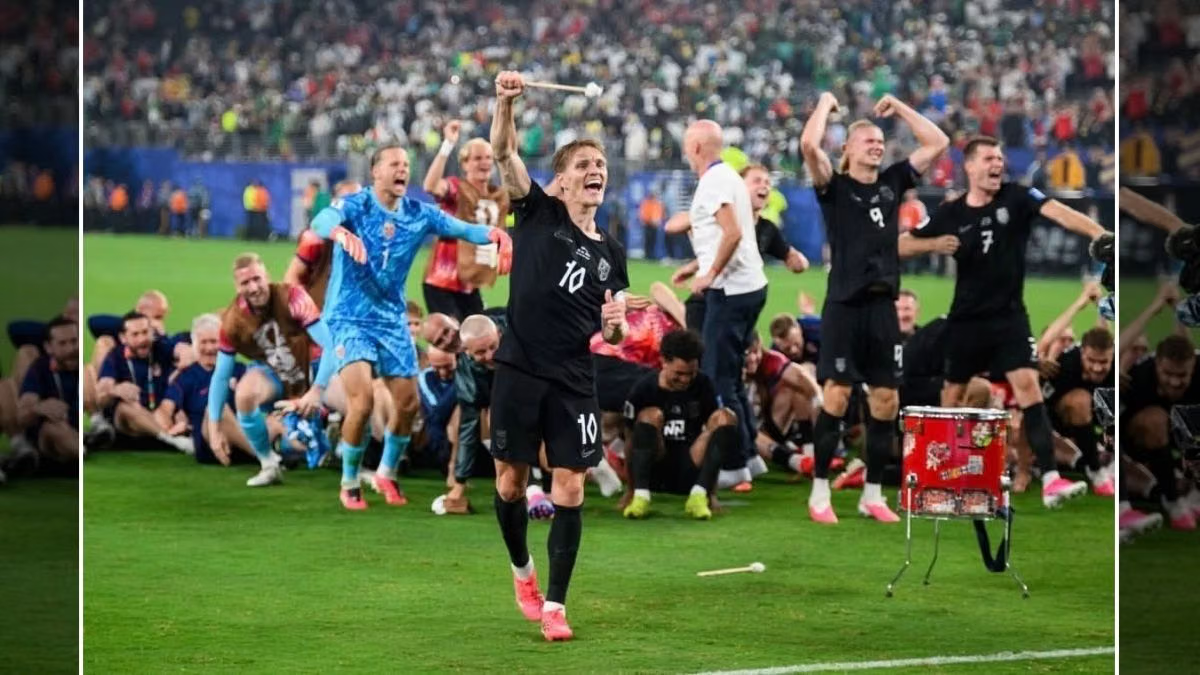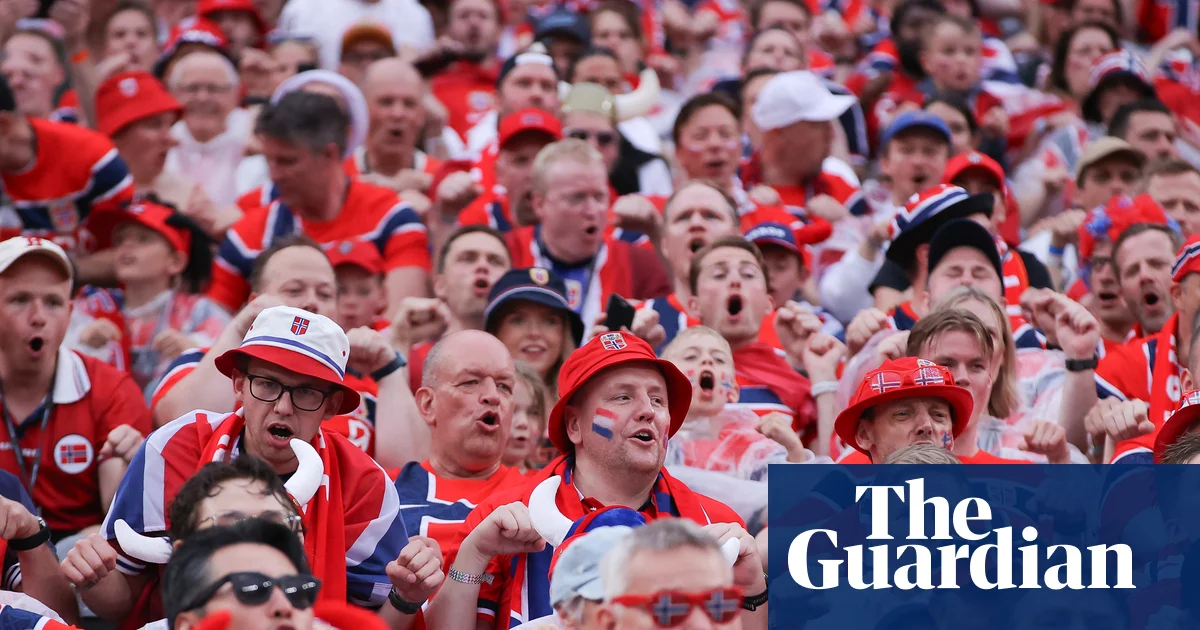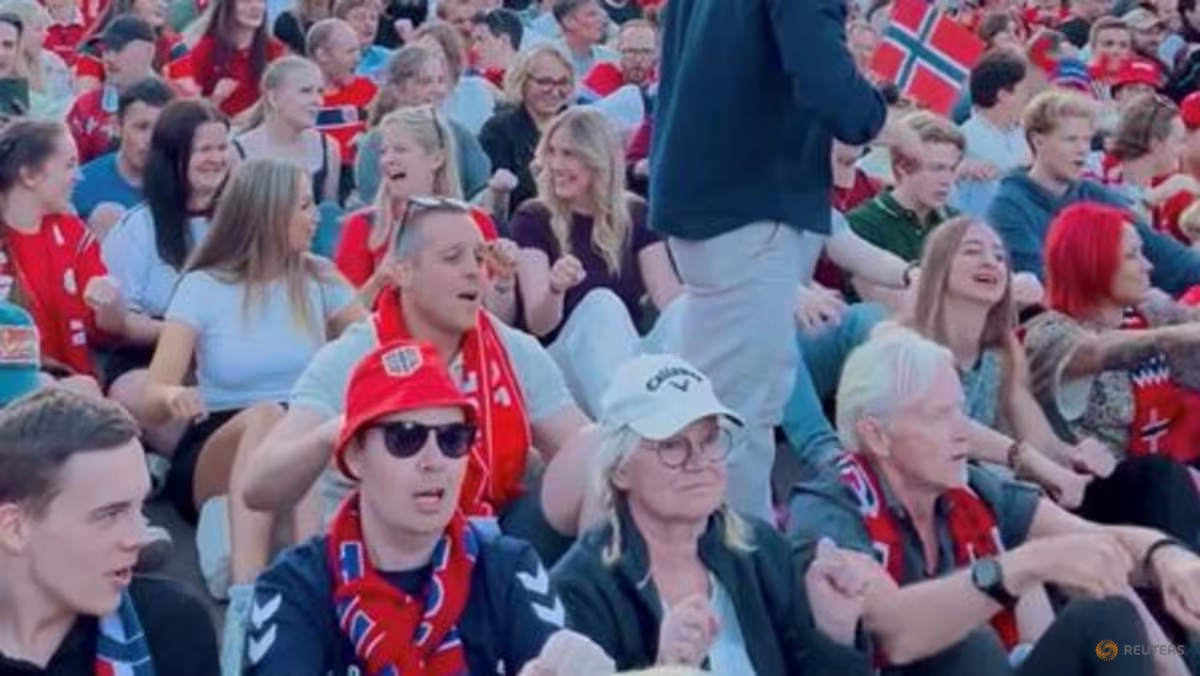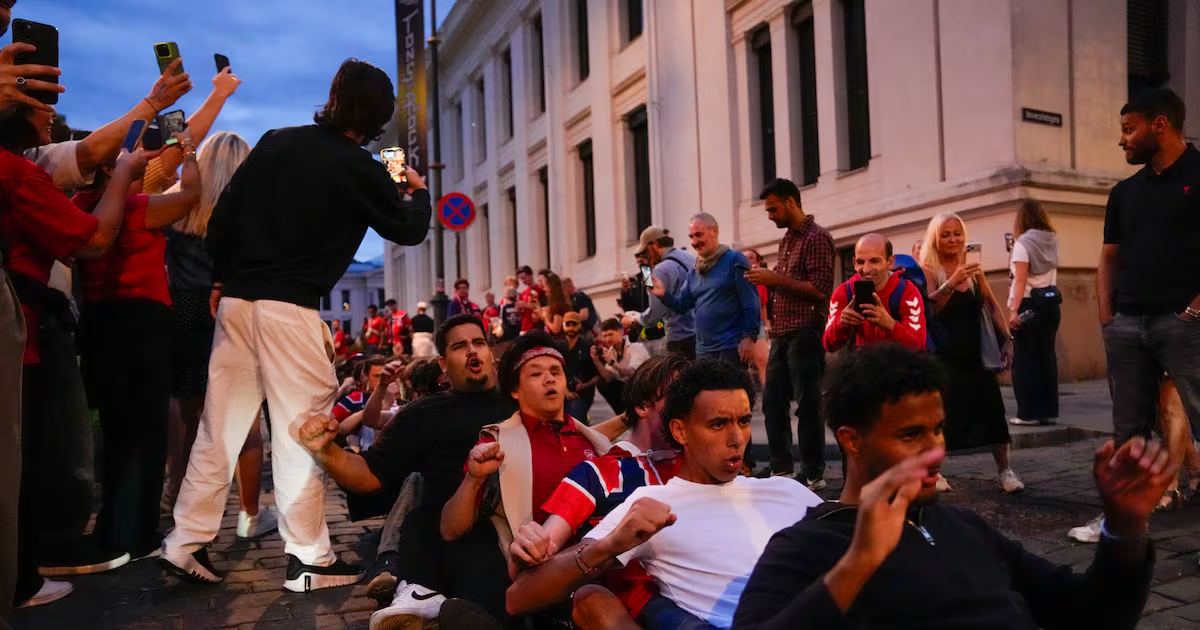
Norway’s return to the World Cup after a 28-year absence has produced more than goals from Erling Haaland and another chance to watch Martin Odegaard on the game’s biggest stage.It has also given the tournament one of its most memorable fan rituals.The Viking Row, a synchronised celebration in which supporters sit together and mimic rowing a longboat, has become one of the viral images of the 2026 World Cup. It has been seen in stadiums, city squares, trains and streets, as well as back home in Norway.The celebration reached a new level after Norway’s 3-2 win over Senegal at New York New Jersey Stadium, a result that sent them into the knockout stage for the first time since 1998. After the final whistle, the players joined their supporters in the chant, with Odegaard helping lead the rhythm and Haaland among those taking part.Since then, the Viking Row has become almost inseparable from Norway’s campaign.What is the Viking Row?Norway supporters bring their Viking Row to a New York Mets game, turning a day at the ballpark into another show of World Cup backing. Getty Images via AFPInfoThe Viking Row is exactly what it sounds like.Fans sit shoulder to shoulder, often in long lines, and move their arms in unison as if rowing a Viking longboat. The movement is usually accompanied by chanting, clapping or drumming, building as more people join in.Its appeal lies in its simplicity. A few supporters can start it, and within seconds an entire stand can look as if it is pulling in the same direction.From above, the movement is especially striking: rows of red-shirted fans rocking backwards and forwards together, turning a football crowd into something resembling a single moving vessel.Where did it come from?Although it looks like an old tradition, the Viking Row is not an ancient ritual revived from the sagas.It is a recent supporter-led invention, widely credited to Norwegian fan Ole Froystad, who helped introduce and popularise it in 2025 as a way to give Norway’s supporters a more distinctive identity.Norway arrived at this World Cup with a strong squad, but without a recent tournament culture around the men’s national team. Its last appearance was in 1998, meaning a generation of fans had never seen them on this stage.The Viking Row has helped fill that gap. It gives Norway something recognisable, repeatable and easy to understand for casual viewers.Why has it become so popular?Martin Odegaard leads Norway’s players in the Viking Row after their win over Senegal, as the squad joined supporters in the celebration. ReutersInfoPart of the answer is that it works well on camera.Modern tournament rituals spread when they look good on television and social media. Iceland’s Thunder Clap at Euro 2016 became famous because it was simple, dramatic and communal. Norway’s Viking Row has a similar quality.It is also playful without feeling forced. It draws on Norway’s Viking imagery, but does so in a way that feels more like a football chant than a history lesson.Norway’s campaign gave the celebration a story. The team beat Senegal, secured a place in the knockout stage and then joined the fans. Once Haaland, Odegaard and the rest of the squad joined in, it became part of the tournament’s wider language.Is it actually connected to Viking history?The celebration uses the image of Viking rowers in a longboat, one of the most recognisable symbols associated with Norway and wider Scandinavian history. But the Viking Row itself is a modern football invention, not a historical practice passed down through generations.That distinction is part of its charm. It is not trying to be a formal cultural ceremony. It is a football crowd using a familiar national image to create something collective, loud and easy to repeat.What does it say about Norway’s World Cup?Despite its ancient-looking Viking theme, the row is a modern fan invention, created to give Norway’s supporters a chant of their own at a tournament they had waited 28 years to return to. AFPInfoNorway arrived at the tournament with familiar star power. Haaland is one of the world’s most recognisable forwards; Odegaard is a Premier League captain, and the squad has enough quality to trouble stronger opponents.But the Viking Row has given the team something beyond football.It has helped frame Norway’s campaign as a national moment, not just a sporting one. For a country absent from the World Cup for nearly three decades, the celebration has become a way of announcing its return.Norway now faces Ivory Coast in the round of 32, where the celebration will have another chance to appear on the global stage.If they win, the Viking Row will grow louder. If they lose, it may still endure as one of the images of the 2026 World Cup: a simple, slightly absurd and highly contagious celebration that gives Norway’s travelling fans a voice in the tournament’s memory.
What is the Viking Row? Norway’s viral World Cup celebration explained | The National
Norway’s fans have turned a simple rowing chant into one of the defining sights of the tournament
803 words~4 min read