Hwang Joo-young
Staff reporter at The Korea Herald’s National Desk, based in Seoul. Covers South Korea’s national security and foreign policy, with a focus on the Defense, Foreign and Unification Ministries, as well as the National Assembly.Before entering journalism, served as an Air Force officer. Experience includes providing translation and interpretation, as well as strategic input for planning efforts, at the ROK-US Combined Forces Command. During three years of military service, took part in six major South Korea-US combined exercises.
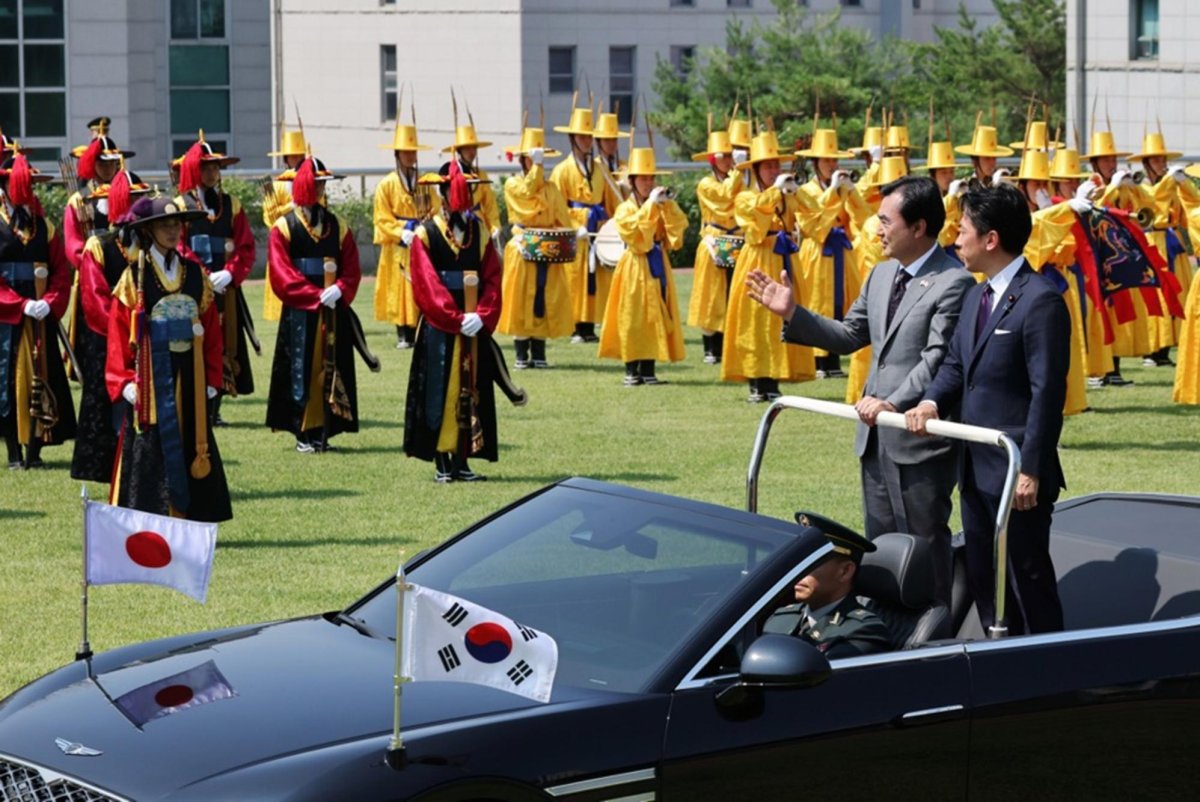
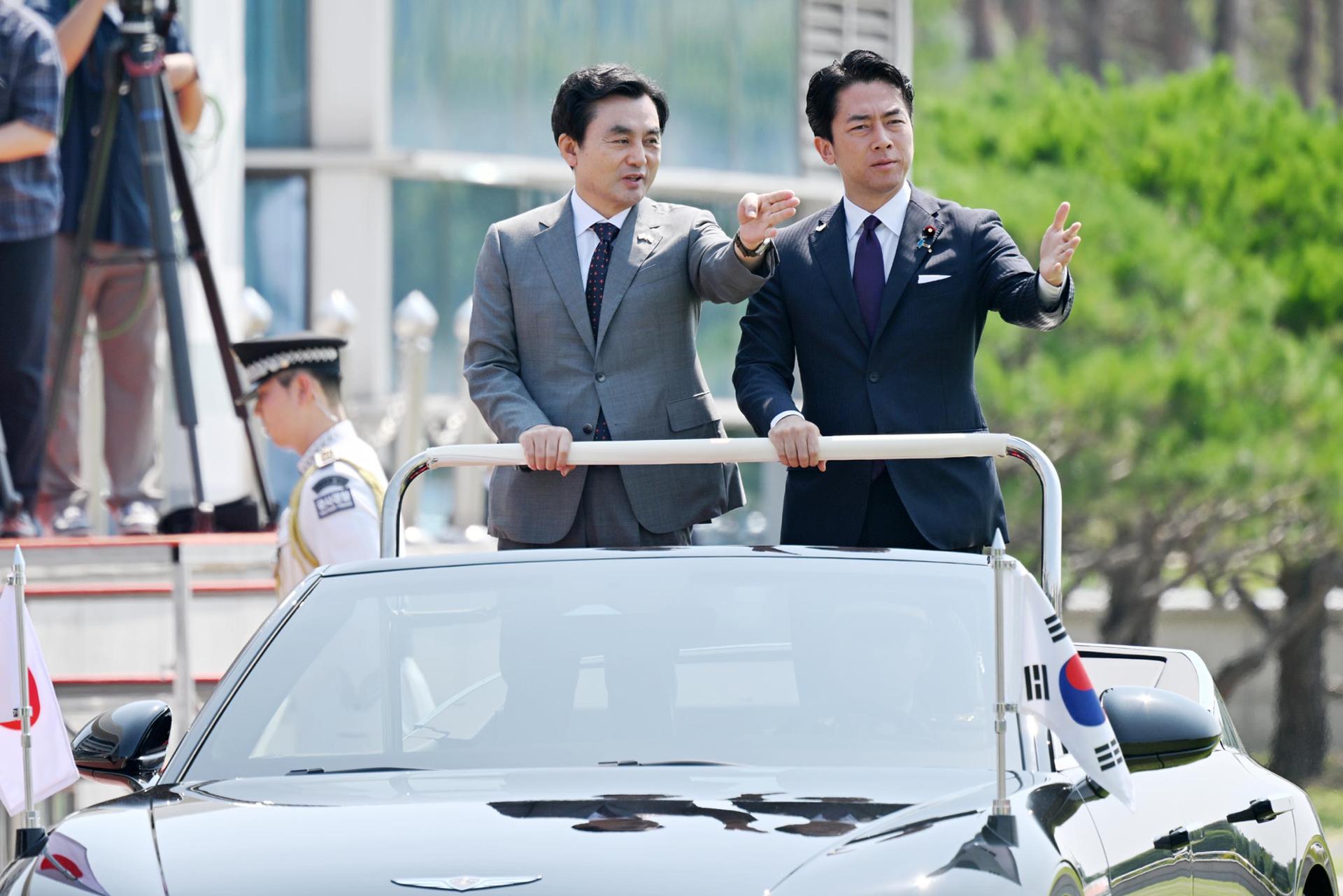
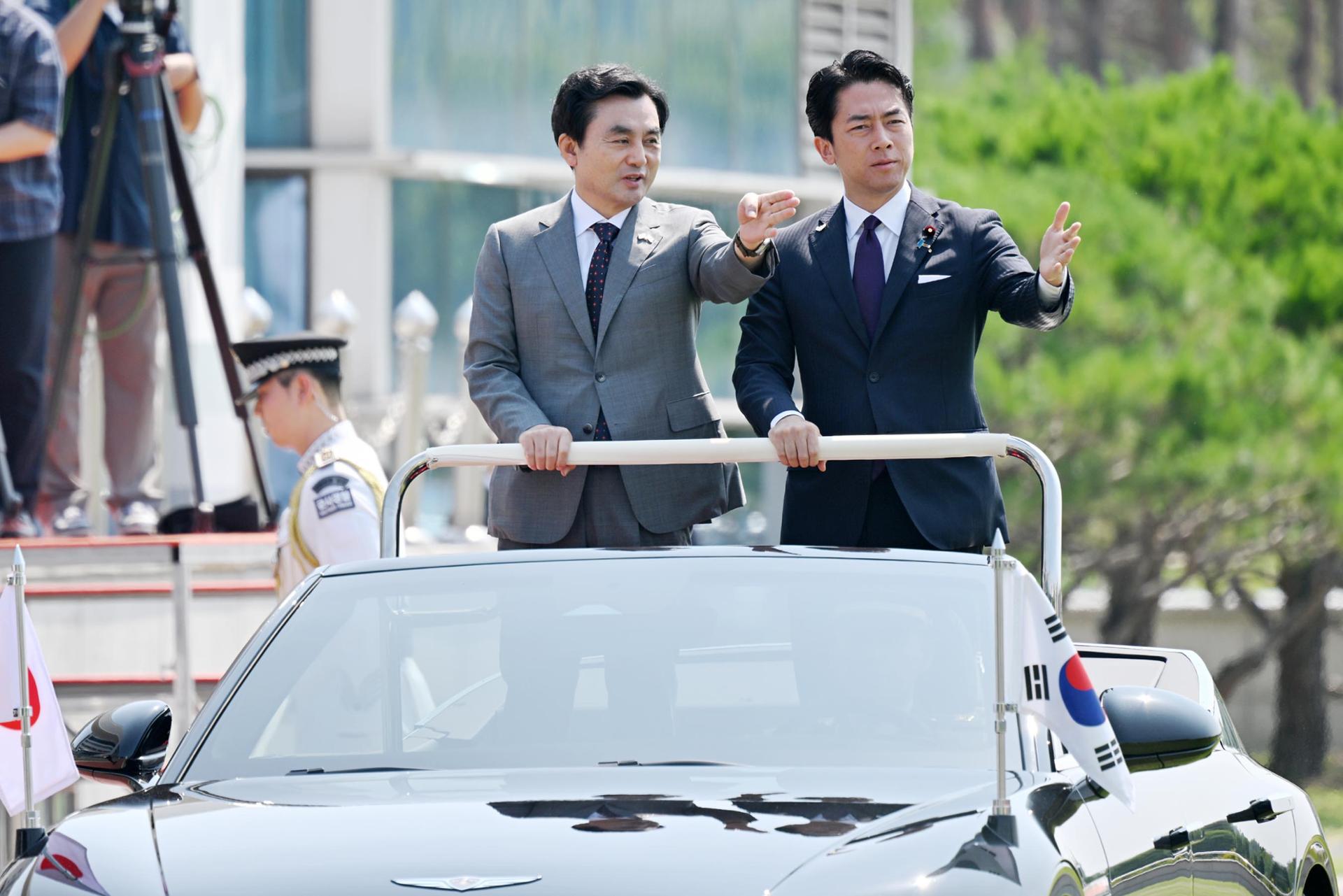
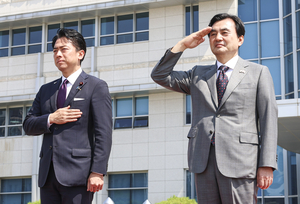
Joint statement omits ACSA, regularized refueling support South Korean Defense Minister Ahn Gyu-back (right) salutes next to Japanese Defense Minister Shinjiro Koizumi during an honor guard ceremony at the Defense Ministry headquarters in Yongsan, central Seoul, Sunday. (Joint Press Corps via Yonhap) The defense chiefs of South Korea and Japan on Sunday agreed to continue security cooperations, while avoiding any mention of a politically sensitive military logistics pact that Tokyo has long sought.In a joint statement between Defense Minister Ahn Gyu-back and his Japanese counterpart Shinjiro Koizumi after the talks, the two ministers welcomed progress in defense exchanges, including regularized mutual visits and ministerial talks, the resumption of bilateral search-and-rescue exercises after about nine years and discussions between defense authorities on artificial intelligence.They also agreed to further develop exchanges between South Korea’s Black Eagles and Japan’s Blue Impulse aerobatic teams, improve search-and-rescue exercises in preparation for various maritime accidents and pursue discussions on advanced science and technology, including artificial intelligence.The ministers “reaffirmed their commitment to the complete denuclearization of the Korean Peninsula and the establishment of permanent peace,” while agreeing to continue bilateral cooperation between Seoul and Tokyo as well as trilateral cooperation involving Washington, according to the statement during Koizumi’s two-day visit to South Korea.But the statement was notable for what it left out.It made no mention of the Acquisition and Cross-Servicing Agreement, a military logistics pact that would allow the two countries’ forces to provide each other with supplies and services such as fuel, food, transportation, maintenance and medical support.Japan has long sought to conclude an ACSA with South Korea as part of efforts to institutionalize defense cooperation between the two US allies.Supporters say the pact would improve interoperability, facilitate joint activities and strengthen deterrence against North Korea, especially in a contingency involving US forces in Japan and United Nations Command rear bases there.The issue resurfaced after Ahn and Koizumi met in Singapore in May. Ahn confirmed that the ACSA had been mentioned in the talks, but declined to elaborate, saying Seoul would remain cautious because the issue requires public understanding and support.South Korean President Lee Jae Myung also took a cautious stance during a press conference on June 8, acknowledging the practical need for such a pact while saying it would be difficult to move ahead given public sentiment in South Korea and unresolved historical grievances with Japan.The joint statement also did not say whether the two sides had reached any agreement on regularizing Japan’s refueling support for South Korean military aircraft. Japanese media had reported ahead of Koizumi’s visit that the issue could be discussed.The statement only said the two sides would continue developing exchanges between the Black Eagles and Blue Impulse, without referring to a broader arrangement on refueling support.Last year Japan declined a South Korean request to allow the Black Eagles to stop in Japan for refueling on their way to an overseas event. Earlier this year, however, Tokyo allowed similar support, in a sign of improving defense ties.The meeting marked the sixth round of talks between the two ministers, following Ahn’s visit to Japan in January and their meeting on the sidelines of the Shangri-La Dialogue in Singapore in May.Historical grievances, operational concernsThe sensitivity concerning an ACSA stems largely from South Korea’s historical resentment of Japan’s 1910-45 colonial rule and concern that the pact could make it easier for Japan’s Self-Defense Forces to operate in or around the Korean Peninsula in a crisis.The ACSA itself would not automatically authorize the deployment of Japanese forces to South Korean territory.A South Korean military official, speaking on condition of anonymity, said the concern is how such a framework could function if Japanese assets are mobilized in connection with US-led operations during a Korean Peninsula contingency.“Once such a framework is in place, Japanese vessels, aircraft or transport assets could request logistical support from South Korea, including access to ports, airfields, fuel, food, maintenance, communications and other services,” the official said. “If Washington frames Japanese support as necessary for US operations in a contingency, Seoul may find it difficult to draw a clear line.”“The problem is not that ACSA automatically brings Japanese forces onto the peninsula,” the official said. “The problem is that it could reduce South Korea’s room to say no when the pressure is highest.”A professor at a state-run institution in South Korea, also speaking on condition of anonymity, said the pact would carry diplomatic costs for Seoul beyond the question of logistics.“For Japan, ACSA is about operational flexibility. For South Korea, it is also about strategic positioning,” he said. “Once Seoul signs it, Beijing and Moscow will read it as South Korea moving more firmly into a trilateral military framework with the US and Japan.”The professor said another concern is that the pact could begin with a narrow scope but expand over time, citing the trajectory of the logistics pact between Japan and the United States.“Japan and the United States first concluded their ACSA in the 1990s, initially focusing on peacetime activities, but later expanded its scope to cover regional contingencies and additional categories of support,” the professor said. “That precedent is one reason South Korea needs to be cautious about entering a similar arrangement with Japan.”If concluded, the ACSA would mark a further step in military cooperation between South Korea and Japan beyond intelligence sharing.South Korea and Japan signed the General Security of Military Information Agreement in 2016 under the Park Geun-hye administration, after years of controversy over military cooperation with Japan.The information-sharing pact allows Seoul and Tokyo to directly share military intelligence, including information related to North Korea’s missile launches and nuclear activities, a move criticized by North Korea and viewed warily by China as part of expanding US-led security cooperation in the region.