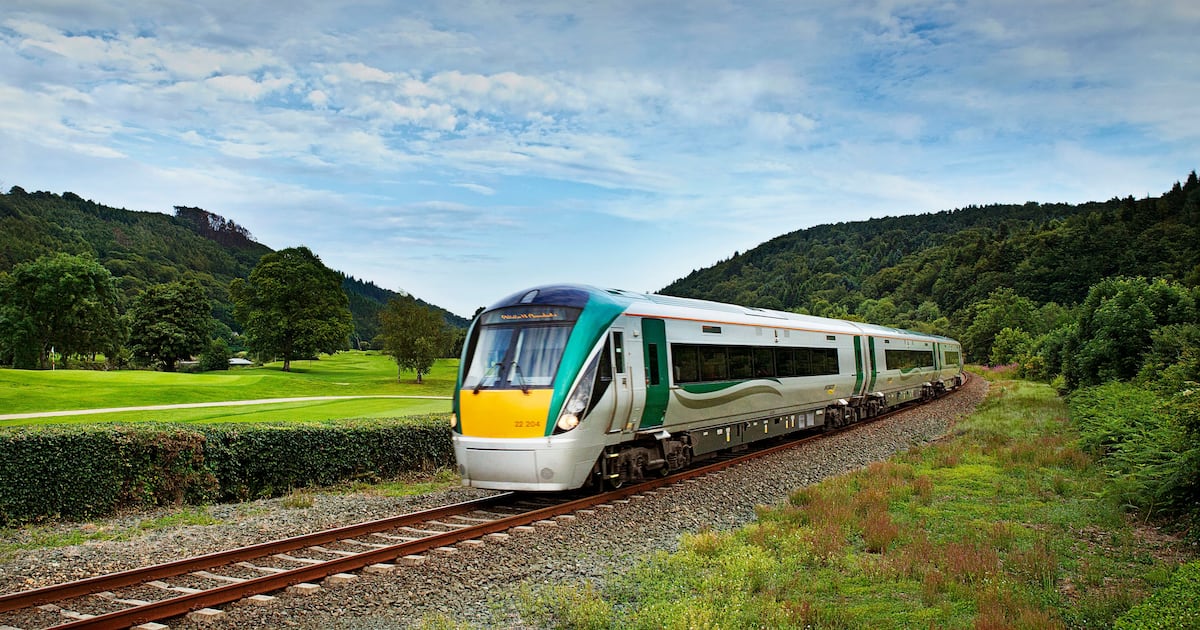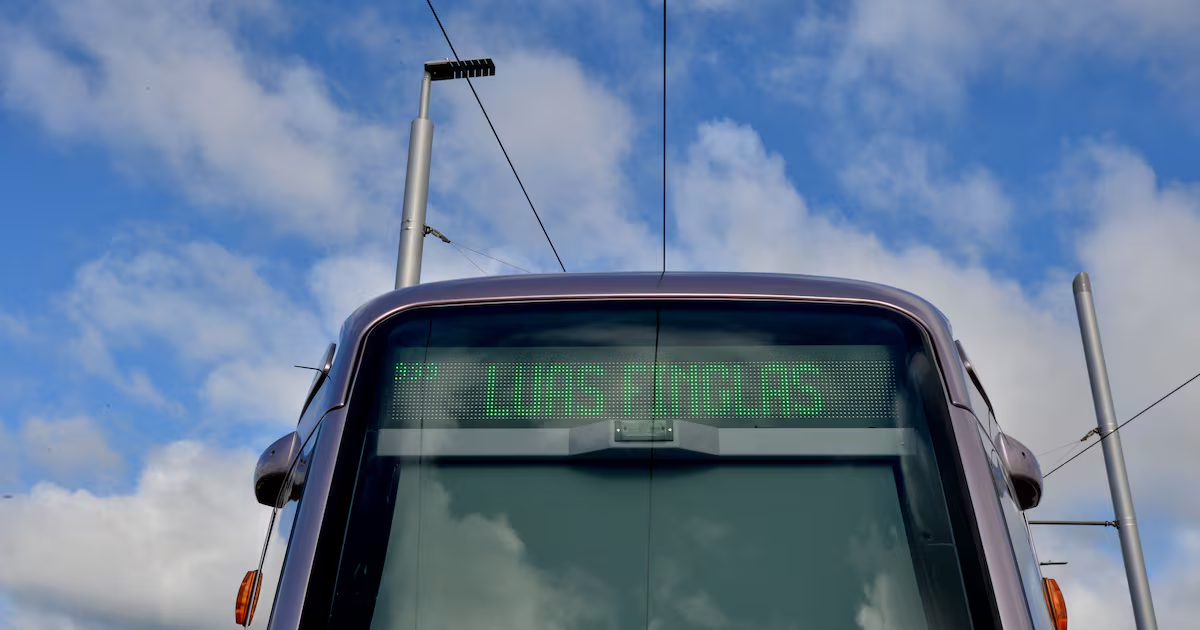
Commuters on the railway are well used to the automated voice telling them to “seachain an bhearna” – mind the gap – as they approach the next station. An announcement this week from the Minister for Transport, Darragh O’Brien, indicates that the Coalition needs a similar warning as it promises faster provision of big transport infrastructure. No new fixed-line public transport has been opened to the public since the Luas cross-city and the extension to Broombridge opened in December 2017. The problem for the Coalition is that no more such projects will be in place before the next general election, due at the latest by January 2030. Apart from some new Dart carriages, all commuters will see over the next couple of years is disruption caused by building work. The gap between promising and delivery is, even if things are done efficiently, long enough. The recent urgency in Cabinet to progress things is welcome, but the two big parties will be rueing their inaction during their last term in government. Had they moved more quickly, there could be a string of politically advantageous announcements; at it is, elbowing each other out of the way to get in the photos on the platform at Drogheda to welcome some new electric trains may be as good as it gets. This week’s announcement from O’Brien referred to the Luas extension to Finglas, a project that had been due to start after 2030, but it is now brought forward to 2028. But the first tram will not head out from Broombridge, the current terminus, to Finglas Village and Charlestown until about 2031.The Luas extension ticks a lot of boxes. Public transport is a key part of cutting carbon emissions. New routes also open up land for housing – including close to city centres, a vital part of Ireland’s spatial and climate planning. Work by Oxford Economics on Manchester – where Labour’s Andy Burnham was mayor – shows how transport links are vital to the economic and social welfare of suburbs, partly because they allow people to travel to well-paid jobs in the city centre. The idea of a Luas line to Finglas has a long history and, like many of the big projects, is a story of opportunities missed. In the mid-1990s, a Dublin transport plan envisaged four tram lines. Two were to be to Cabinteely and Tallaght – the green and red lines that were built, though the original plan saw them connected in the city centre. There were long discussions about whether the connection should be underground. Two other lines were also proposed – to Ballymun with the option of a later link to the airport. And to Finglas. These were postponed due to the cost. Think of the heartache we would have saved ourselves had this all gone ahead at the time.The option of a Luas to Finglas was allowed for when the cross-city Luas was completed and was included in a 2016 National Transport Authority Strategy. Then, a few more years were let slip by. It was 2020 before the preferred route was published and, after design and consultation work, a Railway Order – planning permission for the project – was granted last October. The settling of three judicial reviews then cleared the way to progress.The Government has now moved the intended start time for construction from 2030/31 to 2028. A group of senior public servants and outside experts that looks at big project plans had advised this one should get under way as soon as possible, given its estimated economic and social return.Ireland has some expertise now in the building of Luas lines and the planning work shows lessons from have been learned from past experience. Inevitably, building work takes time. The problem, rather, has been in the endless faffing around and indecision over the past decade, before actually getting on and doing it. For most of this period, money has not been a problem. But the indecision before going ahead and the length of consultation, planning and design processes are striking. Of course, the big Government infrastructure plan launched this year aims to speed all these approval and planning processes up; and the need to do so was underlined by the Oireachtas Joint Committee on Infrastructure and National Development Delivery in a report this week. This is important work. It should all have happened earlier – certainly when it was clear by 2018/19 that Ireland was receiving a huge bounty of corporate tax receipts that would greatly reduce the normal budget constraint. Reading the Government plan, or the Oireachtas report, the previous failures to take simple steps to increase the speed of delivery are all too clear. It has often seemed enough, in the public service, to have a plan, rather than actually implementing it.And this Government is going to pay the political price. The Dart upgrades – to the north, west (Maynooth and Kilcock) and southwest (Hazelhatch and Celbridge) – will not be up and running until into the 2030s despite planning being cleared. Voters will see disruption without any return before the next election. In cases like the Dart extensions to the west and southwest, could this include closures of existing lines at weekends, for example, to allow construction work? The Government is facing into a big sequencing challenge for its big investment projects. Is it possible to find enough construction workers to build the MetroLink and the Dart and Luas extensions at the same time? The scheduling of projects by the Department of Transport, with some not starting until the 2030s, was partly a reflection of this and an attempt to spread the work over time.Now the Cabinet is trying to speed this up. But finding enough construction staff, and somewhere for those coming from overseas to live, will be a key challenge. Exactly the same problem is evident in housing, where a balance needs to be found on staff to build new homes and retrofit existing ones. Then there is the money. Ireland is flush with cash for now. But the demands are substantial, too. The bills for the Metro still have to be added up. The need for State investment in water, energy and other infrastructure and the seeming inability to control day-to-day spending mean outgoings will mount further. Capacity to build may still be the bigger challenge, but the corporate tax gift will have to keep on giving to help pay the bills.
Cliff Taylor: If you want to know why Ireland has such poor public transport, look at Luas Finglas
Commuters can expect plenty of disruption, but no new lines, until at least the next general election
1,071 words~5 min read