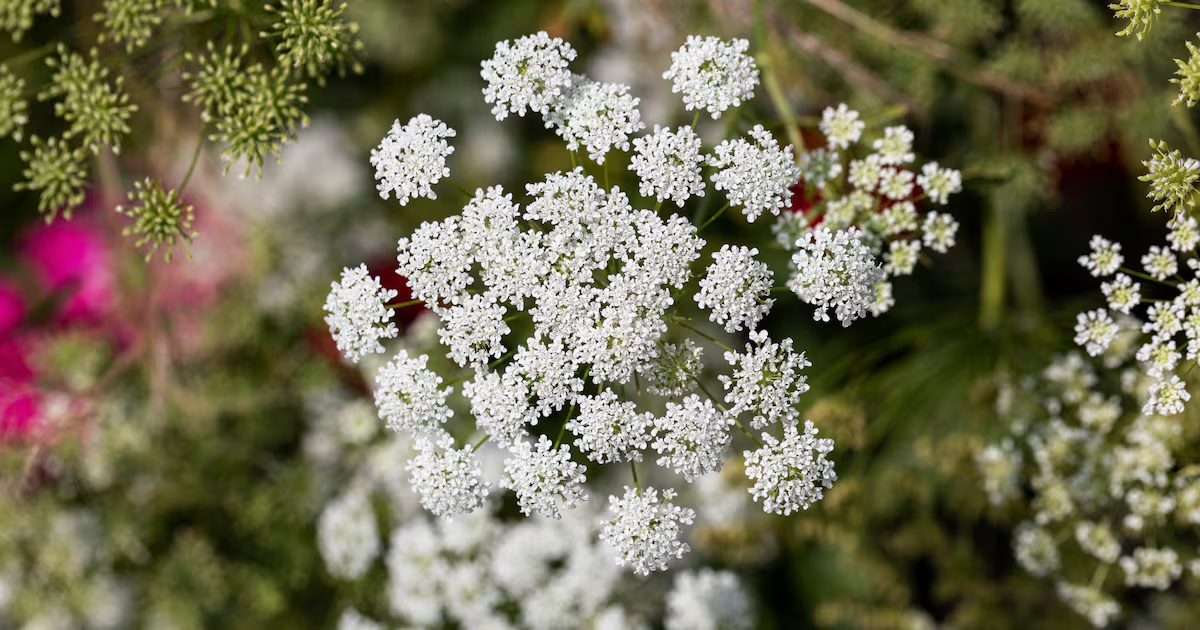
For several years I’ve tried growing ammi in my garden’s little cut-flower patch, but with no success. The seeds germinate just fine and the young plants grow well until they start to flower, at which stage they start to discolour and die off. I don’t think it’s down to any nutrient deficiency in the soil or lack of water, so would really like to know what’s causing it.Emily M, DublinProperly known as either Ammi majus or Ammi visnaga depending on the particular species, this tall, airy, graceful umbelliferous annual plant is very popular as a cut flower, with slender-stemmed, pollinator-friendly white flowers that look like a refined version of cow parsley. It’s also often one of the key species used in the kinds of ornamental annual pictorial meadow mixes commonly sold by garden centres.A hardy annual, it can be sown in autumn or in spring and will quickly grow into a plant as tall as two metres when and if it’s happy. But the problem for many gardeners is that it’s very vulnerable to carrot fly as well as to carrot motley virus (this is transmitted by aphids) – two weaknesses it shares in common with its close relative, the common carrot (Daucus carota), as well as ornamental varieties of the latter.Both the fly and the virus cause stunted growth, yellowing or reddening of the leaves, and eventual death of affected plants, which should be quickly pulled up and binned to prevent spread to other plants. Just as for the carrot plant, the best way to protect your plants is either by growing them in a protected space such as a polytunnel or under cover of insect-proof mesh netting such as Bionet (available from online suppliers such as fruithillfarm.com and quickcrop.ie). While this is fine for a crop of carrots that isn’t being grown for its ornamental qualities, it’s obviously problematic when you’re growing ammi or carrots in a cut-flower patch that you want to be as decorative as it is productive. But unfortunately there’s no other solution. Nematode control is available but is best avoided as it can affect other beneficial insects living in the soil.It’s also worth bearing in mind that other popular members of the Apiaceae family can be affected by both carrot fly and carrot motley virus, including parsnip, parsley, chervil, coriander, celery, celeriac, dill and fennel. Both the carrot fly and the aphids that transmit the carrot motley virus can also overwinter on other suitable host crops, including wild carrot, cow parsley, hemlock and hogweed, another reason why protection is so important from an early stage in the lifecycle of the plants.
Why are my ammi flowers dying in my garden’s cut-flower patch?
These graceful ornamental plants are vulnerable to both carrot fly and carrot motley virus
437 words~2 min read