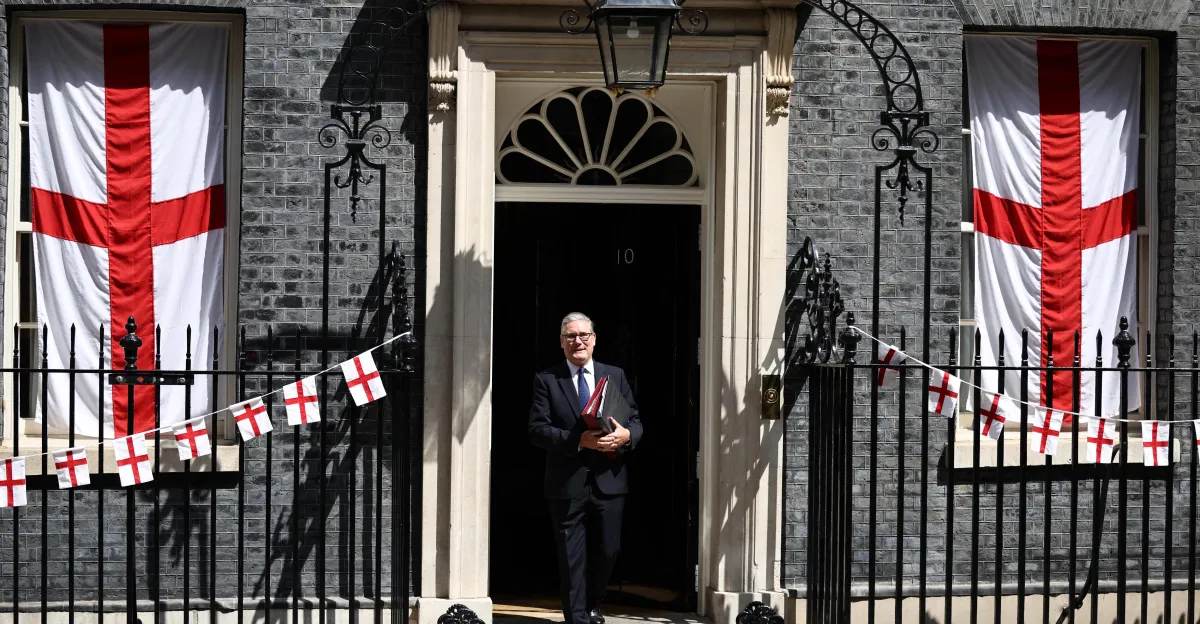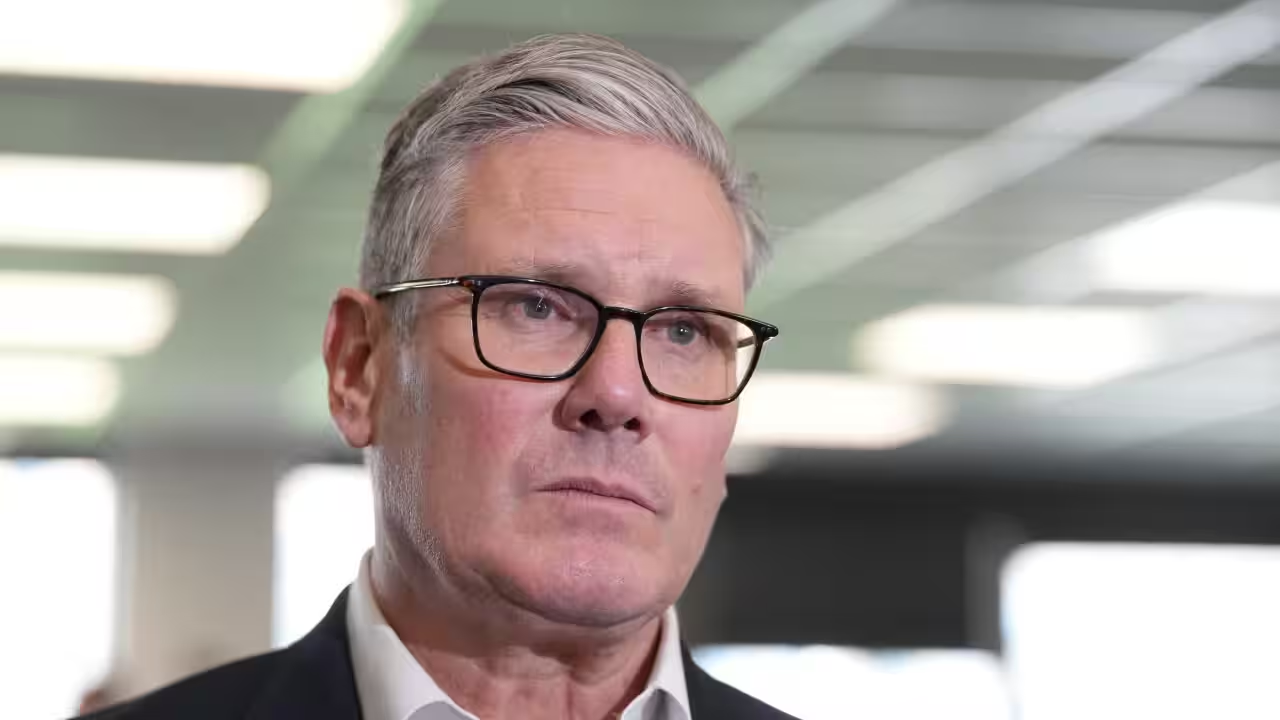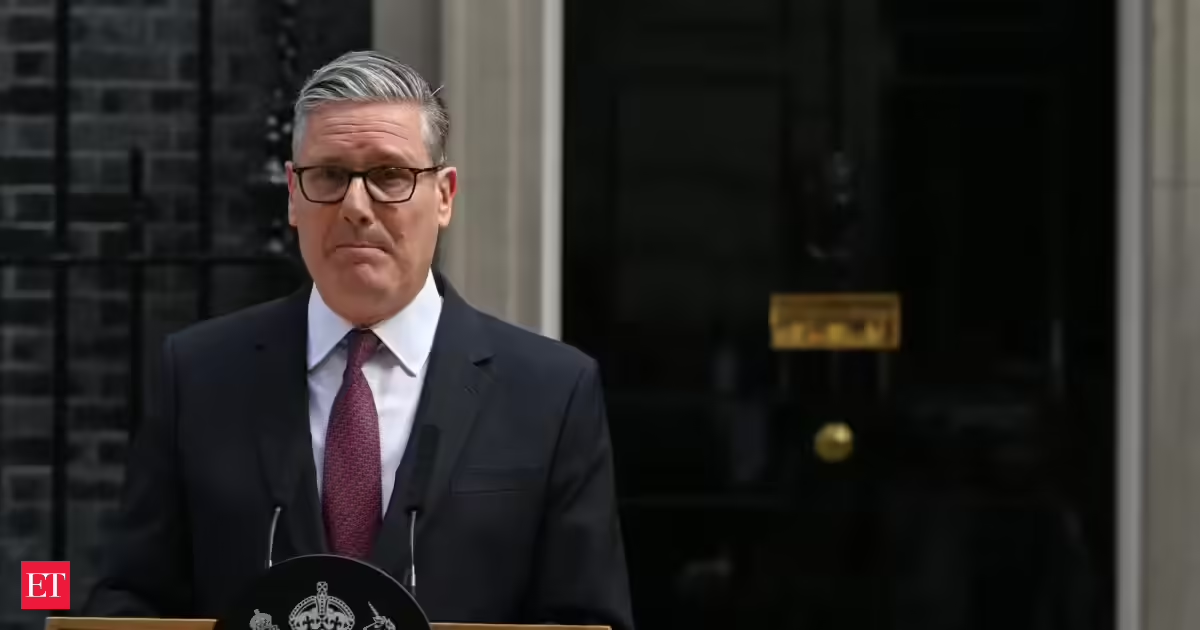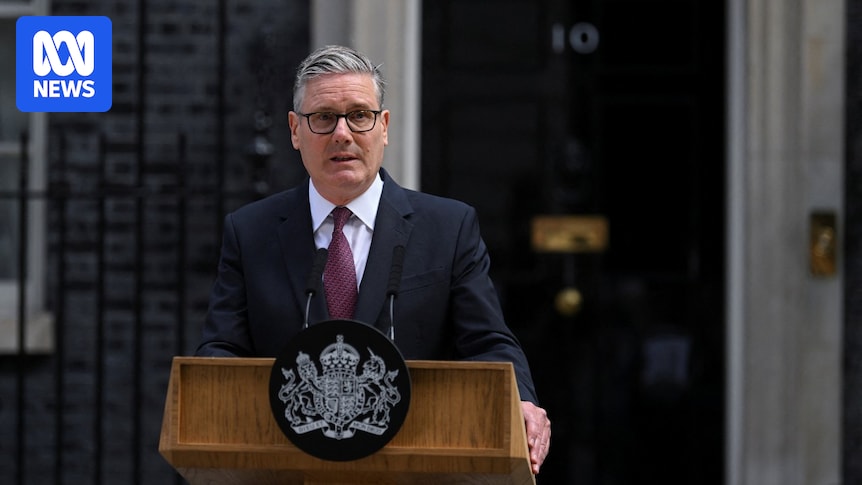
A few hours after the results of Britain's 2024 general election were finalised, dozens of Labour staffers gathered at The Red Lion pub at Whitehall.With plenty of pints, they spent a sunny London afternoon toasting the party's landslide victory. It was Wednesday, July 5, and there was an optimism in the air.Across the road at 10 Downing Street, Sir Keir Starmer — just the fifth Labour leader to take his party from opposition to government — was laying out his plan for the cameras.Labour had spent 14 years in the wilderness of opposition, and now, as Sir Kier put it, they were going to "end the chaos".Number 10 had become a revolving door. The Conservative Party had spent the last few years of its time in office devouring itself and its leaders.For some people, the country's government had become a punchline.The Red Lion pub, on Parliament Street, is an institution for UK politicians and their staffers. (Getty Images)Sir Keir promised stability, but it did not last long. He resigned on Monday, less than two years after coming to power.He is set to be replaced by veteran Labour politician Andy Burnham, a former long-time MP, who has most recently been serving as the Mayor of Greater Manchester.The events of the past week have once again thrust the idea that "Britain is broken" into the national conversation. But for some people, there's a growing sense that it is the UK's political system, rather than the country, that has crumbled.Hating Sir Keir became 'cultural phenomenon'Sir Keir's popularity began to plummet less than a month into his leadership when he cut something called the universal winter fuel allowance — a lump sum of money given to elderly Britons to offset rising energy bills in the colder months.Shortly after the decision, some opinion polls claimed the PM's approval rating had fallen by 45 per cent. Eventually, he walked parts of the policy back, but the damage was done.There were more controversies coming. Sir Keir was accused of trying to appease conservatives when he declared "Britain risks becoming an island of strangers" during a speech in May last year.His deputy, Angela Rayner, resigned in September amid questions about whether she had underpaid stamp duty on an investment property.Sir Keir struggled to explain how a close friend of child sex offender Jeffrey Epstein ended up as the UK's ambassador to the US.His polling numbers continued to fall. The PM and those in his inner circle believed the mistakes were not terminal, characterising them as routine teething issues for a new government.In fact, many of Sir Keir's allies were baffled as to why voters seemed to hate him so much.His friend and former advisor, Tom Baldwyn, acknowledged the prime minister had made errors of judgement, and had at times an almost frustratingly dour communication style.But he struggled to comprehend the level of vitriol towards Sir Keir."He's kept us out of wars, he hasn't crashed the economy, there hasn't been some defining financial scandal or law breaking, which there has been under previous administrations," Mr Baldwyn told the ABC."You go to football matches and people are chanting Keir Starmer and the next word rhymes with anchor … it's now a sort of cultural phenomenon."Despite the unprecedented level of public contempt, Sir Keir, as well as many of his senior ministers and advisors, believed Labour had implemented consequential policy changes.In less than two years, their government expanded free childcare, drastically reduced net immigration, and provided more rights to renters.But Mr Baldwyn said the hatred towards Sir Keir Starmer was part of a broader trend in British politics."The last five prime ministers have actually been the five most unpopular prime ministers in polling history and, according to some polls, each of them has broken the previous one's record for unpopularity," he said."I think that suggests to me there's something else going on in our country, whether it's deep unhappiness and inequality, both through class, through regions, through generations."Andy Burnham snaps a selfie with Labour colleagues this week. (Getty Images: Dan Kitwood)Spooked Labour MPs wanted a circuit breakerCatherine Haddon is an author and senior fellow at the Institute of Government, a non-aligned think tank.She said the 2016 Brexit referendum, in which the country overwhelmingly voted to leave the European Union, had made for an increasingly hostile political landscape in the UK."There's no denying that British politics is going through a very tumultuous period," she said."The last decade has seen very volatile politics and a very difficult environment for any prime minister to carry on doing the job. They're not given much patience."After Brexit, Nigel Farage's right-wing Reform Party (similar to One Nation in Australia) emerged as a political force and, on the left, the Green Party's popularity has also increased.In Labour's case, many MPs, particularly those in marginal seats, were spooked by bad polling and the party's dreadful results in local elections, which were held in May.For some, dumping Sir Keir was an attractive circuit breaker.Sir Keir Starmer announces his resignation outside Number 10 on Monday. (Reuters: Jaimi Joy)Catherine West, an Australian-born Labour MP in north London, last month became one of the first in the party to publicly call for Keir Starmer to resign. She told the ABC she needed to "pivot to street-fighter mode to take on Reform".Ms Haddon believed politicians had found it difficult to navigate the new, more fractured landscape."Brexit was such a shock to the political system that the two big parties, the Conservatives and the Labour Party, have really struggled to think about how to respond to what that says about UK voters, about what they want, about the changing nature of our society," she said.Ms Haddon added that leaders in government often had an immediate disadvantage; they're suddenly perceived by large parts of the electorate as being part of the stuffy political establishment."One of the key factors is that Farage has been a very good media operator, has been very good at connecting with people, and it is, in a sense, easier to be the insurgent on the outside, saying that you're not the party of Westminster," she said.Is Britain now ungovernable?Sir Keir's communication style is often cited as a reason for his demise. Britain's media is world-renowned for its savagery. Its coverage of politics can be particularly brutal.Phillip Collins, a former speechwriter for veteran Labour PM Tony Blair, told the BBC's Newsnight program this week that the press's seemingly unquenchable thirst for political drama, combined with an electorate dealing with a cost-of-living crisis, has created a highly restive governing environment."We are becoming increasingly impatient, journalists, media, the stories are so fast now, and certainly the public has become impatient, the politics is quicker and harder than it has ever been before," he said."Change takes longer than two years, and it will now, that hasn't altered."Mr Collins said the prime ministership had become a poisoned chalice in the UK."If you've got a country where people haven't had a pay rise in 15 years, that is going to be a country where politics is turbulent," he said.Ms Haddon agrees. She said prime ministers were now afforded little opportunity to learn on the job."The media environment in which politics operates now across the world is very different from 20, 30 years ago," she said."The impact of social media, both in terms of the speed of response, the way in which issues can suddenly take hold every single day in government, there might be a new issue that is breaking and risks causing political crises."We probably do need to think about the stability of our leaders. It is valuable for people to learn on the job."And it is notable that with Starmer stepping down, there's also been quite a lot of talk about politicians needing more time on the job. The public also doesn't like the chaos that comes with rapid changes of prime minister."It's a conflicting set of issues that politicians have got to deal with here."Despite the chaos engulfing Westminster, Ms Haddon rejected the assertion that Britain has become ungovernable."I don't think it's helpful for us to say that … if you look at Starmer's premiership, there's a hell of a lot of governing that was going on, huge amounts of policy that's been developed, much of which wasn't controversial with his own party," she said."Just because it's a challenging environment to govern, it doesn't mean that it is impossible to do so. It just means that you've got to really try hard."When he stood outside 10 Downing Street back on July 5, 2024, he said change was "not like flicking a switch; this will take a while".His calls for patience and understanding went unheeded.Less than two years on, Sir Keir was back at the same location, falling on his sword.Across the road, Labour staffers were back sipping pints in the sun at The Red Lion pub. But the optimism that filled the air two years ago was gone.
If the UK has become ungovernable, some people say Brexit is to blame
It took only a month after coming to office for Keir Starmer's popularity to begin plummeting. Does it mean the UK has become ungovernable? Or is something else to blame?
1,483 words~7 min read