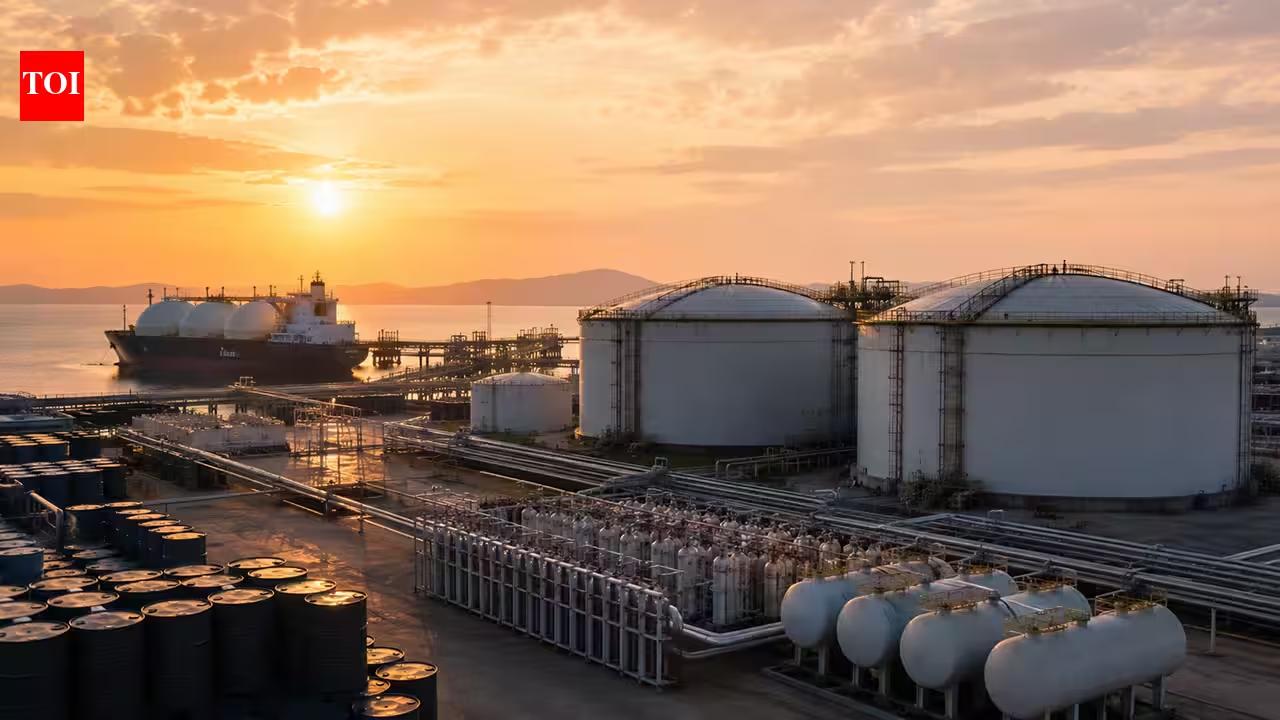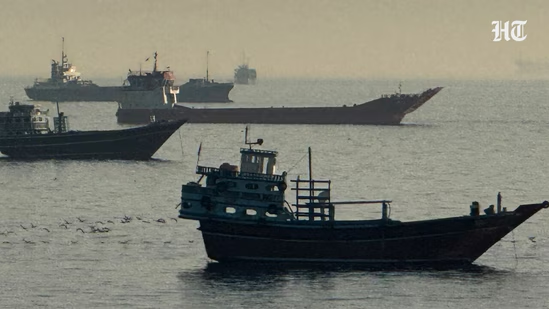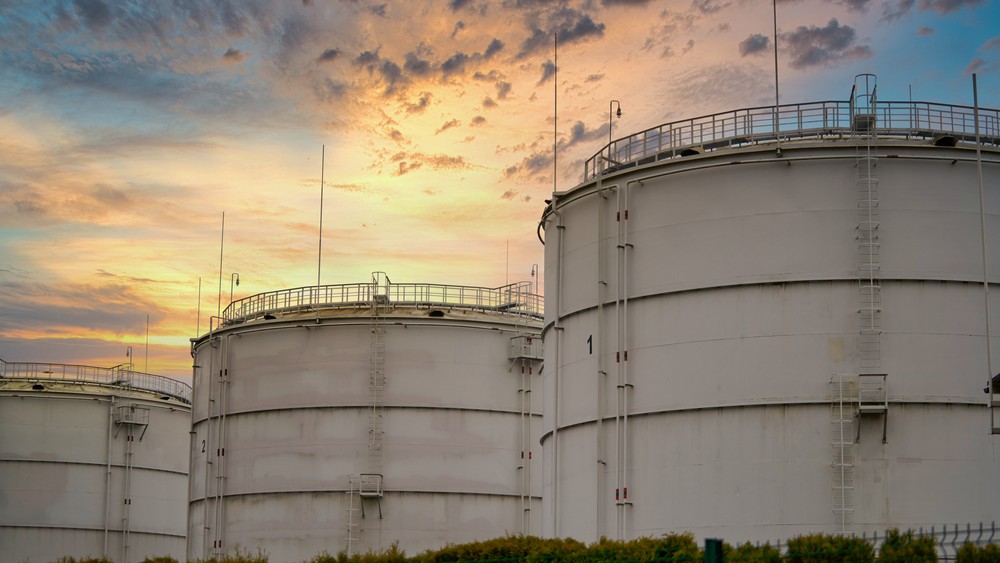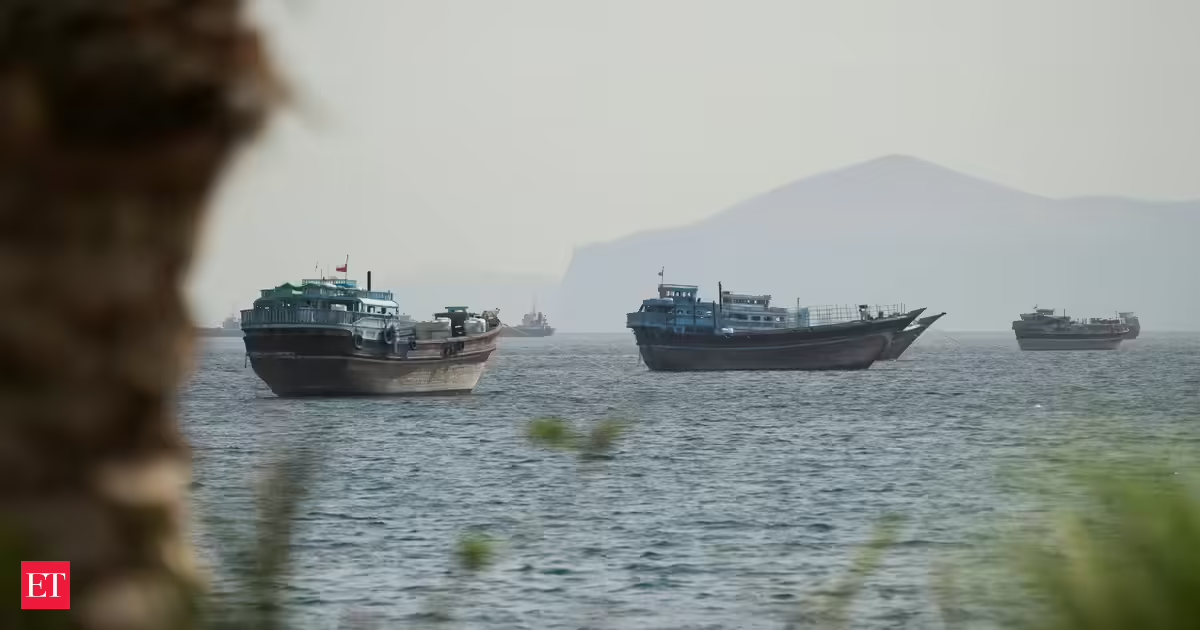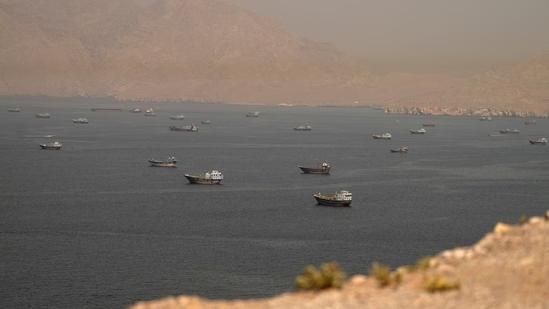
For an energy-dependent country, a strategic reserve is extremely critical. Amid the current geopolitical uncertainty and weaponisation of the international energy transit route, a strategic reserve is a quick fix to momentarily address the crisis. Crises of a similar nature, and others, are expected to occur in some form or another. What is important is a country’s preparedness to address it effectively. In such situations, a strategic reserve gives the breathing space to find a quick alternative. The engine of the economy cannot run without energy. India is an energy-dependent country. It is the world's third-largest oil importer and consumer. It is heavily reliant on crude imports. Its growth aspirations are anchored on an uninterrupted energy supply. India’s strategic petroleum reserves (SPRs) are 5.33 million metric tonnes (MMT). Its capacity is estimated to be roughly 39 million barrels of crude. It is India's emergency strength. The national fuel inventory is a strategic infrastructure that ensures energy supply during a crisis. Vessels at the Strait of Hormuz, as seen from Musandam, Oman. (Reuters File)The Indian Strategic Petroleum Reserve Limited (ISPRL) manages the storage of strategic crude oil across three underground rock caverns: Padur, Karnataka (2.50 MMT), Mangaluru, Karnataka (1.50 MMT), and Visakhapatnam, Andhra Pradesh (1.33 MMT). India has a total fuel reserve of 74-76 days of energy cover. To enhance capacity, the government has approved expansions of 6.5 MMT at Chandikhol, Odisha (a new 4.0 MMT underground facility), and Padur, Karnataka (an additional 2.5 MMT commercial-cum-strategic extension). The SPR helped India immensely to navigate the energy shocks during the Strait of Hormuz crisis. The reserve gave India the vital domestic cushion to manage momentary supply shocks, maintain price stability, and address domestic energy market anxiety and panic. Around 30% of India's crude imports pass through the Strait of Hormuz. When tensions flared in the Strait of Hormuz, SPR provided support and space to explore alternatives. India could structurally reroute its crude imports. The buffer helped India to absorb Russian crude and sign contracts with alternative suppliers in the US, Latin America and West Africa. During the peak period of the crisis, Brent crude surged past $111–$119 per barrel. Had India been forced to buy the crude at the exorbitant price, it would have stressed the Indian economy. It could have inflicted catastrophic effects on retail inflation. The strategic reserve served as an immediate sovereign buffer, preventing the forced purchase of crude oil at high prices. The emergency stockpile saved India from sinking into a severe economic crisis. The government integrated SPR caverns storage with pipeline volumes and refinery operational stocks to keep the energy ecosystem resilient for 74 to 76 days. The combined formula prevented the dry-out at the local petrol pumps. India opted out of the International Energy Agency (IEA)'s call to release strategic stockpiles to protect its national interests. The ministry of petroleum and natural gas emphasised the need to prioritise sovereign security and national interests. The strategic reserve protects India from geopolitical conflicts, supply chain disruptions, and global market price shocks. More importantly, it serves India's national security. It temporarily prevents economic vulnerability caused by war, disasters, tanker strandings, fuel pump failures, shipping blockades, embargoes, supply chain disruptions, and blockades in transhipment and transit routes. It ensures that critical sectors, such as defence, agriculture, and transportation, function unimpeded. It moderates domestic inflation, the fiscal deficit, and market volatility in emergency situations and during price spikes. Ensuring temporary stability is its main focus. A robust stockpile provides strategic autonomy, diplomatic breathing space, and an alternative arrangement, thereby preventing energy coercion by energy-supplying countries and blockade of international transit routes. India is the world's third-largest importer. China is the world's largest importer of energy. The US is the second largest. China imports over 11 million barrels per day (bpd) of crude oil. It lacks the required energy autonomy despite being the world's largest manufacturing and industrial hub. China's domestic oil production cannot meet its massive demand. It has the world's largest SPR network. Its strategic oil inventory has a capacity of 1.4 billion barrels of crude oil. Its energy stockpile is the world's largest emergency energy reserve. It is a national secret for China to reveal the exact figures for its stockpile. It is also difficult to secure an exact figure from a Communist country where secrecy is a State policy. It has a government-held strategic reserve for national security and military emergencies and commercial-strategic inventories for commercial purposes and secondary strategic cushions. China's storage infrastructure includes visible above-ground tank farms and invisible military-grade networks. The latter is mostly located in ultra-secure areas beneath mountains. The former is located along the coastlines near important refining complexes such as Zhoushan, Ningbo, and Qingdao. China aggressively purchased cheaper crude oil from Russia, Iran, and Venezuela in 2025 to build a massive stockpile. The 1.4-billion-barrel stockpile will help Beijing secure energy immunity for over 200 days, or maybe a little beyond, because it is difficult to assess the exact quality of its energy stockpile. If a geopolitical crisis chokes China's energy supply routes, it may survive an immediate energy collapse. But it will severely affect its economy, industry, and manufacturing. The US's crude oil import volume is roughly six to eight million barrels per day (bpd). It does not have acute energy dependence. It is also one of the world’s largest domestic crude oil producers. The US refineries use the technology to process heavy, sour crude from West Asia and South America. The US's domestic crude production is light and sweet. Therefore, the US exports its light crude to foreign markets and imports heavy crude for its refineries. A structural shift in refining engineering is required to refine the domestically produced light crude. However, the US has its energy autonomy through domestic sources. It may reengineer to produce domestically to meet its needs. The US's SPR has the storage capacity of 714 million barrels of crude oil. It uses hollowed-out underground salt caverns for its energy stockpile. They are located along the Gulf of Mexico coastline—two in Texas (Bryan Mound and Big Hill) and two in Louisiana (West Hackberry and Bayou Choctaw). They are connected to oil refineries and maritime shipping channels. The 2026–2027 refilling mandate is to aggressively restore the energy cushion. It has released 400 million barrels to combat West Asian transit blocks. Emergency releases have been done to give it as a loan to commercial energy companies. It also shows how important it is for the US to secure a resilient energy stockpile. Therefore, an energy stockpile is critical to meet emergency situations. Given the above comparison, China is expanding its strategic reserve by buying cheap crude from Iran, Russia and earlier Venezuela. It uses crisis conditions to strengthen its energy reserves. The US tightens its grip on India, not to buy cheaper Iranian and Russian oil, but fails to exercise the same grip on China. It helps China to secure its energy storage and expand its strategic reserve. Strategic reserve ensures China’s safety and crisis management in the event of an emergency. India should be given the opportunity to expand its strategic reserve to emerge as a competing power in the global scenario. The expanding China, with its strength in energy and other critical areas, may emerge as a hegemonic power and hinder India's progress. It may not appreciate India rising as a competing power in its immediate neighbourhood. Since strategic reserves are a critical indicator of growth trajectories, it is important that India expand its strategic reserve capacity to build economic resilience, strategic immunity, and geopolitical strength. Energy is Beijing's Achilles heel. If it is allowed to address its deficit, New Delhi must also be allowed to buy Russian oil to expand its strategic reserve. India is a democratic country, and to make it emerge as a competing power, an alternative manufacturing hub, and a supply chain partner is far more sensible than letting China monopolise manufacturing and supply chains. (The views expressed are personal)This article is authored by Jajati K Pattnaik, professor and chairperson, Centre for West Asian Studies, School of International Studies, Jawaharlal Nehru University, New Delhi and Chandan Panda, professor, Central University of Karnataka.
How critical are strategic reserves for India?
This article is authored by Jajati K Pattnaik and Chandan Panda.
1,359 words~6 min read