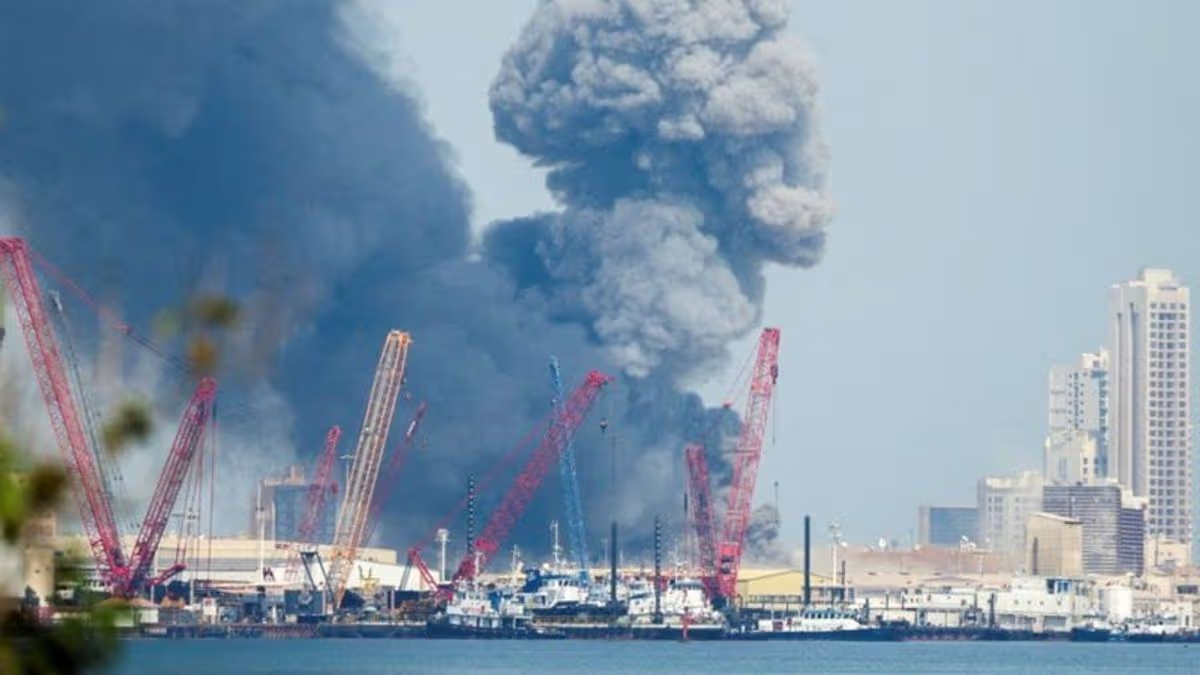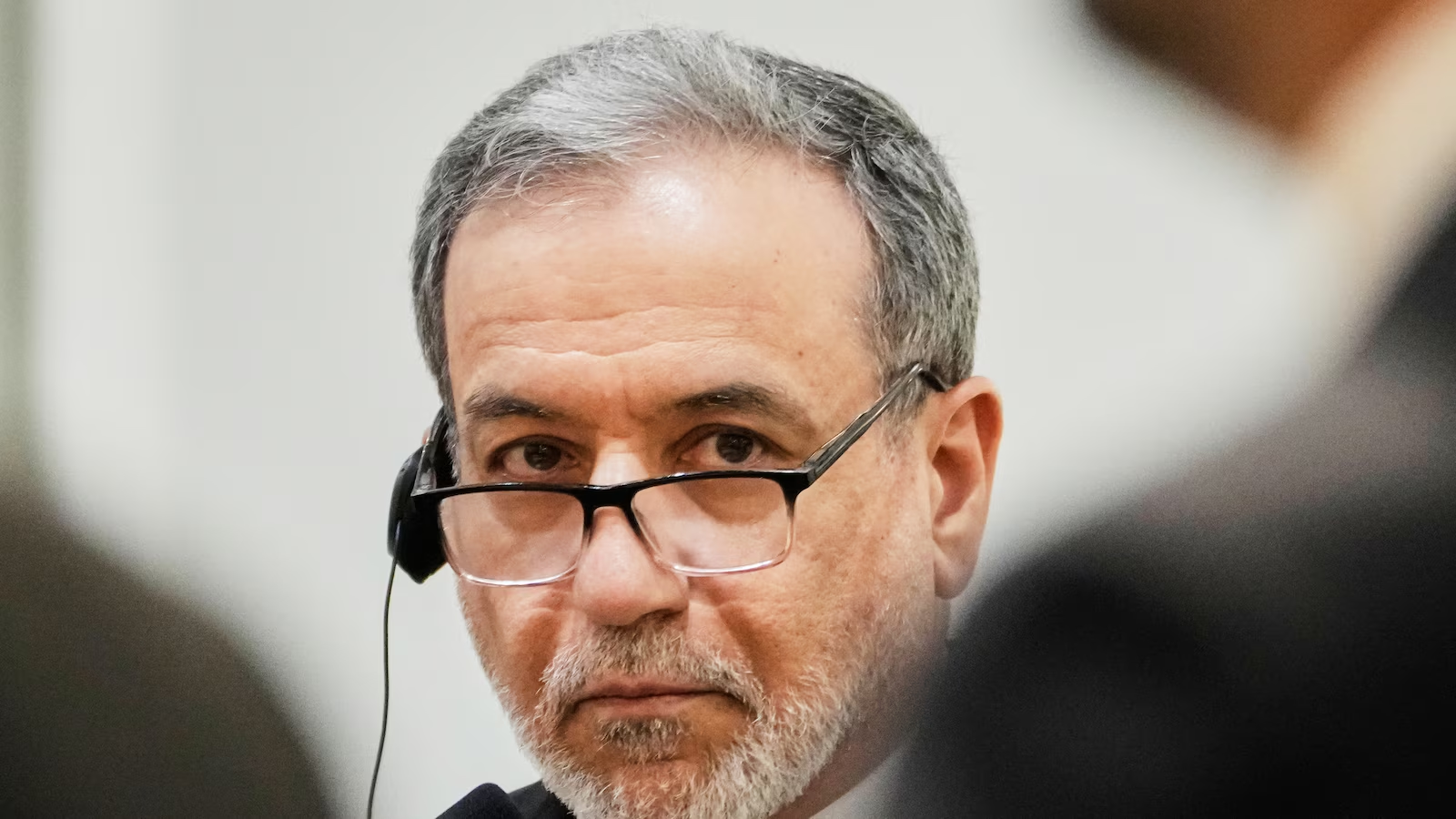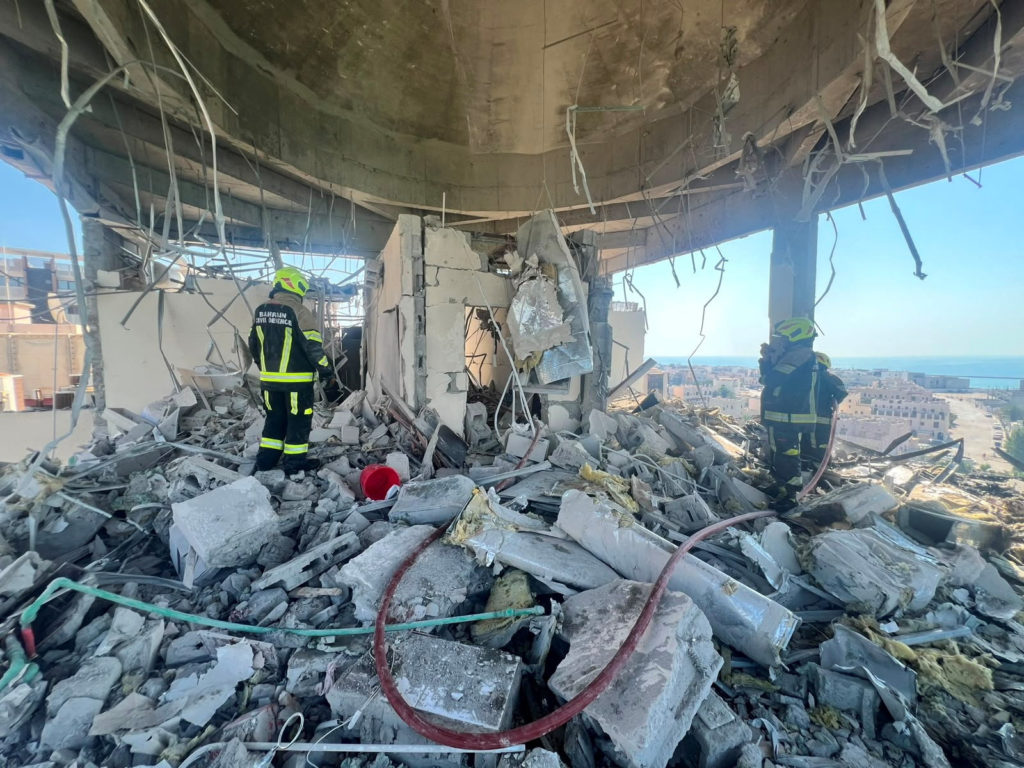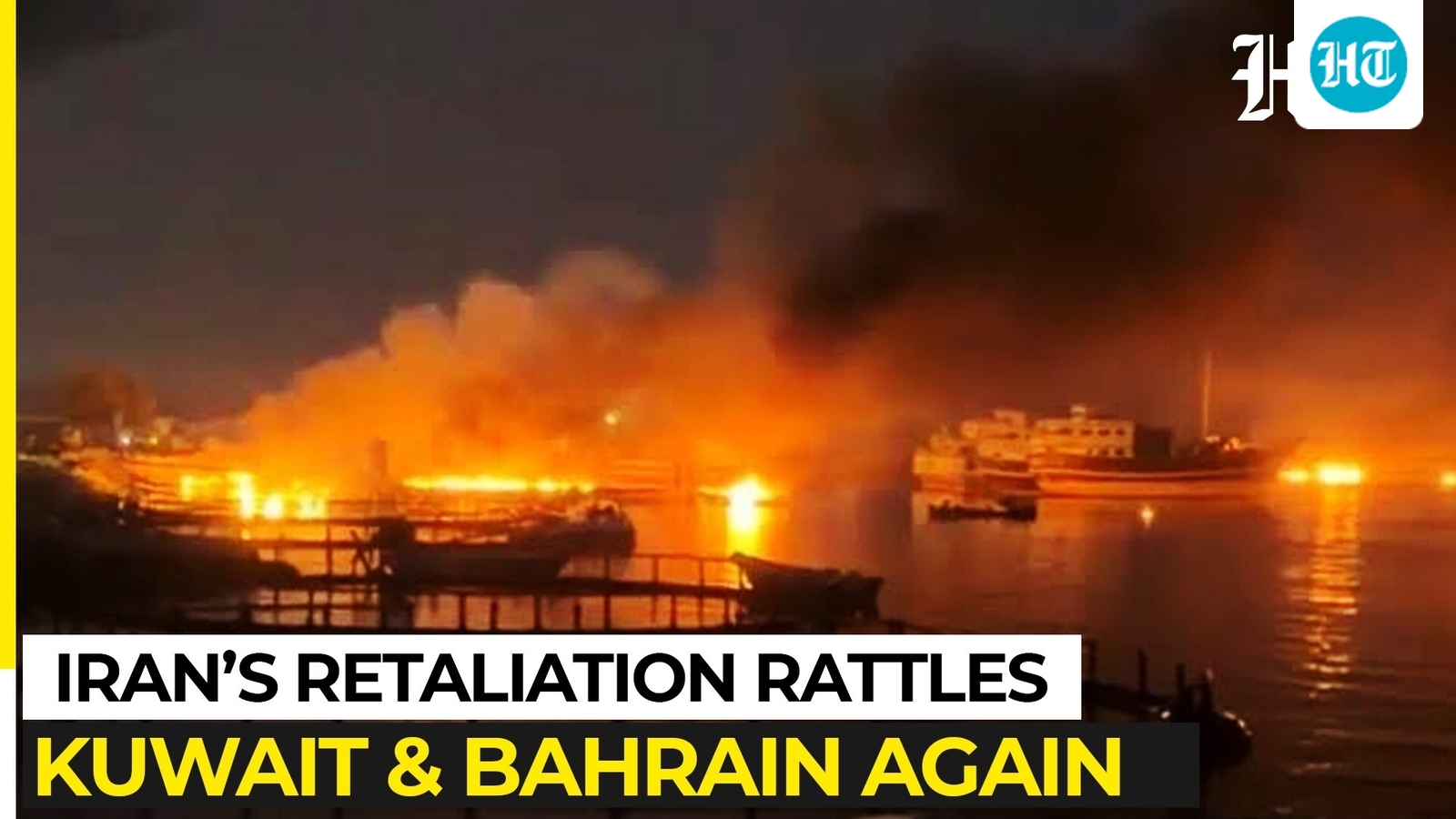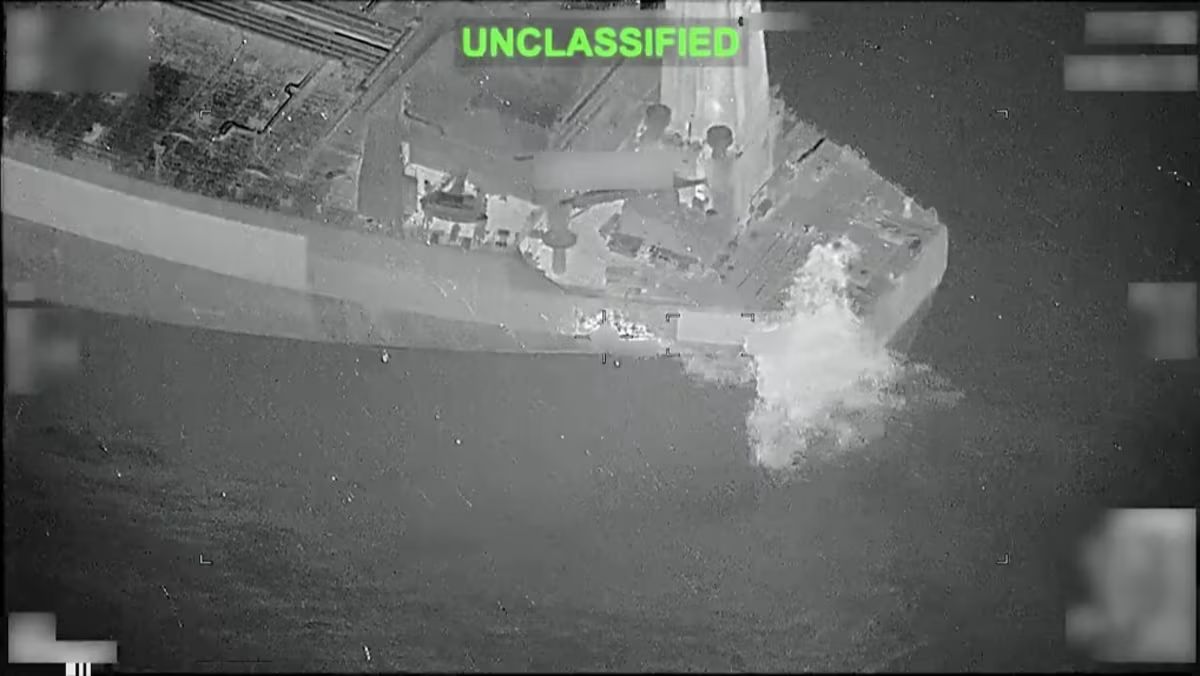
The Middle East ceasefire is under severe strain after US warplanes struck 10 military targets in Iran on Sunday, triggering Iranian attacks on Bahrain and Kuwait. The strikes, ordered by US President Donald Trump, were carried out in response to a drone attack on an oil tanker in the Strait of Hormuz. Trump warned that further violations could lead to full-scale military action, putting the fragile interim peace deal at risk. Iran’s IRGC has vowed a stronger response to any further US strikes, as tensions continue to escalate across the Gulf. Follow all the latest developments here: 06:27 AM, 29 June 2026We are closing this coverage now. For the latest updates, click here.02:13 AM, 29 June 2026Technical talks on implementing the US-Iran deal still 'on track'Technical talks on implementing the US-Iran memorandum of understanding remain scheduled despite the latest military exchanges between the two countries, a senior US administration official told CNN late on Sunday."Nothing has been canceled. Technical talks regarding the implementation of the MoU are on track for the coming days as planned, and deconfliction channels are up and running after the Lake Lucerne Summit," the official said, referring to the recent round of negotiations in Switzerland.The renewed exchange of strikes has put the fragile agreement under increasing strain. President Donald Trump warned that the United States would respond with additional military action if Iran continues attacking US interests, while Tehran cautioned that any violations of the ceasefire would "result in the complete halt of all diplomatic processes."The memorandum of understanding, signed earlier this month, established a framework for reopening the Strait of Hormuz to commercial shipping, easing selected financial restrictions on Iran and launching technical negotiations over the future of Tehran's nuclear program.The agreement also triggered a 60-day negotiating period during which US and Iranian officials aim to finalize a broader accord covering nuclear safeguards, sanctions relief and long-term regional security.02:07 AM, 29 June 2026US-Iran peace talks survive missile exchanges as Gulf conflict widensDespite a sharp escalation in military exchanges across the Gulf, US and Iranian officials say diplomatic negotiations remain on track, underscoring the unusual reality of a conflict in which both sides are trading attacks while keeping channels for a broader peace agreement open.The latest crisis erupted after Iran launched drones and missiles toward US military facilities in Bahrain and Kuwait following American retaliatory strikes on Iranian military sites. US officials said none of the Iranian drones or missiles successfully struck their intended targets. Most were intercepted by US and allied air defenses, while others failed before reaching their destinations. American officials also reported no US casualties.Despite the exchange of fire, negotiators are still expected to meet in Qatar this week to continue technical discussions aimed at preserving the fragile ceasefire framework and advancing a broader agreement covering Iran's nuclear programme, sanctions relief and security in the Strait of Hormuz. Mediators from Qatar and Pakistan continue to push both sides to keep diplomacy alive even as military pressure intensifies.The latest flare-up has also widened the regional conflict. Iran warned it could suspend negotiations if further US strikes continue, while Israel has stepped up operations against Hezbollah in Lebanon, prompting a parallel race by Israel's military and technology sector to strengthen defences against increasingly sophisticated drones, precision missiles and electronic warfare threats posed by the Iran-backed militant group.The Gulf states have increasingly found themselves on the front lines of the confrontation. Bahrain and Kuwait, both hosts to major US military facilities, became direct targets of Iranian retaliation, highlighting how America's regional partners remain vulnerable even when attacks are intercepted. The renewed exchanges have also reignited concerns over commercial shipping through the Strait of Hormuz, a vital artery for global oil exports, although negotiators insist efforts to stabilize maritime security remain part of the ongoing talks.01:53 AM, 29 June 2026Arab League condemns continued Iranian attacks on Bahrain, KuwaitAhmed Aboul Gheit, Secretary-General of the League of Arab States, has once again strongly condemned the continued Iranian attacks carried out against the Kingdom of Bahrain and the State of Kuwait using missiles and drones, describing them as a flagrant violation of sovereignty, international law and the Charter of the United Nations.In a statement issued on Sunday, Aboul Gheit stressed the need for the immediate cessation of all Iranian hostile acts targeting the Gulf states and threatening regional security and stability, holding Iran fully responsible for its unlawful actions, which undermine regional and international diplomatic efforts aimed at achieving peace in the region.12:04 AM, 29 June 2026Iran talks continue despite exchange of fire: US officialTechnical talks on the US–Iran memorandum of understanding remain “on track” despite recent exchanges of fire, a senior US administration official said on Sunday, according to CNN.The official said no meetings had been cancelled and that discussions on implementing the MoU are still scheduled to proceed in the coming days as planned.They added that deconfliction channels remain active following the Lake Lucerne summit in Switzerland, where talks were led on the US side by Vice President JD Vance.Get updated faster and for FREE: Download the Gulf News app now - simply click here.11:48 PM, 28 June 2026Iran claims eight US sites hit in Kuwait, BahrainIran’s Islamic Revolutionary Guard Corps (IRGC) has claimed its forces destroyed eight US military sites in Kuwait and Bahrain, according to state broadcaster IRIB.The report said ballistic missiles and drones were used in the operation, which Tehran described as retaliation for recent US strikes on Iranian facilities in Sirik and Qeshm.The statement did not provide independent verification of the claims.11:03 PM, 28 June 2026Iran warns against attacks from regional territoryIran has warned regional countries against allowing their territory or facilities to be used for attacks on its soil, Foreign Minister Abbas Araghchi said on Sunday, according to the semi-official Tasnim news agency.He stressed that regional governments must play a role in safeguarding peace and security, particularly by preventing “aggressor parties” from using their territory or infrastructure to launch what Tehran called unlawful attacks on Iran.10:55 PM, 28 June 2026Turkey denounces Israel's 'political' recognition of Armenia genocide
Live updates: Iran foreign minister calls on regional states to block attacks from their territories
Iran’s missile and drone attacks on Bahrain and Kuwait, US retaliatory strikes, and rising Hormuz tensions put the fragile Middle East ceasefire at risk.
5,394 words~25 min read