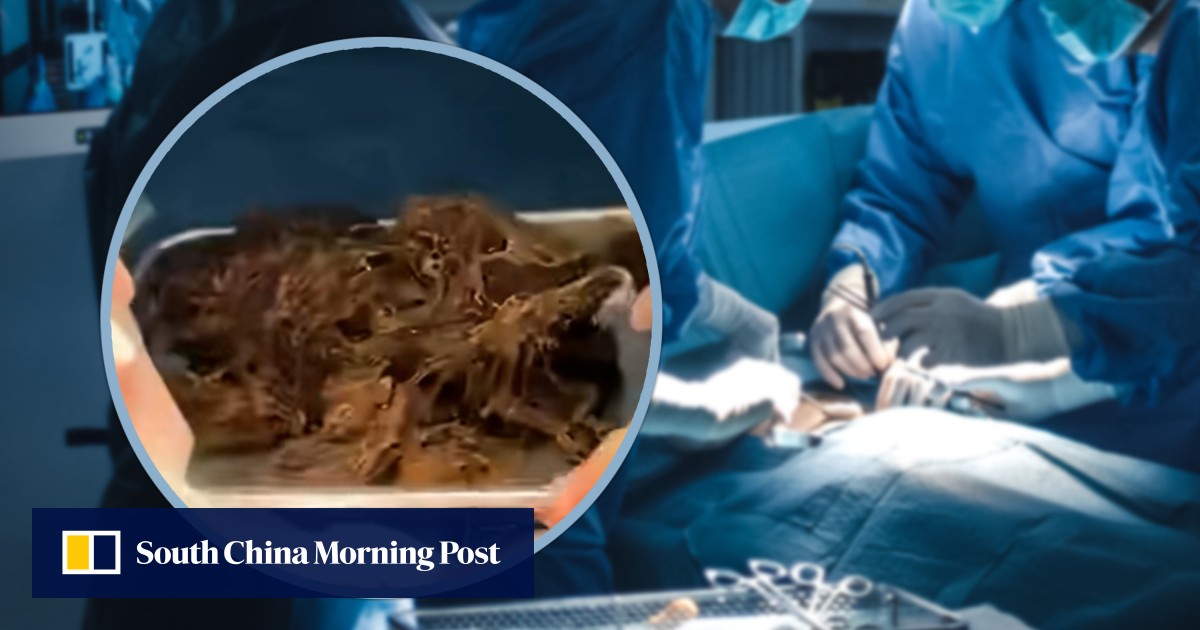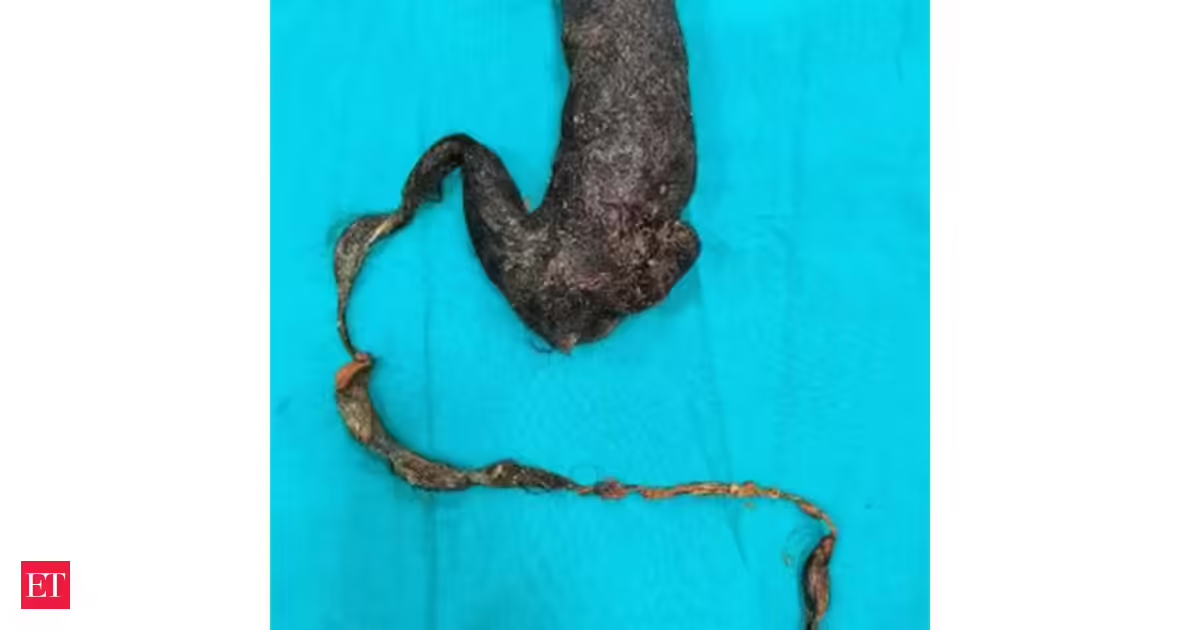
A 30-year-old woman was left shocked after doctors discovered a giant hairball occupying a large portion of her stomach, causing months of abdominal pain, nausea, and loss of appetite, reports news agency AI. Doctors at Amrita Hospital in Haryana's Faridabad said the unusual condition had been developing silently over several years before it was finally diagnosed and surgically removed.ALSO READ: How IIT dropout Dhravya Shah built an AI startup before 20Persistent Stomach Pain Led to Shocking DiscoveryAccording to the hospital, the woman, identified as Shashi, had been experiencing abdominal pain, poor appetite, nausea, and a constant feeling of fullness since February.ALSO READ: University of Michigan faces heat over $75,000 H-1B techie rolesEven after eating small amounts of food, she felt uncomfortably full. As her symptoms worsened over the following months, doctors conducted a detailed examination to determine the cause.The tests revealed a large trichobezoar — a compact mass of swallowed hair that had accumulated inside her stomach over time.What Is a Trichobezoar?A trichobezoar is a hairball that forms when a person repeatedly swallows hair. Since the human digestive system cannot break down hair, it remains in the stomach and gradually builds up into a solid mass.Over time, these hairballs can grow large enough to cause serious health problems, including:Persistent stomach painNausea and vomitingLoss of appetiteMalnutritionIntestinal blockageIf proper treatment is not done at the right time, then the condition can become life-threatening.Linked to a Mental Health DisorderDoctors found that the patient's condition was associated with trichotillomania, a psychiatric disorder that causes an uncontrollable urge to pull out one's own hair. Some people with trichotillomania also develop trichophagia, a condition in which they eat the hair they pull out.Experts say this case highlights the close connection between mental health and physical illness. What begins as a behavioral disorder can eventually lead to severe medical complications if not addressed.Understanding Rapunzel SyndromeIn severe cases, a trichobezoar can develop into a rare condition known as Rapunzel Syndrome. This happens when the hairball extends beyond the stomach into the small intestine and, in some cases, even reaches the colon. Doctors warn that untreated cases can be fatal.Named after the fairy tale character Rapunzel, the syndrome can cause:Complete bowel obstructionIntestinal perforationSevere infectionsProtein-losing enteropathyMajor surgical complicationsSurgery Successfully Removes the Giant HairballThe patient was treated by a multidisciplinary team led by Dr. Saleem Naik, Dr. Puneet Dhar, and Dr. Jaya Agarwal from the Department of Gastrointestinal Surgery at Amrita Hospital.After detailed evaluation and counseling, surgeons performed an exploratory laparotomy and successfully removed the massive hairball from her stomach.The procedure relieved the underlying cause of her symptoms and prevented potentially dangerous complications.Why Follow-Up Care Is ImportantDoctors recommend long-term psychiatric treatment and behavioral therapy for patients diagnosed with trichotillomania. While surgery can remove the hairball, addressing the psychological condition is essential to prevent the problem from recurring.The case serves as a reminder that mental health conditions can sometimes manifest as serious physical illnesses, making early diagnosis and comprehensive treatment crucial.FAQsWhat is a trichobezoar?A trichobezoar is a mass of swallowed hair that accumulates in the stomach because the body cannot digest hair.What causes hairballs in the stomach?Hairballs are often linked to trichotillomania and trichophagia, conditions involving hair pulling and hair eating.What is Rapunzel syndrome?Rapunzel syndrome is a rare form of trichobezoar in which the hairball extends from the stomach into the intestines.Can a stomach hairball be dangerous?Yes. If untreated, it can cause intestinal blockage, malnutrition, infections, stomach perforation, and, in rare cases, death.How is a trichobezoar treated?Large trichobezoars usually require surgical removal, followed by psychiatric treatment and behavioral therapy to prevent recurrence.
She couldn’t eat properly for months but yet felt full. Faridabad doctors later removed a giant hairball from her stomach
A 30-year-old woman's persistent stomach pain led to a shocking discovery: a giant hairball, or trichobezoar, filling her stomach. Doctors at Amrita Hospital surgically removed the mass, which had developed over years due to a linked mental health disorder. This case highlights the severe physical consequences of untreated trichotillomania and trichophagia, with potential for life-threatening complications like Rapunzel Syndrome.
590 words~3 min read