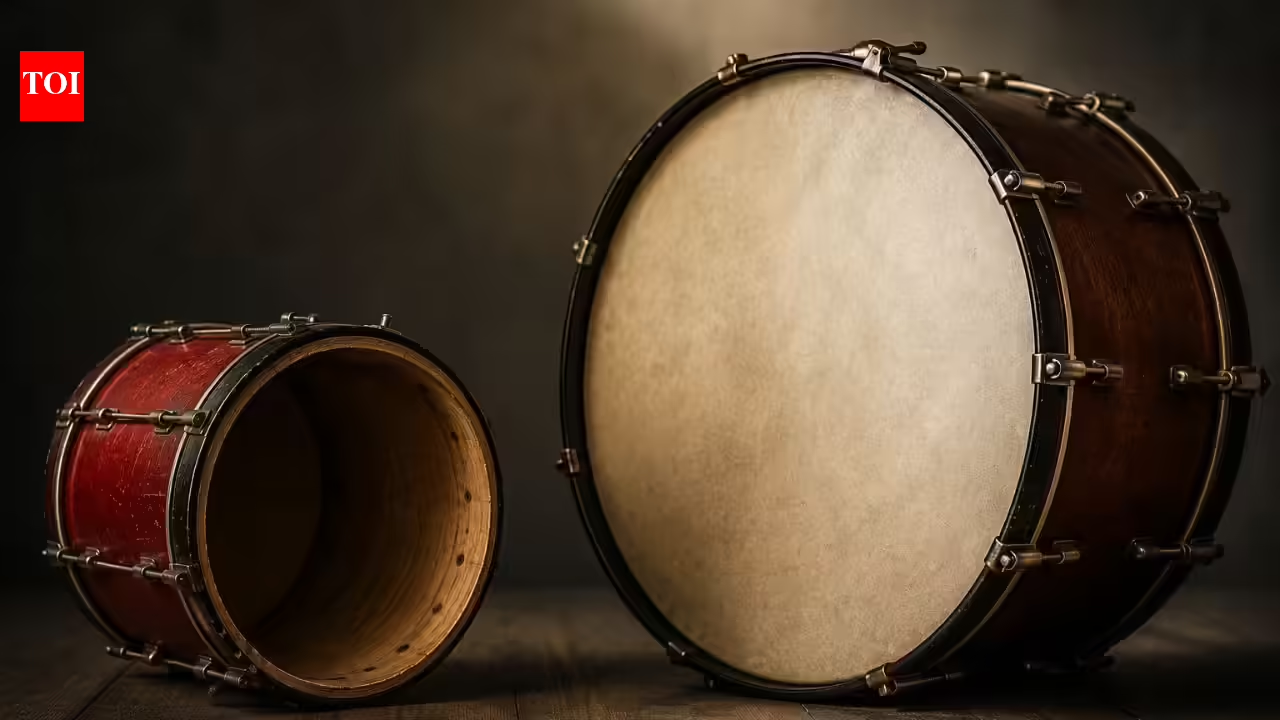
Chinese proverb of the dayYou have met this person. At meetings, they speak the loudest and longest, filling every silence with confident declarations and sweeping pronouncements. They have an opinion on everything and never seem to doubt themselves. They are the first to take credit, the last to admit a mistake, and somehow, they always seem to be in the middle of every conversation.They are also, more often than not, the one who knows the least.There is an old Chinese proverb that captures this precisely."The loudest drum is often the emptiest."— Chinese ProverbProverb of the DayAt first glance, it is about music. A drum that makes the biggest noise is usually the one with nothing inside. A drum that is full does not resonate as loudly. But the proverb is not really about drums. It is about people.The ones who shout the loudest, who talk the most, who fill every room with their voice, are often the ones who have the least to say. They are filling the space because they have nothing to fill it with.The noise of emptinessThe proverb offers a quiet warning: do not mistake confidence for competence. Do not assume that the person who speaks the most knows the most. Volume is not a substitute for substance. Noise is not a sign of depth. The person who is genuinely knowledgeable does not need to prove it.They are not performing. They are simply present.The loudest voice in the room is often the one trying to drown out its own uncertainty. The quietest person is often the one who has nothing to prove and everything to offer.The danger of mistaking noise for substanceWe live in an age that rewards noise. Social media amplifies the loudest voices. Attention flows to whoever can shout the most dramatically, post the most provocatively, or package their opinions in the most clickable way. The person who speaks in measured tones does not go viral. The person who screams does.The proverb cuts through this pattern. It asks us to stop and think. Is the loudest person actually saying anything? Or are they just making noise?Consider the people you trust most. Are they the loudest people you know? Probably not. The doctor you trust is not the one who shouts about their expertise. They are the one who listens carefully, asks the right questions and offers clear answers. The best teacher does not lecture endlessly. They create space for learning. The best leader does not dominate meetings. They guide conversations and let others speak.The loudest drum is empty because it has nothing to offer but noise. The drum that is full does not need to announce itself. Its value is not in its volume, but in what it contains.The proverb is not just a warning for how we judge others. It is also a test for ourselves. How often do we mistake volume for value? How often do we perform confidence when we actually lack substance? How often do we speak when we should be listening?There is a temptation in modern working life to be the loudest person in every room. To have an answer for everything. To fill silences with opinions, whether or not they are informed. It feels like progress. It feels like contribution. But it is not. It is just noise.The proverb points to something else: the value of silence. The person who knows their field does not need to dominate every conversation. They do not need to prove their worth through volume. They can afford to be quiet. They can afford to listen. They can afford to say "I don't know" because they are not performing expertise, they are living it.The loudest drum is empty. The drum that is full makes a different sound. It is lower, quieter and more resonant. It does not need to announce itself. Its value is self-evident.Why this proverb matters nowIf you find yourself in a room where the loudest voice is dominating, pause. Ask yourself: what is actually being said? Is there substance behind the noise? Or is the volume a substitute for depth?If you find yourself being the loudest voice, pause. Ask yourself: what am I trying to prove? Is what I am saying worth saying? Or am I filling space because I am unsure of my value?The person who is genuinely knowledgeable does not need to announce it. They do not need to shout. They do not need to dominate. They simply need to be present, to listen and to speak when they have something worth saying.The takeawayThe loudest drum is often the emptiest. It is a reminder that volume is not a measure of value. Noise is not the same as substance. The person who knows the least is often the one who talks the most. The person who knows the most is often the one who says the least.Next time you encounter someone who seems to fill every room with their voice, ask yourself: are they a drum that is full, or a drum that is empty?
Chinese proverb of the day: 'The loudest drum is often the emptiest' — A reminder that volume is not a measure of value
You have met this person. At meetings, they speak the loudest and longest, filling every silence with confident declarations and sweeping pronouncements.
836 words~4 min read