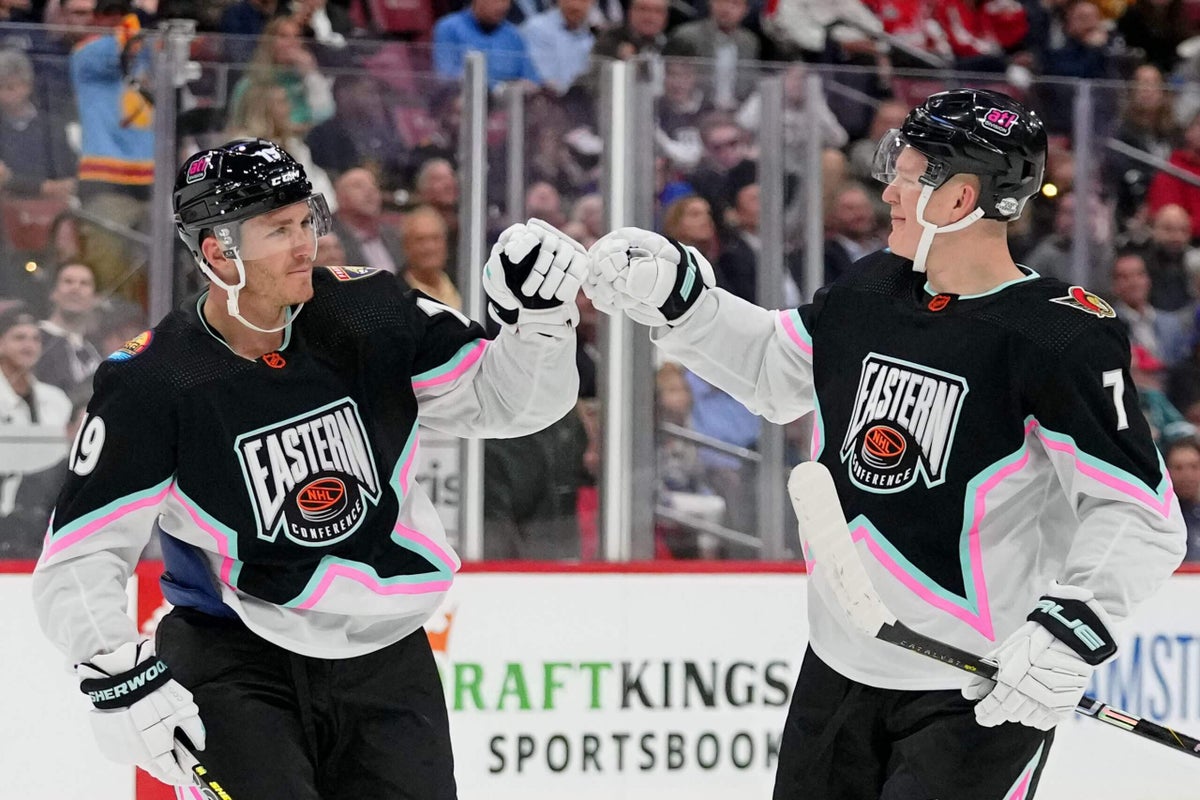
BOSTON, MASSACHUSETTS - FEBRUARY 20: Brady Tkachuk #7 of Team United States celebrates with Matthew Tkachuk #19 after scoring a goal against Jordan Binnington #50 of Team Canada during the first period in the NHL 4 Nations Face-Off Championship Game at TD Garden on February 20, 2025 in Boston, Massachusetts. (Photo by Maddie Meyer/Getty Images)Getty ImagesNo-trade and no-move clauses have become so commonplace in the NHL that many fans assume they are simply part of the business of sports. They aren’t.No-trade and no-move clauses are not the industry standard in North American sports. In fact, the NHL is the outlier. Here’s the approximate number of no-trade and no-move clauses per league:NFL: 8NBA: 2MLB: 35NHL: 245The contrast is remarkable. While the other three leagues treat movement restrictions as rare contractual exceptions, the NHL has made them an industry norm.There are a few reasons NHL teams offer so many no-trades.1) NHL Salaries Are Lower Than Those of Other Major SportsThe NHL operates in a different financial universe than the NBA, MLB, and NFL as there is a significant gap between salaries. Here’s what the average star makes in each of the four leagues:MORE FOR YOUNHL superstar: $10–16 millionNBA superstar: $50–70 millionMLB superstar: $40–70 millionElite NFL quarterback: $50–65 millionSince NHL players earn significantly less than their counterparts in the other major leagues, they often negotiate for certainty rather than seeking a bump in pay. They will give up income for a no-move since it provides players with control over their personal life.2) Hockey’s Culture Has Traditionally Valued LoyaltyHockey has long embraced the idea of organizational loyalty. Players are expected to commit themselves to a franchise, while teams frequently reward veterans with contractual stability.General managers have often viewed no-move clauses as a sign of mutual trust rather than merely a contractual concession. So it ties into hockey culture.3) The NHL’s Salary Cap Encourages Creative NegotiationsThe NHL’s hard salary cap limits how much clubs can spend. When teams reach the financial ceiling, they often have little flexibility to increase a player’s salary. So they offer the perk of a no-move to incentivize a signing. While a no-trade or no-move clause doesn’t cost the club cap space, it can be pretty valuable o the player.Why Other Sports Don’t Need ThemThe absence of movement clauses in other leagues is not accidental. Each league has alternative mechanisms that provide players with protection.NFL contracts are largely non-guaranteed. Teams can release players at any time, making long-term movement protection far less practical.MLB players acquire significant rights through service time. A player with at least 10 years of MLB service, including the last 5 consecutive years with the same club, earns the right to veto any trade.The NBA makes full no-trade clauses extremely difficult to obtain. To qualify, a player generally must have at least eight years of NBA service and four years with his current team.NHL hasn’t merely normalized movement restrictions; it has built a system where control over movement is itself a central currency in player-team negotiations.For now at least.
The NHL's Obsession With No-Trade Clauses: Why Hockey Is The Outlier In North American Sports
No-trade and no-move clauses have become so commonplace in the NHL that many fans assume they are simply part of the business of sports. They aren’t.
501 words~2 min read