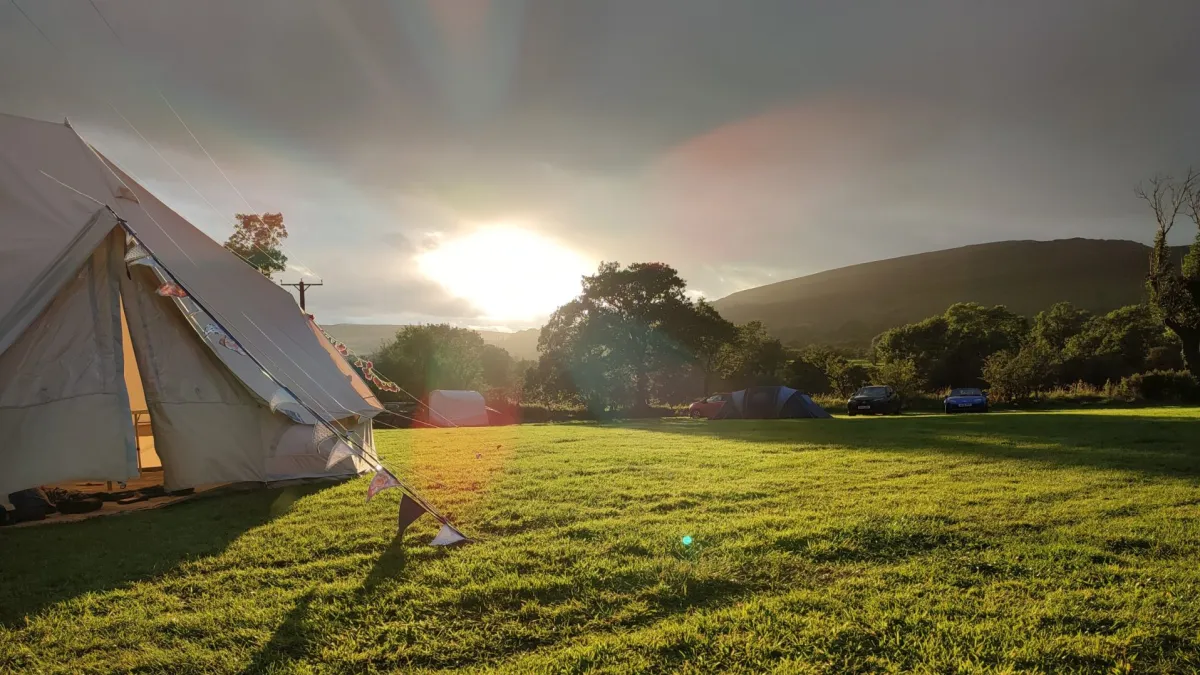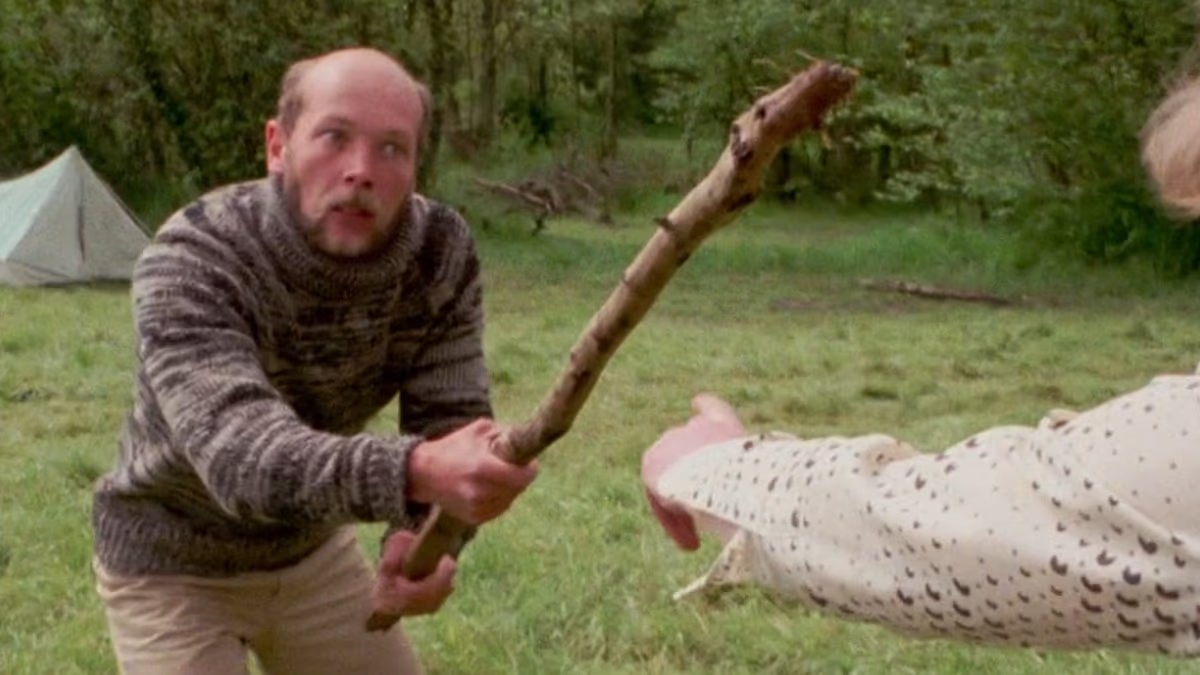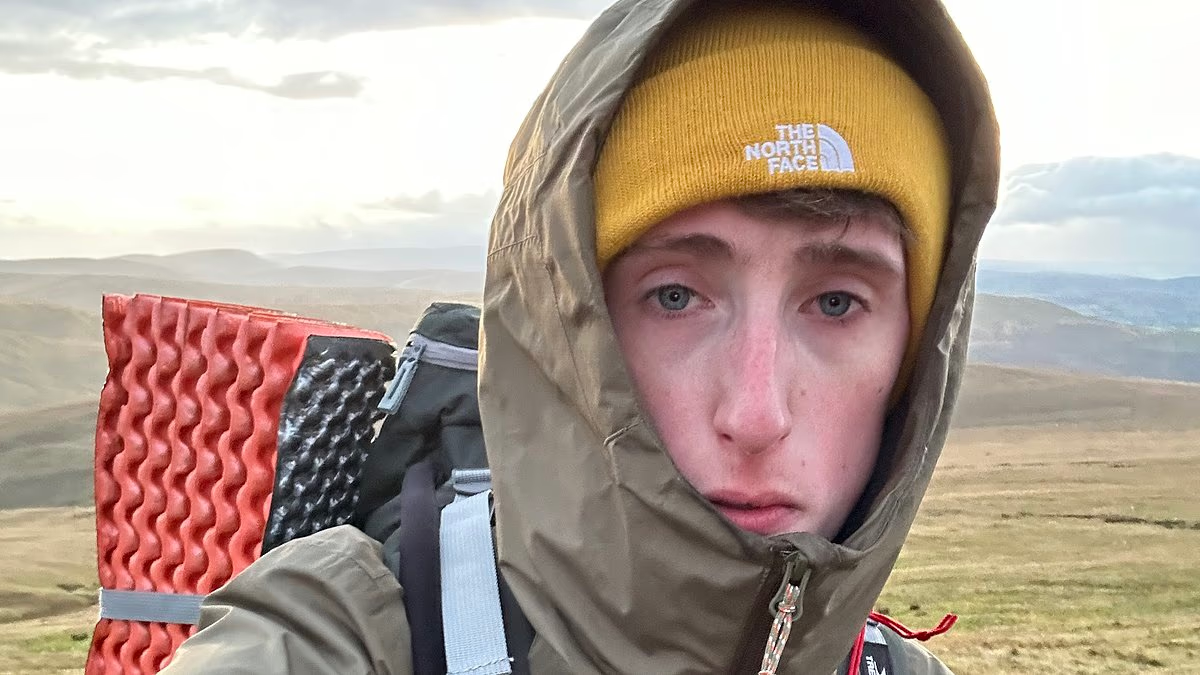
Camping trips usually involve setting up a spacious tent with several compartment rooms on a dedicated pitch. A shower and toilet block is often nearby, as well as water taps and maybe even an electric hook-up. Wild camping, however, throws away all of those luxuries and really dives into nature.While legal in Scotland, the practice is not allowed in England and Wales without permission from the landowner. It is permitted at Dartmoor National Park however, if campers promise to follow certain guidelines. Two fans of the pursuit, Ben Anthony and Sam Weller, share their experiences – from horror stories of frozen feet to how being out in nature can really help mental health. Ben Anthony, pictured, has been wild camping since 2021 when his father convinced him to join him on a trip The 30-year-old has spent between £1,000 to £1,500 on kit for the hobbyAnthony, from South Wales, started the hobby back in 2021 after his father convinced him to join him on a trip and he has been hooked ever since. The 30-year-old reveals he has spent up to £1,500 on kit and tells the Daily Mail, 'It is quite expensive'.'You can get gear that's relatively cheap second-hand off Facebook Marketplace, places like Vinted,' Anthony adds. 'My stuff probably cost £1,000, £1,500.'The Welshman often goes wild camping with his father, or opts to venture out on his own, and has been out in temperatures as low as -8C. 'It was 2022, just before the Christmas period...' he recalls. 'There was a little bit of snow on the ground and when I woke up in the morning, the water in my blender had frozen completely, even though it had an insulated layer to try and stop that.'Anthony soon realised his foot was 'frozen' too, which made packing up his camp difficult.'I realised that my foot had also frozen, I had taken my boots off to go to sleep in my sleeping bag and then I woke up in the morning and my right foot was frozen,' he says. 'It wasn't frostbite, it was just frozen, so I couldn't really bend my toes.' During one adventure, temperatures were so cold that his foot froze during the night Anthony follows a 'Leave No Trace' approach and makes sure to take everything home with himAfter assessing his icy situation, Anthony decided the best thing to do was call it a day and go home. 'I managed to pack all of my gear away, my tent away, whilst there was still snow on the ground and it was windy and it was cold,' explains the experienced camper, all with just one boot on because he couldn't get his shoe over his frozen foot. 'Then it was just the pain of putting the boot on my frozen foot, carrying 15 kilos on my back, back down the mountain.' Fortunately, Anthony's foot defrosted after around 45 minutes and it didn't deter him from going on future wild camping trips.Despite having years of experience behind him, Anthony managed to forget his tent poles on another camp last year.He had double checked his kit before setting off and hiked for two hours to his spot in the wilderness before he noticed.'I got there, I took everything out of my pack... I've got my tent out and I realised I made one of the most stupidest mistakes you can make camping – not taking the tent poles,' Anthony recalls, sharing how he had no choice but to return home. Another wild camper, Sam Weller (pictured), started camping earlier this year He has found the adventures in nature have helped improve his mental health and enjoys being outdoorsAnthony follows the 'Leave No Trace' principles and tends to arrive at his spot late, usually after sunset, and leaves early. He makes sure to always take everything back home with him too. Another wild camper, Sam Weller, 27, picked up the hobby in January of this year after losing his job and finding himself inspired by videos of adventurers, like Dick Proenneke, on YouTube. He had never been camping before and his first venture on January 19 didn't go to plan. 'It was a nightmare to be honest,' he recalls, explaining that he was 'underprepared' and ended up 'soaked through'.'My idea of what I needed and the reality of what I needed were in two different worlds,' Weller adds.Once home, the former electrician from Oxford spent some time preparing properly and doing more local camp outs.Weller credits wild camping for helping his mental health, and even started sharing his adventures on social media and YouTube, @Samoutdoor.s, connecting with others who can relate. 'When this started I was in not in a good place,' he explains. 'I just lost my job and I was quite down. For my mental state really, I wanted to be out in nature and on my own.' But his first trip didn't go to plan, he ended up 'soaked through' Weller adds, 'From what I'd seen of these other people online who were out in nature, they were just happy and at peace with being in the world and that's what drew me to it.'He's found that wild camping and connecting with nature has put him on 'a very grounded level' – a huge shift from the busy and stressful 'work mindset' he was in before. 'It is very physical to go on these trips,' Weller admits. 'I know when I get home I'm exhausted, it's the lack of sleep, the not eating properly, but it's the excitement.'With wild camping, Weller enjoys going somewhere he hasn't been to before and then sharing his adventures online. The ultimate wild camping guide, according to experts 1. Choose your location wisely: Experts at British outdoor retailer Blacks recommend heading to areas that are suitable for camping, and checking restrictions and guidelines before pitching up.2. Leave no trace: Leave the area exactly as you found it, without any evidence of your stay left behind.3. Pitch late and leave early: This is 'one of the golden rules of wild camping' and helps to minimise your presence. 4. Be considerate: Pitch up somewhere discreet and out of the way from any paths to avoid causing disturbance. It's also important to respect any fellow camping neighbours and not be noisy and disruptive.5. Respect wildlife and livestock: Don't disturb any animals and wildlife, and don't feed them. It's also important to close gates properly to avoid livestock escaping. 6. Campfires and cooking: Many areas don't allow fires because of the risk of wildfires. Check local regulations beforehand.7. Pre-plan meals: Be adventurous with your meals and plan ahead with the resources you have. 8. Be prepared: Plan ahead and make sure to pack all the necessary camping equipment and essentials.9. Inform someone: Make sure someone knows your plans and intended location just in case something goes wrong. 10. Be aware of UK wild camping laws: Rules vary and it's good to check specific guidelines for the area you wish to camp in. Source: Blacks
The highs and lows of wild camping as told by experienced campers
Two wild campers reveal the reality of the hobby - from frosty nights to finding peace in nature, and just how much the kit can cost.
1,168 words~5 min read