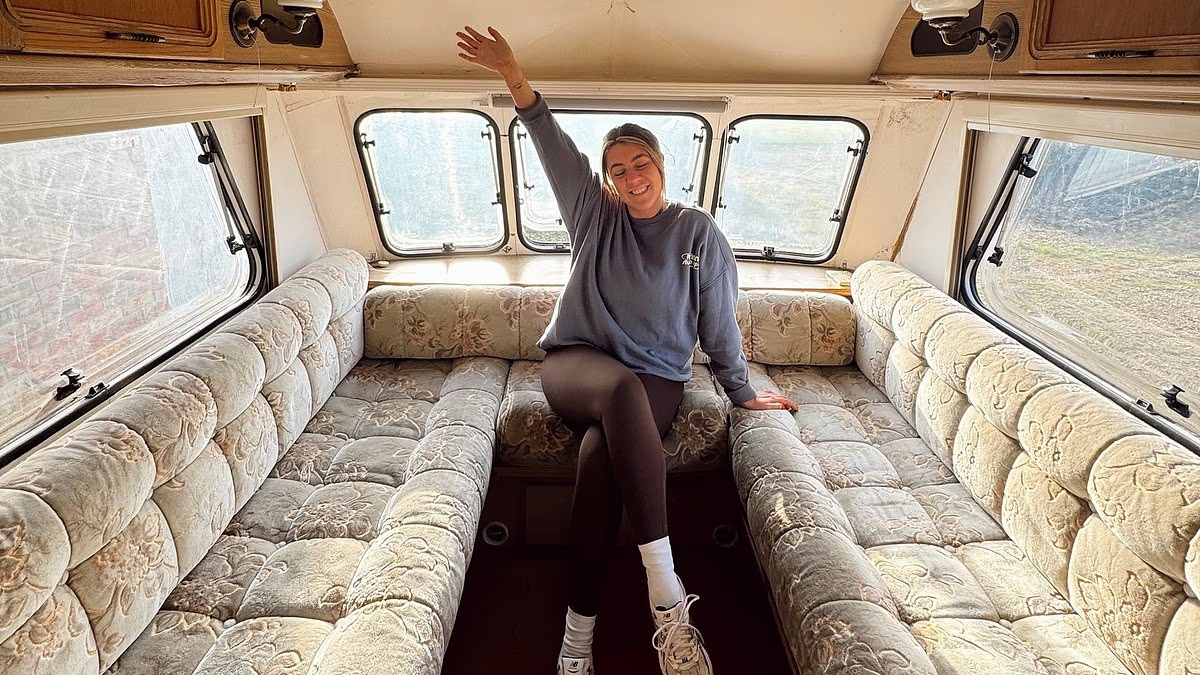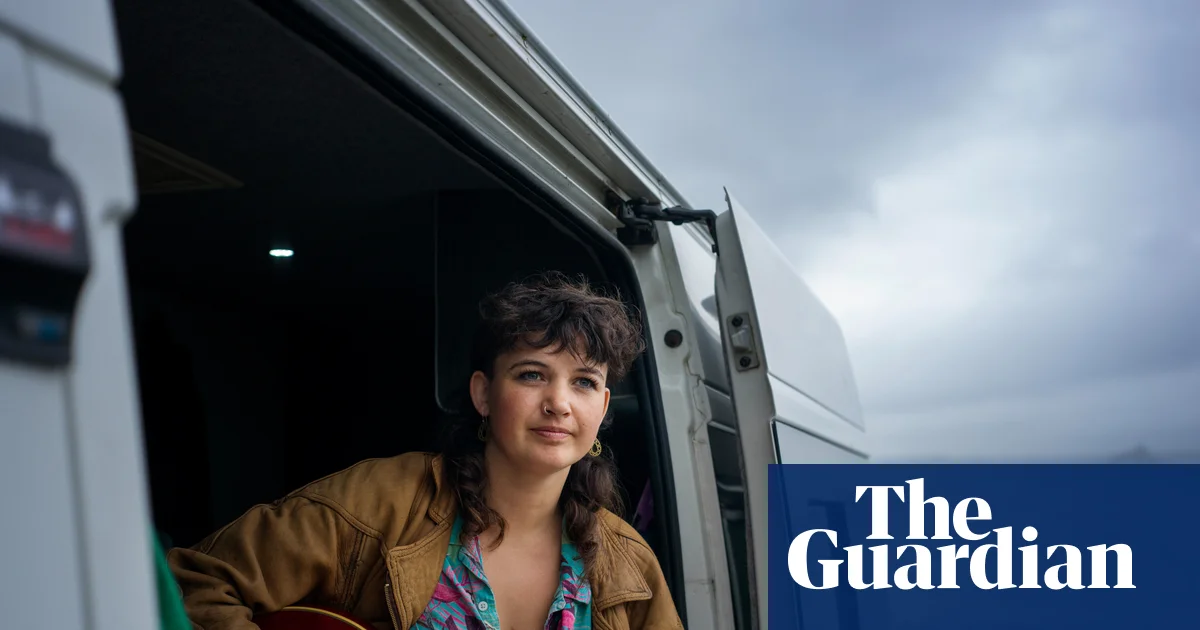
Skye has a thick duvet in the van she calls home in Cornwall. In winter, the 25-year-old goes to bed in several layers of clothes and is grateful for the extra warmth of her cat. She parks up late, often in car parks well away from beaches, and never stays more than one night in case local people get angry and bang on her windows. This is van life. It can be a very different world from the tourist dream.“Some winters I’ve had ice on the inside of my van windows, and the door handles frozen shut with me inside,” says Skye, a special educational needs teaching assistant. One year her diesel air heater packed up, and she spent the whole winter feeling cold. “That was genuinely awful.” Even with the heater on in the evening, those nights and early mornings when the temperature drops below zero are tough. “I often get dressed in bed,” she says. “You just have to adjust.”
Skye, 25 arriving back at her van after a day of walking
Skye is one of an unacknowledged cohort of young Cornish people who are buying old vans to live in because they can’t find or afford a rental property. The lure of picturesque coves and seaside cottages brings 4 million tourists to the county every year. They drive Cornwall’s economy, but their presence also means the county has become more lucrative for landlords to own one of an estimated 24,000 Airbnbs and holiday lets than to look for longer term local tenants.Q&AWhat is the Against the tide series?ShowOver the next year, the Against the Tide project from the Guardian’s Seascape team will be reporting on the lives of young people in coastal communities across England and Wales.Young people in many of England's coastal towns are disproportionately likely to face poverty, poor housing, lower educational attainment and employment opportunities than their peers in equivalent inland areas. In the most deprived coastal towns they can be left to struggle with crumbling and stripped-back public services and transport that limit their life choices.For the next 12 months, accompanied by the documentary photographer Polly Braden, we will travel up and down the country to port towns, seaside resorts and former fishing villages to ask 16- to 25-year-olds to tell us about their lives and how they feel about the places they live. By putting their voices at the front and centre of our reporting, we want to examine what kind of changes they need to build the futures they want for themselves. With about 13,000 visitors also owning second homes, long-term rental properties are thin on the ground in many Cornish areas. Employment in the county can also be unreliable, with many young people relying on the sort of seasonal work that makes it hard to commit to regular monthly rental payments.A van offers a different path. Some days these young people may be “living the dream”, watching the sun set over the sea, but unlike many of the self-styled van lifers on Instagram they are not just having an adventure for a summer. Many are living like this all year round.Against the Tide: Cornwall LoopSkye moved to Cornwall from Milton Keynes with her mother and father when she was 16 and fell in love with the place and with surfing. But three years later, when her parents’ marriage started to break down, she moved out and spent months sleeping on friends’ sofas.With earnings from her job as an agency SEN teaching assistant, Skye teamed up with her then-boyfriend and another friend to try to rent a house. All three had jobs, but they kept losing out on the few rental properties they could afford because someone else had got there first. On one occasion, someone from London even swooped in and took what they had hoped could be their home. Frustrated, Skye took out a loan and bought a “really nice but old” van to live in.