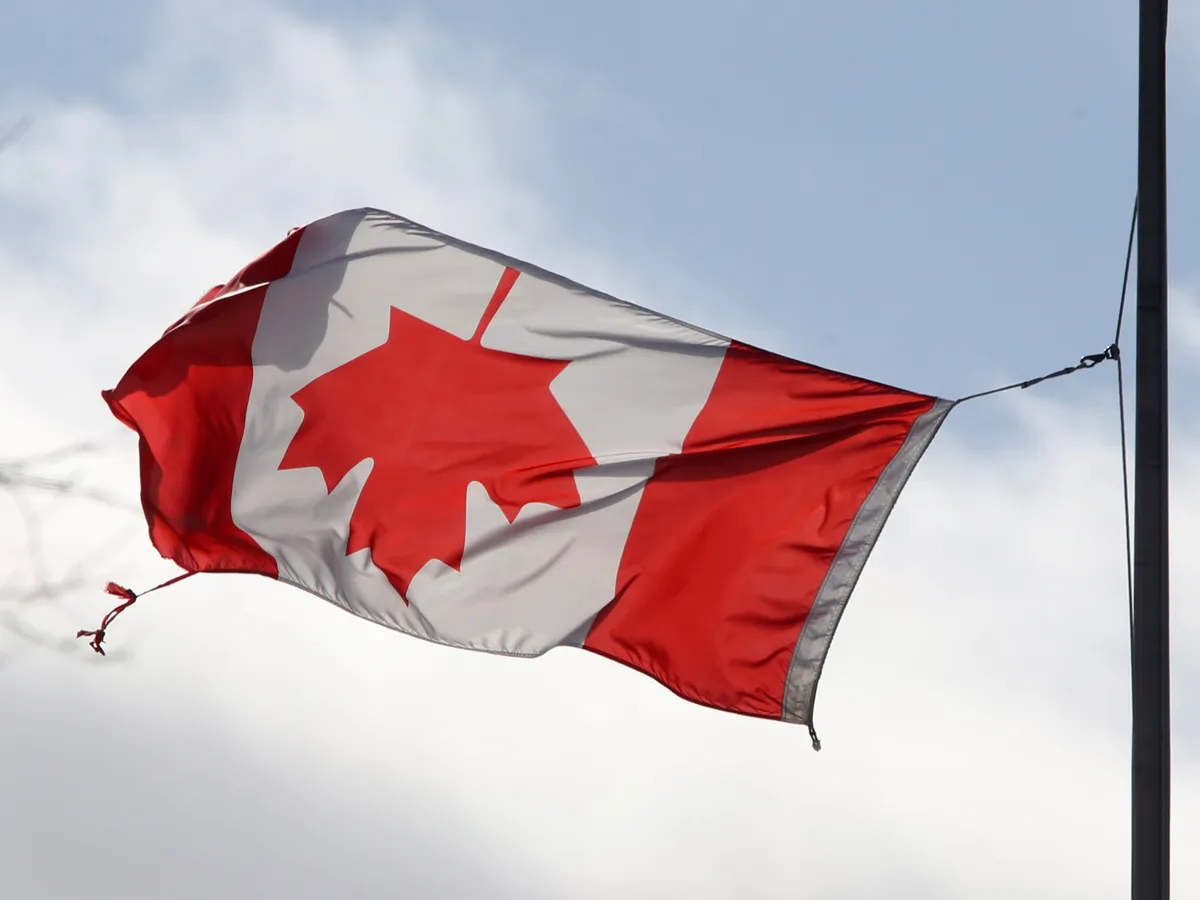
Skip to Content News Archives Economy Energy Oil & Gas Renewables Electric Vehicles Mining Commodities Agriculture Real Estate Mortgages Mortgage Rates Finance Banking Insurance Fintech Cryptocurrency Work Wealth Smart Money Wealth Management Investor Personal Finance Family Finance Retirement Taxes High Net Worth FP Comment Executive Women Puzzmo Newsletters Financial Times Business Essentials More Innovation Information Technology FP500 Podcasts Small Business Lives Told Tails Told Shopping Financial Post Store Obituaries Place a Notice Advertising Advertising With Us Advertising Solutions Postmedia Ad Manager Sponsorship Requests Classifieds Place a Classifieds ad Working Profile Settings My Subscriptions Saved Articles My Offers Newsletters Customer Service FAQ News Economy Energy Mining Real Estate Finance Work Wealth Investor FP Comment Executive Women Puzzmo Newsletters Financial Times Business Essentials HomeFP CommentWilliam Watson: Our discontent is about freedomIf Canadians are feeling glummer this Canada Day than in previous decades, it's because governments are treading less lightly on our livesLast updated 41 minutes ago You can save this article by registering for free here. Or sign-in if you have an account.Increasingly, governments like Canada have become much more involved in the lives of their citizens, telling them what they can and, more and more, cannot do. Photo by TIM KROCHAK/PostmediaI learn from Wikipedia, a magical resource I hope children will still be able to use even after we’ve banned them from “social” media, that in 1958 the Diefenbaker government allocated $14,000 to what were then still Dominion Day celebrations. (Canada Day didn’t become Canada Day until 1982, when 12 MPs snuck a private member’s bill through the House of Commons — a cultural coup whose most astonishing aspect was that it took place eight days after that year’s Dominion Day. Attendance was clearly low but the Commons was actually in session in mid-summer.)Subscribe now to read the latest news in your city and across Canada.Exclusive articles from Barbara Shecter, Joe O'Connor, Gabriel Friedman, and others.Daily content from Financial Times, the world's leading global business publication.Unlimited online access to read articles from Financial Post, National Post and 15 news sites across Canada with one account.National Post ePaper, an electronic replica of the print edition to view on any device, share and comment on.Daily puzzles, including the New York Times Crossword.Subscribe now to read the latest news in your city and across Canada.Exclusive articles from Barbara Shecter, Joe O'Connor, Gabriel Friedman and others.Daily content from Financial Times, the world's leading global business publication.Unlimited online access to read articles from Financial Post, National Post and 15 news sites across Canada with one account.National Post ePaper, an electronic replica of the print edition to view on any device, share and comment on.Daily puzzles, including the New York Times Crossword.Create an account or sign in to continue with your reading experience.Access articles from across Canada with one account.Share your thoughts and join the conversation in the comments.Enjoy additional articles per month.Get email updates from your favourite authors.Create an account or sign in to continue with your reading experience.Access articles from across Canada with one accountShare your thoughts and join the conversation in the commentsEnjoy additional articles per monthGet email updates from your favourite authorsSign In or Create an AccountorFourteen thousand 1958 dollars translates — disgracefully — to $155,761.59 today, which is pocket change to today’s federal government, which — also disgracefully — spends our money at the rate of a little over $1.1 million per minute. In real terms, Canada Day celebrations now typically cost Ottawa about 30 times what 1958’s did.Get the latest headlines, breaking news and columns.By signing up you consent to receive the above newsletter from Postmedia Network Inc.A welcome email is on its way. If you don't see it, please check your junk folder.The next issue of Top Stories will soon be in your inbox.We encountered an issue signing you up. Please try againSuch things as the nation’s mood are obviously hard to judge but despite the big increase in celebratory spending my guess is the country doesn’t feel as good about itself as it did back in 1958, when the baby boom was filling up new neighbourhoods, migrants were flooding in and the prideful afterglow from World War II was still being felt.As we approach Canada Day 2026 (No. 159 in the series), the Confederation whose birth we observe is in question again. A leading party in Quebec favours a secession referendum, while Alberta has scheduled a referendum about having a secession referendum. A country that used to rank fifth in the world happiness survey is now 23rd, while in the world development reports we are down from first in the 1990s to 16th today.Our discontent is not unique. Britain, having just devoured another prime minister, is on to her fourth in four years, a span during which Italy, traditional homeland of political farce, has had only the indomitable Giorgia Meloni. The United States is still digesting whether it won or lost a war in which it helped kill most of the adversary’s leaders in the first minutes, lost almost no combatants itself but somehow ended up legitimizing Iranian control over the Straits of Hormuz.But best not overstate our current gloom. Dominion Day 1958 marked peak Diefenbaker. Three months earlier he had won almost 80 per cent of the seats with almost 54 per cent of the popular vote in an election in which voter turnout was almost 80 per cent. But just five years later he was out as prime minister, replaced by Lester Pearson, who himself lasted not quite five years.Canadian politics in the 1960s were so addled, off-putting and scandal-ridden that journalist Peter Newman titled his best-selling 1968 history of the Pearson government “The Distemper of Our Times.” And it was published in January of that year, before the Americans lost two leaders to assassination (Martin Luther King and Robert Kennedy) and suffered the military victory but propaganda defeat of the North Vietnamese Tet offensive in Viet Nam, in which 246 Americans died on the battle’s worst day (Jan. 31) — many times more than in the Iran war, so far at least.You want to feel depressed? Those are reasons for feeling depressed.To judge such an elusive thing as the national mood, each of us brings his own strong priors. Looking at the happiness numbers, I’m struck by Canada’s ranking only 48th in terms of freedom, which is judged by asking people the question “Are you satisfied or dissatisfied with your freedom to do what you choose with your life?”My reaction to surveys is always to ask, well, what exactly do you mean by that? Is it a Jean-Paul Sartre question: are you happy (whatever that means) that as a human being you are free to make vital choices? Or is it a John Stuart Mill question: are you actually free to make your own choices or do you feel constrained and, if so, by whom or what?But if we assume freedom is a good thing and the question is therefore about how factually free people feel, 48th in the world isn’t a very good place to be (especially with the aforementioned Viet Nam ranking first). It’s small solace that we out-do the officially freedom-loving U.S., where only 75.4 per cent of people are satisfied they can make their own life choices, versus 85.8 per cent here. But in 2005, fully 95.7 per cent of us were satisfied with our freedom, good enough for third place in the entire world.On his first day in office, Keir Starmer told Britons his government would “tread more lightly” on their lives. It was a good inaugural message. But then, almost immediately, he raised taxes and started banning and regulating this and that. I suspect if people are feeling more discontented, it’s because governments have become much more involved in their lives, telling them what they can and, more and more, cannot do — or now even think. Join the Conversation This website uses cookies to personalize your content (including ads), and allows us to analyze our traffic. Read more about cookies here. By continuing to use our site, you agree to our Terms of Use and Privacy Policy.
William Watson: Our discontent is about freedom
If Canadians are feeling glum this Canada Day, it's because governments are treading less lightly on our lives. Find out more here
1,348 words~6 min read