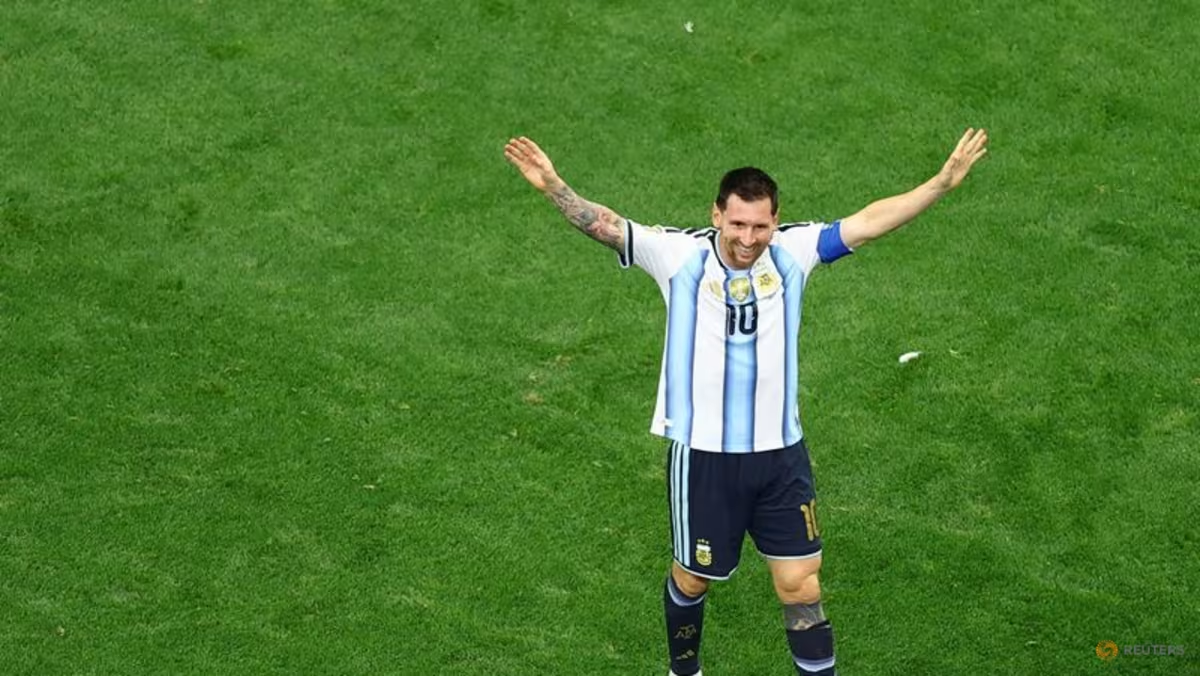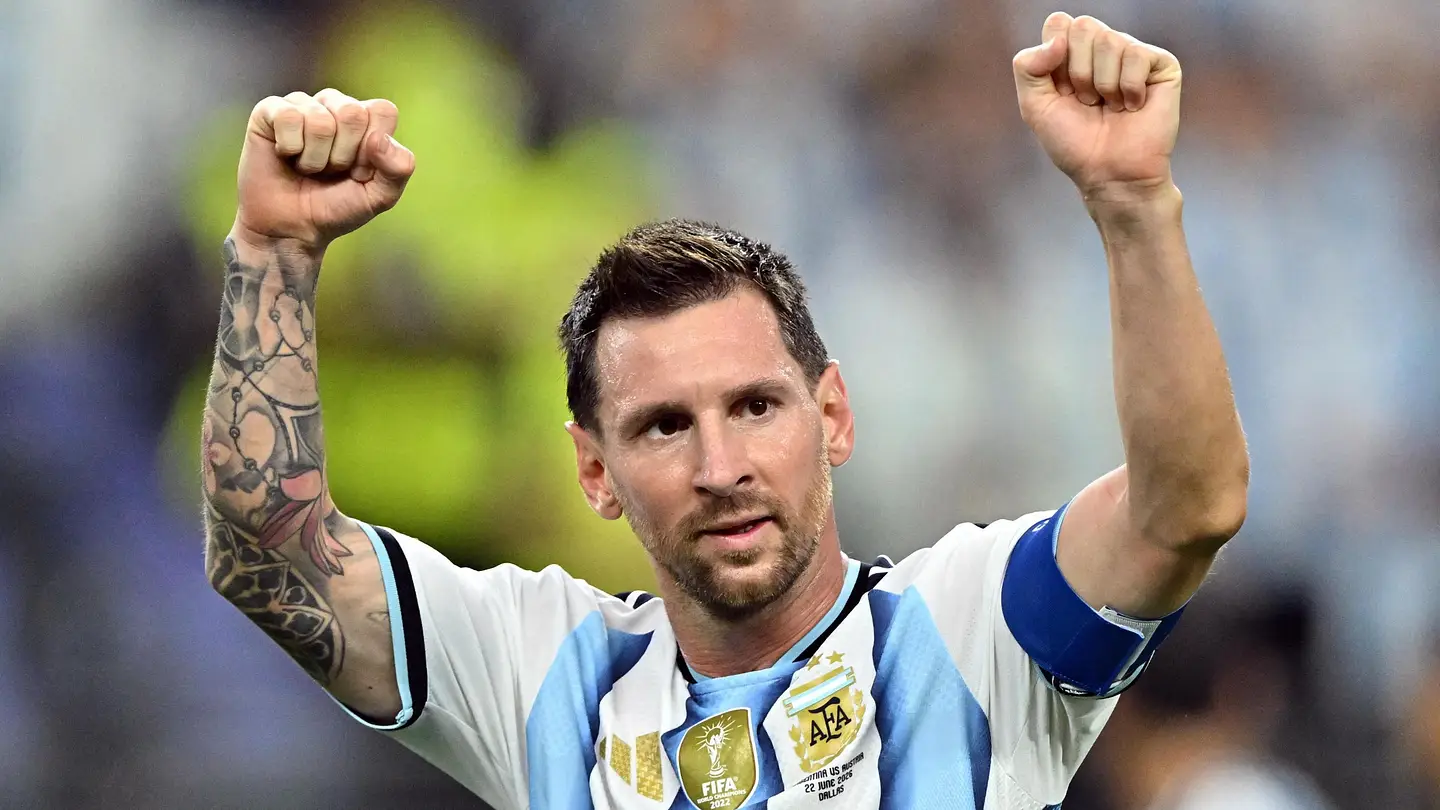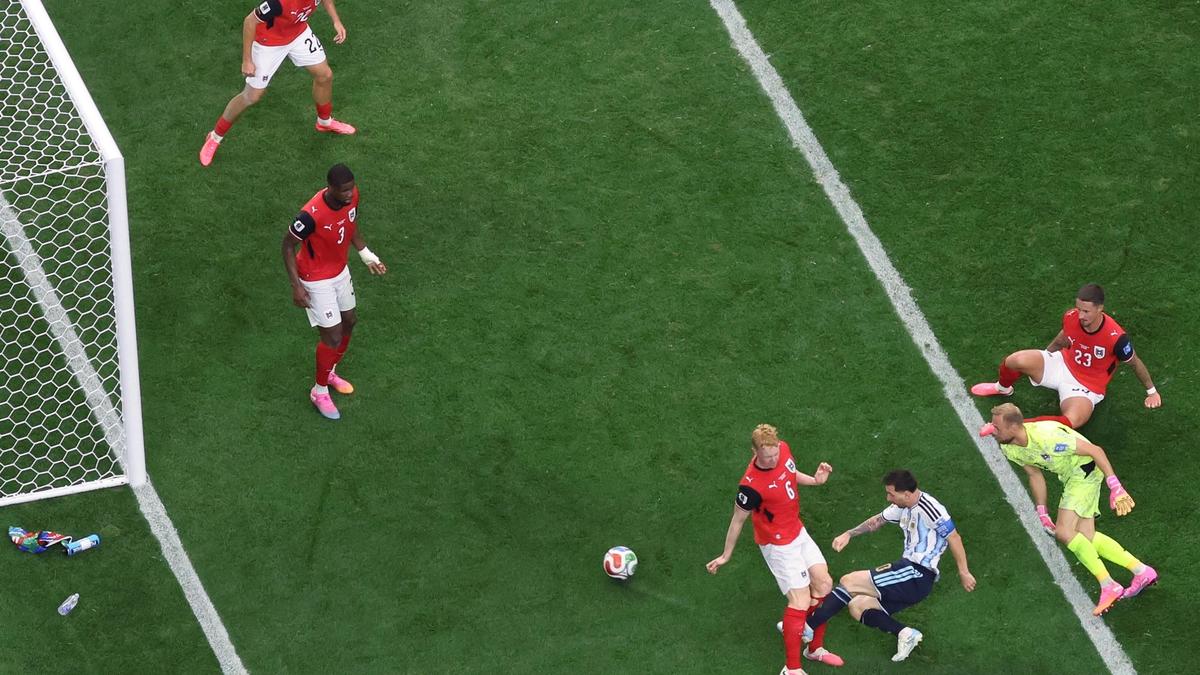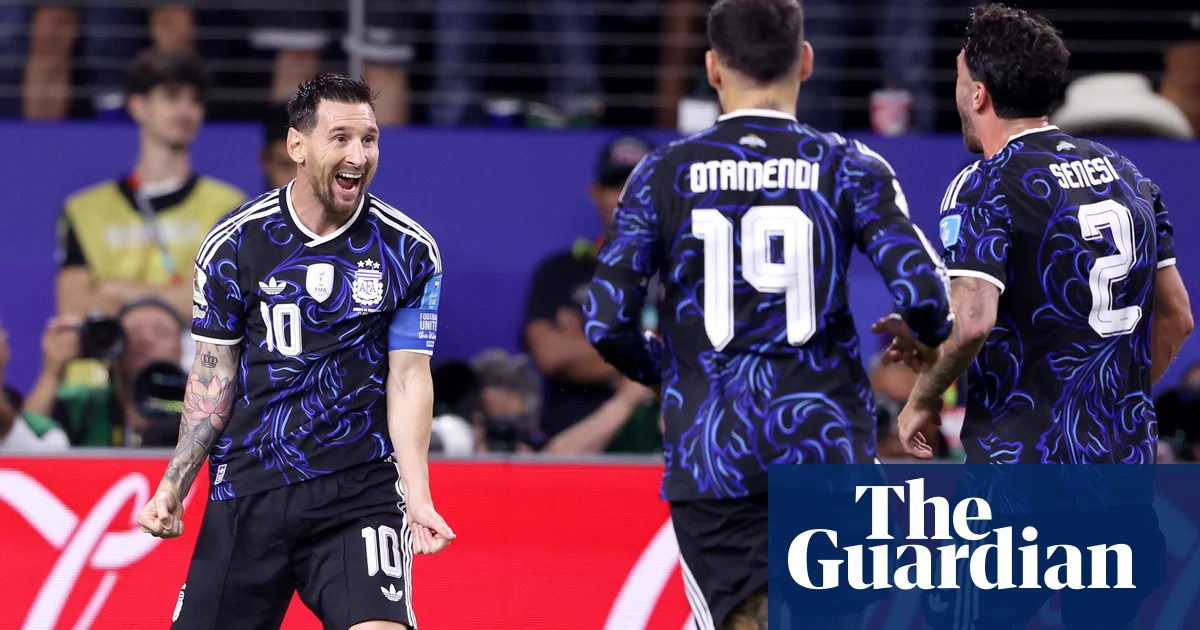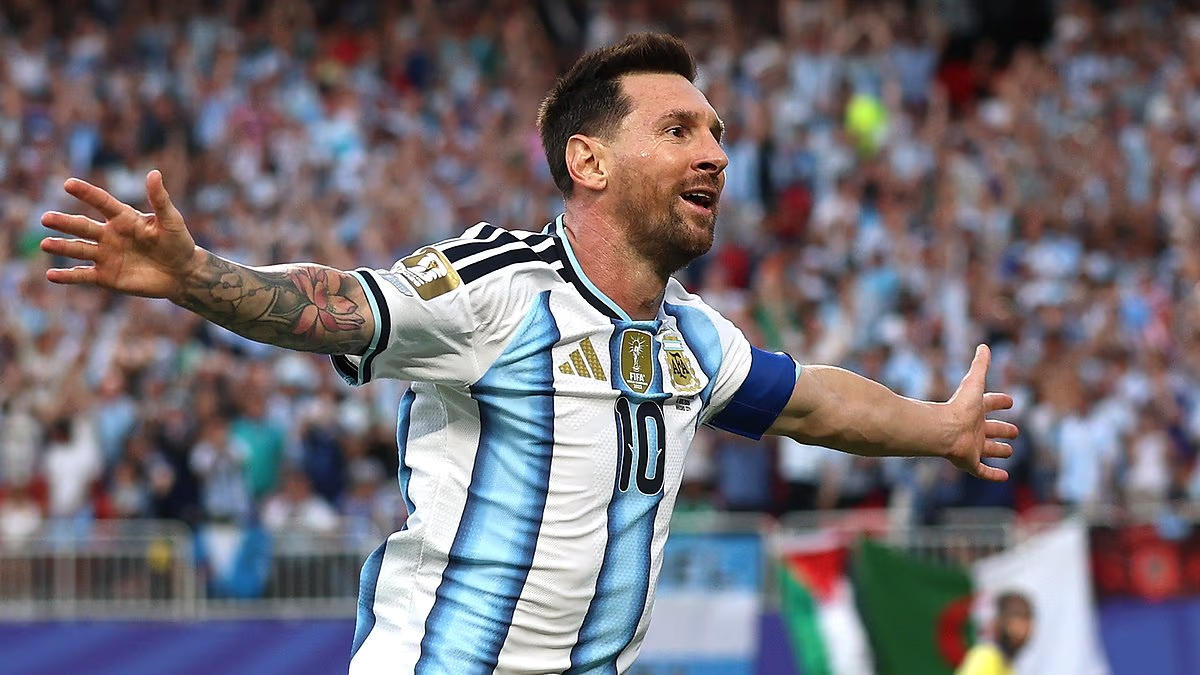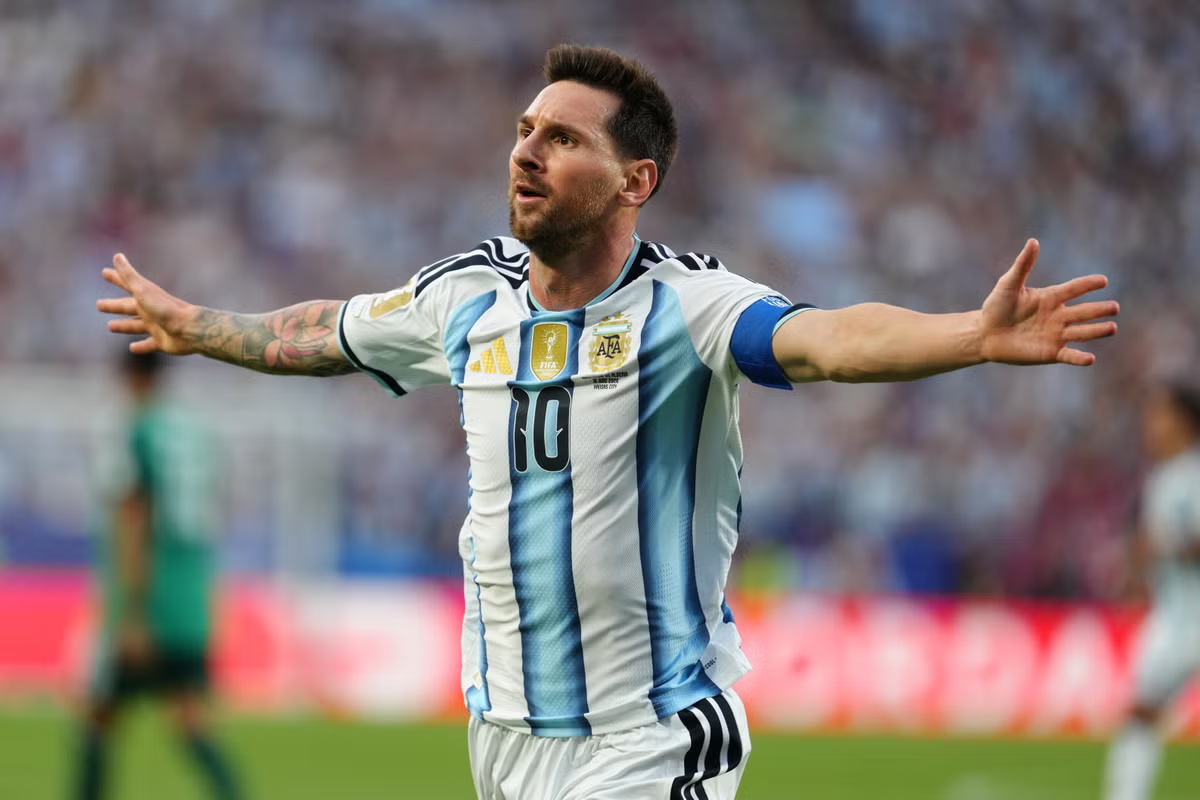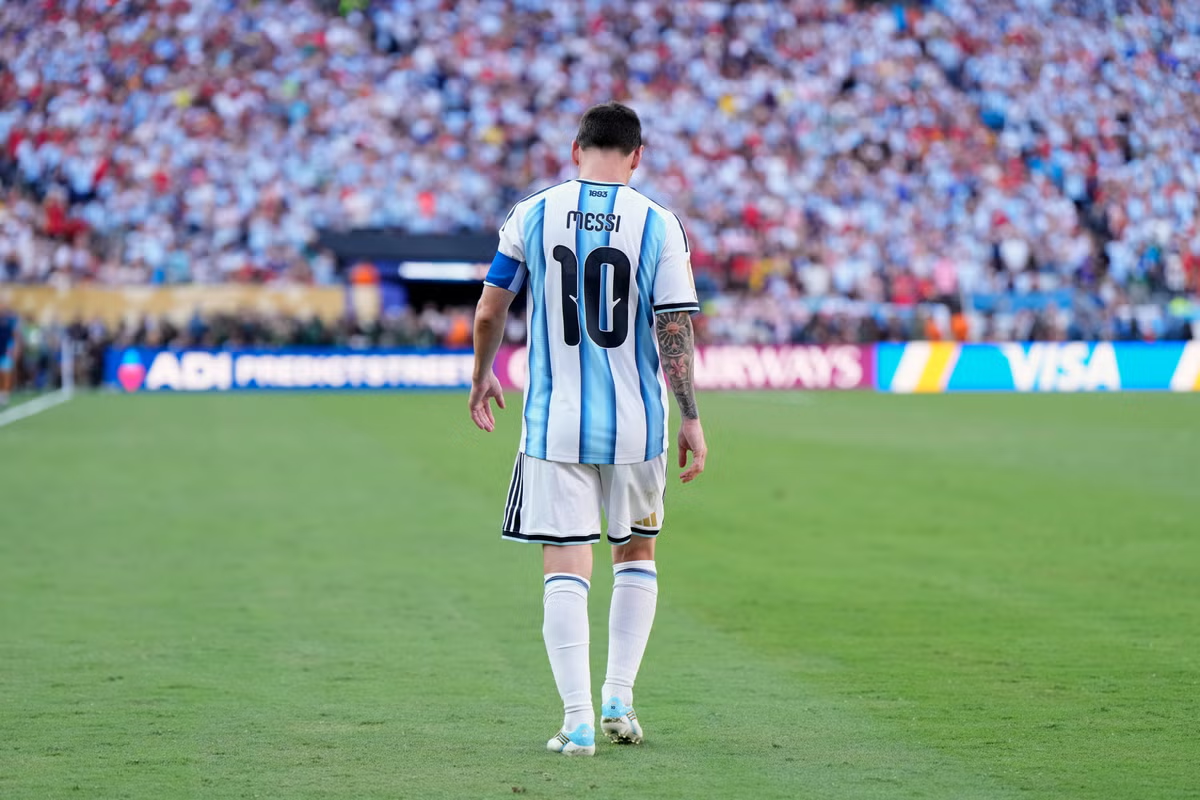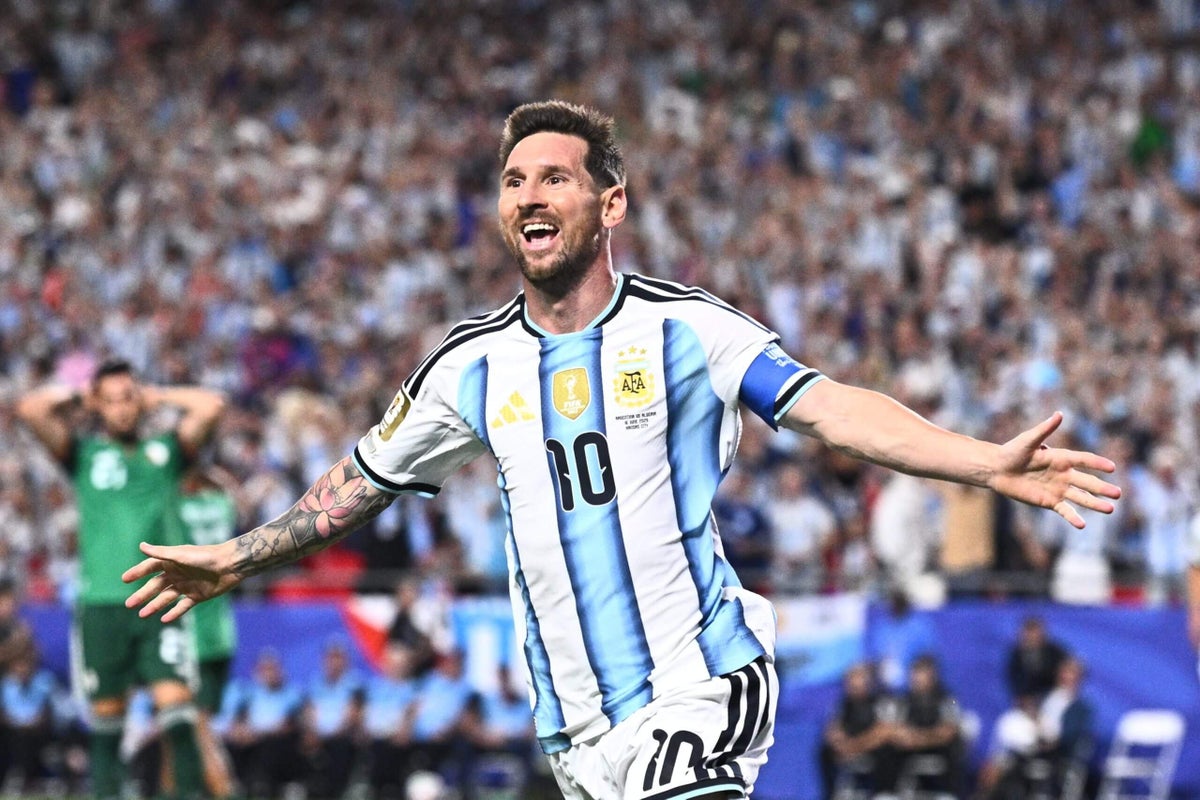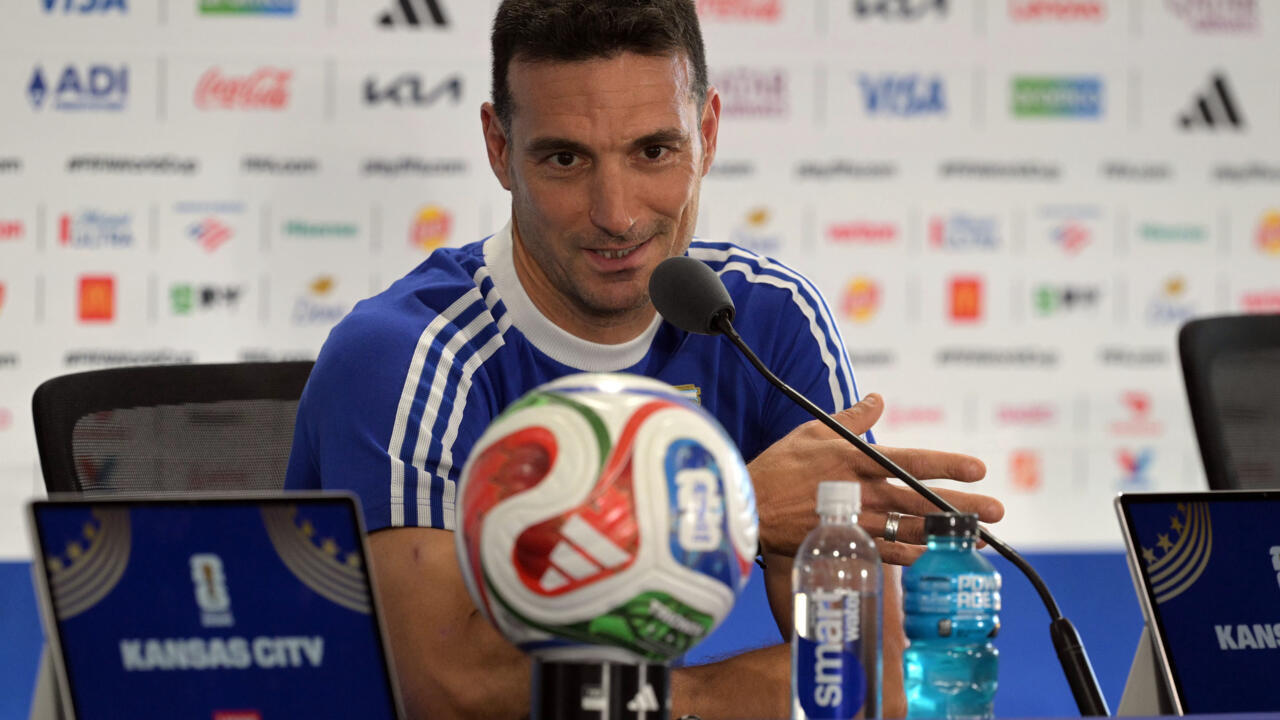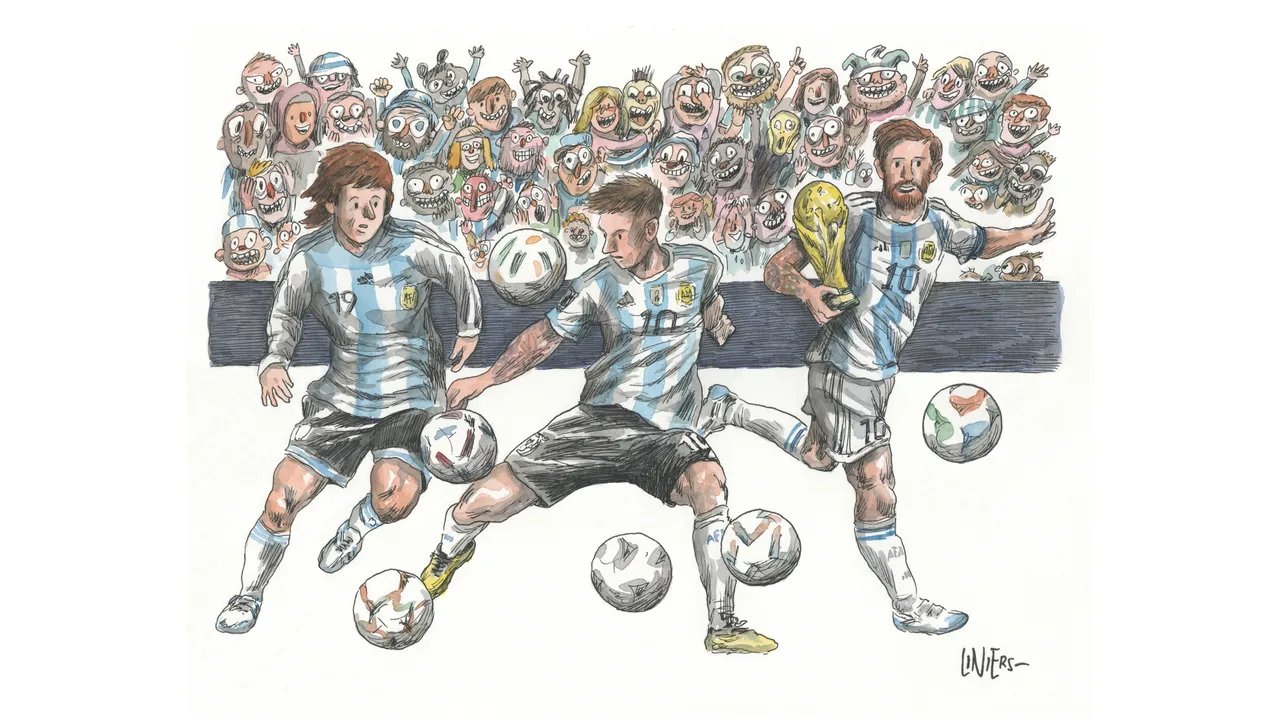
The day that Lionel Messi made his World Cup début, on June 16, 2006, I was in elementary school. I had never set foot in Argentina, and I didn’t speak a word of Spanish. The game was against a then unified Serbia and Montenegro. Argentina wore dark blue. I knew very little about the country that my grandparents had left behind, in 1964, for the United States—only that on that day, at home in the New York suburbs, I somehow belonged to it.Messi’s first World Cup was my first World Cup—not the first one I had lived through but the first one that I remember. He was almost nineteen (the number he wore on his back), and I was nine. I like to tell people the story of how, a few months earlier, my dad had gone up onto the roof of our house in Pelham and dismantled our old TV antenna, installing in its place a cable package of Spanish-language channels, so that we could hear announcers marvel at Barcelona’s teen-age phenom in his native tongue. But nothing could have prepared us for Messi’s greatness. Against Serbia and Montenegro, in the group stage, Messi came on as a sub in the seventy-fourth minute, with Argentina up 3–0. The press had already anointed him the heir apparent to Diego Maradona; an emotional Maradona was filmed in the stands, with his arms in the air, as Messi entered the game. Ten minutes later, Messi assisted Carlos Tévez on a fifth goal, and then, he scored the sixth himself. He played in each of the next two games in the tournament—a goalless draw against the Netherlands and an overtime win against Mexico in the round of sixteen—only to be left on the bench by then coach José Pékerman in Argentina’s quarterfinal loss against Germany. Pékerman’s decision is now considered by some to have been a historic mistake, and, for the next twenty years, Messi played every minute of every Argentina World Cup game, until this summer.For many families like mine, the twenty-six World Cup games that Messi played from 2006 to 2022, totalling more than twenty-three hundred minutes of game time, are remembered more like life events. Watching highlights on YouTube, I can easily recall the precise circumstances of each match—the cousin’s bat mitzvah we nearly missed in upstate New York (Argentina vs. Nigeria, in 2010); the summer internship in Manhattan I snuck out of (also Argentina vs. Nigeria, oddly enough, in 2018); the family meals at La Fusta, an Argentinean steak house in Elmhurst, Queens, whenever my dad couldn’t get home from work in time for the games (Argentina vs. Switzerland, in 2014; Argentina vs. Poland, in 2022; and others). Keeping time via mundiales is a very Argentinean experience, one that I inherited without fully realizing it: in his basement, my grandfather—who is now ninety-seven years old, and who was born six blocks from the Boca Juniors stadium in Buenos Aires—has a stash of VHS tapes of Argentina games from World Cups dating back to the nineteen-seventies, when my grandparents first moved to the house in the Hudson Valley where they still live today.After my first World Cup, my understanding of my grandparents’ home country became one-dimensional, existing solely through the lens of soccer. By Messi’s second World Cup, hosted by South Africa in 2010, I’d started taking Spanish classes at school, and I noticed that, for the first time, I could actually understand some of what the announcers were saying, like invisible ink becoming legible. The growing legend of Messi slowly revealed itself: that he had left Argentina for Spain at just thirteen years old to join Barcelona’s youth academy; that he himself continued to negotiate his own Argentinean-ness as an emigrant, even as he became the most famous Argentinean in the world. After Argentina’s underwhelming showing in 2010—Messi didn’t score that year, with an inexperienced Maradona as coach—many pundits in the country began to criticize him harshly, calling him pecho frío, slang for someone lacking heart.Mostly, though, it was the euphoric game calls that stuck with me. Kicking a ball around with my younger brothers, in our back yard or on the carpeted floor of our basement, I would narrate our games and penalty shootouts in my own limited Spanish, impersonating the iconic calls of Argentinean announcers I recognized—such as Mariano Closs (“atención!”), Sebastián (Pollo) Vignolo (“cántalo, cántalo, cántalo!”), and Walter Nelson (“ta-tan, ta-tan!”)—using gibberish and invented words to fill in the gaps of what I didn’t know how to say. We would take off our shirts and run up and down our dead-end street when we scored winning goals. In my own imprecise way I even tried to Hispanicize our American names, so that we would fit more seamlessly into the “Argentinean” narrations: “Jordani, pase para Jonathani, ahora para Miguelitooooo . . . cántalo, cántalo, cántalo! Goooool!”In this way, the four-year cycles came and went, and I grew up in between. I kept watching soccer in Spanish, and my world expanded. One channel aired a popular Sunday-night highlights show from Argentina’s domestic league, called Fútbol de Primera, which not only introduced me to up-and-coming players who might someday make the national team but also gave me a mental map of the country’s cities and neighborhoods. Indeed, to understand the selección is to understand the trajectories of each of its players, and to understand an Argentinean player’s journey it is impossible to ignore the club where he came of age.I travelled to Argentina for the first time shortly after what was arguably Argentina’s most heartbreaking World Cup loss yet—in Brazil, 2014, an electric and joy-filled campaign, when a generation of stars at the peak of their powers (Messi, Javier Mascherano, Sergio Agüero, Gonzalo Higuaín) were defeated by Germany in the hundred-and-thirteenth minute of the final. I was nearing the end of high school, and, by that point, I had spent an entire childhood trying to imagine what Argentina was actually like. When we landed in Buenos Aires that December, I found myself staring at the domestic-departures screen at the airport. I know these places, I thought. There was Mendoza, where Godoy Cruz played; Bahía Blanca, home of Olimpo; Rosario, where both Ángel Di María’s Central and Messi’s boyhood club, Newell’s Old Boys, were crosstown rivals. As we walked the streets of the capital with my grandparents, I saw buses bound for neighborhoods and suburbs that also sounded familiar, and I couldn’t help but feel that even though I’d never set foot in Parque Patricios (Huracán), Núñez (River Plate), or Liniers (Vélez Sarsfield) myself, I had already gleaned an essential part of their identity from more than five thousand miles away.I wondered if I could say the same for my own. How much can you truly know about a place, even your own heritage, if you have only ever experienced it from a distance? It turns out, when the country is Argentina and your cultural currency is soccer, quite a lot; the neighborhood clubs, the players, the selección are all so infused into the national identity that they are almost inextricable from it. In the Argentinean dialect of Spanish, there are words and phrases entirely derived from soccer references, and I realized that, as the years went on, I was able to start many conversations in Argentina purely on the granular detail with which I paid attention to the game. I visited any local stadium I could, convincing groundskeepers in La Plata, Mendoza, and Banfield to open the gates for me simply because I had come this far. With every match, every video, every visit, my accent became more Argentinean. Back home in the States, I felt increasingly comfortable speaking in Spanish with my grandparents, who had always spoken only English to me.As I grew into my own Argentinean-ness, Messi’s relationship with his home country was growing more complex. I was at the Copa América Centenario, in New Jersey, in the summer of 2016, when he famously missed a penalty in the final against Chile, and subsequently resigned from the national team after Argentina’s third straight finals loss in as many years. “Se terminó para mí la Selección,” Messi told reporters after the game, and I understood the gravity of his words. I had never known an Argentinean national team without Messi, and, apparently, many others felt the same: following his announcement, hundreds of Argentineans took to the streets in Buenos Aires, and tens of thousands more signed online petitions, begging him to reconsider. The same pundits who had once criticized him offered their apologies live on television. After nearly five months, Messi made his comeback during the 2018 World Cup qualifiers, scoring a stunning free kick against Colombia in Buenos Aires; a year later, in the final game of the qualifiers, he scored a come-from-behind hat trick against Ecuador in Quito, sending Argentina to the tournament.Despite Messi’s return, Argentina eventually crashed out of the 2018 World Cup in Russia, losing in the round of sixteen to France, who would eventually win it all. The national team needed to reset. The manager Jorge Sampaoli left, setting up his assistant, Lionel Scaloni—one of Messi’s older teammates in 2006—to take over. At first, Scaloni was considered an interim coach. Instead, he led a generational change, surrounding the remaining heavyweights Messi, Di María, and Nicolás Otamendi with a fresh crop of young players—many of whom were born around the same time I was, and had similarly idolized Messi since his 2006 début, which, for some, was the first World Cup they could remember. Buoyed by the likes of Rodrigo De Paul, Lautaro Martínez, and Emiliano (Dibu) Martínez—and, a bit later, Julián Álvarez, Alexis Mac Allister, and Enzo Fernández—Argentina won the 2021 Copa América in Brazil, the 2022 Finalissima in London, and, finally, the 2022 World Cup in Qatar.After the greatest triumph of them all, Messi moved to the United States to play for Inter Miami, a new Major League Soccer club owned by David Beckham and the Mas brothers, Jorge and José, Cuban American businessmen based in Florida. Messi was reportedly offered a contract worth about a hundred and fifty million dollars, which included an eventual ownership stake in the club and even a cut from new subscriptions to Apple’s streaming service, where all M.L.S. games are shown. By this point in his career, he has become such a household name—and brand—in America that some opposing teams even offer compensation to their fans when he doesn’t play.Meanwhile, since the Scaloni era’s unprecedented winning streak, Argentineans’ adoration of Messi has, at last, become unconditional. In 2024, the Scaloneta won its second consecutive Copa América, also in Miami. Even as he kept playing through the qualifiers and friendlies, Messi kept mum about whether he would ultimately participate in this summer’s World Cup, his sixth, until the very last squad announcement. Now he is leading the selección in an attempt to make Argentina the first back-to-back world champions since 1962, vying for the country’s fifth consecutive international title in the past five years.Messi is thirty-nine now, and I am twenty-nine. Two weeks ago, on June 16, 2026, Argentina played its first match in this year’s tournament, against Algeria. It was exactly twenty years to the day since Messi’s début against Serbia and Montenegro, in the summer of 2006. For once, the game was not taking place in some faraway time zone, like Johannesburg or Doha; there were no work or school commitments to skirt for the 9 P.M. kickoff. I watched the game on Telemundo with my family, in the same place where we watched it two decades earlier. Messi, ever the showman, scored a stunning hat trick—his first ever in a World Cup—for the 3–0 win, and was subbed out in the seventy-ninth minute for Nico Paz (suggested by some to be his heir apparent), to a standing ovation. In the next game, against Austria, Messi again scored both goals in a 2–0 victory, an astonishing start to the tournament. He played as loosely and freely as he had on his first day; after winning everything imaginable, he played like he had nothing to lose.After each game, my American friends reached out to congratulate me, as though I had achieved something myself. The same thing had happened four years earlier, in 2022, when Messi and Argentina won it all in Qatar: people remembered how much it meant for my family, all those years, as we kept time in mundiales. That year, when I sent those friends videos of our long-awaited celebrations after the final, singing Argentinean soccer songs in Spanish, I wondered if they were surprised that I knew the words by heart. ♦
The Evolution of Messi
After two decades of dominance at the World Cup, Lionel Messi has proved himself to the Argentinean faithful. Now he has nothing to lose.
2,109 words~10 min read